
- Collection type
- Object
- Description
- Grey pottery sherd with cord marks covering the surface. Extremely worn. Fits with fragment 1892.56.110. [JC 31 8 2000; Fumiko Ohinata, Japanese Archaeology Project 1996-2000]
- Long description
- Four refitted pieces. Grey sherd with cord marks covering the surface. Extremely worn. There is evidence of old exhibition mount marks (which probably appeared before the object was donated to the Pitt Rivers Museum). Fits with fragment 1892.56.110. [JC 31 8 2000; Fumiko Ohinata, Japanese Archaeology Project 1996-2000]
- Geographical reference
- Hokkaidō [北海道] Oshima Subprefecture [Oshima-shichō, 渡島支庁] Hakodate [Hakodate-shi, 函館市]
- Cultural groups
- Japanese
- Date / Period
- Archaeological period: Jōmon 縄文時代
- Date collected
- By 1892
- Acquisition information
- Purchased: 05/1892
- Materials and processes
- Material Pottery, Process Handbuilt, Process Impressed, Process Fire-Hardened
- Dimensions
- Width: max 31 mm, Length: max 37 mm, Depth: max 5 mm, Weight 7.5 g
- Object numbers
- Accession number: 1892.56.111 Other numbers: JAC 406
- Research and responses
Listed and described as JAC406 on page 120 of the unpublished draft typescript 'The Japanese Archaeology Collections at the Pitt Rivers Museum, University of Oxford', by Fumiko Ohinata and Jeremy Coote (dated 2002): ‘Pottery ... Jomon pottery ... Japanese Jomon pottery is renowned for its antiquity as it is more than 12,000 years old ... Pottery from this period has a great variety of shapes and decoration, including the characteristic cord-marking (jomon), which has given its name to the whole period. It should be noted, however, that not all pottery of the Jomon period has cord mark decorations. The jomon pottery provides the terminology after which the period is named and not the criteria by which it is assigned ... JAC 406; Plate 56.9 / Hokkaido, ?Hakodate / 7.1×5.5×0.8 cm; Total 28.4 g / Four refitted pieces. Grey sherd with cord marks covering the surface. Extremely worn. There is evidence of old exhibition mount marks (which probably appeared before the object was donated to the Pitt Rivers Museum). / PRM 1892.56.110 (8.9 g), 1892.56.111 (7.5 g) 1892.56.114 (6.7 g) & 1892.56.115(5.3 g).' Also illustrated in Plate 56.9. (Copy of typescript in RDF: Researchers: Ohinata and Coote). [MN 04/01/2010]
Further items to explore
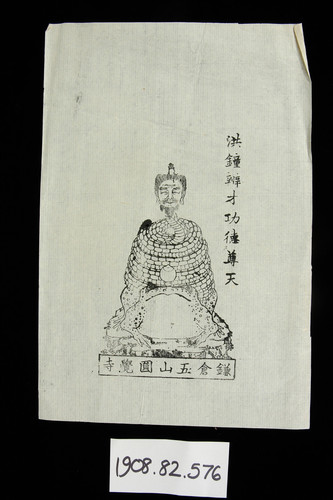 1908.82.576Print of Kosho, represented as a human-headed snake with toad's fore-legs, sitting behind a large toad or frog [SM 30/09/2008]1908.82.576
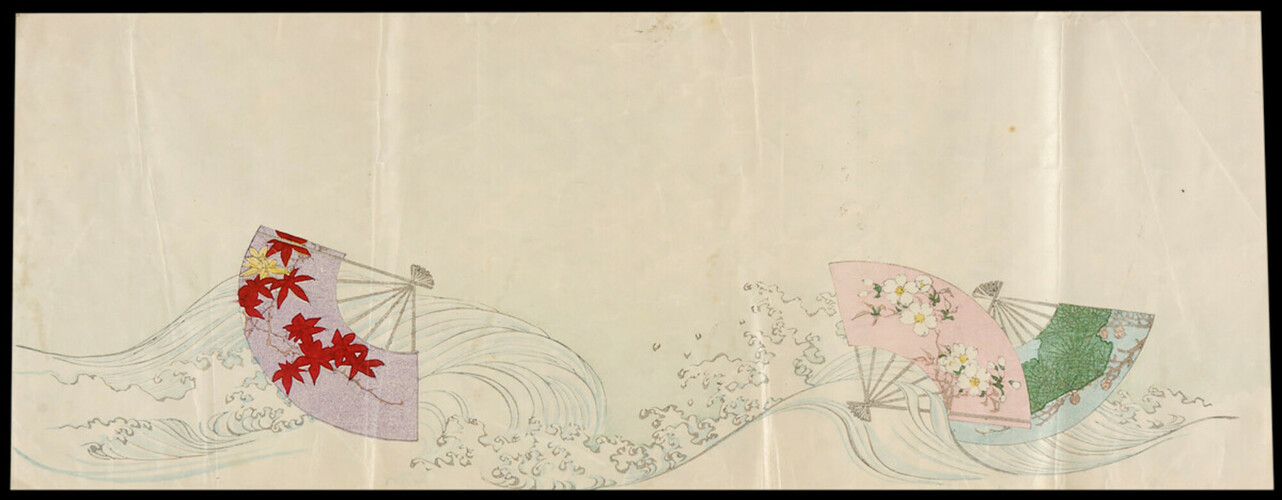 2004.18.14.3Part of a writing set: Sheet of writing paper on one side of which is three coloured fans against a background of waves. [JP 16/4/2004].2004.18.14.3
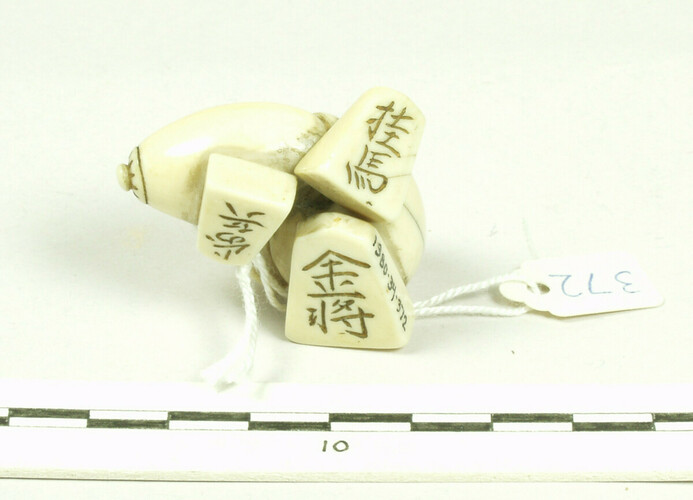 1980.34.372Netsuke toggle of a gourd with four chessmen [L.Ph 'DCF 2004-2006 What's Upstairs?' 5/4/2005]1980.34.372
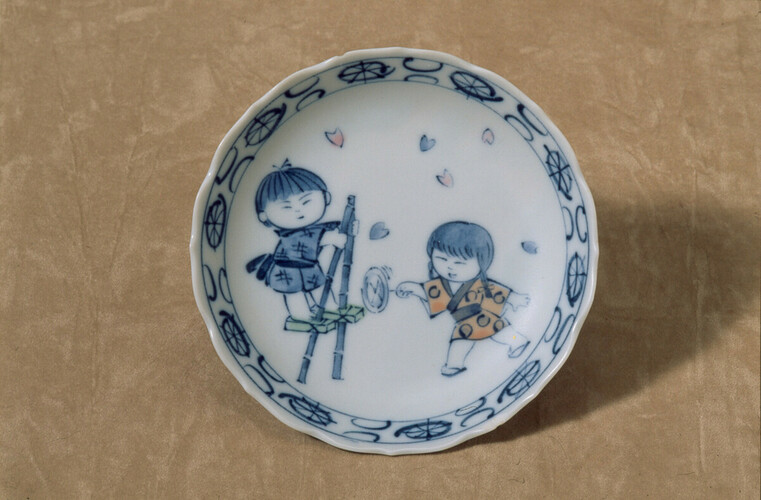 1996.17.227Set of four small porcelain dishes. Painted with a scene of a boy on stilts (note Japanese variety) and a small girl with a windmill toy, in underglaze blue, the girl's kimono painted in pink. The makers mark is on the base of the dish within the foot in Kanji. [ASh [OPS move] 01/03/2016]1996.17.227