
- Collection type
- Object
- Description
- Red ware pottery vessel, flat base with a rounded body, short flared neck and rim. [ASh [OPS move] 04/04/2016]
- Long description
- Red ware pottery vessel, flat base with a rounded body, short flared neck and rim. Decorated on a white ground with plant and flower motifs in black and red paint on the exterior. [ASh [OPS move] 04/04/2016]
- Date / Period
- Date made: Circa 1920-1923?, uncertain
- Date collected
- ?1922
- Acquisition information
- Donated: 1923
- Dimensions
- Height: max 310 mm, Diameter: max 295 mm
- Object numbers
- Accession number: 1923.88.80
- Research and responses
According to Thomas Myers, 1997 (Curator of Anthropology, University of Nebraska State Museum) it is difficult to decide what tribe this group of pots were made by (1923.88.74 - 85). Indeed it may have been neither the Iquitos or the Yurimaguas. It is strange that the accession book provenance gives both Iquitos and Yurimaguas as possible makers as these groups are culturally very different. The Yurimaguas people are a mainstream Amazon group moved to the town of Yurimagua by the Jesuits in about 1680. One would expect the Yurimaguas, as a mainstream group, to have much more control over the execution of their pottery than these pieces demonstrate. The Iquitos lived on a tributary North of the Amazon (the Nanay). The decoration on the pots has many similarities to the Solimoes style made by the Cocoma and Omagua peoples. However the designs on these particluar pots appear to have been executed by people who do not fully understand the style. It is possible that these pots were made by a tribe who had had some contact with the Cocma or Omagua peoples in a mission. There are clear indications of European influence, particularly in the floral designs and the shape of the jug (1923.11.85). The use of white slip and the form of the pots are indicative of mainstream Amazon group influence.
Further items to explore
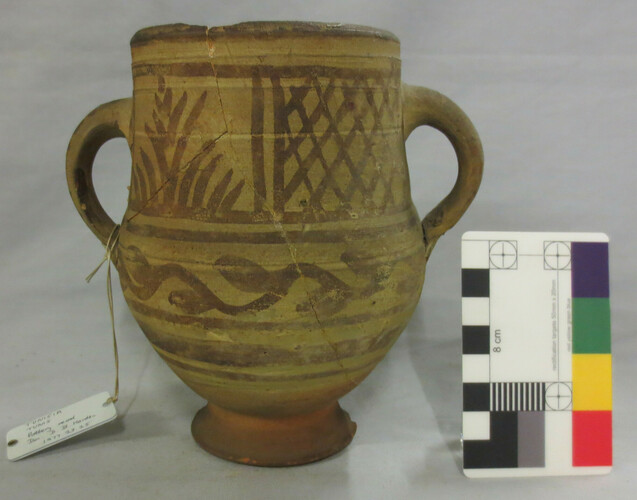 1977.23.25Pottery vessel with narrow foot and 2 handles. [ASh [OPS move] 05/02/2016]1977.23.25
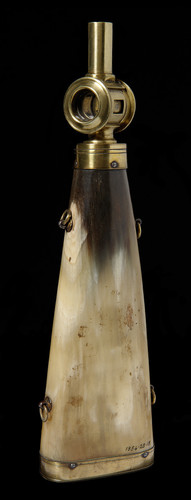 1884.28.18Powder-horn, straight, with brass-mounted nozzle with glass chamber. [El.B 17/10/2007]1884.28.18
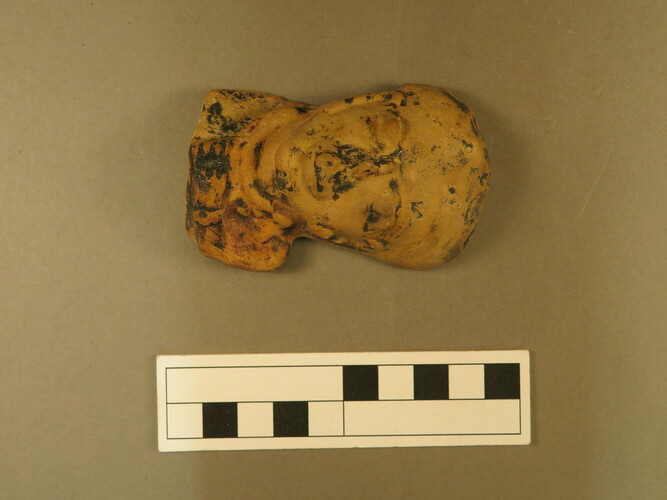 1920.81.411Ceramic head; fragment of a larger object1920.81.411
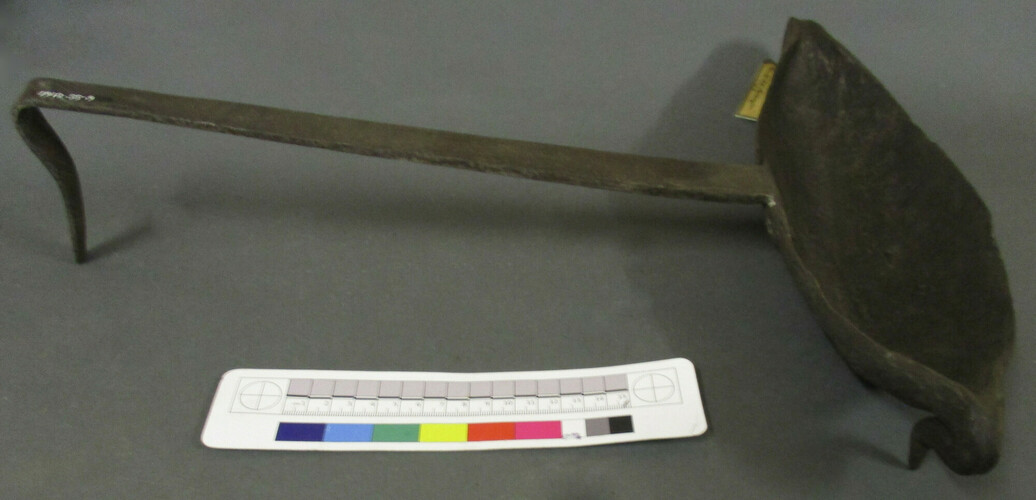 1912.55.9Iron fat bowl for dipping rush-lights. The bowl is lenticular in shape and has two curled extensions, one extending from either end of the bowl. Extending from the middle of one side of the bowl is a flat handle which is bent at a right angle towards the end, acting as a rest for the bowl. [SB [OPS Move] 12/5/2017]1912.55.9
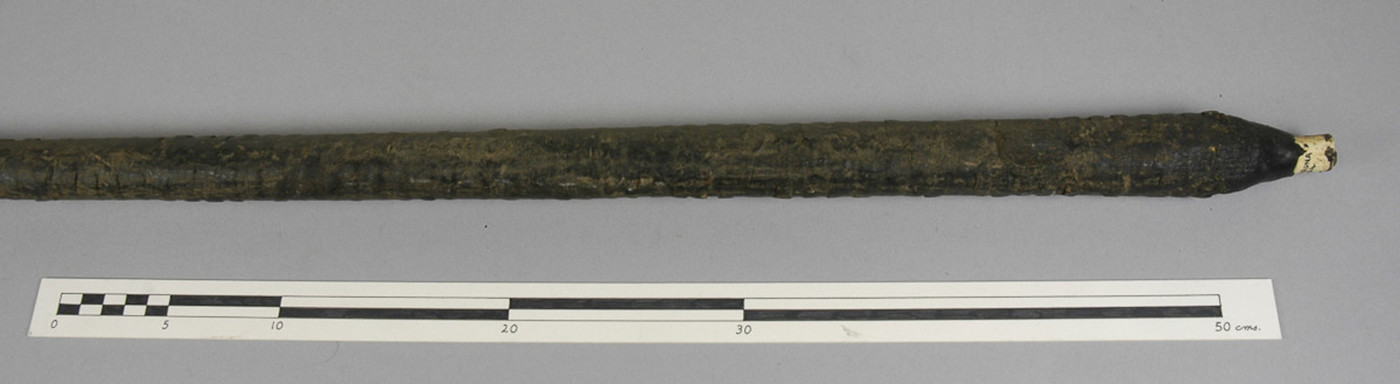 1923.88.1Blowpipe of wood, made of two halves bound together with bark strips. The whole pipe is covered with gum. The mouthpiece is of bone, and there is a small lump of gum near it to serve as a backsight. [El.B 2/5/2007]1923.88.1
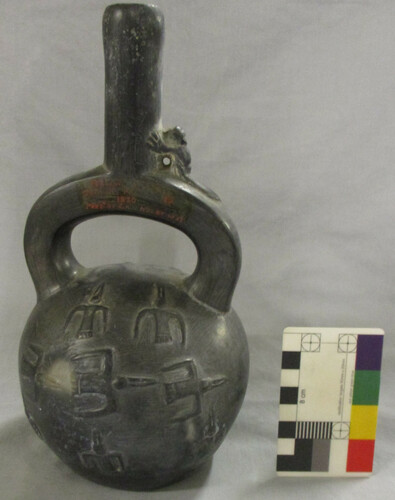 1895.31.1Blackware stirrup spout vessel with relief bird motifs on body & modelled monkey at base of spout. [MOBB [OPS move] 16/03/2016]1895.31.1
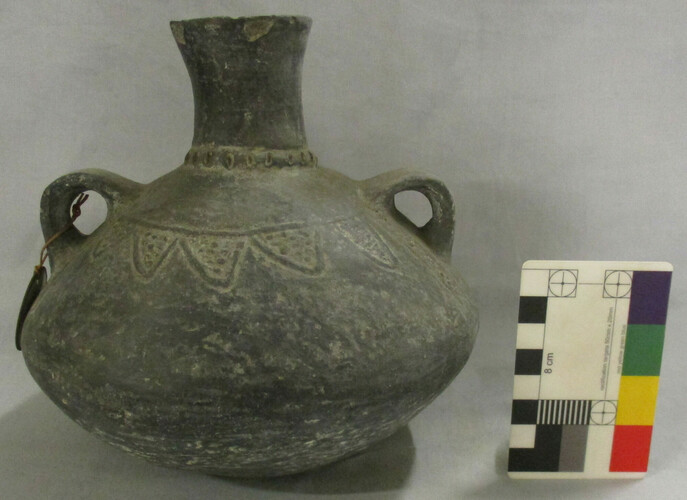 1946.10.32Pottery vessel of black ware with loop handles and slightly flared (chipped) rim. [MOBB [OPS move] 22/03/2016]1946.10.32
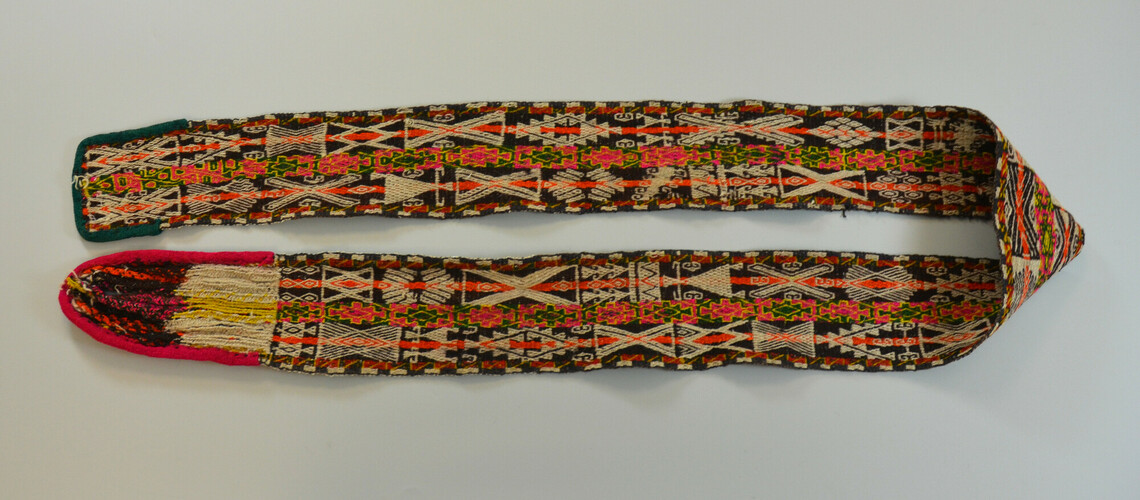 1997.2.53Multicoloured belt1997.2.53