
- Collection type
- Object
- Description
- Beaded hide skirt with hide tassles.
- Geographical reference
- Arusha Mbulu
- Cultural groups
- Iraqw
- Date / Period
- Date made: Before 1940
- Date collected
- By 1940
- Acquisition information
- Loaned: 1940
- Materials and processes
- Material Animal Leather Skin, Material Bead, Material Iron Metal, Process Beadwork, Process Embroidered, Process Stitched
- Object numbers
- Accession number: 1940.7.0114
- Research and responses
For discussion of Iraqw skirts, bibliography, and illustration of a comparable example in the collection of the Commonwealth Institute, London, see '2.41' (entry on Iraqw skirt), by Jeremy Coote, in Africa: The Art of a Continent, edited by Tom Phillips (London: Royal Academy, 1995), p. 156; also in German in Afrika: Die Kunst eines Kontinents (Berlin: Zeitgeist Gesellschaft, 1996), p. 156; revised as '20: Skirt' in Africa: The Art of a Continent - 100 Works of Power and Beauty (New York: Solomon R. Guggenheim Museum, 1996), pp. 65-7. [JC 11 2 1998]
Related Documents File - Appears on undated typed list: "One M'Bulu skirt (N. Tanganyka Tribe) worn by Morumbo". List is annotated by hand on back: "List of Curios" and "Far from complete". Handwritten note: 'Far from complete'. See RDF 1940.7.0114 for correspondence between Margaret Carey and Jeremy Coote regarding the Royal Academy publication and Coote's request for conservation information regarding the coating of the cupreous rings with what is identified to be 'fat the Iraqw used for rubbing into their skin' which Carey recommends removing in order to prolong the life of the skirt. [GI 17/12/2001]
- Associated publications
- Illustrated in black-and-white as Figure 4 on page 124 of Volume 1 of The Encyclopedia of Africa South of the Sahara, edited by John Middleton (New York: Charles Scribner's Sons, 1997), where it illustrates the entry 'Art: Eastern Africa', by Jeremy Coote (pp. 122-32). See also brief discussion of Iraqw skirts on p. 123. [JC 11 2 1998] Illustrated in black-and-white as Figure 3 on page 159 of Volume 1 of New Encyclopedia of Africa, edited by John Middleton and Joseph C. Miller (Detroit etc.: Thomson Gale /Charles Scribner's Sons, 2008), where it illustrates the entry 'Art, Regional Styles: Eastern Africa', by Jeremy Coote (pp. 156-166); see also brief discussion of Iraqw skirts on the same page. [JC 9 11 2007]
Further items to explore
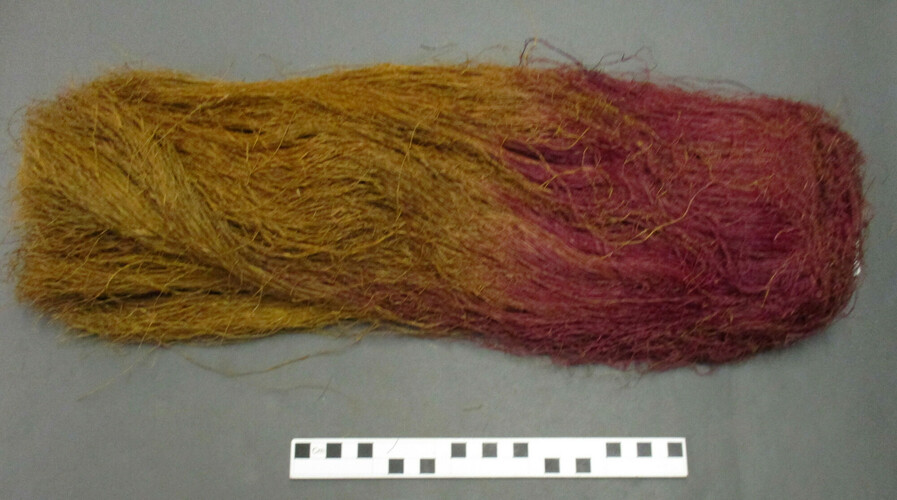 1987.1.1Skirt made from split plant fibre, the top half of the fringing is dyed dark pink. [FB 19/02/2015]1987.1.1
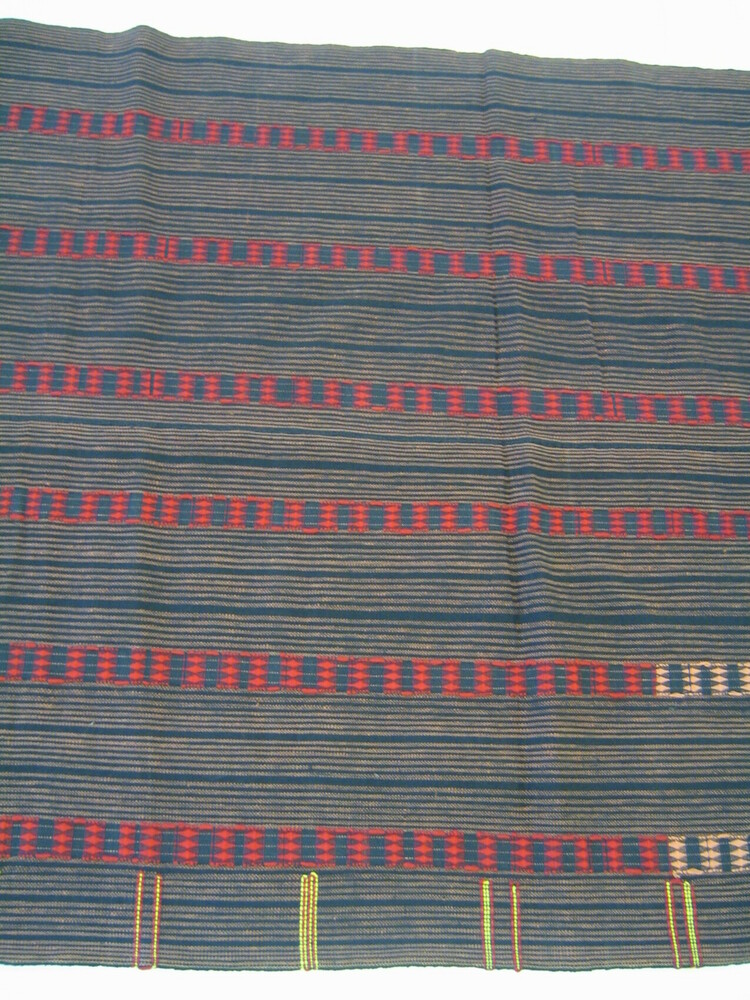 1934.82.128Black cloth in two panels, with orange stripes and a diamond pattern embroidered in red wool. [ZM 10/5/2005]1934.82.128
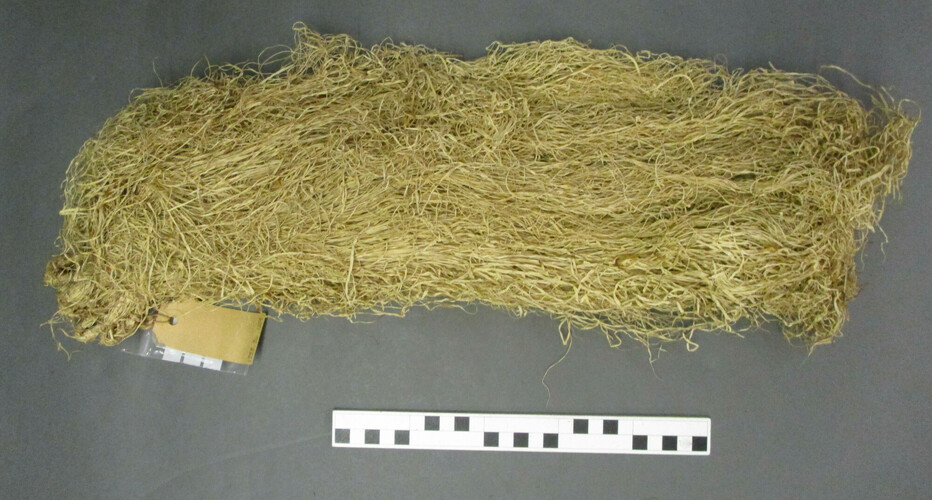 1938.36.1207Five bunches of shredded plant fibre, slightly frizzy, folded over near top and stitched. These bunches when pushed over a barkcloth or vine belt form a skirt.1938.36.1207
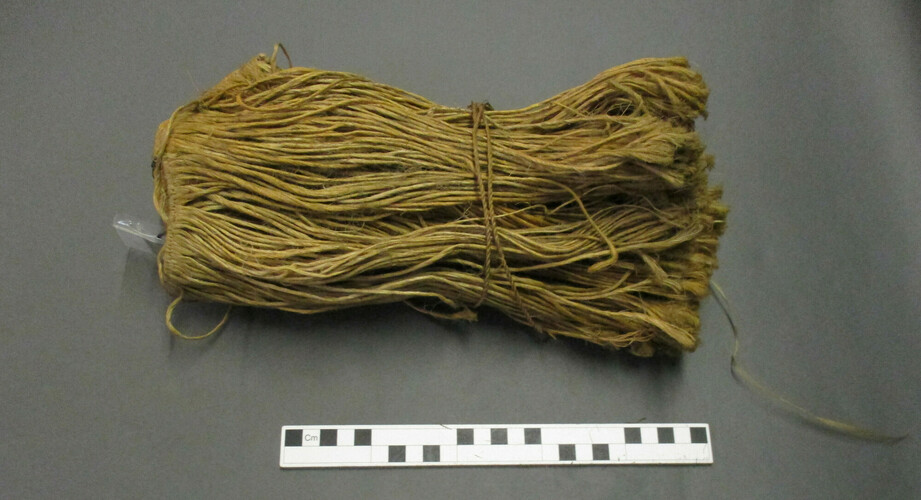 1884.87.12Woman's fringed skirt. The fringe is made from twisted plant fibre string tied to plant fibre waist band. The skirt is stored rolled. [MOBB [OPS move] 25/1/2017]1884.87.12
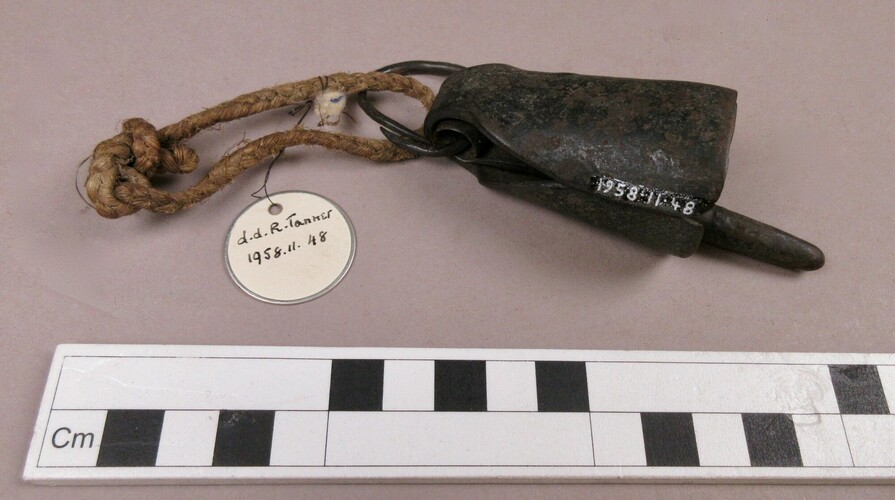 1958.11.48Goat bell.1958.11.48
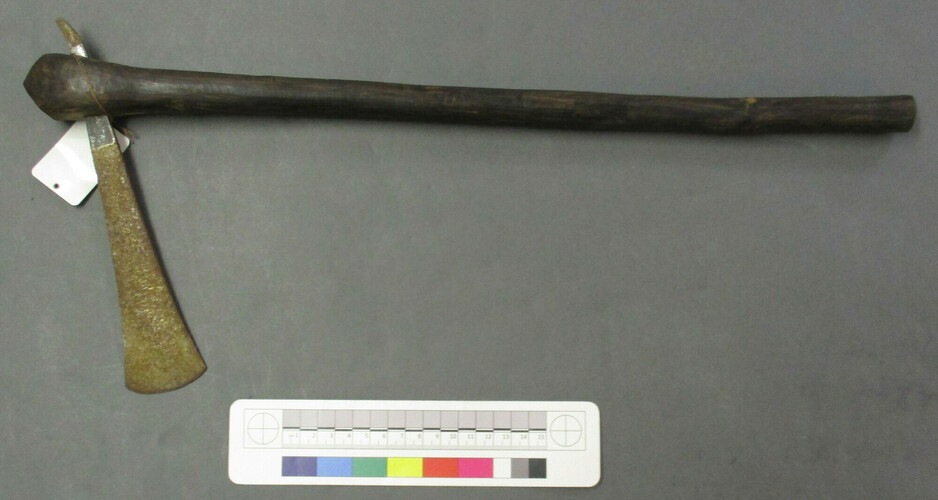 1971.34.21Ceremonial axe with iron blade socketed to carved wooden axe. The blade has incised lines along the edges and shows signs of corrosion on each side of the blade. [FB 10/07/2014]1971.34.21
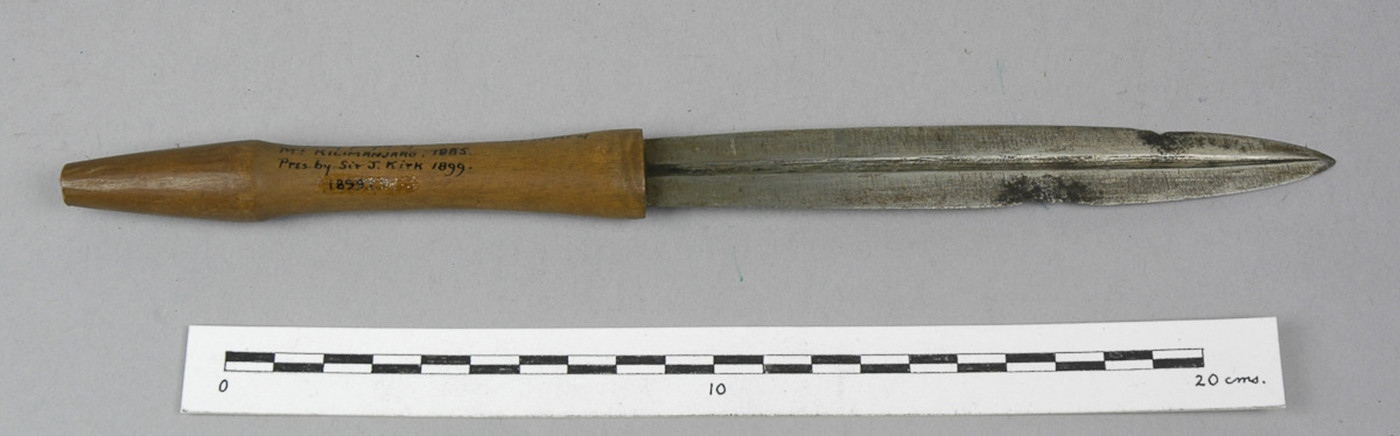 1899.1.1Knife with two edged tapering blade with a central groove on both surfaces and a wooden handle. [SM 27/06/2007]1899.1.1
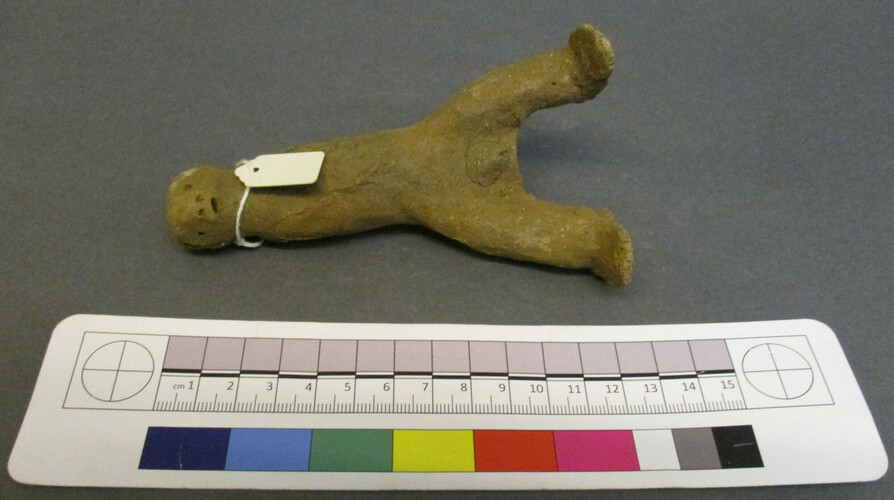 1958.11.1.17Clay Mkaramo figurine. Anthropomorphic figure with a cylindrical body, that flares at the base to represent buttocks. Stands on two cylindrical legs with flat and wide oval shaped feet. Both ears and arms are missing. Small incisions to represent eyes, mouth and nostrils. [IL [OPS Move] 19/4/2017]1958.11.1.17