
- Collection type
- Object
- Description
- Woman's headband of hair string wound around a core and covered with red ochre; pendant bandicoot tail-tip.
- Long description
- From conservation card by Emma Hook 03/10/1996: Twisted strings of hair bound by a further string. Some then coated with mud/pigment. A tassel of white and back hair is tied onto the cord with no mud.
- Geographical reference
- Cultural groups
- Kaytetye
- Person
- Field collector Francis James Gillen
- Field collector Walter Baldwin Spencer
- Field collector Erlikilyika
- PRM source Walter Baldwin Spencer
- Date / Period
- Date made: Before 1902
- Date collected
- 1901 - 1902
- Acquisition information
- Donated: 1903
- Materials and processes
- Material Animal Hair, Material Ochre, Material String, Material Animal Tail, Material Animal Sinew, Process Painted, Process Bound, Process Twisted, Process Tied
- Dimensions
- Length: max 310 mm doubled
- Object numbers
- Accession number: 1903.39.3.1 Other numbers: Spencer number 3
- Research and responses
This object was seen by Philip Jones from the South Australian Museum during a visit from 3 to 6 May 2011. The following comments were recorded: The possum fibre string is wrapped around a flexible core. Animal sinew (from kangaroo tail or emu leg) is used to attach tail pendant to necklace. The tail is from a rabbit bandicoote. Worn in daily life by women. [MJD 16/05/2011]
This headband was collected during an expedition of Central Australia led by Walter Baldwin Spencer and Francis Gillen between 1901 and 1902. However, it should be noted that accompanying them was an Aboriginal man called Erlikilyika. He was 'hired' (receiving no monetary payment) to run their campsites, but actually undertook some of the ethnographic work himself. He could speak Arrernte (his native language), Kaytej (another Aboriginal language), and English. In their personal field-diaries, Spencer and Gillen note that they took days off work, leaving Erlikilyika with "entire charge of the ethnological branch", where he spoke with and recorded the complex beliefs and customs of Aboriginal communities that were not his own (the Kaytetye group in particular). Unfortunately, there is no way of knowing if Erlikilyika collected any of these objects himself but we know that he played a vital role in documenting their meaning and significance, and should be credited as a possible field collector. This information was provided by Fionnuala Bradbury, a Master's student in Archaeology at Newcastle University, as part of her thesis entitled "Erlikilyika and Walter Baldwin Spencer: Indigenous Informants, Ethnographic Analogy, and Archaeological Interpretation". There is an abridged version of the thesis in RDF.
- Associated publications
- "These tail-tips are called Alpita and are a very favourite form of ornament amongst men and women alike, women usually wear them suspended over the ears". S&G 1899: 573 [AP 13/1/2000]
Search terms: Ornament, Head Ornament
Further items to explore
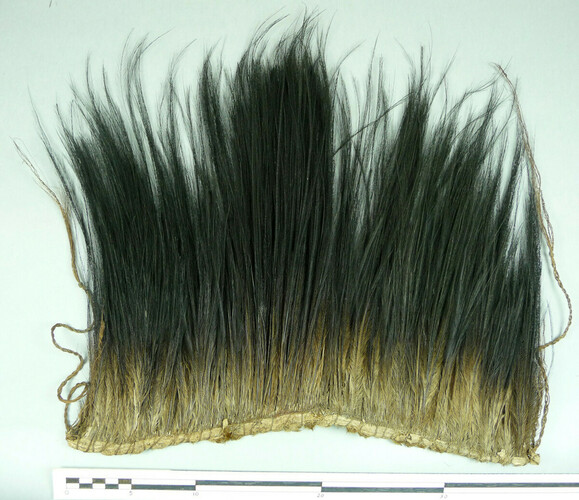 2009.89.1Head ornament of brown cassowary feathers bound to a length of plant fibre with ties of twisted string at either end. [MJD 23/07/2009]2009.89.1
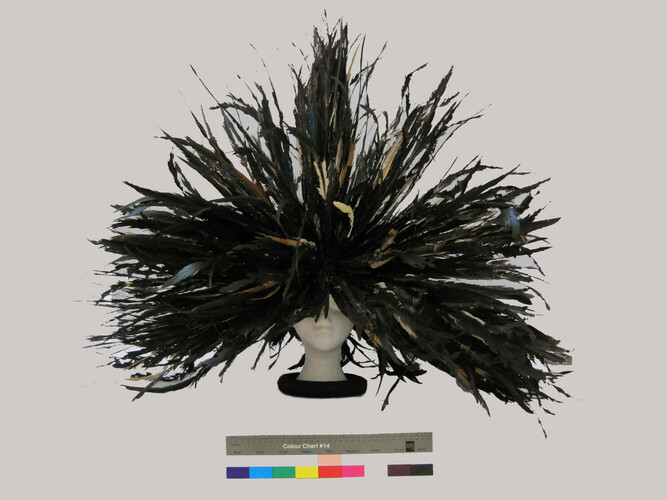 1942.13.439Headdress1942.13.439
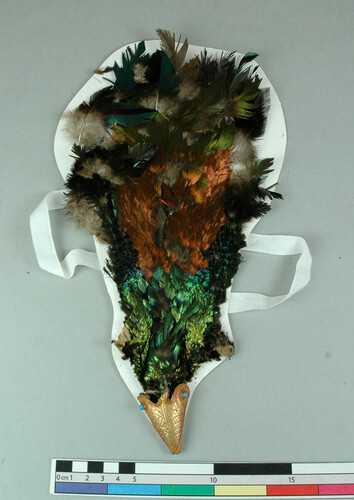 1981.19.6Bird feather hat ornament worn by men of rank. [MJD DDF Body Arts Project 2010/2011 16/08/2010]1981.19.6
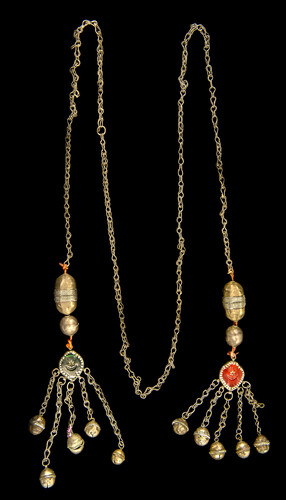 2018.37.50.2Head-dress side piece decoration formed of a silver metal linked chain, with an amulet of a glass bead and bells at either end. Worn with face veil 2018.37.50 .1. [AF [EFCF project] 30/10/2018]2018.37.50.2
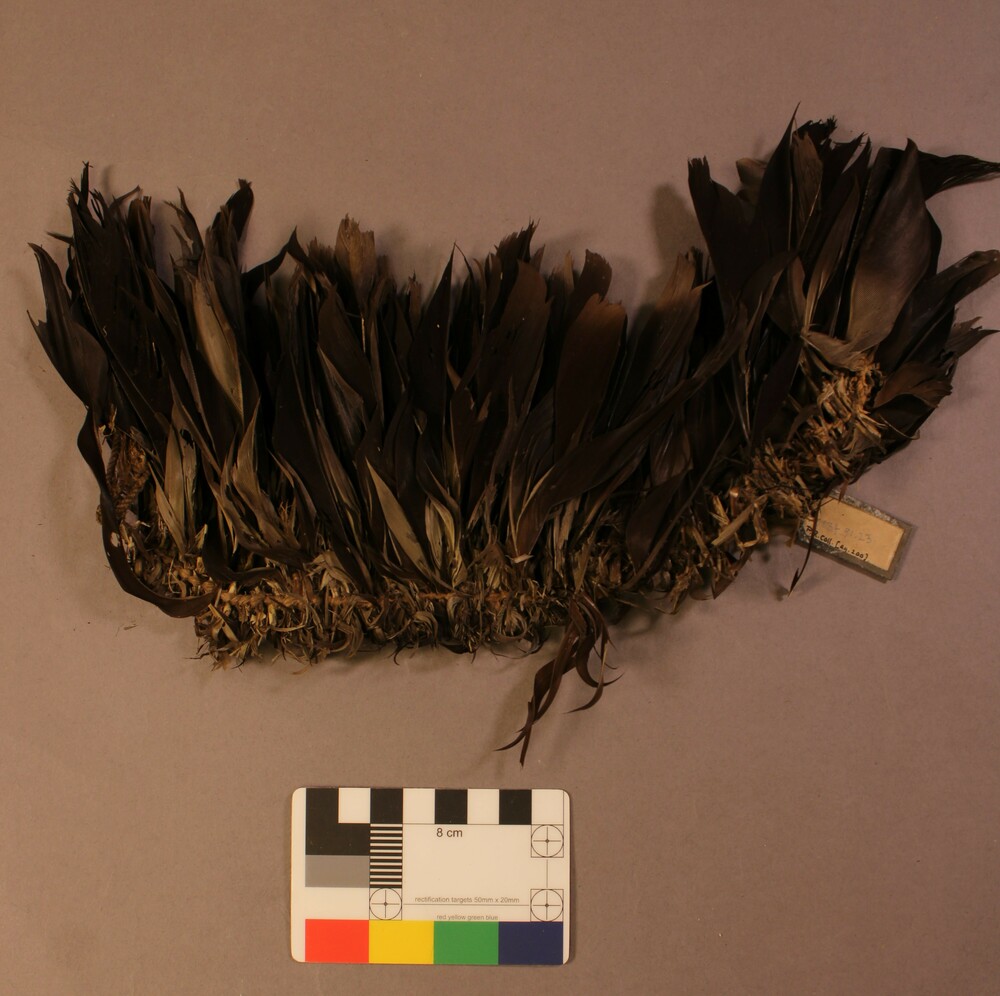 1884.91.23Feather headdress (?split Eagle hawk feathers)1884.91.23
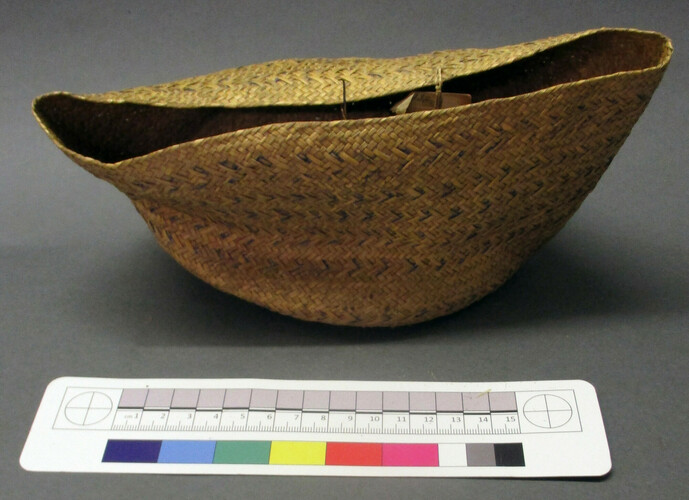 1889.34.47Basket with twill woven sides and chequer woven base. Blue dyed design on sides. [MJD 15/4/2010]1889.34.47
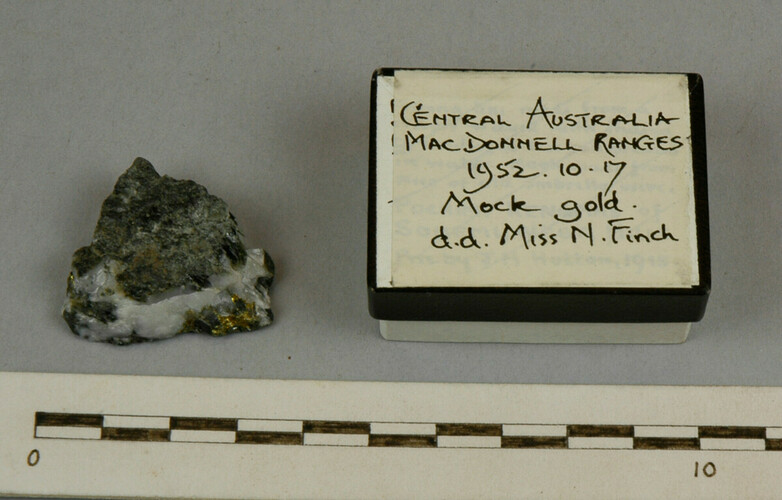 1952.10.17Specimen of "mock gold". [SM 14/11/2007]1952.10.17
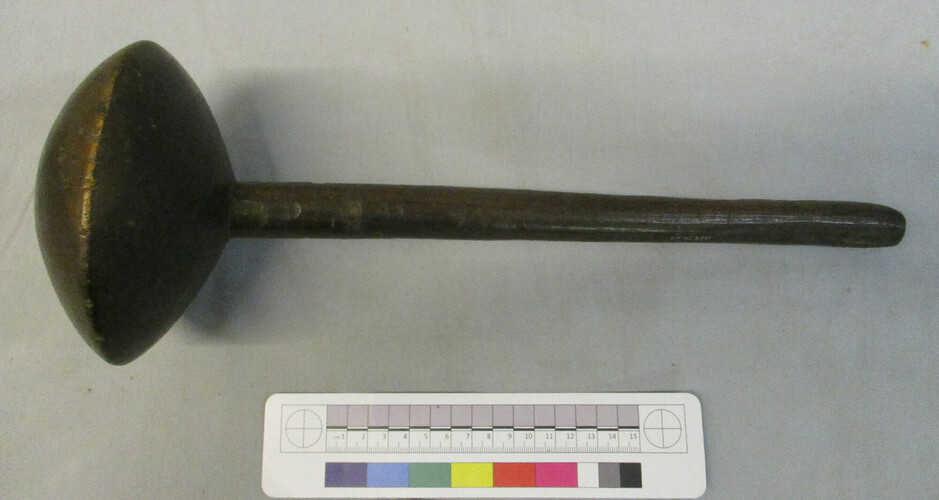 1889.34.69Wooden club with a cylindrical staff and a wide rounded end, slightly lenticular. [NC 19/5/2016]1889.34.69