
- Collection type
- Object
- Description
- Bone gouge, possibly kangaroo, split in half length ways and shaped at one end.
- Cultural groups
- Arrernte
- Person
- Field collector Francis James Gillen
- Field collector Walter Baldwin Spencer
- PRM source Walter Baldwin Spencer
- Date / Period
- Date made: Before 1902
- Date collected
- 1901 - 1902
- Acquisition information
- Donated: 1903
- Dimensions
- Length: max 168 mm, Width 28 mm
- Object numbers
- Accession number: 1903.39.36 Other numbers: Spencer number 19
- Research and responses
S&G 1904: 676 'Gouges are made by splitting a strong bone, such as the femur of a kangaroo, and then grinding down one or both ends. In this way a very efficient tool is secured. They vary a good deal in size, the longest in our possession measuring 10 inches in length ... a second one measures 6 1/4 inches in length ...'. [AP 13/1/2000]
This object was collected during an expedition of Central Australia led by Walter Baldwin Spencer and Francis Gillen between 1901 and 1902. However, it should be noted that accompanying them was an Aboriginal man called Erlikilyika. He was 'hired' (receiving no monetary payment) to run their campsites, but actually undertook some of the ethnographic work himself. He could speak Arrernte (his native language), Kaytej (another Aboriginal language), and English. In their personal field-diaries, Spencer and Gillen note that they took days off work, leaving Erlikilyika with "entire charge of the ethnological branch", where he spoke with and recorded the complex beliefs and customs of Aboriginal communities that were not his own (the Kaytetye group in particular). Unfortunately, there is no way of knowing if Erlikilyika collected any of these objects himself but we know that he played a vital role in documenting their meaning and significance, and should therefore be credited for his valuable contributions to the expedition. This information was provided by Fionnuala Bradbury, a Master's student in Archaeology at Newcastle University, as part of her thesis entitled "Erlikilyika and Walter Baldwin Spencer: Indigenous Informants, Ethnographic Analogy, and Archaeological Interpretation". There is an abridged version of the thesis in RDF.
Further items to explore
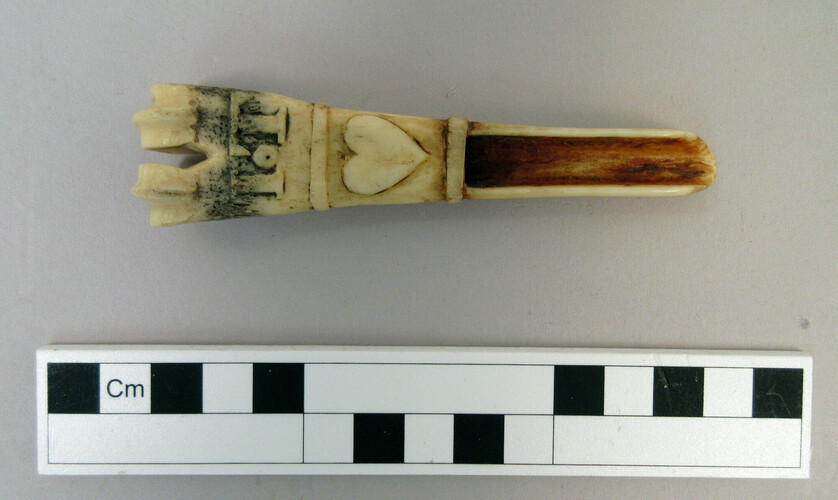 1898.57.2Apple-gouge. [DCF Court Team 30/1/2003]1898.57.2
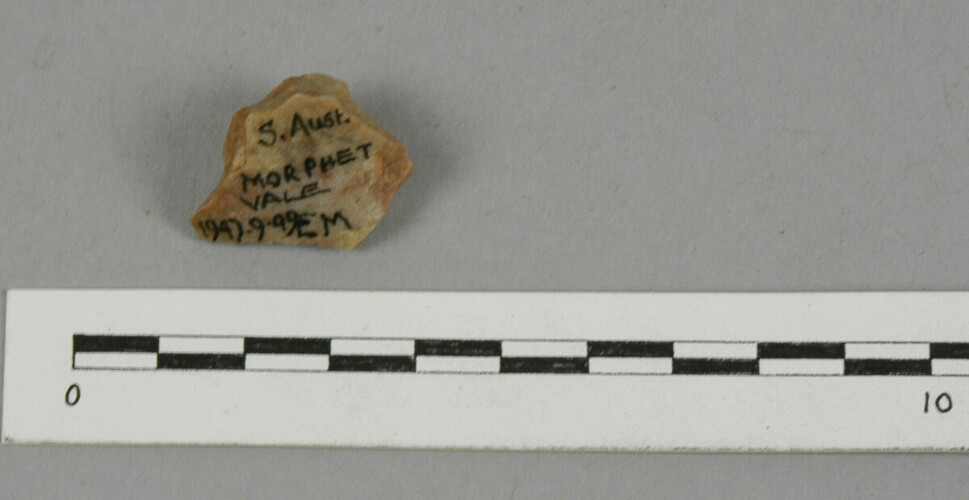 1947.9.49Small piercer of pinkish stone, the tip is broken off. [SM 08/08/2007]1947.9.49
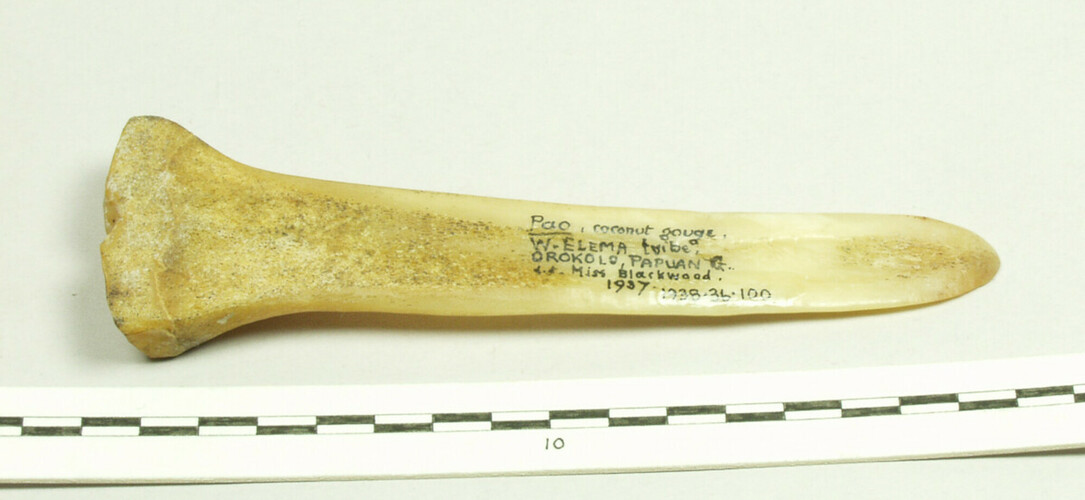 1938.36.100Bone gouge.1938.36.100
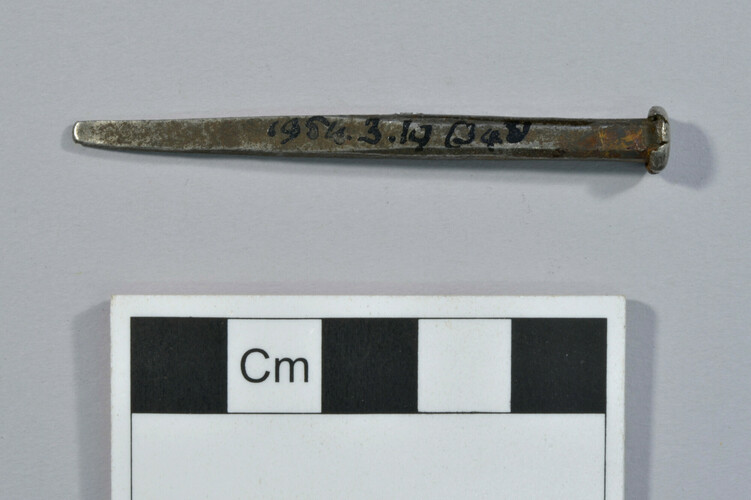 1954.3.19.34.3Small chisel or punch with shallow taper to a flat point for non ferrous metalworking. The end has been hammered. [SM (Verve) 09/09/2014]1954.3.19.34.3
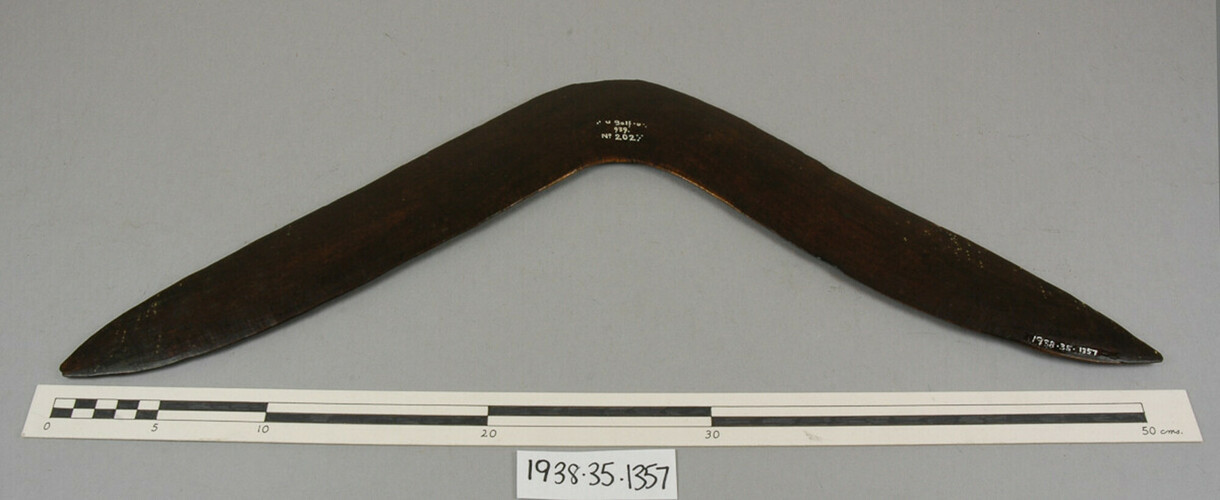 1938.35.1357Boomerang, wooden, steep curve, v-shaped. [AR 08/08/2007]1938.35.1357
 1900.55.146Slightly curved spear thrower with heavy ball butt painted bright red and white. The whole is coloured red and decorated with man, animal and dot ornamentation in red and white on hook side. Hook bound with ?fibre painted red and white, grip engraved with very fine lines on both sides.1900.55.146
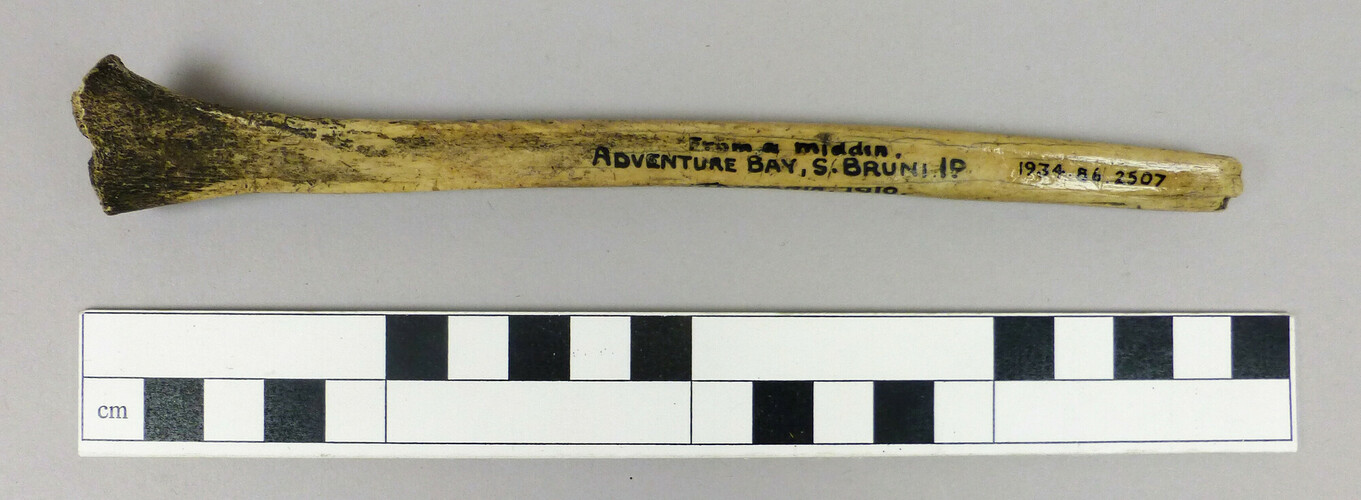 1934.86.2507Kangaroo (fibula) bone tool, one end is rounded and striated with use (probably a pressure flaker) [SM 13/11/2007]1934.86.2507
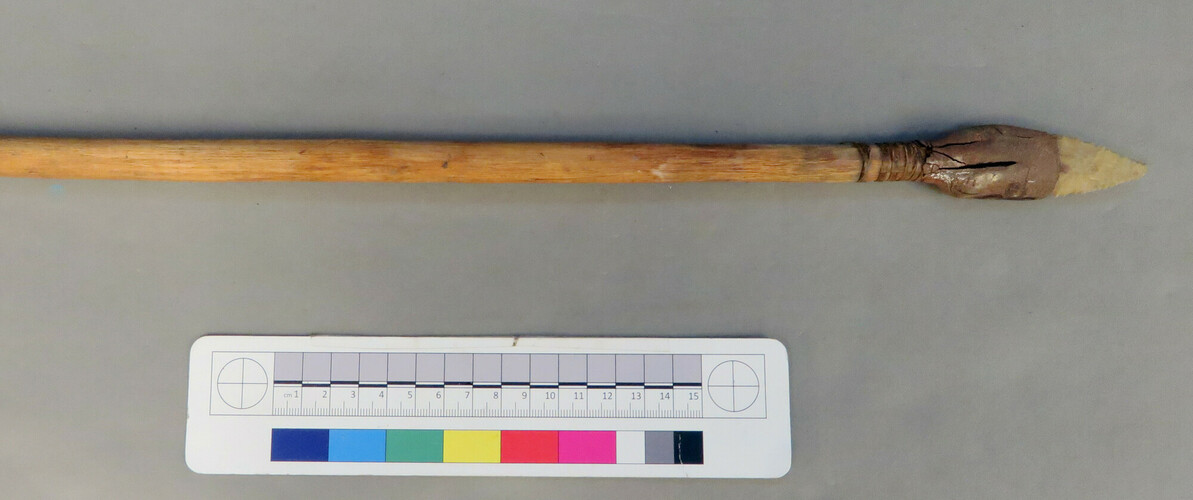 1932.53.55Very long spear with reed shaft, wooden foreshaft and small stone blade fixed with resin. [JMC [OPS move] 9/8/2018]1932.53.55