
- Collection type
- Object
- Description
- Brick of tea, divided into 8 sections, stamped 'M.P. & Co.' in cyrillic letters.
- Geographical reference
- Date / Period
- Date made: Before 1917
- Date collected
- By 1917
- Acquisition information
- Donated: 1917
- Materials and processes
- Material Tea Plant, Process Machine-made, Process Stamped
- Dimensions
- Length: max 246 mm, Width: max 187 mm
- Object numbers
- Accession number: 1917.28.13
- Research and responses
See Pitt Rivers Museum Manuscript Archive for Balfour Papers. [MdeA 25/6/99]
This tea brick was sampled by Melody Li, DPhil Archaeology candidate at the University of Oxford, on Thursday 14 August 2025. The sampling process is described as follows:
Analysis Method (Thermal Desorption Headspace GC-MS)
Non-invasive method to sample volatile organic compounds of museum objects to collect chemical information and ‘smell’ – relevant to DPhil topic exploring taste and smell of plants in archaeology using tea as a case study. DPhil centred around methods development; museum tea bricks provide useful analogy before moving onto archaeological samples of tea; museum tea bricks also help understand degradation of tea VOCS over time.
Sample Preparation
Viewed tea bricks, photographed, took notes. Each tea brick was placed inside an individual pre-labelled Nalophan sampling bag. Each bag was secured by folding multiple times then clipping with bulldog clips. Placed bags with tea brick inside cardboard box for storage in the PRM Conservation Laboratory, for 45 days, average room temperature 19-20℃.
Sample Collection
Removed tea bricks from cardboard box. Before sampling, tried to stretch out Nalophan bag so it had as much surface area as possible. Photographed brick inside the bag, then first checked each bag for the best location to insert the sampling probe. Connected Markes International stainless steel sorbent tubes to vacuum pump. Pierced bag at appropriate location, inserted sorbent tube into bag and sealed opening with masking tape, turned on vacuum pump for 20min. After 20 minutes removed tube, replaced cap, labelled and placed sample in collection box. After all samples collected, took them for chemical analysis.
Sample Analysis (Thermal Desorption GC-MS)
Volatile organic compounds collected in sorbent tube will be analysed using GC-MS. Sorbent Tubes will be placed in cold trap attached to GC-MS column, then heated quickly to release VOCs and injected into GC-MS column for analysis.
Search terms: Food and Drink, Currency, Specimen, Plant, Tea Accessory, Food
Further items to explore
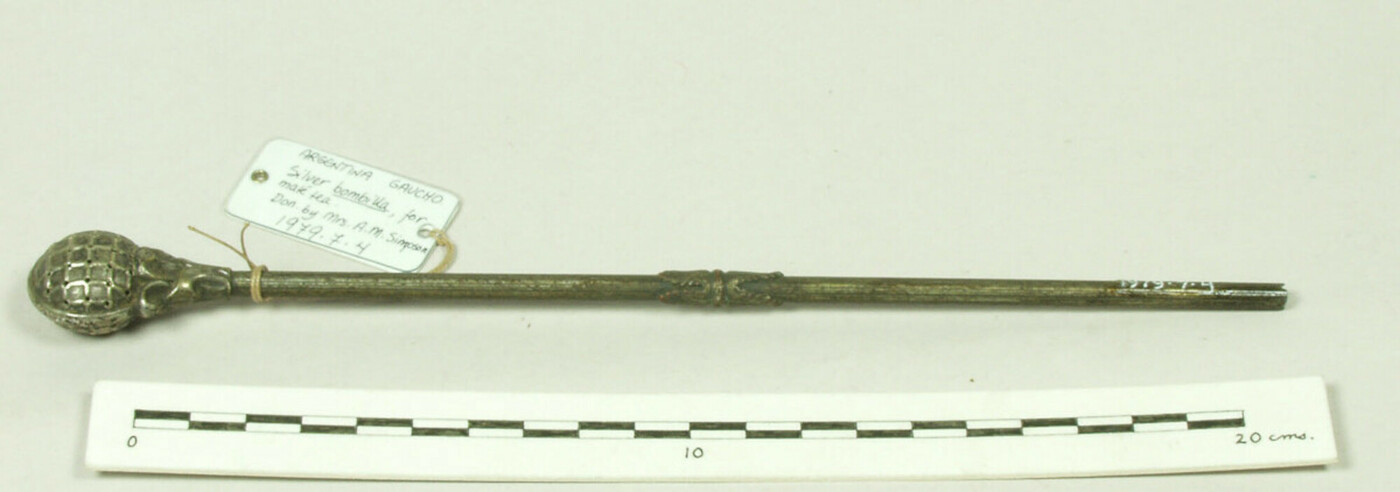 1979.7.4Silver bombilla, strainer used for drinking tea.1979.7.4
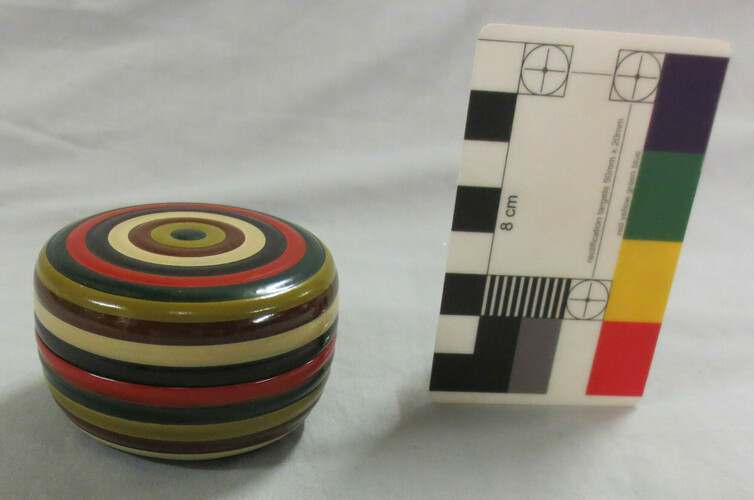 1996.17.41.13Black lacquered wood tea container. [ASh [OPS move] 03/03/2016]1996.17.41.13
 1996.17.214.3Tea cup. [part of a matching set of teapot and 7 cups, see 1996.17.214.1-.8] decorated with geometric and floral designs. Makers mark on the base within the foot in Kanji script. [FC 07/01/2011]1996.17.214.3
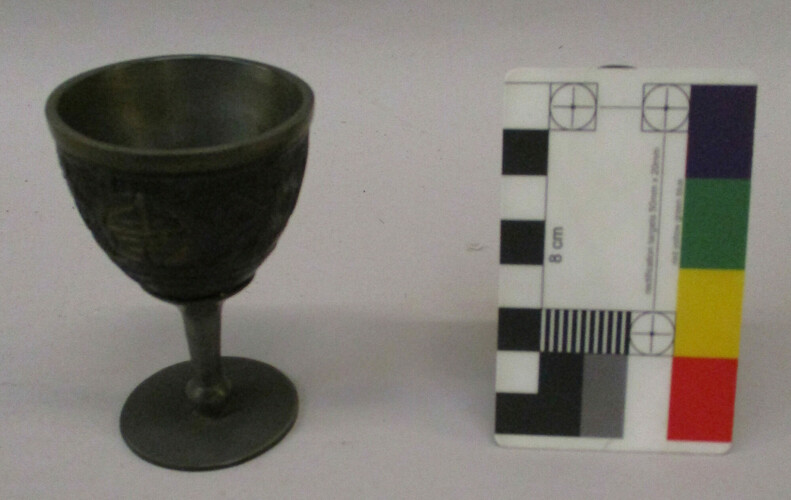 1968.5.78Wine cup of carved coconut shell lining, rim, stem and flat circular foot of metal. Decorated with engraved Chinese characters. [JC [OPS move] 13/7/2016]1968.5.78
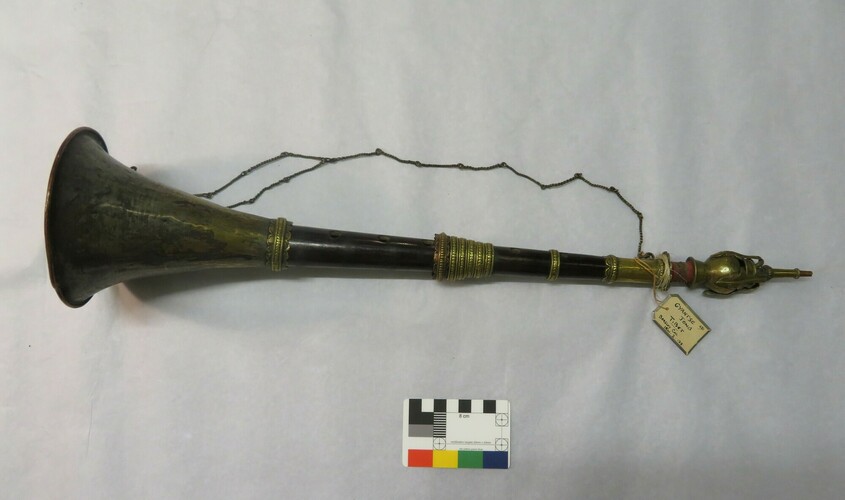 1941.2.138Oboe, lacking reed. Bound with brass and copper ring. Elaborate brass mouthpiece. (No. 531).1941.2.138
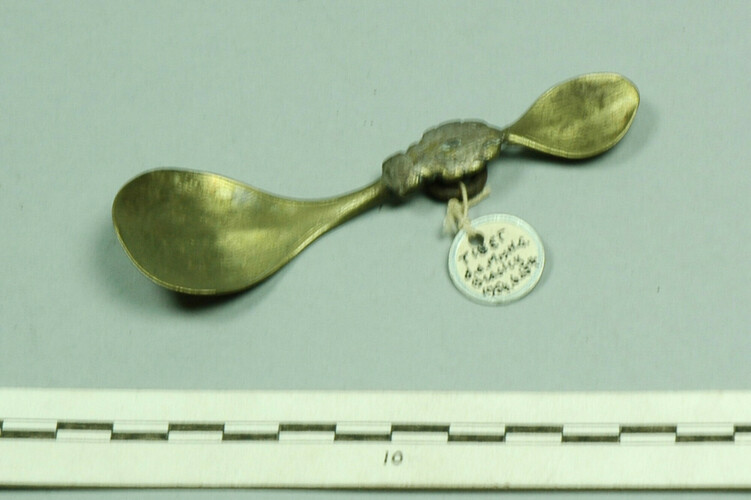 1954.6.154Small brass spoon, with a bowl at each end, and loop and ring for suspension between them. [EC 'DCF 2004-2006 What's Upstairs?' 31/3/2006]1954.6.154
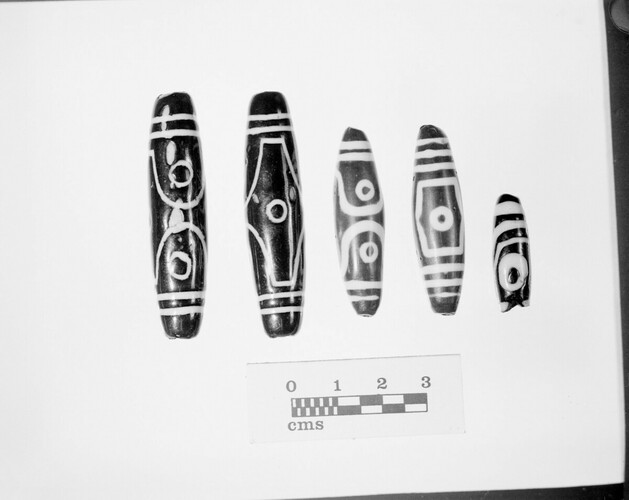 1986.30.5Imitation dZi bead, tubular in shape and made of black glass with patterns in white. Strung with others 1986.30.5 - .9 [L.Ph 'DCF 2004-2006 What's Upstairs?' 9/6/2005]1986.30.5
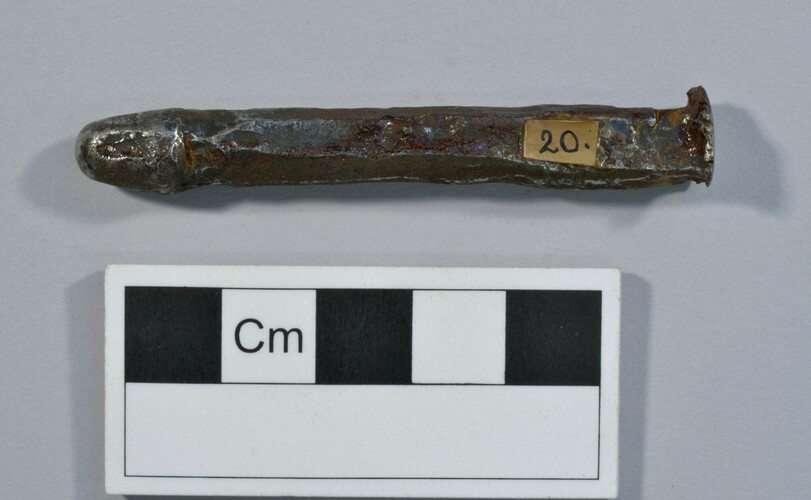 1954.3.19.20Blunt-nosed punch of metal. [MJD 12/03/2013]1954.3.19.20