
- Collection type
- Object
- Description
- Textile fragment
- Long description
- Square formed of split cane pieces arranged side by side, covered with folded and stitched white textile
- Person
- Field collector Frederick George Denham Bedford
- PRM source Ipswich Museum
- PRM source Patricia Margaret Maclaren Butler
- Date / Period
- Date made: 1000-1500?, uncertain Archaeological period: Paracas, uncertain
- Date collected
- Excavated 1879
- Acquisition information
- Purchased: 1966
- Materials and processes
- Material Textile, Material Cane Plant, Material Pigment, Process Painted, Process Woven
- Dimensions
- Width 160 mm, Length 155 mm
- Object numbers
- Accession number: 1966.1.1389 Other numbers: 1923.107
- Research and responses
Notes taken during a research visit by Ann Rowe (Textile Museum Washington) March 2012: Apparently plaques are common at Ancon. [JN 16/05/2012]
Similar to the Paracas 'mummy masks' illustrated by Anton (DOC). Reiss & Stubel (DOC) call these 'sepulchral tablets': they were found stuck into the ground near mummies, or attached to mummies. ( Ref. Anton, F. 1987. ANCIENT PERUVIAN TEXTILES, Figs. 41-42. Reiss, W. & A. Stubel, 1880-1887. THE NECROPOLIS OF ANCON, Pls. 15, 33.)
Textile is white cotton plain weave, apparently with single warps (Z2S) and paired wefts (singles). It is folded diagonally across the cane square. LM. See also 1966.1.1375. Ref. Reiss, W. & A. Stubel 1880-1887, THE NECROPOLIS OF ANCON. For full text of Accession Book introduction (from Collections XVA Ipswich Ethnography A) see entry for 1966.1.1 [OD 15/6/2001].
Search terms: Textile, Death, Religion, Figure, Grave Good, Religious Object, Bird Figure
Further items to explore
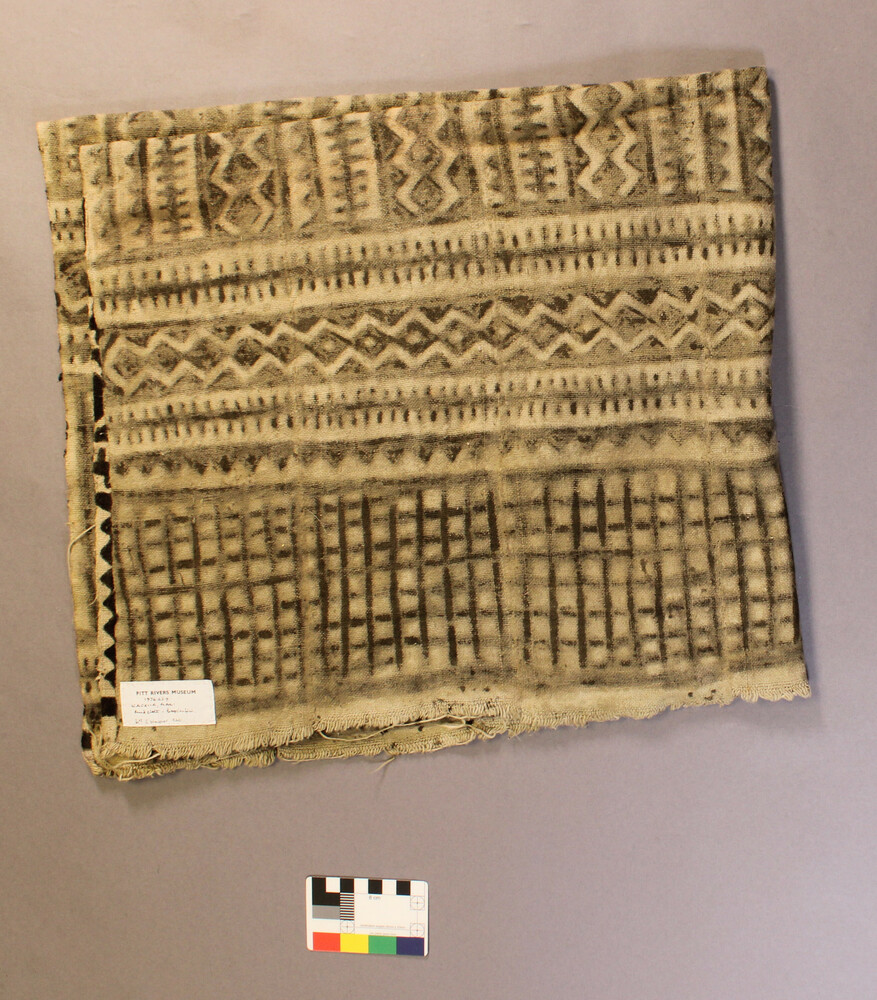 1974.23.9Bogolanfini, cotton cloth patterned with painted repeated geometric designs using iron-rich mud pigment.1974.23.9
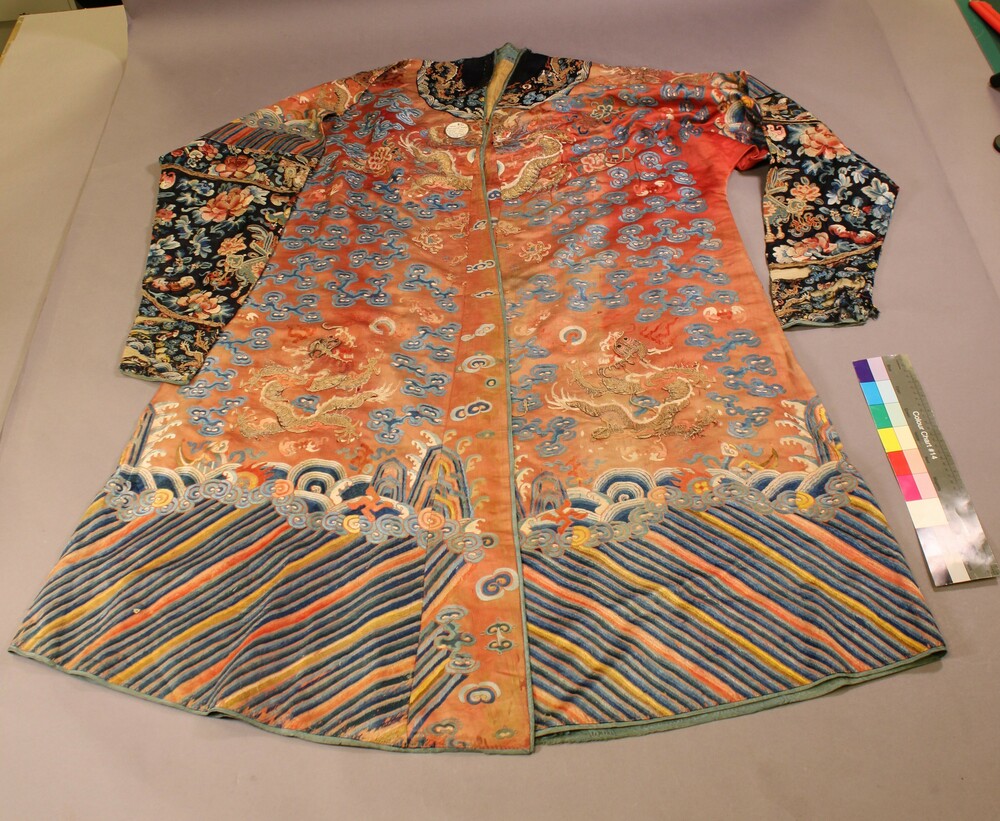 1944.5.4BEmbroidered coat.1944.5.4B
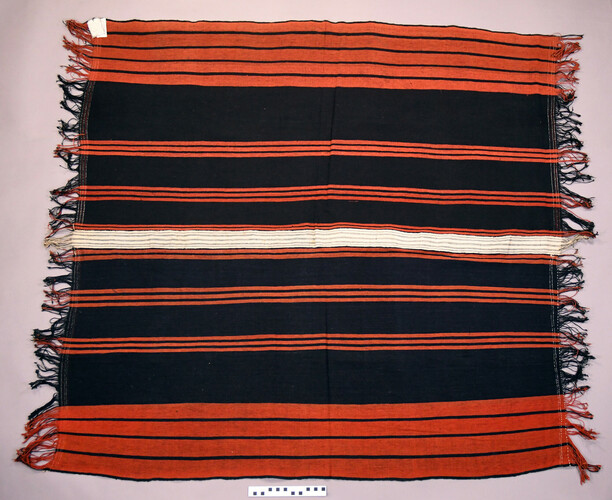 1928.69.253Red and black cloth with white band ornamented with thin black lines. [MJD 28/1/2010]1928.69.253
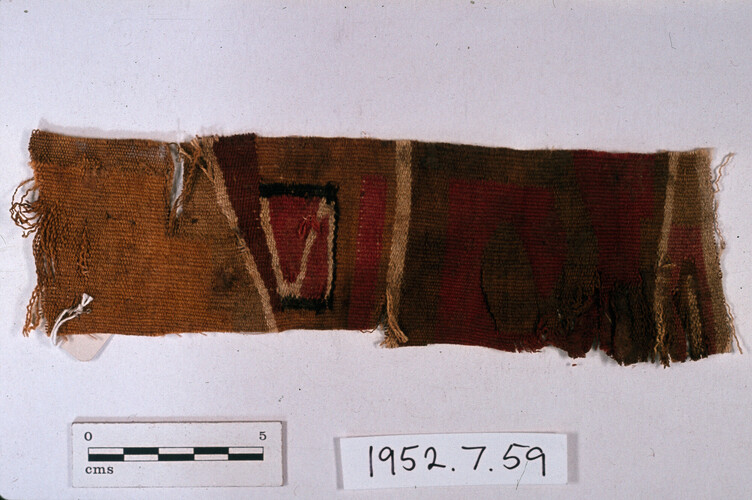 1952.7.59Textile fragment1952.7.59
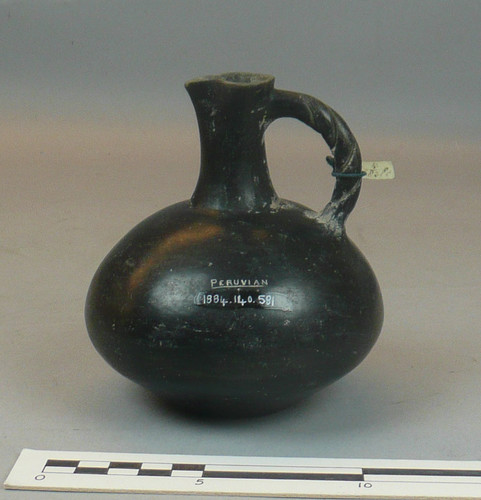 1884.140.581Ceramic ewer1884.140.581
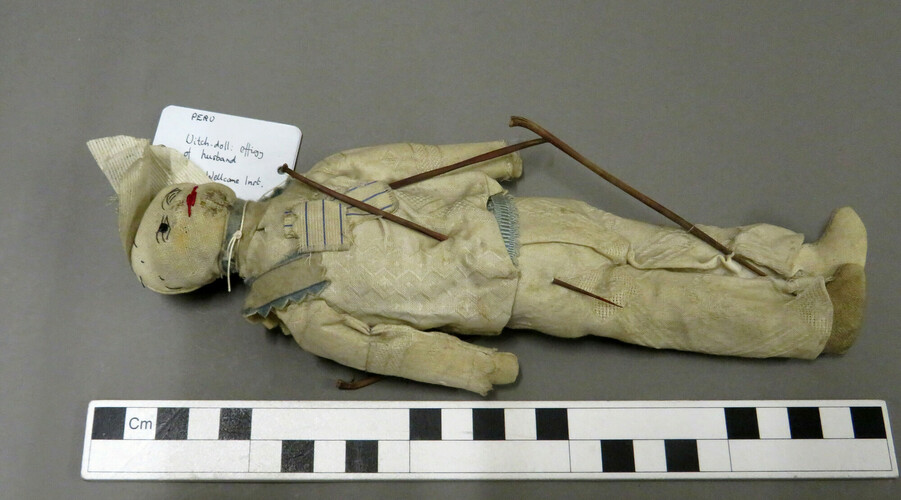 1985.49.187Male cloth doll with three thorns penetrating the main body. [ILL [OPS move] 5/10/2017]1985.49.187
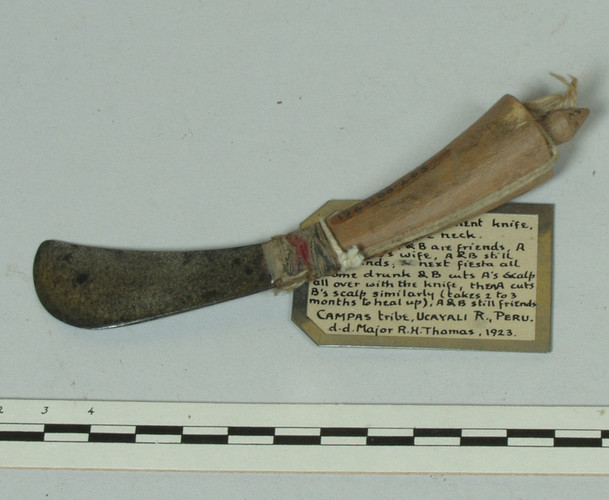 1923.88.263"Punishment" knife with a wooden handle and curved metal blade. The handle and blade are bound together with string.1923.88.263
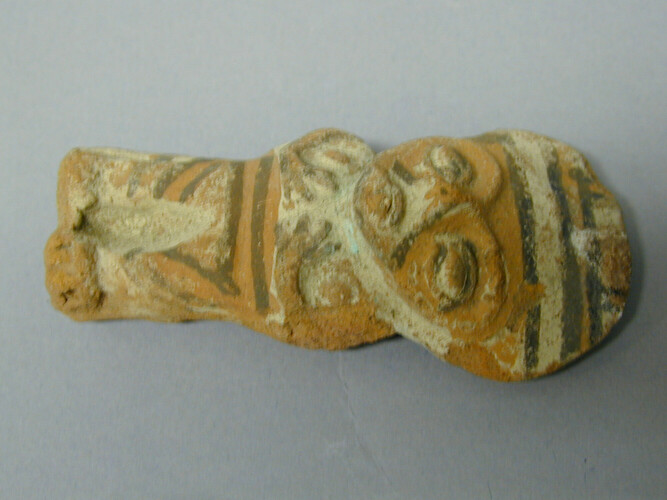 1902.82.7Ceramic figure1902.82.7