
- Collection type
- Object
- Description
- Smooth bore 'Brown Bess' long gun with a metal ramrod and piece of flint. For bayonet see [1884.27.38 .2].
- Long description
- Brown Bess, slightly modified stock cock adapted to flint-screw, no finger grip on trigger guard, no sight English Light Infantry George III and IV. For bayonet see [1884.27.38 .2].
- Geographical reference
- Cultural groups
- English
- Person
- Maker Unknown Maker
- Field collector Unknown Collector
- PRM source Augustus Henry Lane Fox Pitt Rivers founding collection
- Date / Period
- Date made: 1750-1850
- Date collected
- ?By 1862
- Acquisition information
- Donated: 1884
- Materials and processes
- Material Metal, Material Wood Plant, Material Brass Metal, Process Forged (Metal)
- Dimensions
- Length: max 1390 mm
- Object numbers
- Accession number: 1884.27.38.1 Other numbers: 37
- Research and responses
From 1851 Pitt Rivers was interested in the development of new firearms as a result of his work for the Schools of Musketry. This object was probably part of this work. [AP Leverhulme project on founding collection 1995-1998]
Related Documents File - Information about the Brown Bess provided by R Oliver including photographs of this type of weapon. 'The Brown Bess was the musket of the British army from about 1730-1835. It appeared in 8 different patterns. [followed by detailed information, nb there is no indication of the original source of this information][AP Leverhulme project on founding collection 1995-1998]
See http://en.wikipedia.org/wiki/Brown_bess: Brown Bess is a nickname of unknown origin for the British Army's Land Pattern Musket and its derivatives. This musket was used in the era of the expansion of the British Empire and acquired symbolic importance at least as significant as its physical importance. It was in use for over a hundred years with many incremental changes in its design. These versions include the Long Land Pattern, Short Land Pattern, India Pattern, New Land Pattern Musket, Sea Service Musket and others.
The Long Land Pattern musket and its derivatives, all 0.75 calibre flintlock muskets, were the standard long guns of the British Empire's land forces from 1722 until 1838 when they were superseded by a percussion cap rifled musket. At the time, the British Ordnance System did not have a policy of replacing functioning firearms in armories and the Brown Bess saw service until the middle of the nineteenth century. Some were still in service during the Indian rebellion of 1857 and some were sold to Mexico where troops used them during the Texas Revolution of 1836 and the Mexican-American War of 1846 to 1848. ... [AP 29/09/2006]
- Associated publications
- This object features in the Museum's audio guide produced in 2010. [HH 20/06/2010]
Search terms: Firearm Weapon, Firearm, Bayonet

Further items to explore
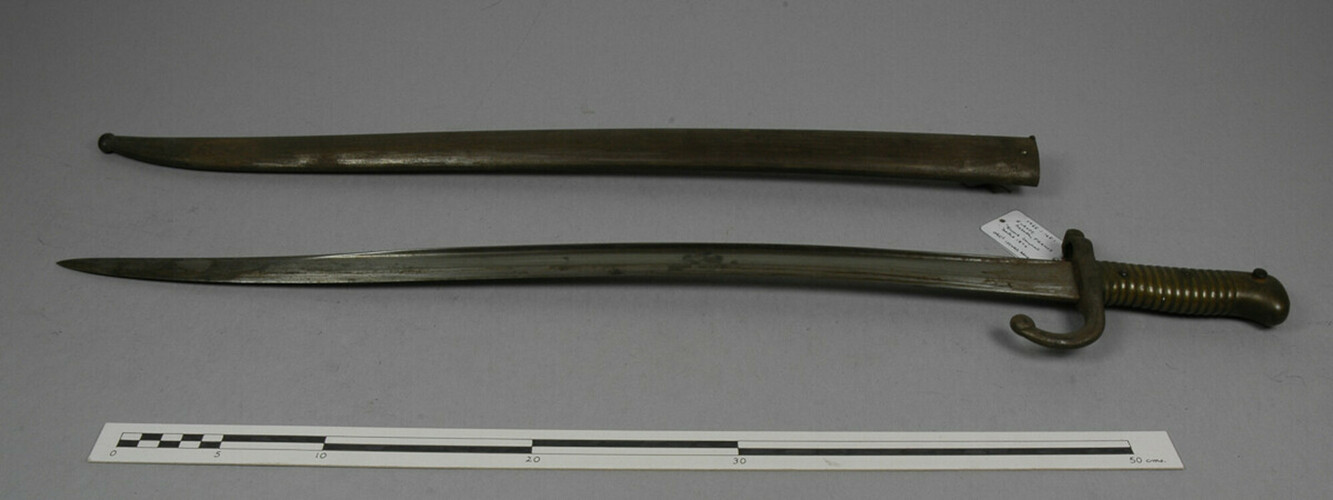 1966.1.145.1Sword bayonet [.1]: slightly flamboyant, single-edged blade with broad fullers. The iron guard has a ring for insertion of gun nozzle and the grooved brass grip has slot for attachment to firearm. Metal sheath [.2] with knob at the end. [LM 12/09/2007]1966.1.145.1
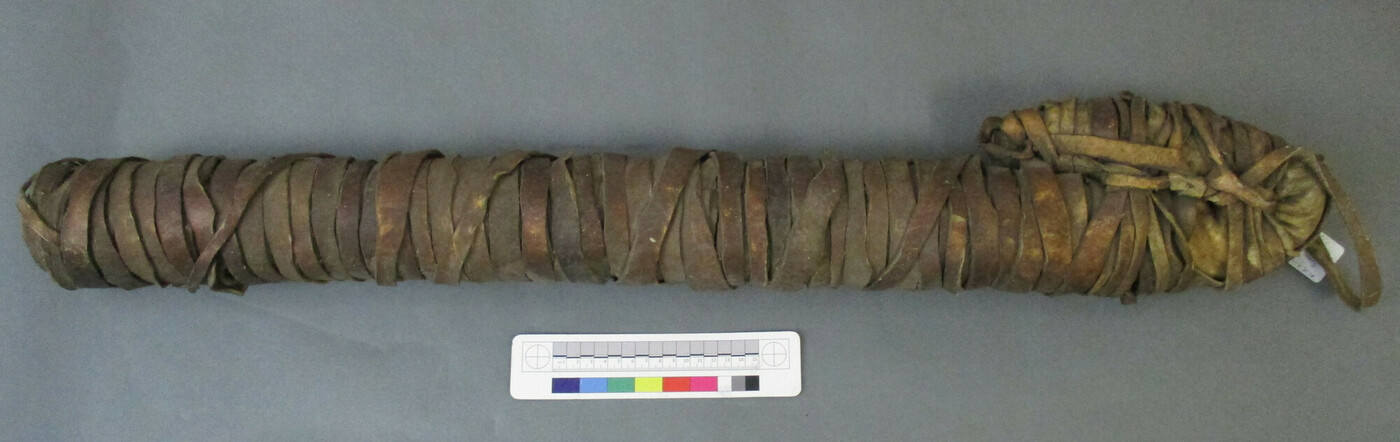 1923.84.463Hand cannon made entirely of raw hide.1923.84.463
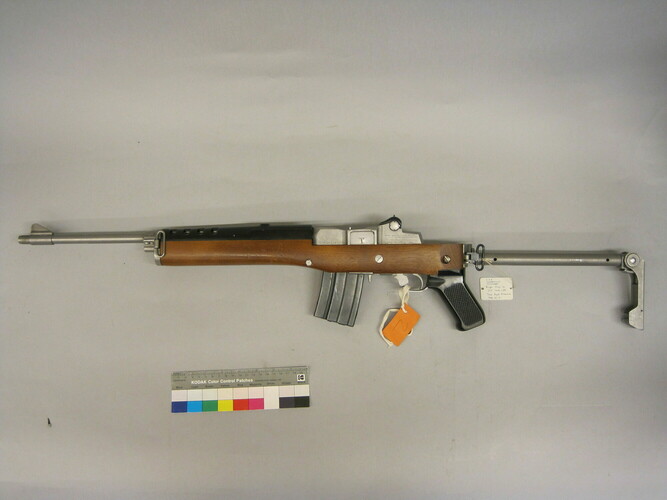 1990.60.10Ruger Mini-14 .223 (ranch) rifle, inscribed with the serial no. 185-25204. With a magazine and a folding stock.1990.60.10
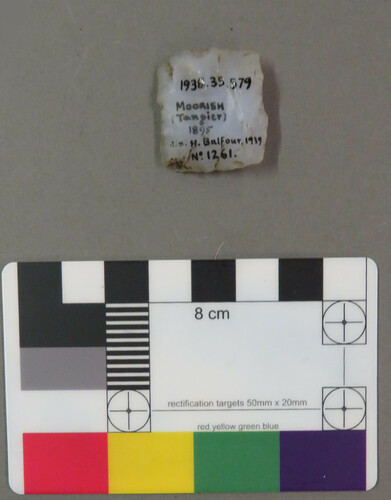 1938.35.579Gun flint. Square with irregularly bevelled surface and sharp edges. White in colour with a high sheen and semi transparent. [BS [OPS move] 14/8/2017]1938.35.579
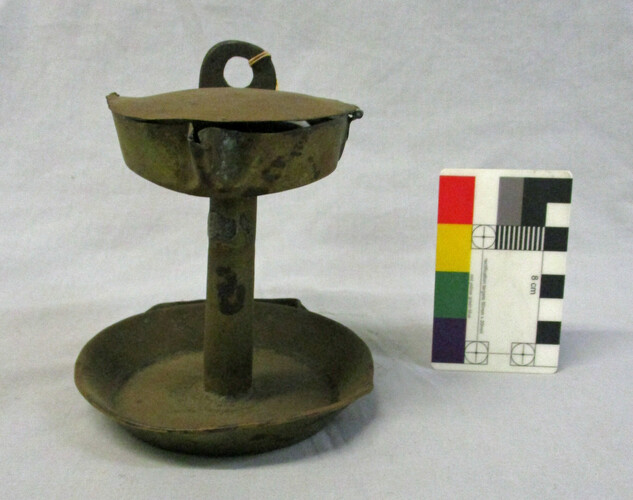 1966.3.68Metal lamp. Circular saucer base with squared handle or wall rest. Cylindrical metal pillar supporting smaller saucer lamp with pinched nozzle and round, flat hinged lid. Small back plate attached for hanging from the wall. [MOBB [OPS move] 13/06/2016]1966.3.68
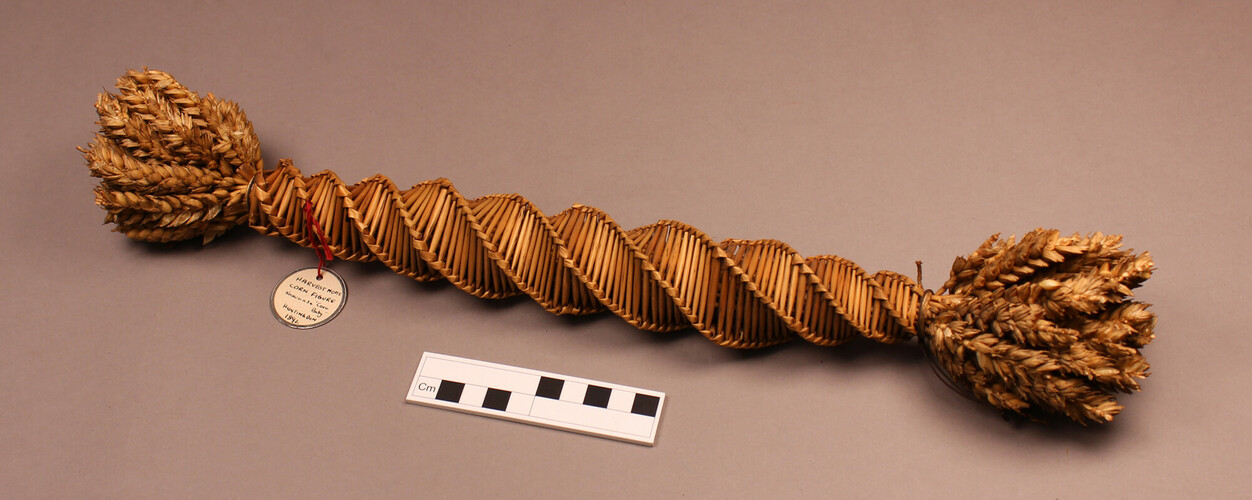 1961.7.49Harvest figure.1961.7.49
 1884.138.8.44Ceramic sherd1884.138.8.44
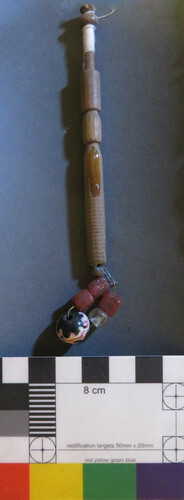 1947.5.5.59Wooden spangled bobbin for lace-making. Part of a set of wooden and bone bobbins still attached to a partially completed sample of lace, for the other bobbins in this set see [1947.5.5 .43 - .72, .75 - .78 & .91 - .102]. [BS [OPS Move] 31/5/2017]1947.5.5.59