
- Collection type
- Object
- Description
- Cylindrical cane ear ornament.
- Geographical reference
- Person
- Maker Unknown Maker
- Field collector Edward Horace Man
- PRM source Augustus Henry Lane Fox Pitt Rivers founding collection
- Date / Period
- Date made: Before 1878?, uncertain
- Date collected
- ?Prior to 1878
- Acquisition information
- Donated: 1884 Found unentered: 02/07/2019
- Materials and processes
- Material Cane Plant, Process Carved
- Dimensions
- Diameter: max 16 mm, Length: max 86 mm
- Object numbers
- Accession number: 1884.140.1915 PR Cat other PR nos: ? 3252
- Associated publications
- JAI 1878: 467 'Ichê Worn in the holes which they bore in the lobes of their ears PL XV' [Taken from the 'List of Andamanese and Nicobarese implements ornaments etc presented to Major General Lane Fox by EH Man esq and thus described by Mr Man 18th September 1877']. Indian Antiquary, Feb. 1895, 'Catalogue of Nicobarese objects', p. 108 '78 (m) Iche (Car Nicobar Harâ-nang) Ear-stick ornament, usually made of a variety of cane called palai, very commonly worn by both sexes at most of the islands, after the manner of the Burmese. These objects are sometimes hollowed and filled with dammar on account of its agreeable odour, or with tobacco. The silver facet consists generally of a four-anna piece, the surface of which has been rubbed smooth on a stone. This is styled calmât-iche, ie 'the eye of the iche'. The Car Nicobar ear-stick is usually small and neatly-made. When not in use, za plug of cloth rolled leaf etc is often inserted in the perforated ear-lobe.' [AP Leverhulme project on founding collection 1995-1998]
Search terms: Ornament, Ear Ornament
Further items to explore
 1921.46.14Earring of turtle-shell. Linked with 1921.46.13. [El.B DDF Body Arts Project 2010/2011 24/11/2010]1921.46.14
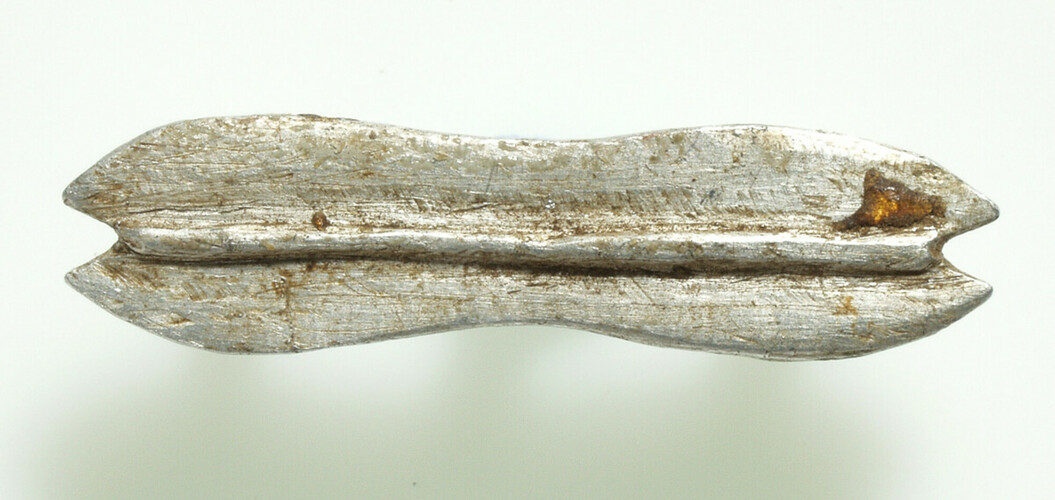 1979.20.158.2Aluminium or tin ear stud with three-pronged base, part of a pair [RTS 12/5/2004].1979.20.158.2
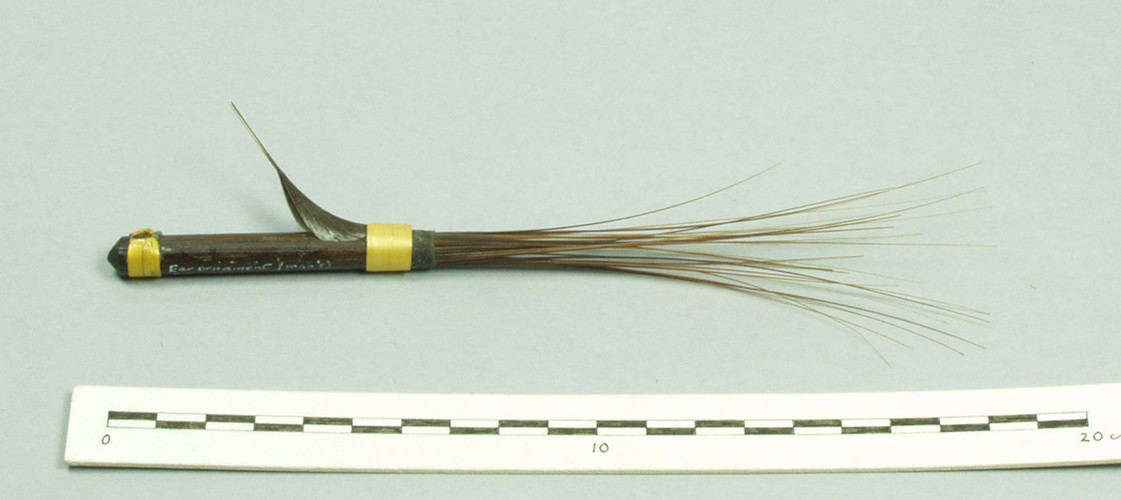 1923.84.347Ear-ornament of blackened wood with two bands of yellow orchid stem, a tuft of pig’s bristles and the tail feather of a drake. [EC 'DCF 2004-2006 What's Upstairs?' 12/9/2005]1923.84.347
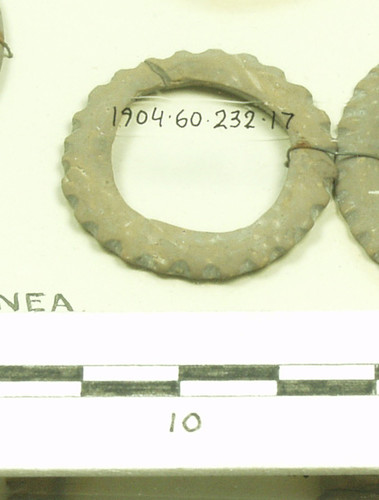 1904.60.232.17Ear ornament of coconut shell with serrated edges. [N.B. 'DCF 2004-2006 What's Upstairs?' 17/6/2005]1904.60.232.17
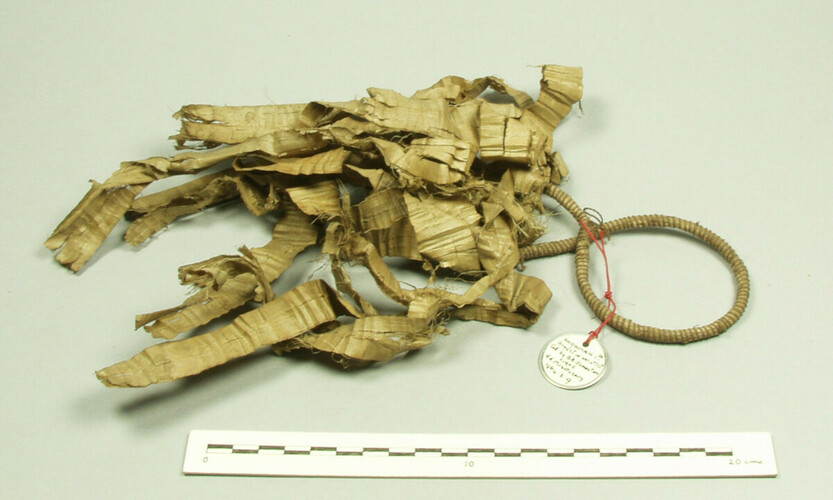 1964.2.9Arm ornament of a tightly bound ring with pandanus leaf strips hanging from two stalks. [El.B 'DCF 2004-2006 What's Upstairs?' 25/11/2005]1964.2.9
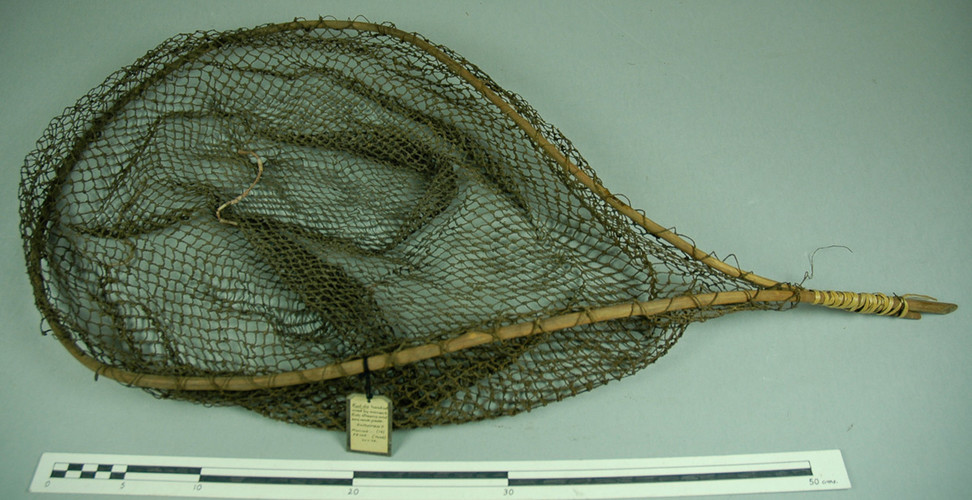 1884.48.21Fishing net of bent cane tied at the handle with grass. The net has two strings of pieces of dentalium shells. [MJD 18/11/2009]1884.48.21
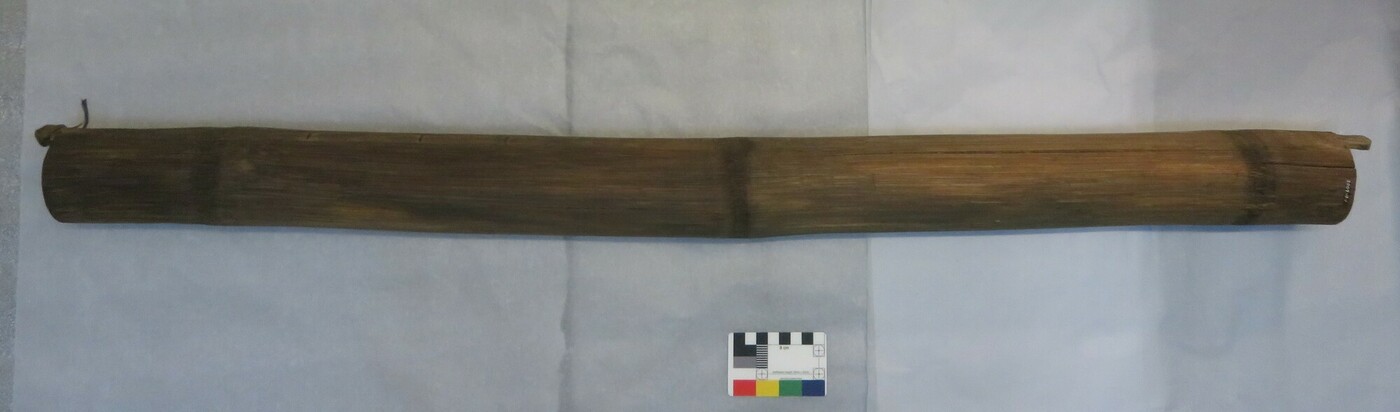 2009.18.1Zither of bamboo with three metal frets and triangular notch cut out towards one end. [FC 14/5/2009]2009.18.1
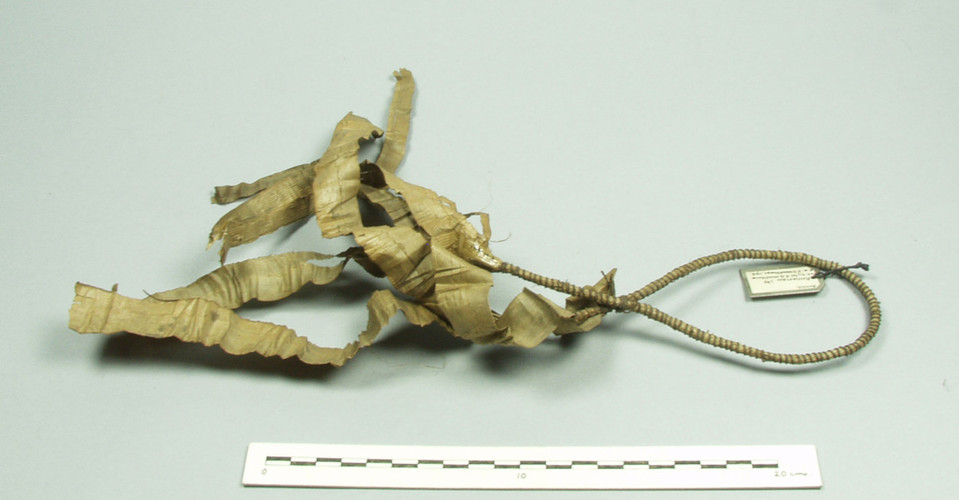 1916.10.3Arm ornament of a thin ring of tightly bound palm leaf with two tassels of palm leaf stript on two stalks. [El.B 'DCF 2004-2006 What's Upstairs?' 28/11/2005]1916.10.3