
- Collection type
- Object
- Description
- Bronze figure of a bird, made using the lost wax technique. [JMC 12/12/2018]
- Long description
- Bronze figure of a bird, possibly a peacock or a cock, made using the lost wax technique. The surface of the body is made up of many parallel lines, produced using wax threads. The bird's two legs are connected to a flat, rectangular base with an extension at each corner. The comb on top of its head is a spiral and there is another decorative spiral where the flaring tail-feathers join the body. There are two wings at the sides of the body, each decorated with parallel grooves. [JMC 12/12/2018]
- Cultural groups
- Khond
- Person
- Maker Unknown Maker
- Field collector Honor E. C. Wilkins
- Field collector Eric Gordon Wilkins
- PRM source Robert G Wilkins
- Date / Period
- Date made: Before 1951
- Date collected
- 1951
- Acquisition information
- Donated: 21/03/2018
- Materials and processes
- Material Bronze Metal, Process Lost Wax Cast
- Dimensions
- Height: max 88 mm, Width: max 71 mm, Length: max 96 mm
- Object numbers
- Accession number: 2018.110.5
- Research and responses
The four bronze animal figures were given to the donor's parents, Honor and Eric Gordon Wilkins, in 1951 while they were living in Odisha. They had been sent by the Baptist Missionary Society in 1936 to help build the Moorshead Memorial Hospital. See E. G. Wilkins autobiography 'By Hands, Bullocks and Prayers: The Building of the Moorshead Memorial Hospital, Kond Hills, India.' The bronze figures are mentioned on page 202: "At various farewell gatherings speeches were made and special songs, composed for the occasion, were sung. The Kui people gave me a set of four Kui hunting axes and some arrows. Honor was given a scarlet bridal sari and silver head-dress. For the boys there were wooden models of a plough, an earth leveller and clapper birds, used both in play and in Kond sacrifices. The most precious gift was of heir-loom bronze models, usually kept in the special sacred place in a Kond house; an elephant, a bull and two birds. These are made by the 'lost wax' process which is well described in Barbara Boal's book." [JMC 12/12/2018]
In Barbara Boal’s 1982 book ‘The Konds’, the author suggests that Khond bronze figures or emblems fall roughly into four categories: “first, those used formerly in human sacrifice, secondly, lineage-group emblems; thirdly, those included in brides’ dowries; and fourthly, artifacts for various purposes”. She adds that they are classed as dorbo (bronze valuables) and some are referred to as pradi dorbo (ancient bronze valuables) (Boal 1982: 200).
In terms of the first category, small stylised ‘double peacocks’ appear frequently as do solid cast bulls. This may be related to those animals’ associations with the Earth Goddess in different areas of Odisha. (ibid., 200-1)
Each lineage group would have a connection to a certain animal. Lineage group emblems, which are marked by bronze animal figures, would be kept in a dark corner of the main room in every Khond household in the ‘ancestor’s place’, where the head of the family would make libations and offerings (ibid., 201). Wilkins states that the bronze figures he and his wife were given [2018.110.3 - .6] were usually kept in the special sacred place in a Khond house, therefore it seems likely they may fall into the category of lineage group emblems.
In Odisha both solid and hollow cire perdue casting is known, however the hollow casting method is more widely practised (ibid., 208). In this method a core of clay and sand is modelled, slightly smaller than the desired object, and the wax is applied to this before being covered again in clay and heated so that the wax melts. Then the molten bronze is poured in. Khond metalworkers have long practised the lattice-work casting whereby “thin wax threads are first made and arranged over the core so as to give a network, or placed in parallel lines or diagonally”. Other features are modelled in the usual way but wax threads would be used for eyes and spiralled decorative features (ibid., 208).
Some bronze figures are ritually “purified”, being covered in cow dung or sacrificial blood (ibid., 208). [JMC 13/12/2018]
Search terms: Figure, Religion, Ritual and Ceremonial, Bird Figure, Religious Offering, Ceremonial Object
Further items to explore
 1945.8.5.26Black glass bangle. [El.B 'DCF 2004-2006 What's Upstairs?' 11/11/2005]1945.8.5.26
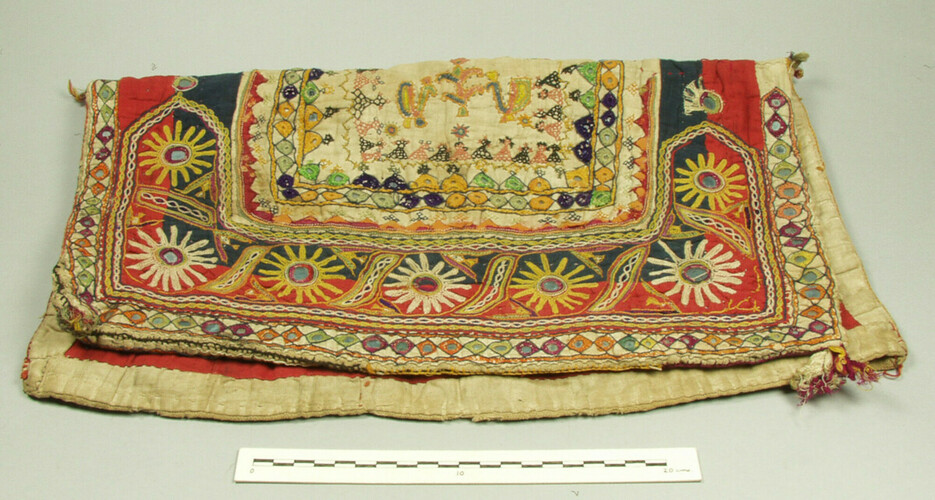 1981.16.8Dowry bag of cotton cloth with blue and red stripes near the edges. Embroidered in many colours, with mirror inserts and tassels on the bottom corners. [El.B 'DCF 2004-2006 What's Upstairs?' 13/12/2005]1981.16.8
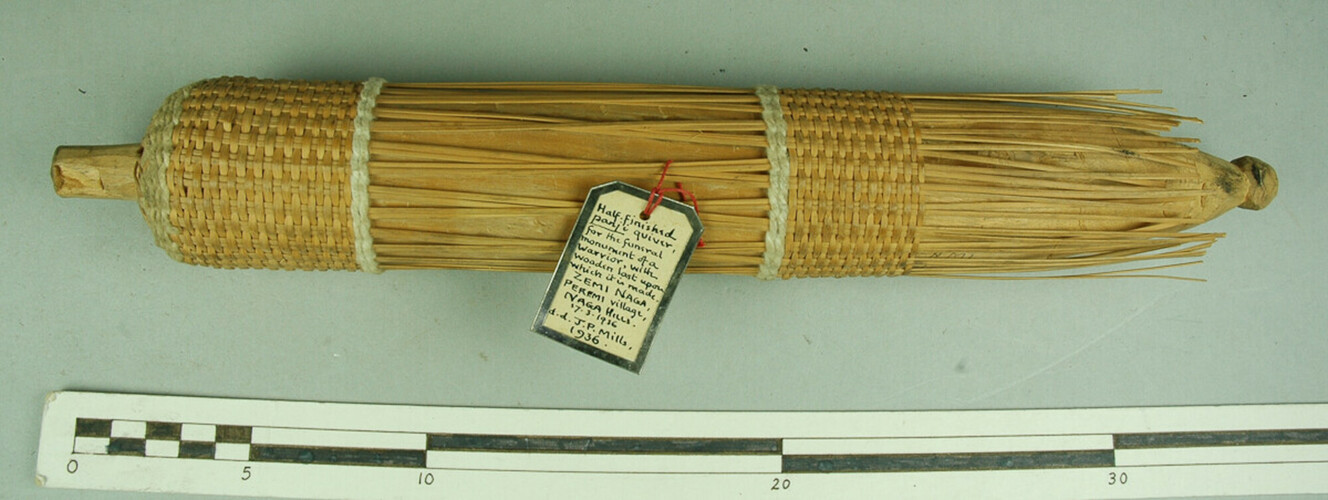 1934.82.16.1Half finished basketry quiver [.1] for holding calthrops or panjis with wooden last [.2]. [MJD DDF Body Arts Project 2010/2011 29/09/2010]1934.82.16.1
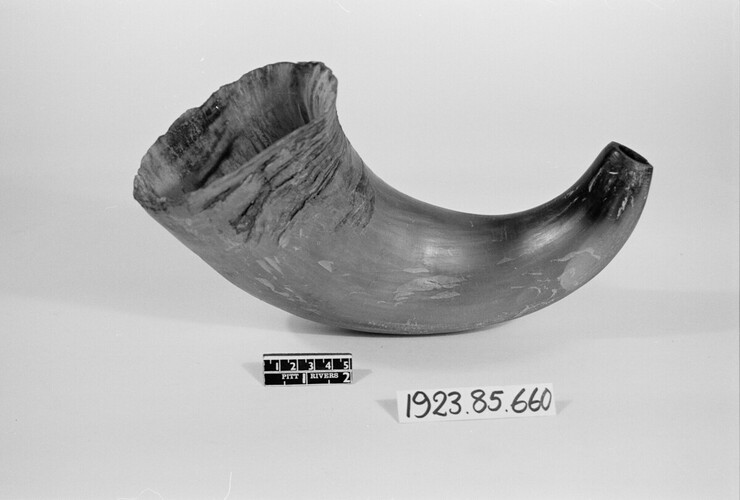 1923.85.660Trumpet of mithan horn. [DCF Court Team 12/2/2003]1923.85.660