
- Collection type
- Object
- Description
- Ceramic pucará figure of a bull. [JMC 13/7/2018]
- Long description
- Ceramic pucará figure of a bull. The main body of the bull is hollow, with an exaggerated hump at the back of the neck, and a large, circular opening at the top of the rump, next to which is a looped handle. The four solid legs are straight and cylindrical. The other features of the bull have been hand-modelled: these include the curving horns, the tail, which curves back on the rump, and the head and ears, with impressed circles for the eyes and carved out nostrils and mouth. Three pairs of decorative rings ornament the front of the bull’s neck, running from the chin downwards, and two raised bands of ridges decorate the hump. A small ceramic rosette has been applied to the bull’s forehead, and a decorative ridged band to the top of the horns. The legs and underside of the bull retain the natural terracotta colour, while the rest has been painted white. The head, horns, tail, and decorative elements have been covered in a green glaze and the body is decorated with large bands of green glaze and wavy lines and spirals in red paint. The hooves and tail end have been painted black. [JMC 13/7/2018]
- Cultural groups
- Quechua
- Date / Period
- Date made: Before 1964
- Date collected
- 1962 - 1964
- Acquisition information
- Donated: 27/06/2018
- Materials and processes
- Material Pottery, Material Pigment, Process Fire-Hardened, Process Glazed, Process Painted, Process Modelled, Process Impressed
- Dimensions
- Height: max 197 mm, Width: max 89 mm, Length: max 230 mm
- Object numbers
- Accession number: 2018.107.1
- Research and responses
There is a photograph of a similar pucará bull on p.74 of the Peruvian Official Tourist Bureau brochure (see RDF). The accompanying text reads "Post-Hispanic pottery has produced forms universally admired, all of which have Western European themes, such as the so-called Pucará bull and the Ayacucho churches. These two examples fulfil religious functions, the first native and the second Indo-Hispanic. The bull superseded a god called Amaru (serpent) who lived in the waters at the center of the earth. Legends today still tell of this god, but it is said that he has the form of a bull and not a serpent, as he used to be imagined until quite recent times. The ceramic bull serves as an offering to the gods of the mountains and also guards and protects the crosses which are placed on the roofs." p.75-6. [JMC 13/7/2018]
Search terms: Figure, Vessel, Animal Figure
Further items to explore
 1918.32.7Stone figure of an animal, with a flint flake bound to its back. Recorded as a 'Zuni hunting fetish'.1918.32.7
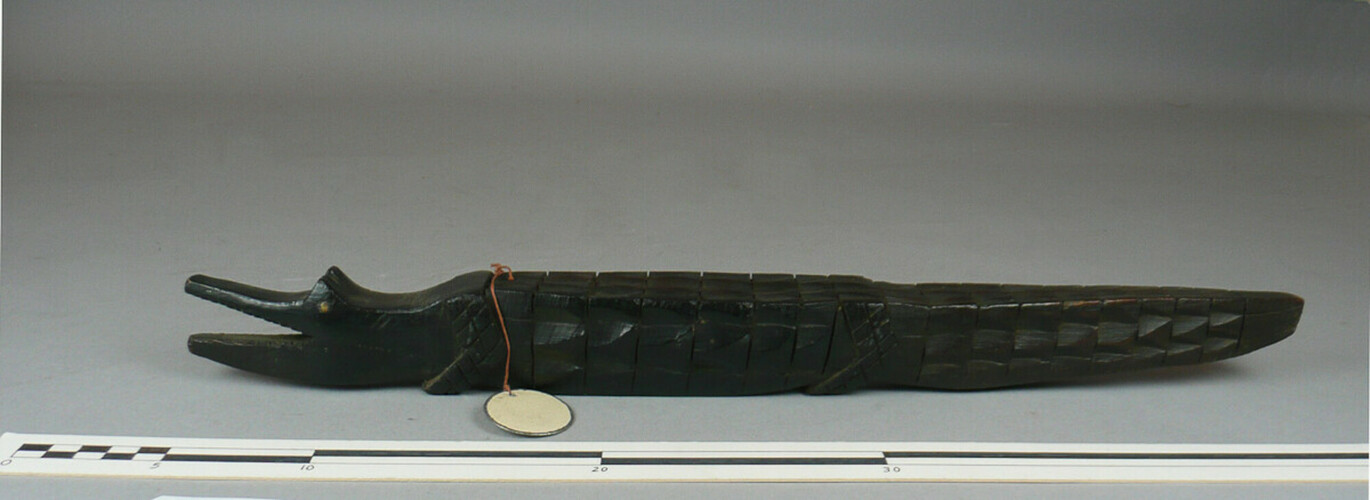 1940.8.030Carved wooden crocodile.1940.8.030
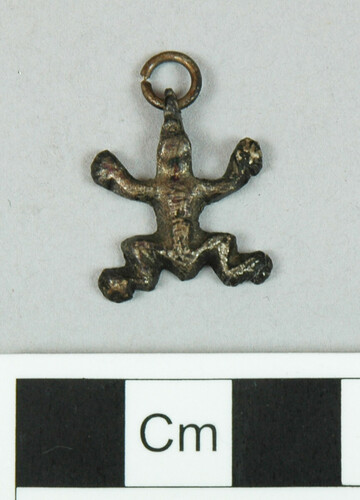 1985.51.906Silver frog charm with suspension loop. [SM 20/04/2011]1985.51.906
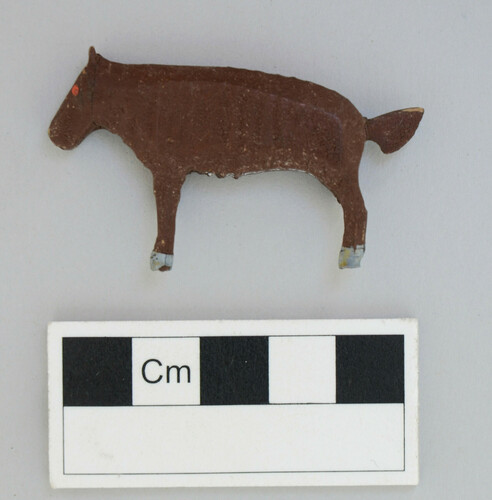 1956.9.70.212Small brown ?cow figure with grey feet and red eyes. Part of a Noah’s Ark set. [SM (Verve) 15/04/2015]1956.9.70.212
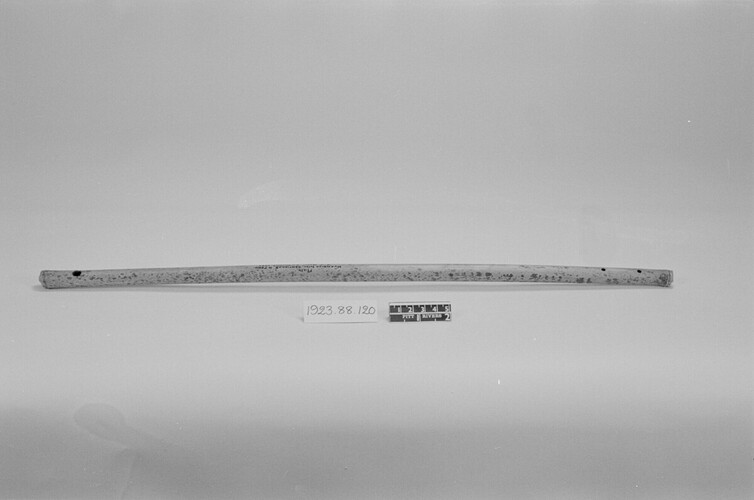 1923.88.120Bamboo flute closed at both ends by nodes; mouth hole at one end at side, and two stops on same side at other end.1923.88.120
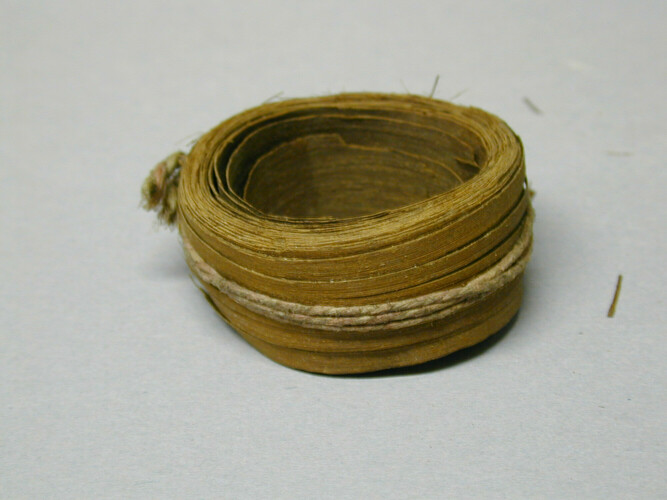 1985.49.156Ring of coiled fibre for distending the ear-lobe.1985.49.156
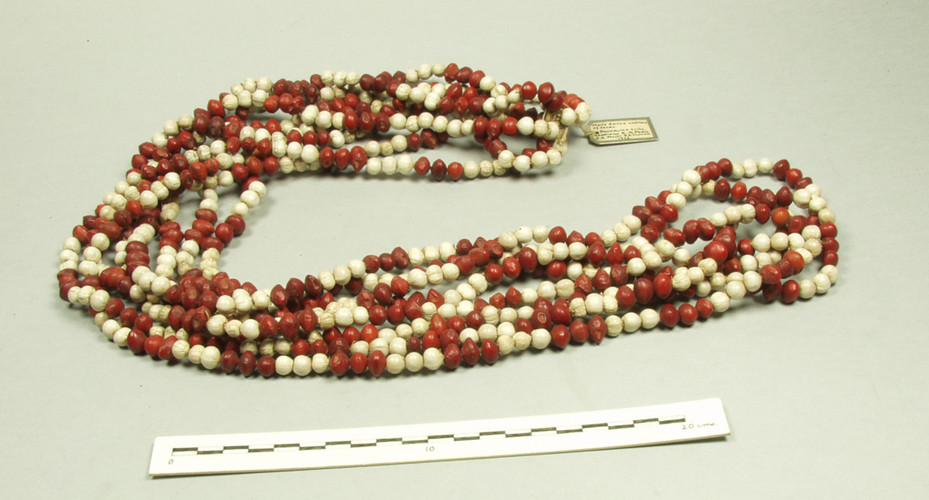 1923.88.177Dance necklace of 3 strings of coix lacryma and red seeds, alternating in groups of 3. [LM 'DCF 2004-2006 What's Upstairs?' 2/8/2005]1923.88.177
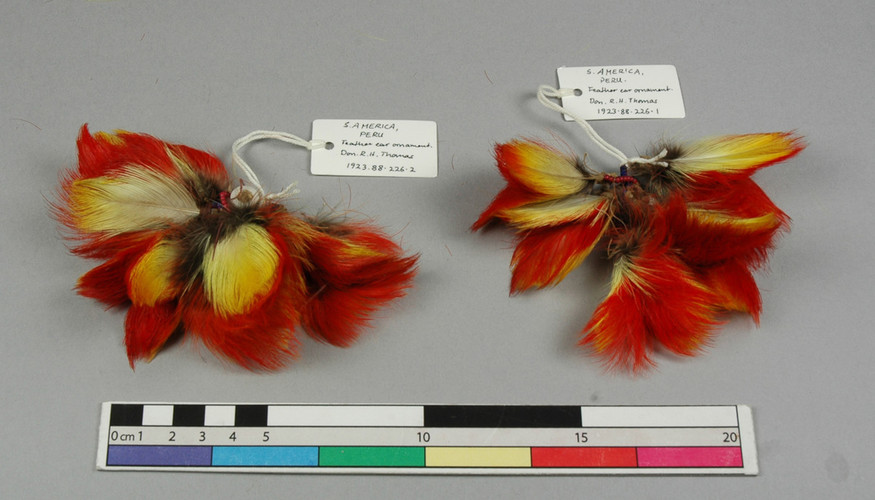 1923.88.226.1Pair of ear ornaments, bunches of red and yellow feathers on bead strings, with buttons to pass through the ear. [El.B DDF Body Arts Project 2010/2011 10/11/2010]1923.88.226.1