
- Collection type
- Object
- Description
- Pipe-tomahawk with iron-pointed axe-blade and pipe-bowl. Haft is made of wood. [SM 17/04/2007]
- Long description
- Pipe-tomahawk with iron-pointed axe-blade and pipe-bowl. Haft is made of wood. The blade is shaped like a bull, with two protruding horns - one is damaged - and two holes for eyes. The blade has a makers stamp "O. B. SPRAGUE". The blade butt forms the pipe-bowl. This has three grooves and is decorated with triangles around the mouth. [SM 17/04/2007]
- Geographical reference
- Date / Period
- Date made: Before 1921
- Date collected
- By 1921
- Acquisition information
- Donated: 29/10/1921
- Materials and processes
- Material Iron Metal, Material Wood Plant, Process Forged (Metal), Process Inscribed, Process Hollowed, Process Perforated, Process Incised, Process Stamped
- Dimensions
- Length x Width: max 621 x 262 mm
- Object numbers
- Accession number: 1921.53.2
- Research and responses
The following notes are drawn from research compiled by Andy Mills as part of the DCF Cutting Edge Project in 2006-2007. The true metal tomahawk acquired its name from the Renape indians also, and was first recorded as a term by Captain Smith (of Pocohontas fame) as tamahagan – an axe or implement used for cutting. It was the European realisation of the saleability of axe heads which drove them to flood North America with trade axe blades, and their lack of understanding of Native American cultural and linguistic variation which led them to apply the term tomahawk wherever that trade went on. The Native Americans themselves took up the term, in the rational understanding that tomahawk was the word the Europeans themselves used.
The pipe tomahawk as a composite tool has been recorded as early as 1700 (or ‘smoak tomahawk’, as it was called by the English colonials), and was a major commodity used in the Fur Trade that dominated northeastern North America between 1650 and 1870. It is often asserted that pipe tomahawk blades were mass produced in Europe (generally, England), for supply to the North American fur market. However, Taylor ( see Native American Weapons. by C. F. Taylor, published 2001. p. 34) remarks that very few tomahawk blades bear the trade marks or maker’s name that was standard practice for British and French smiths to apply to their work. Rather, he argues, the vast majority of tomahawks were home-wrought by American settlers.
This example is unusual, therefore, in bearing the name “O.B. Sprague”. It does not indicate a European origin, however, and here Google has provided invaluable information: The Cass Historical Railroad Website (www.cassrailroad.com/spruhist) shows that in 1905, O.B. Sprague was recorded as one of two blacksmiths working in the small logging town of Spruce in eastern West Virginia. Spruce no longer exists, and the mill opened in the town in the year 1905, implying that Sprague had moved there fairly recently.
Stylistically, this tomahawk is of the ‘Spontoon-Bladed’ or ‘French’ style – drawing its formal influence from the French Colonial pole-arms which had been in use in North America since the early 17th century, and were still carried by military officers during the American Civil War (see Taylor, 2001). Consequently, this is an old-fashioned tomahawk, which was wrought some time around the turn of the 20th century. In a logging town, it is likely, therefore, to have been something of a curiosity, and may even represent an example of tourist art, or a non-functional dress or ceremonial tomahawk made for trade to Indians, which was easily snapped up by Louis Clarke. [SM 17/03/2008]
Search terms: Ritual and Ceremonial, Tool, Weapon, Writing, Figure, Narcotic, Ceremonial Object, Axe, Pipe, Tobacco Accessory, Inscription, Animal Figure
Further items to explore
 2022.89.1Rainbow rosary beads.2022.89.1
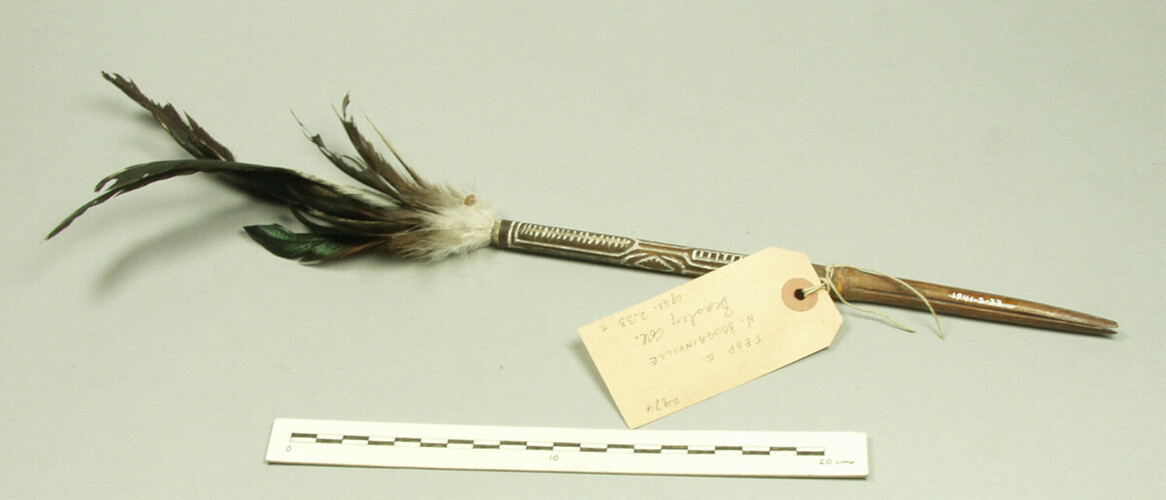 1941.2.33Comb of a thin reed of cane with three teeth, the top with carved patterns picked out in white and iridescent green feathers stuck into it. [El.B 'DCF 2004-2006 What's Upstairs?' 7/2/2006]1941.2.33
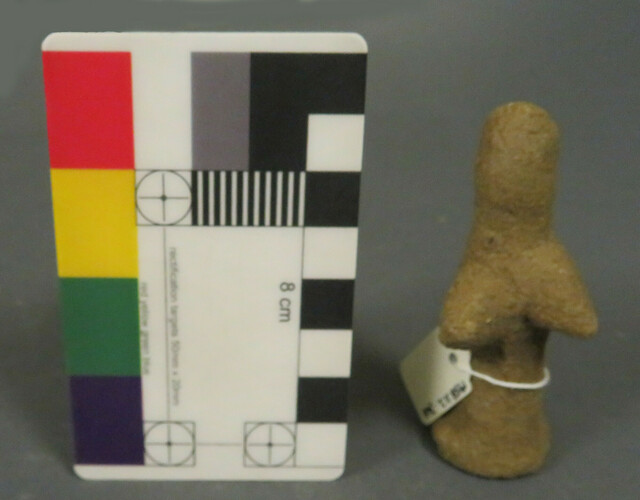 1958.11.2.340Clay Mkaramo figure. Cylindrical figure, rounded head and flat, flared, circular base. Two pointed protrusions, representing breasts. Little distinction between the main body and the head [IL [OPS Move] 15/5/2017]1958.11.2.340
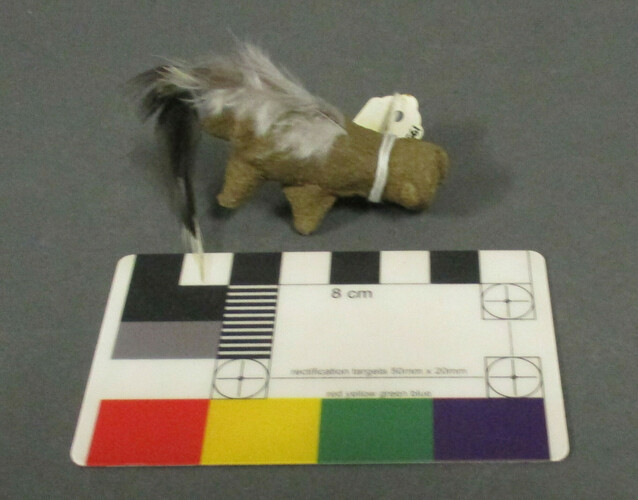 1958.11.2.388Clay Mkaramo figure. Cylindrical body, with no distinction between the body and head. Four forward extended limbs. Two circular pieces of clay attached to either side of the head. Black and white feather attached to the back. [BH [OPS Move] 18/5/2017]1958.11.2.388
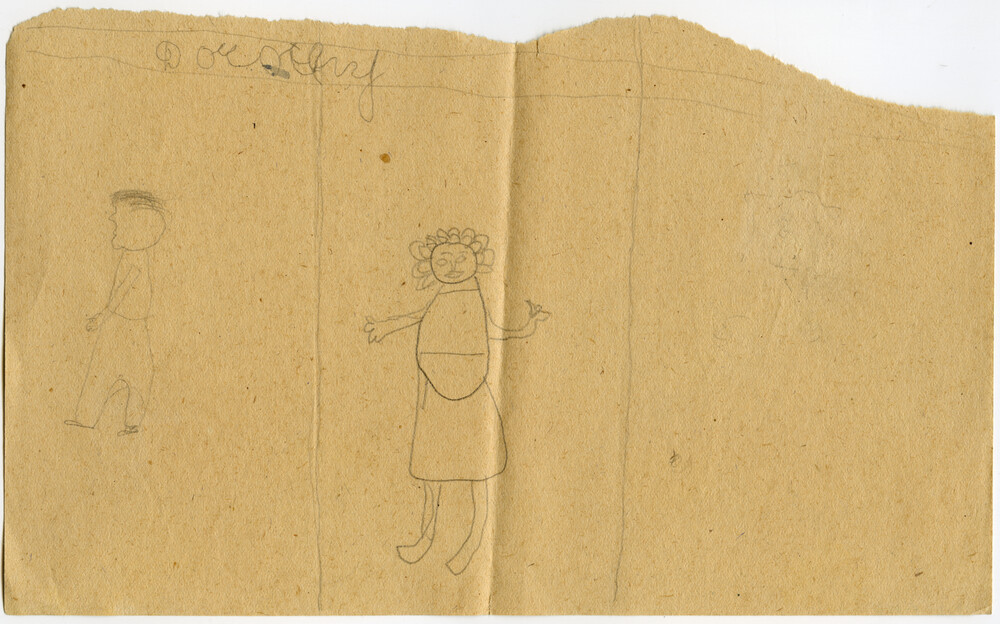 1994.15.663Drawing by child in pencil of two figures. [MJD 26/01/2015]1994.15.663
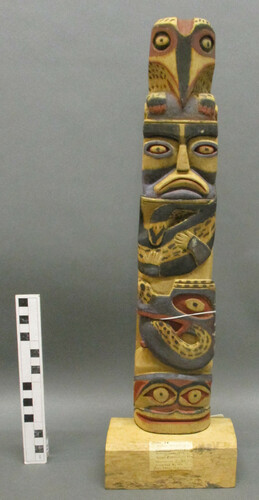 1965.3.195.1Carved and painted wooden model totem pole depicting bird, human, killer whale, snake and ancestor figures. For the base see [1965.3.195 .2]. [JC [OPS Move] 3/7/2017]1965.3.195.1
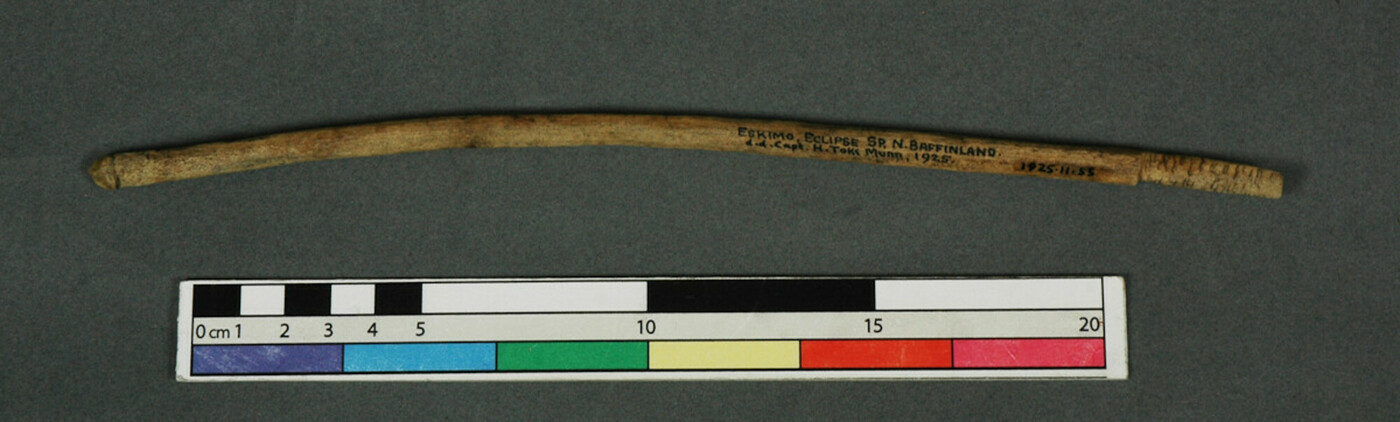 1925.11.55Bone rod, with one flattened and notched end. The other has had a wedge removed from the tip to form a point. The point has been incised. [CW [OPS Move] 20/4/2017]1925.11.55
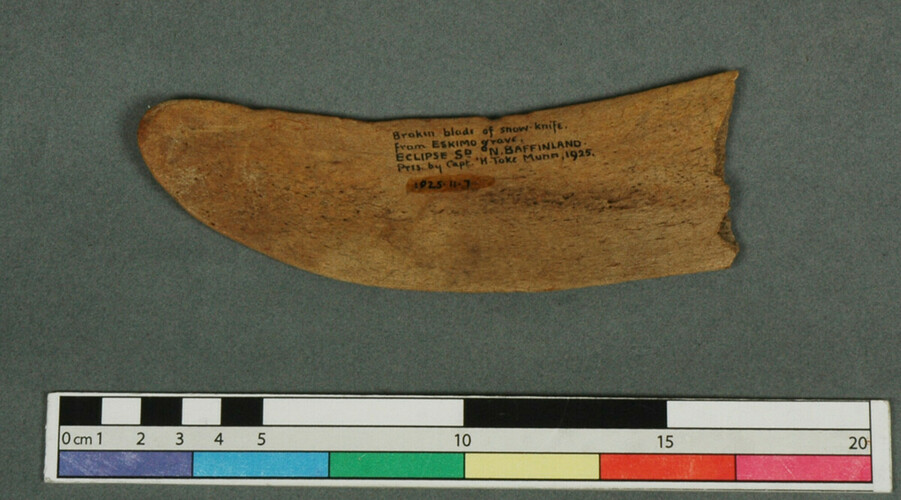 1925.11.7Broken bone snow-knife blade; from a grave. the blade edge is curved and the tip rounded. [CW [OPS Move] 20/4/2017]1925.11.7