
- Collection type
- Object
- Description
- Wooden casket, overlaid with brass. Base [.1], lid [.2]. In the shape of a cow's or antelope's head. Both of these animals are used for sacrifices to the gods. Boxes like this are for kola nuts: they are owned by chiefs and used for ceremonial presentations to the Oba.
- Cultural groups
- Edo
- Date / Period
- Date made: Before 1897
- Date collected
- February 1897
- Acquisition information
- Donated: 09/1900
- Materials and processes
- Material Wood Plant, Material Brass Metal, Process Carved
- Dimensions
- Height: max 160 mm, Length: max 285 mm
- Object numbers
- Accession number: 1900.39.23.1 Accession number: 1900.39.23.2
- Research and responses
This object is part of a collection documented as ‘from Benin city, taken during the punitive expedition under Admiral Rawson, February, 1897’. The objects in the collection were acquired by Mary Henrietta Kingsley before her death in June 1900. They were bequeathed to her brother Charles G. Kingsley, with the understanding that they would be transferred to the Pitt Rivers Museum after his death, however he arranged for them to be immediately presented to the Museum, where they entered the collection in September 1900. [JMC 14/04/2023]
- Associated publications
- Listed as number 73 on page 11 of Art from the Guinea Coast (Pitt Rivers Museum, Illustrated Catalogue No. 1), Oxford: Pitt Rivers Museum (1965): 'NIGERIA Midwest Region ... 73. Box for valuables in form of cow's head, carved from wood and decorated with repoussée brass foil. Benin City (1900.39.23.) (28.5 cm.)'. (For details of exhibition, see under 'Display History'.) [JC 12 9 2013] Drawing of this object reproduced as figure 243 on page 213 of Great Benin, Its Customs, Art and Horrors, by H. Ling Roth (Halifax, F. King & Sons, 1903). [LMM 3 1991 ?; JC 7 7 2000] Listed as no B8/75 on p. 2.1.32 of An Illustrated Catalogue of Benin Art, by Philip J. C. Dark (Boston, MA: G. K. Hall, 1982). [JC 1995] Illustrated in colour on page 85 of Women of the World: Women Travelers and Explorers (Extraordinary Explorers), by Rececca Stefoff (New York and Oxford: Oxford University Press, 1992). It is featured (along with eight other pieces from the PRM collections) in a special photographic section entitled 'Mary Kingsley's African Trophies' accompanying Stefoff's Chapter 5 'Mary Kingsley: Wandering through West Africa'. The photograph is captioned (same page): 'In Africa Kingsley encountered people who made all their dishes, tools, and clothing from the materials at hand. Everyday items like this covered bowl were often carved to resemble animals or decorated with designs. But although factory-made cloth and skillets from England could not match the beauty of traditional African household items, mass-produced trade goods were beginning to transform African life.' NB This is not an everyday object. Nor is Benin a good example of a society in which all objects were made from the materials to hand. (Copy in RDF: Biographies: Mary Kingsley.) [JC 11 9 2003]
Search terms: Box, Figure, Narcotic, Vessel, Food and Drink, Animal Figure, Food Accessory
Further items to explore
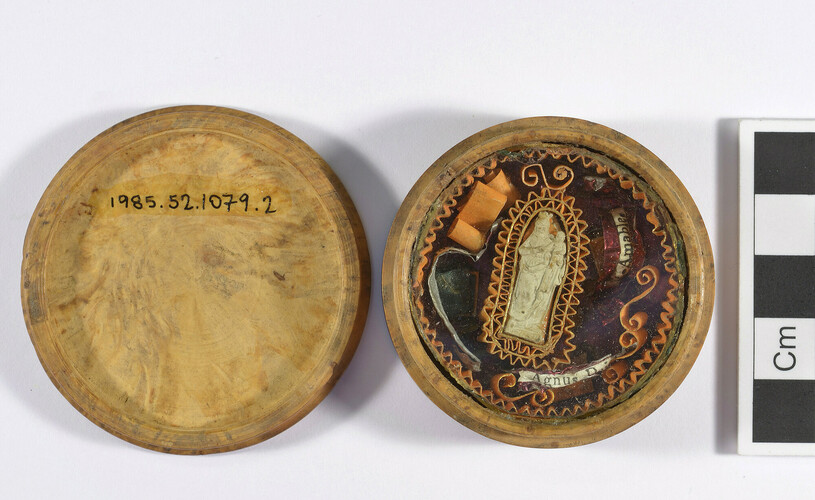 1985.52.1079.1Amulet, cylindrical wooden relic box with lid [1985.52.1079 .2], containing a figure of the Virgin Mary and saint's names written on paper. [ACA 30/04/2012]1985.52.1079.1
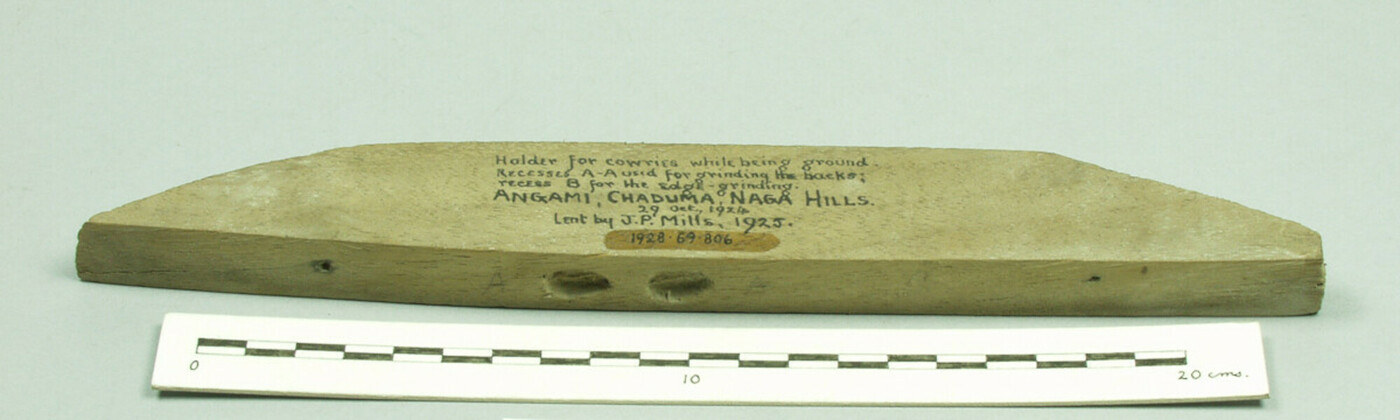 1928.69.806Boat-shaped wooden tool with recesses for holding cowrie shells while they are being ground into shape for use as ornaments. [N.B. 'DCF 2004-2006 What's Upstairs?' 20/6/2005]1928.69.806
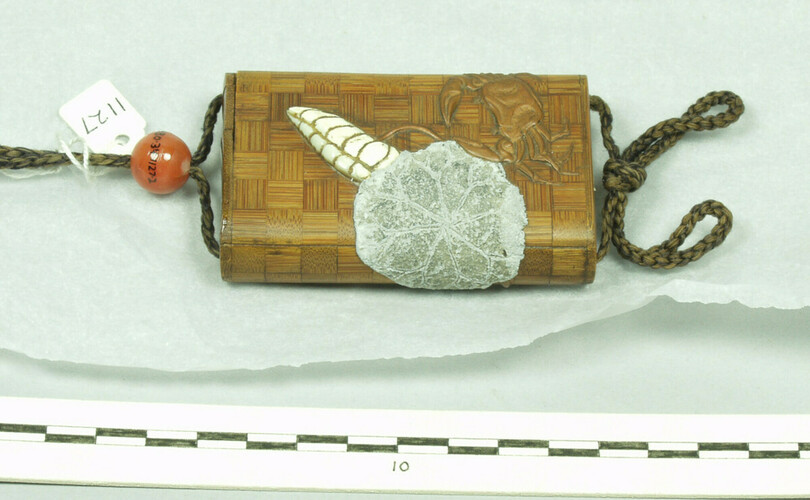 1980.34.1127.1Cabinet box [.1], with bamboo chess board surface and inlaid decoration of crab and lotus leaves in brown lacquer, pewter and ivory. Attached is a coral bead [.2]. [El.B 'DCF 2004-2006 What's Upstairs?' 13/5/2005]1980.34.1127.1
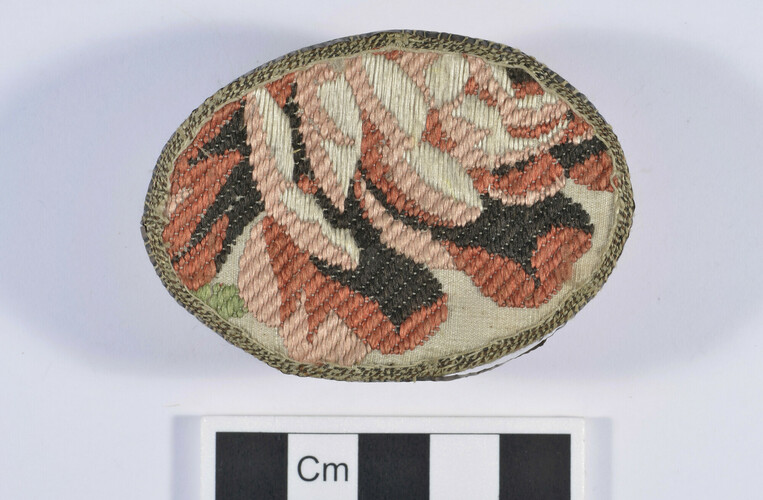 1985.52.2024.1Amulet, oval textile reliquary box, containing saints' relics and a figure of the Virgin Mary framed behind glass, and a detachable lid [1985.52. 2024 .2]. [ASh [OPS move] 30/1/2017]1985.52.2024.1
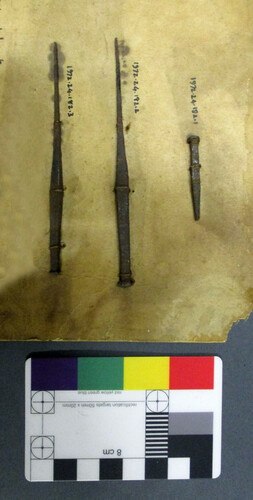 1972.24.182.1Tool for making beads. Made from iron and shaped with a tapered, pointed end to bore holes. The other end has been flattened and squared off. Attached to a board alongside 1972.24.182 .1 - .8 [ASh [OPS move] 30/11/2016]1972.24.182.1
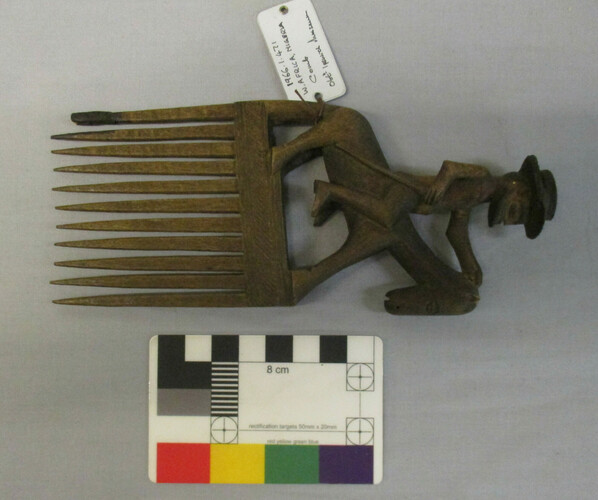 1966.1.471Wooden comb carved to represent a bearded man wearing a hat and riding a horse. Some of the teeth have [?]local repair and have been fixed with a [?]clay or [?]resin.1966.1.471
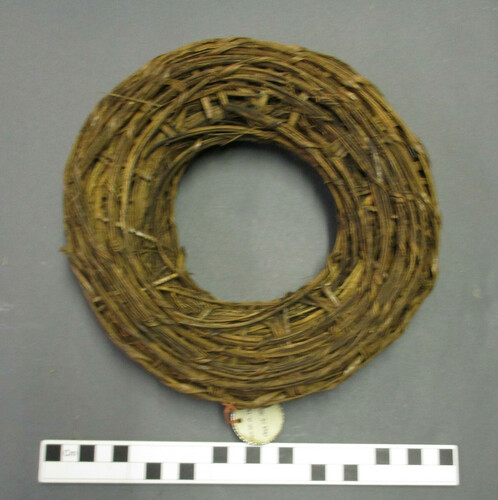 1942.13.909Wicker woven basketry circular pot rest. [CW [OPS Move] 22/2/2017]1942.13.909
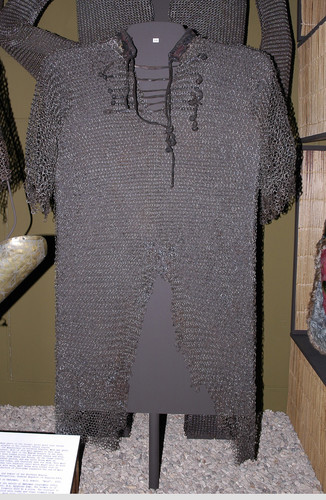 1904.54.15Chain mail shirt with leather collar and leather thongs for fastening. [El.B 28/3/2007]1904.54.15