
- Collection type
- Object
- Description
- Ceramic figure of an animal, with painted decoration. Stood on four legs, with a round main body, along the back of which there is a painted ridge. [IL [OPS Move] 29/6/2017]
- Long description
- Ceramic figure of an animal, with painted decoration. Stood on four legs, with a round main body, along the back of which there is a painted ridge. The figure is hollow, and there is a hole to the hole centre at the front of the face in place of a nose and mouth. Has two round eyes with a painted black outline, and one remaining ear. Painted with incised lines, and band around the neck [IL [OPS Move] 29/6/2017]
- Geographical reference
- Western USA New Mexico Sandoval County Cochiti Pueblo
- Cultural groups
- Cochiti
- Person
- Field collector Octavius Bates
- Field collector Octavius John Seymour Cavendish Bates
- PRM source Octavius Bates
- PRM source Octavius John Seymour Cavendish Bates
- Date / Period
- Date made: Before 1889
- Date collected
- By 1889
- Acquisition information
- Donated: 08/1889
- Dimensions
- Height: max 67 mm, Width: max 106 mm, Depth: max 49 mm
- Object numbers
- Accession number: 1889.39.11
- Research and responses
In March 2007 Dr Bruce Bernstein from the Smithsonian Institution examined 1889.39.1 through to 1889.39.10 and identified all eleven pots as items made specifically for sale to travellers and tourists. This is because of their miniaturised form, the simplified painted designs and their shapes, including animals and mini teacups that are 'pleasing' or recognisable to tourists. Objects like this would also sell in the nineteenth century because the popularity of the idea of the exotic that was associated with indigenous peoples. They would have been new or unused when purchased, probably costing 5 or 10 cents each. [ZM 8/3/2007]
Search terms: Figure, Pottery, Animal Figure
Further items to explore
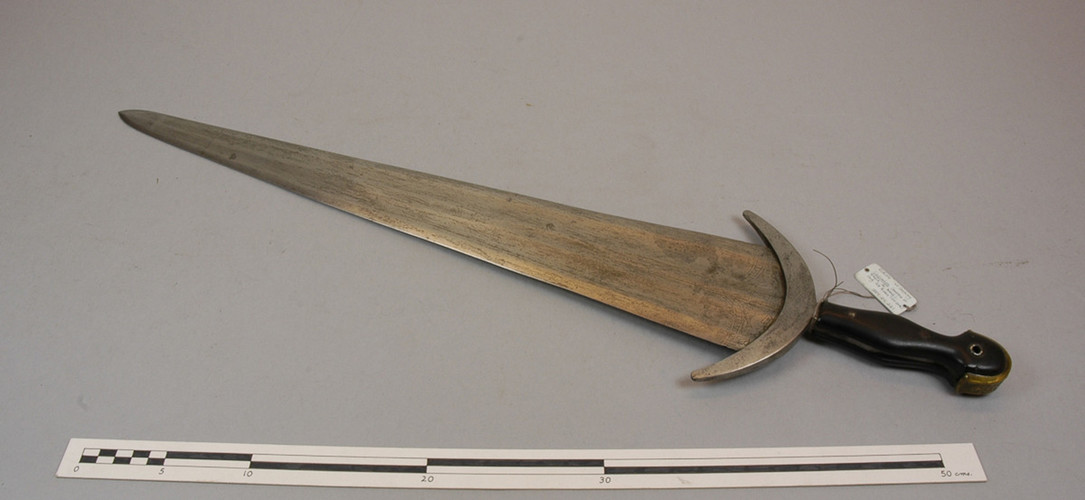 1884.24.221Sword with broad, two-edged, grooved triangular blade.1884.24.221
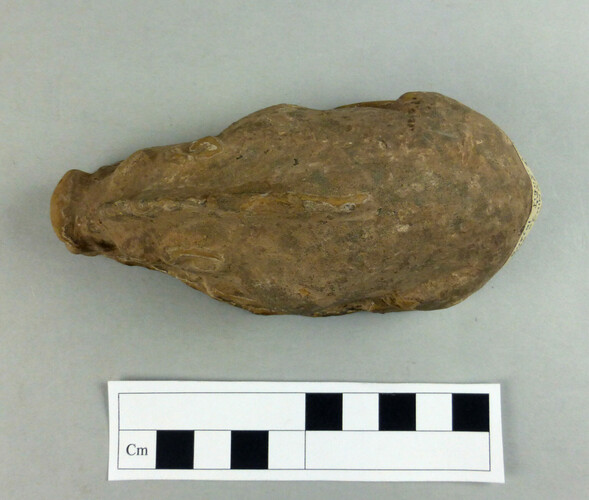 1912.93.1Grave good, burial figure of a pig. [DCF Court Team 14/11/2002]1912.93.1
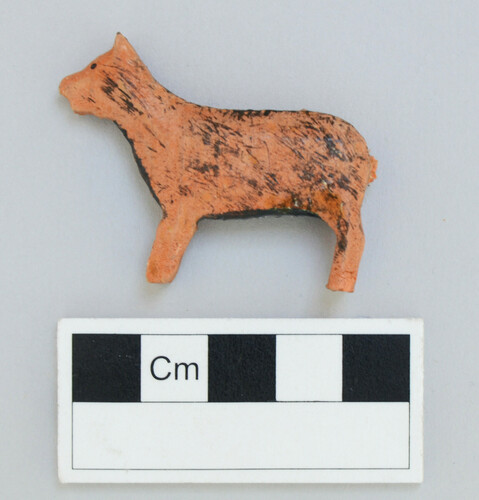 1956.9.70.253Pink and black animal figure with black stomach and chest. Possibly a dog or cat. Part of a Noah’s Ark set. [SM (Verve) 21/04/2015]1956.9.70.253
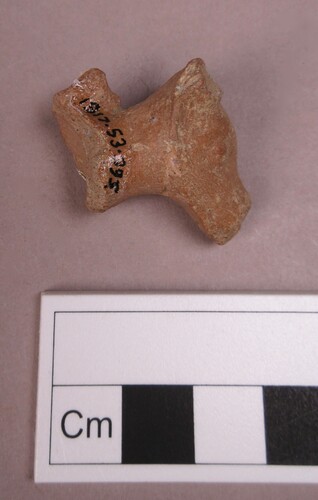 1917.53.395Ceramic animal head1917.53.395