
- Collection type
- Object
- Description
- Metal die. [MJD (Verve) 2/5/2017]
- Long description
- The metal die is circular and shows the inverse image of a pick, a theodolite, a stone battle-axe head, a bronze halberd, a skull and a vase. [MJD (Verve) 2/5/2017]
- Geographical reference
- England Wiltshire
- Cultural groups
- English
- Person
- Maker Unknown Maker
- Field collector Unknown Collector
- PRM source Michael Augustus Lane-Fox Pitt-Rivers
- PRM source George Anthony Lane-Fox Pitt-Rivers
- Date / Period
- Date made: 1800-1900
- Date collected
- By 1971
- Acquisition information
- Loaned: 1971
- Materials and processes
- Material Metal, Process Turned, Process Forged (Metal), Process Stamped
- Dimensions
- Diameter: max 47 mm, Height: max 39 mm
- Object numbers
- Accession number: 1971.30.5.1
- Research and responses
Wesley Jacobs, Helen Jacobs from the Bullpen, Steve Hurst, sculptor and foundry owner and Daniel Hunt from Kansas State University undertook a research visit on Tuesday 18 October 2011. The following comments were recorded about this object: The medallions look like they are made of copper. Copper is a soft metal to stamp. They may be copper alloy but adding any metal to copper will make it harder. [MJD 24/10/2011]
- Associated publications
- See 'Tiles Can Tell Tales Centuries Later', by Alan Ferg, in The Petroglyph: Newsletter of the Arizona Archaeological Society, Vol. XXXIX, no. 8 (April 2003), pp. 1, 3; 'Tiles to Identify Previous Excavations', by Alan Ferg, in Arizona Archaelogical Council Newsletter, Vol. XXVII, no. 1 (spring 2003), pp. 11-12; and 'Testing Tile Technology', by Alan Ferg, in Glyphs: The Monthly Newsletter of the Arizona Archaeological and Historical Society, Vol. LIV, no. 2 (August 2003), pp. 4-5. In each case Ferg provies a brief account of the medallions. In the latter two, he illustrates one. Copies of all three articles and related correspondence in RDF. [JC 12 9 2003] Illustrated in colour as Figure 11.12 on page 255 of 'Later Prehistoric and Roman Europe', by Joshua Pollard and Dan Hicks, in World Archaeology at the Pitt Rivers Museum: A Characterization, edited by Dan Hicks and Alice Stevenson (Oxford: Archaeopress, 2013), pp. 240-261. Caption (same page): 'Figure 11.12 Unused example of General Pitt-Rivers' 'medalets', which he had specifically crafted for date-stamping and placement in his excavation trenches before back-filling (PRM Accession Number 1971.30.5).'. [MJD 24/06/2014]
Further items to explore
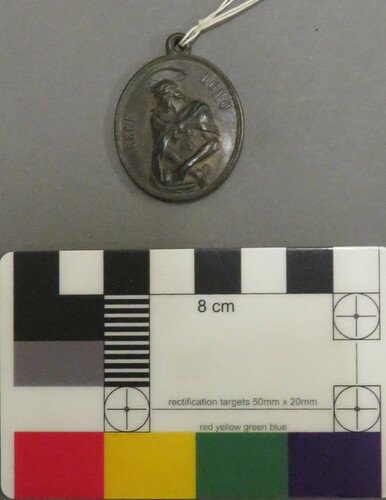 1985.50.270Amulet, oval medal of brass with figure of the Virgin on one side and Christ on the other. With suspension loop. [MJD (Verve) 12/9/2017]1985.50.270
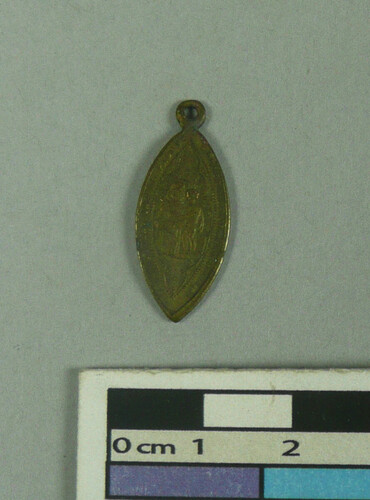 1985.51.515Devotional medallion depicting a figure and child on one side and crosses, hearts and a crown on the other. [SM 25/02/2011]1985.51.515
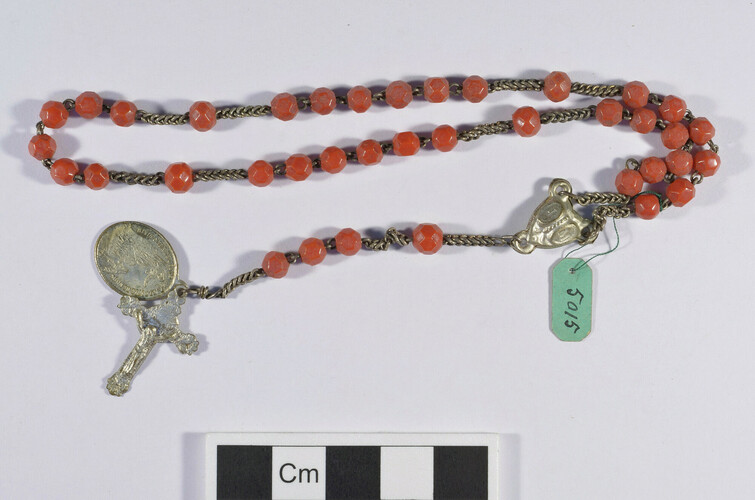 1985.52.2458Amulet, rosary comprised of red ?plastic beads strung together on a white metal chain, with a Crucifix and medal suspended from the end. [RB 01/08/2012]1985.52.2458
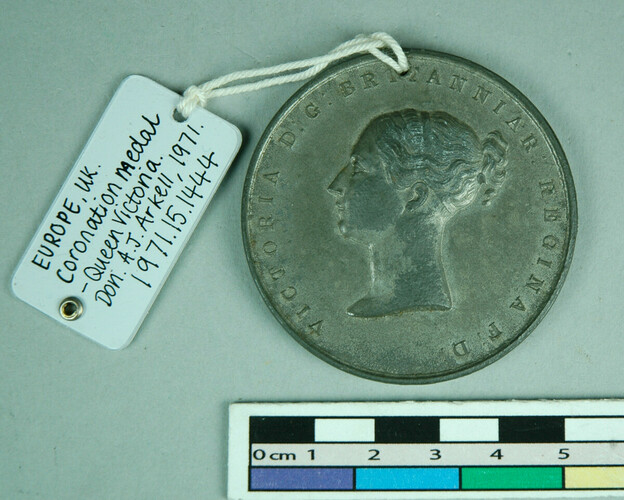 1971.15.1444A medal commemorating the accession of Queen Victoria to the British throne. [MJD 02/03/2010]1971.15.1444
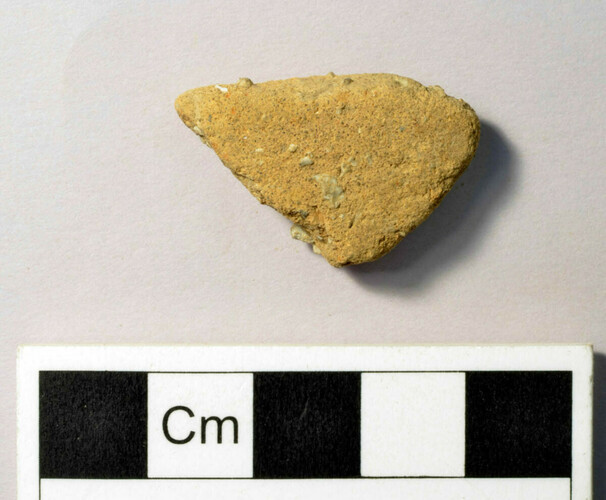 1884.137.23.21Ceramic sherd1884.137.23.21
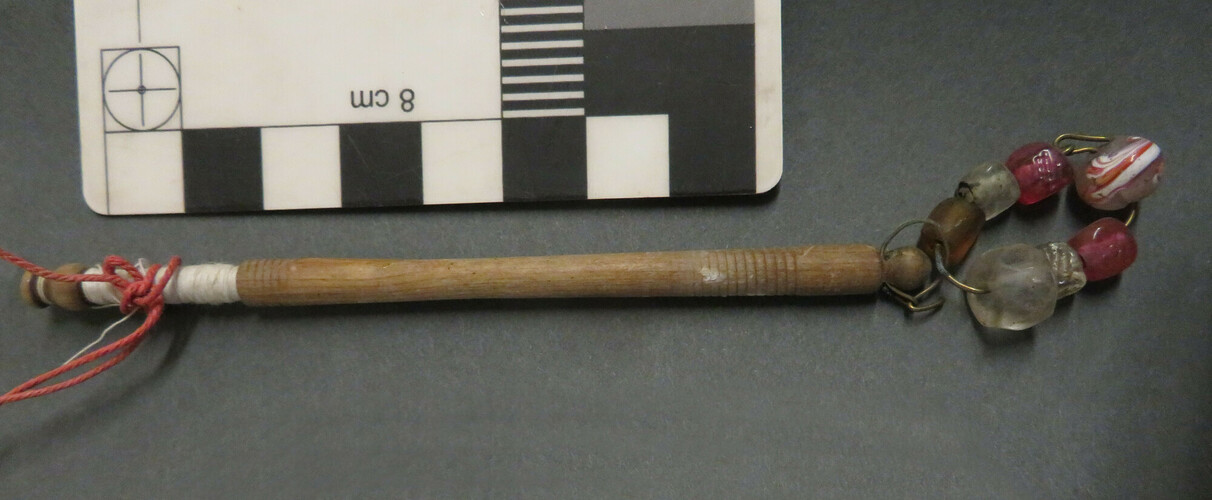 1947.5.5.33Wooden spangled bobbin for lace-making. Part of a set of wooden and bone bobbins still attached to a partially completed sample of lace, for the other bobbins in this set see [1947.5.5 .1 - .42, .83 - .90]. [BS [OPS Move] 26/5/2017]1947.5.5.33
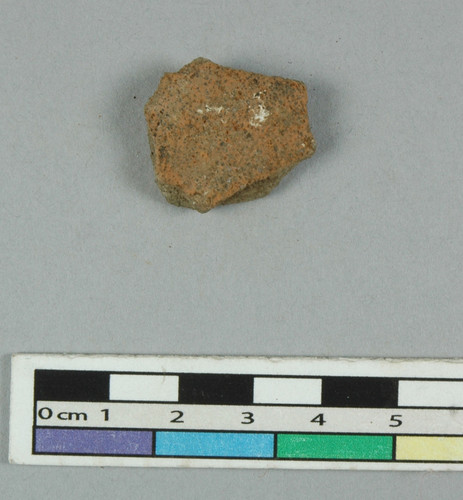 1884.138.8.66Ceramic sherd1884.138.8.66
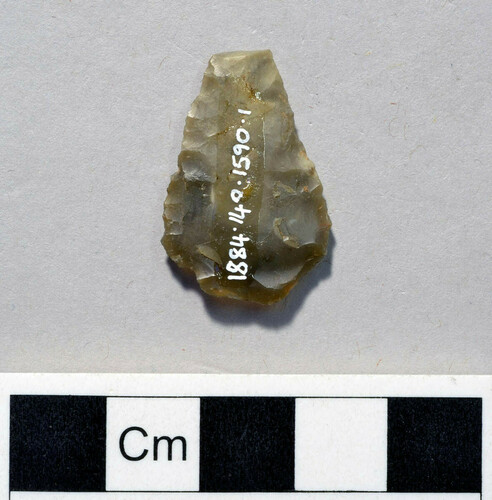 1884.140.1590.1Stone arrow-head1884.140.1590.1