
- Collection type
- Object
- Description
- Trade spear-head hafted as a knife, wooden handle partly covered with red cloth. [ZM 20/02/2006]
- Geographical reference
- Date / Period
- Date made: Circa by 1909
- Date collected
- circa 1909
- Acquisition information
- Donated: 1954
- Materials and processes
- Material Iron Metal, Material Wood Plant, Material Textile, Process Woven, Process Recycled
- Dimensions
- Length: max 410 mm, Weight 297.1 g
- Object numbers
- Accession number: 1954.9.29.1 Other numbers: Beasley no. 16.10.33
- Research and responses
The following notes are drawn from research compiled by Andy Mills as part of the DCF Cutting Edge Project 2006-2007. This knife is a composite weapon, comprising a European Arsenic-Bronze trade spearhead, which has been hafted and sheathed as a knife. On stylistic resemblances of the sheath, which is decorated with split, dyed and woven porcupine quills, it seems most likely that this is a knife from the northern Plains, possibly of Siouan manufacture (see Native American Weapons by C. F. Taylor, published in London by Salamander books in 2001. p. 42, No.6). Knives were of considerable importance to both Sioux & Chippewa men, and their high-ranking warriors wore broad-bladed copper knives slung around their necks at the time of their earliest encounters with European travellers in the 1760s. Long after the Sioux had abandoned these knives in favour of firearms, high-ranking warriors wore a triangular panel of beadwork or tradecloth over the upper chest of their shirts, to recall the prestigious mark of the knife’s wide triangular scabbard. This knife and scabbard are much later, and the scabbard matches a dirk of ‘Bowie Knife’ form – although it still retains the porcupine quillwork for which the Plains are justly famous. Much closer in time to this piece’s likely date of manufacture, the early anthropologist Lewis Henry Morgan recorded the use of knives for the swearing of oaths by Plains peoples in the 1860s. The individual held the knife into the sky, then proclaimed ‘I have spoken the truth’, and passed the blade of their knife through their lips, with their tongue visibly touching the blade. This was believed to be spiritually poisonous, if the swearer had lied. Research Conducted for DCF Cutting Edge 2006/2007 [AM; edited L Peers 19/02/2008].
Search terms: Trade, Tool, Weapon, Knife, Spear-head
Further items to explore
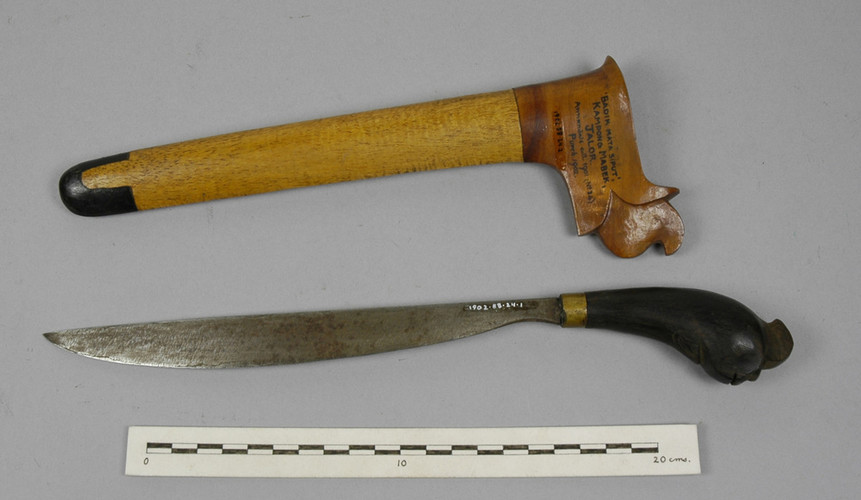 1902.88.24.1Knife [.1] with wooden handle carved into a curved shape representing a cockatoo's head. With wooden sheath [.2] with crosspiece. The tip is painted black. [El.B 30/5/2007]1902.88.24.1
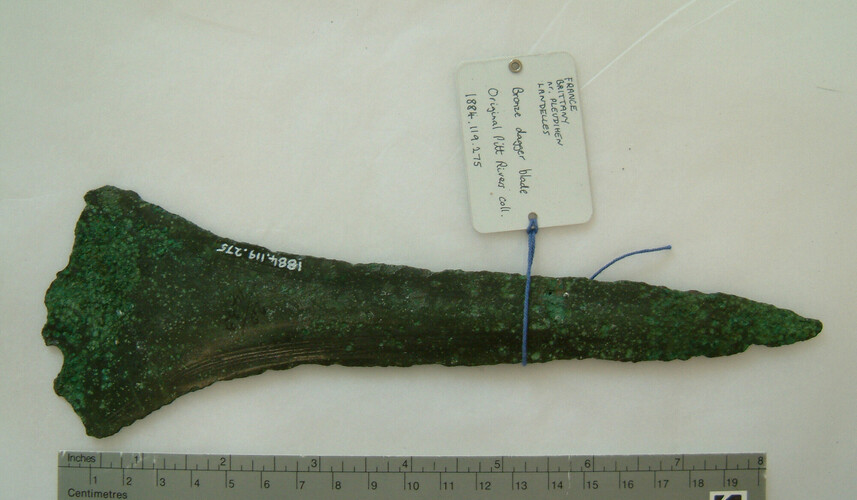 1884.119.275Bronze blade1884.119.275
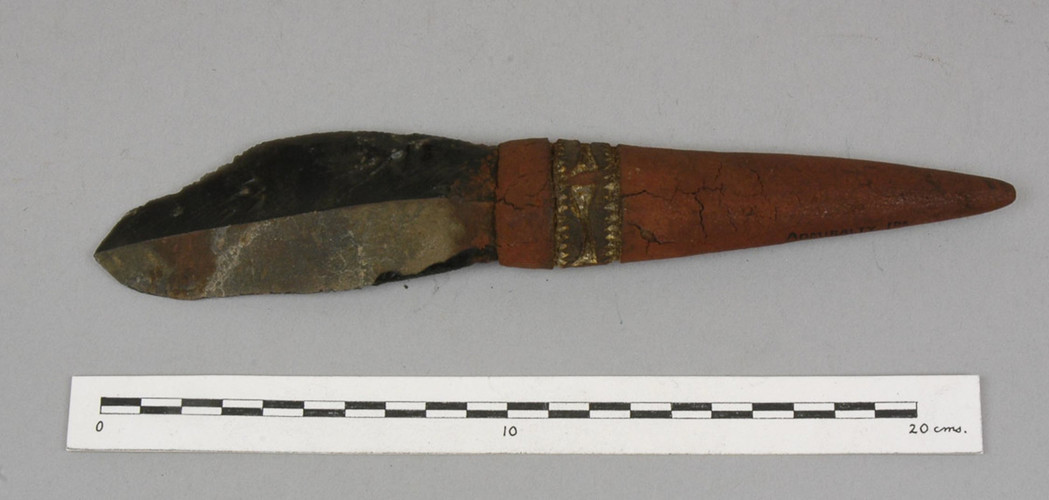 1911.65.14Dagger with obsidian blade and tapering handle painted red with carved geometric decoration that is painted black and white [SM 27/07/2007]1911.65.14
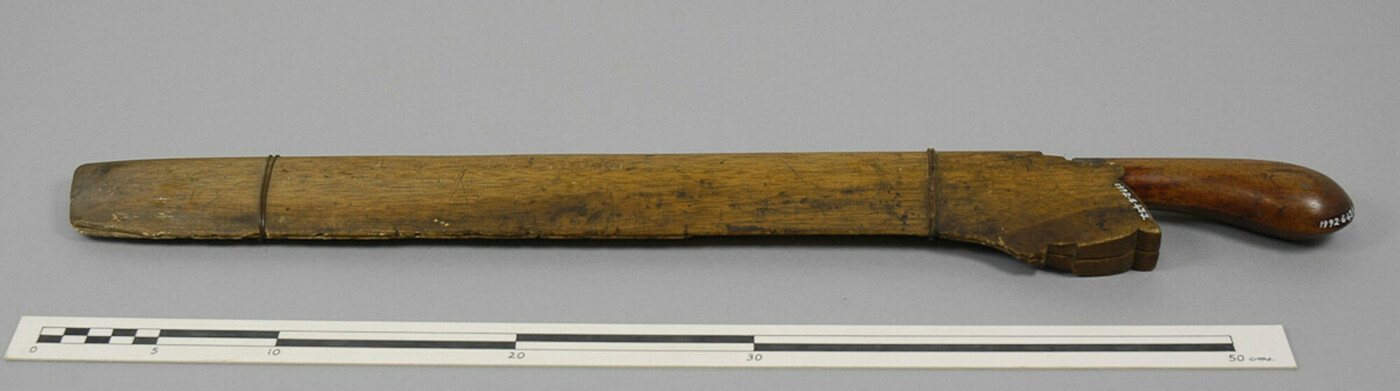 1992.6.43.1Malay knife [kris] [.1] in sheath [.2]. The sheath is made of wood which has been bound in two places by metal wire.1992.6.43.1
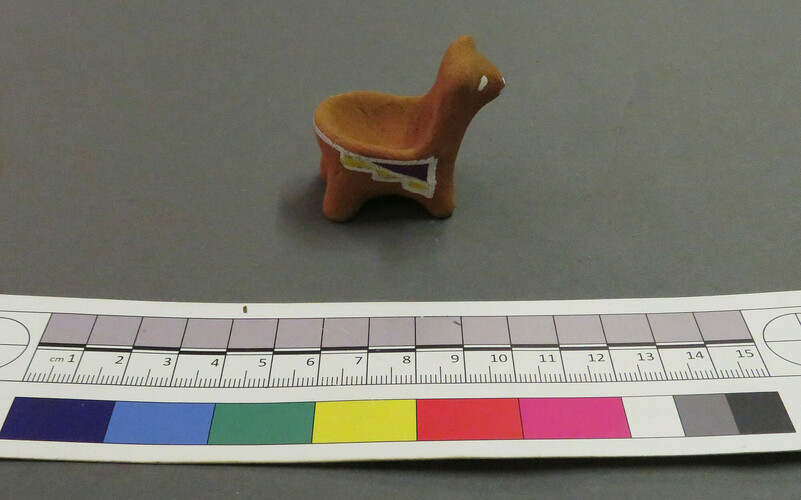 1985.36.225.2Pottery figure of a llama, painted white, purple and yellow. Stood on four legs, with an inwardly curved, bowl-shaped back. [IL [OPS Move] 27/6/2017]1985.36.225.2
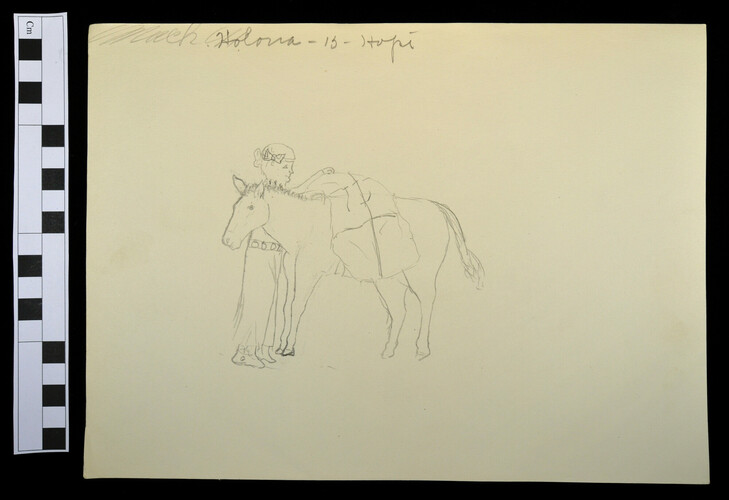 1994.15.386Drawing by a child of a figure with a mule in pencil. [MJD 14/01/2015]1994.15.386
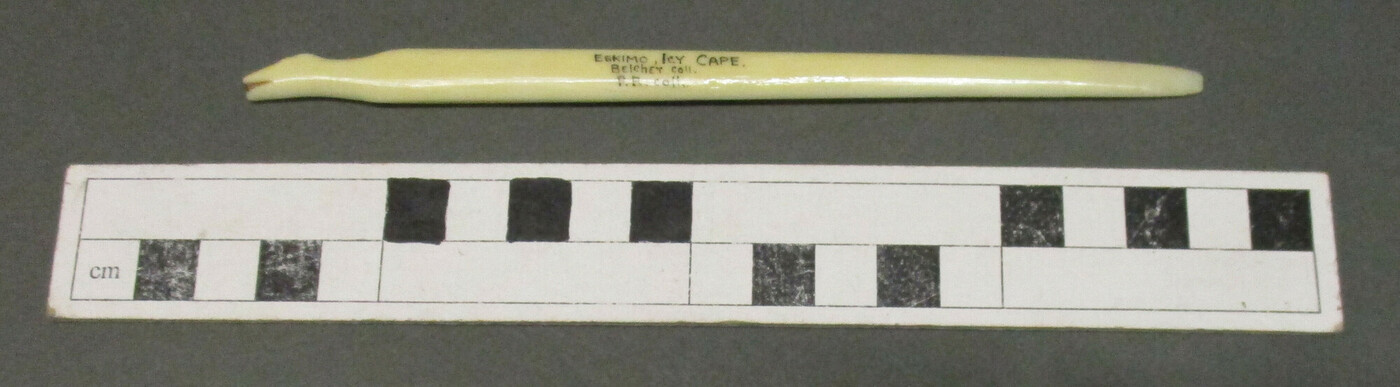 1884.118.5.2Ivory ?knife. The ?knife is curved and has a handle representing a ?seal face. [SB [OPS Move] 28/6/2017]1884.118.5.2
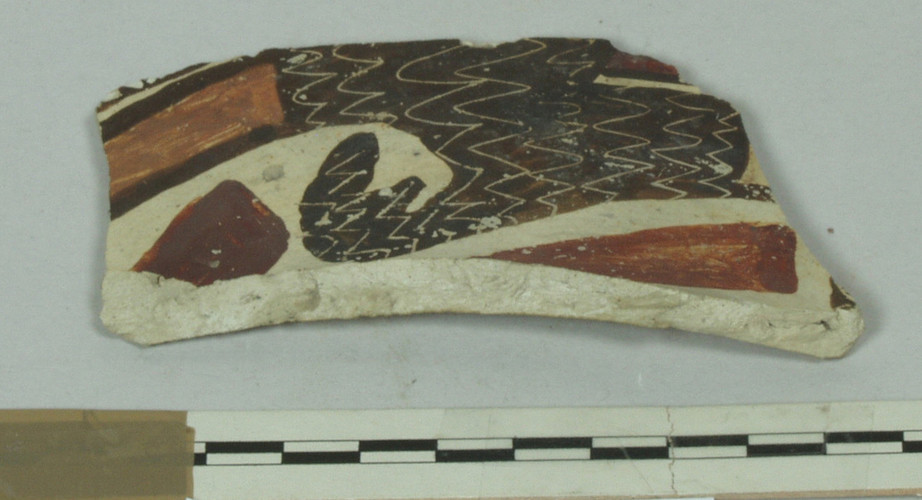 1920.79.18Ceramic sherd with painted decoration1920.79.18