
- Collection type
- Object
- Description
- Playing card. Painted image in the centre of multiple circular shapes with a square in the centre. There are at least three Chinese symbols painted above the image. At the edge of the card three bands with a circle on the end on a black background. A pink stripe has been painted down the centre. The reverse of the card is plain. One card from a pack of twenty-one playing cards 1966.1.892 .1 - .21. [ASh [OPS move] 27/06/2016]
- Geographical reference
- Person
- Field collector E.J. Fitzroy
- PRM source Ipswich Museum
- PRM source Patricia Margaret Maclaren Butler
- Date / Period
- Date made: Before 1952
- Date collected
- By 1952
- Acquisition information
- Purchased: 1966
- Materials and processes
- Material Pigment, Material Paper Plant, Process Painted
- Dimensions
- Depth: max 1 mm, Width: max 22 mm, Length: max 94 mm
- Object numbers
- Accession number: 1966.1.892.13 Other numbers: 1952.202.18
- Research and responses
Notes from George Pollard: An (incomplete, should be 30) example of Chinese money cards, the same family of cards as the four Thai "Kwan Pai" decks 1899.44.5-8.x. These cards bear the names of characters from the Chinese novel Water Margin, e.g. 1966.1.892.11 bears the name 代宗 Dai Zong. Having names on all the cards like this deck does is relatively rare, but the correspondence between card and name seems to be the same as that on a deck which appears in the catalogue of the (now defunct) Mahjong Museum in Japan. The design of the deck is different to this.
Search terms: Toy and Game, Card Game
Further items to explore
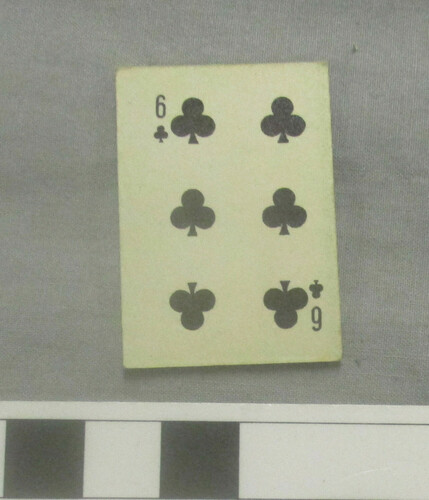 1985.36.214.20Six of Clubs playing card. The reverse of the card is printed green with a white rabbit and butterfly depicted in the centre of the card. See 1985.36.214 .1 for the box and 1985.36.214 .2 - .53 for the cards that are part of this set. [ASh [OPS move] 21/06/2016]1985.36.214.20
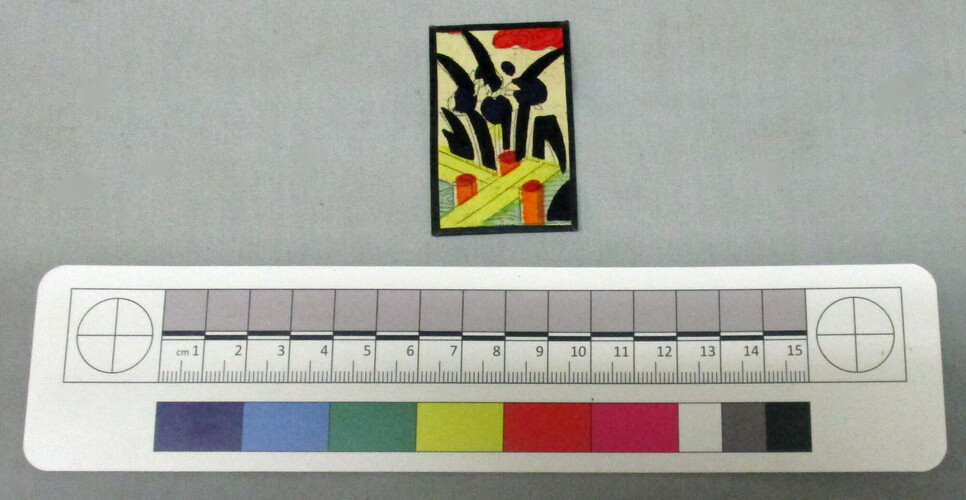 1901.47.1.79Gaming card. With an image which depicts a blue flower (iris?) and black foliage with a yellow and orange bridge over water. The card is rectangular and made from paper, the back of the card is black with an image glued to the front. The card is one of forty-nine black cards in a game set. [AB [OPS Move] 21/7/2016]1901.47.1.79
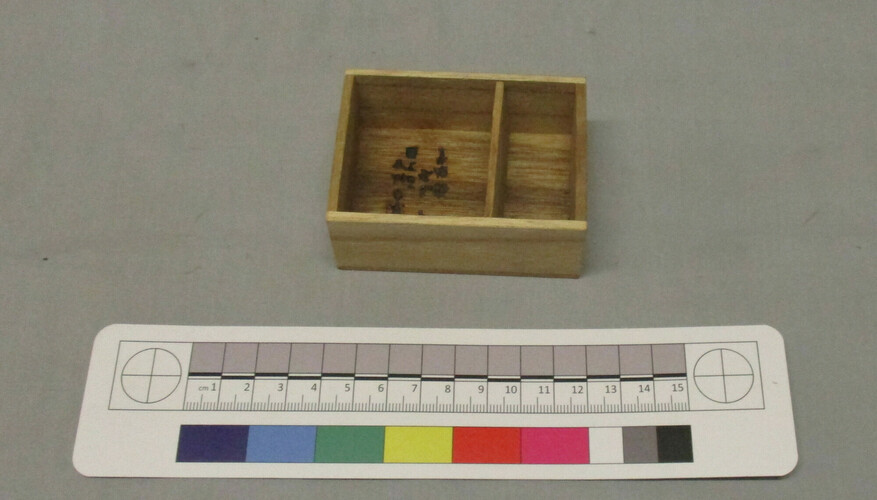 1901.47.1.5Wooden tray for holding gaming tokens. The tray is rectangular in shape with straight edges and a divider inside. [AB [OPS Move] 21/7/2016]1901.47.1.5
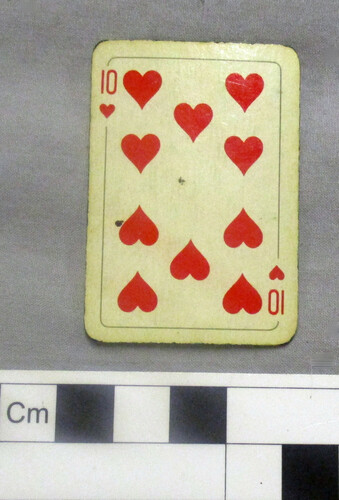 1985.36.211.105Ten of Hearts playing card. On the back of the card is an intricate, swirling floral pattern in blue, cream and gold. Part of a set, which includes a box 1985.36.211 .1 and two full sets of playing cards including three Jokers in each set [see 1985.36.211 .2 - 1985.36.211 .56 for the red cards and 1985.36.211 .57 - 111 for the blue cards]. [ASh [OPS move] 23/06/2016]1985.36.211.105
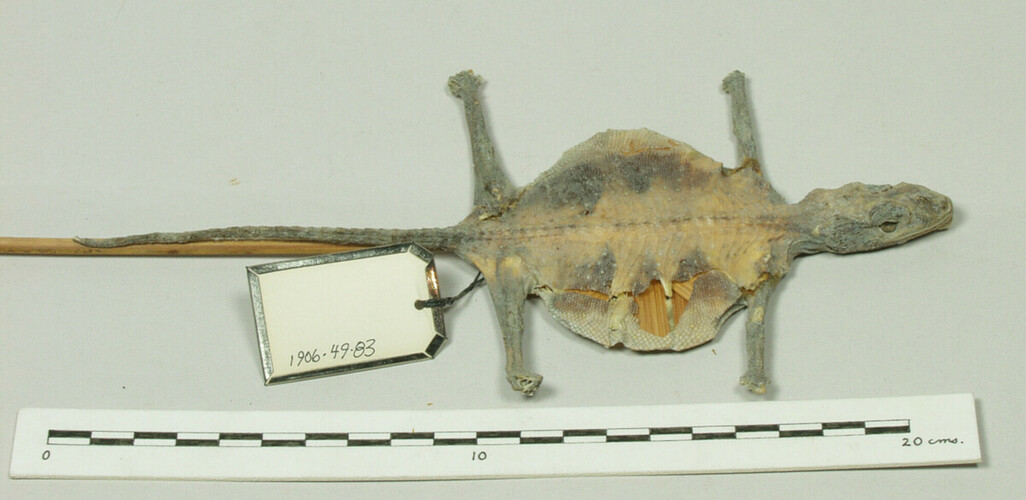 1906.49.83Gecko mounted on a bamboo stick.1906.49.83
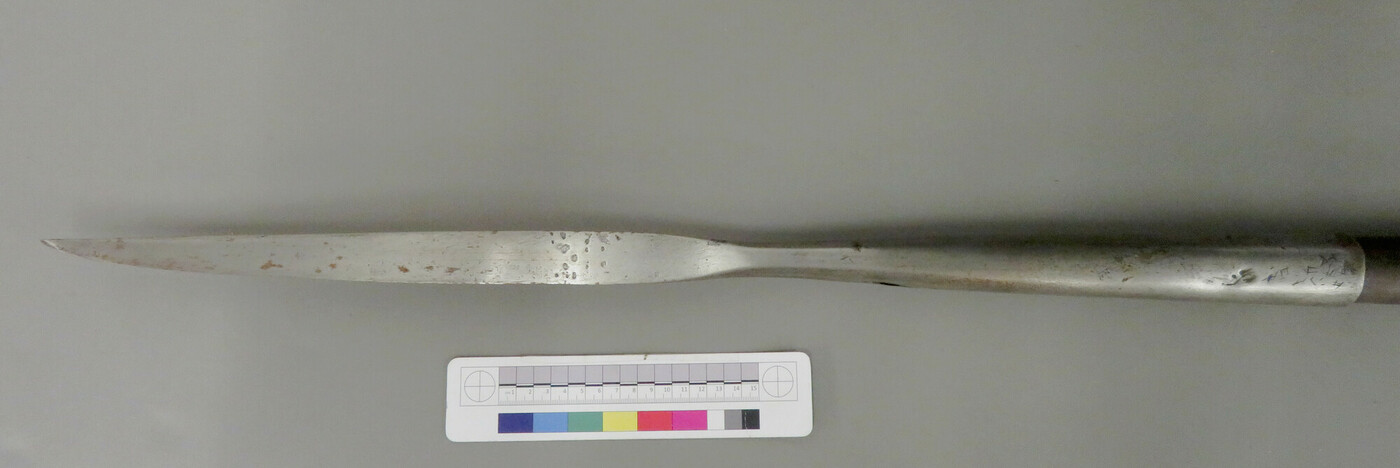 1884.22.5Glaive or sword with narrow pointed flat blade with long socket, holding the head to a hardwood shaft. The base of the socket has incised Chinese characters. [VS [OPS move] 7/9/2018]1884.22.5
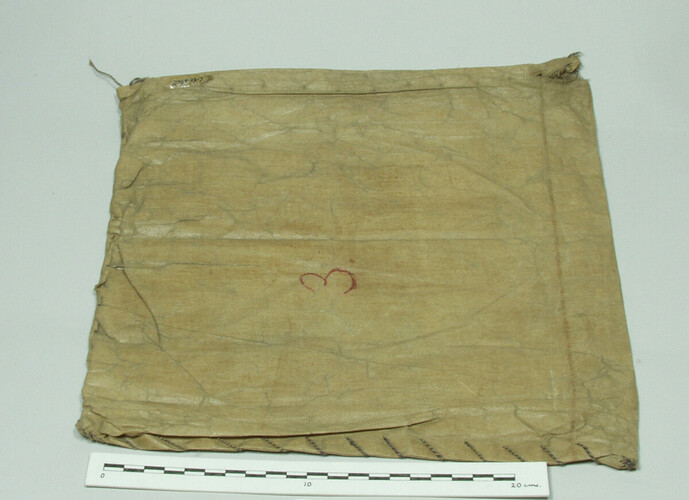 2005.33.7Bag of ?rice textile.2005.33.7
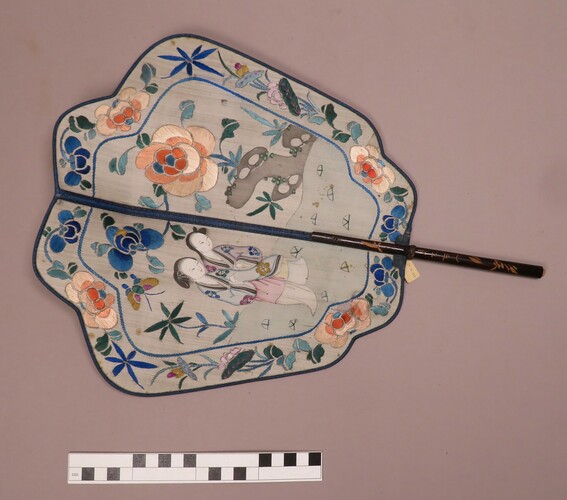 1935.36.45Racquet-shaped painted, silk-embroidered fan.1935.36.45