
- Collection type
- Object
- Description
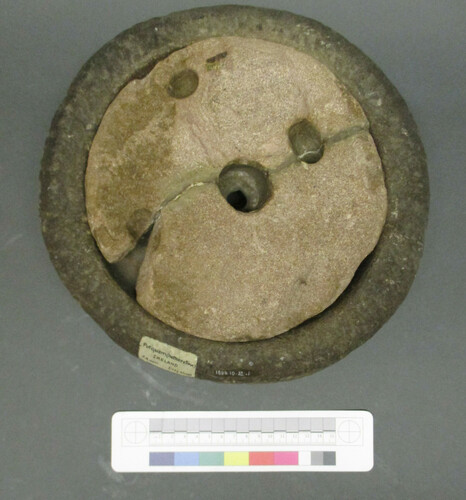
- Circular quernstone with central perforation, an upperstone from a potquern. Split into two parts which have been glued back together. There are three circular hollows on the base. For netherstone see [1884.10.32 .1]
- Long description
- Potquern consisting of three-footed netherstone [.1] and circular upperstone [.2]. [JC [OPS Move] 1/11/2016]
- Geographical reference
- Person
- Maker Unknown Maker
- Field collector Unknown Collector
- PRM source Augustus Henry Lane Fox Pitt Rivers founding collection
- Date
- Date collected
- By 1874
- Acquisition information
- Donated: 1884
- Materials and processes
- Material Stone, Process Ground, Process Perforated, Process Drilled
- Dimensions
- Diameter: max 200 mm, Height: max 40 mm
- Object numbers
- Accession number: 1884.10.32.2 PR Cat other PR nos: 1252 PR Cat other PR nos: 1253
- Research and responses
Pitt Rivers was in Ireland [serving in the Army] from 1862-66, this object may have been obtained during this period [Bowden, 1991: 60-4]. [AP Leverhulme project on founding collection 1995-1998]
Search terms: Food and Drink, Tool, Grinder, Food Accessory
Further items to explore
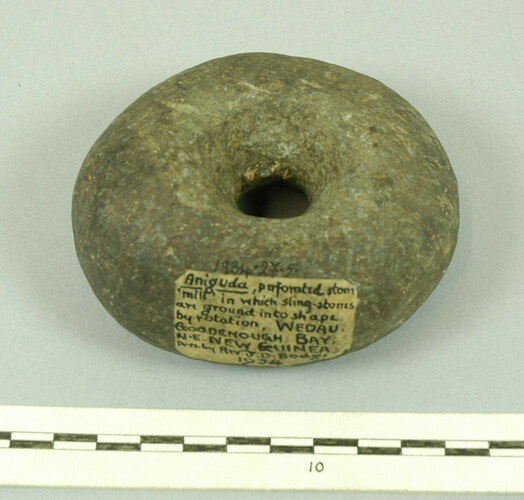 1934.27.5Doughnut-shaped stone with central hole, for shaping sling-stones. [El.B 13/2/2007]1934.27.5
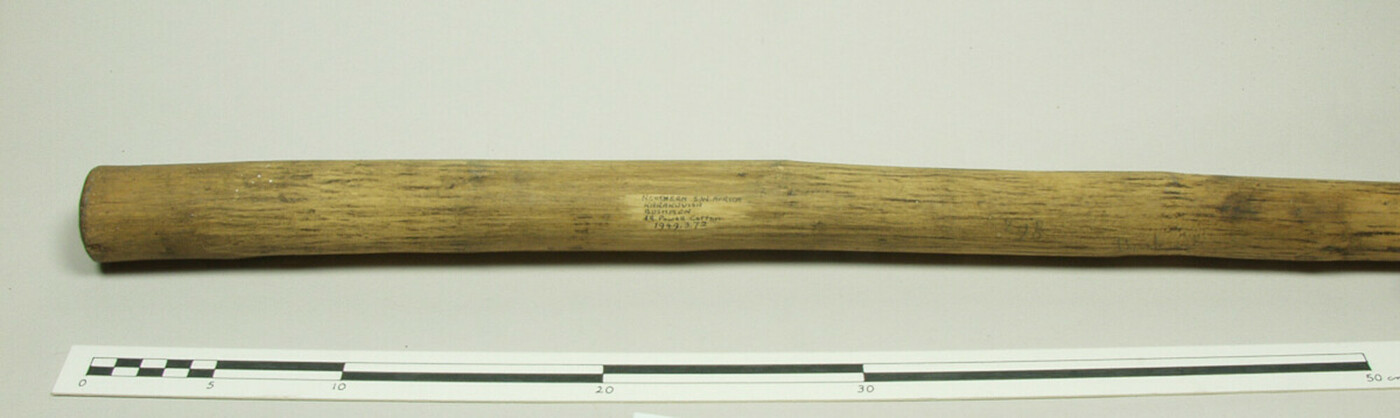 1949.3.72Wooden pestle. [El.B 'DCF 2004-2006 What's Upstairs?' 6/4/2005]1949.3.72
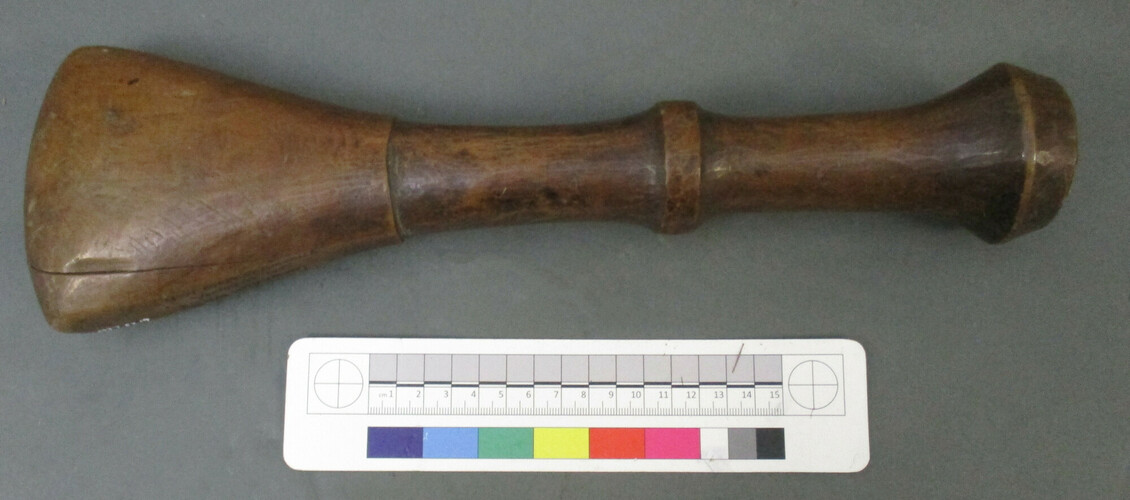 1937.52.19Wooden club-like pestle. [FB 13/6/2017]1937.52.19
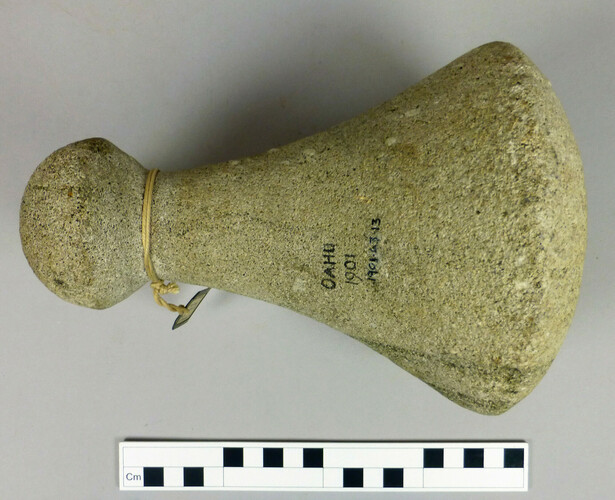 1901.43.13Stone pounder with knob-shaped handle at the top and curved step that tapers out to form a round convex base. [ZM 20/5/2004]1901.43.13
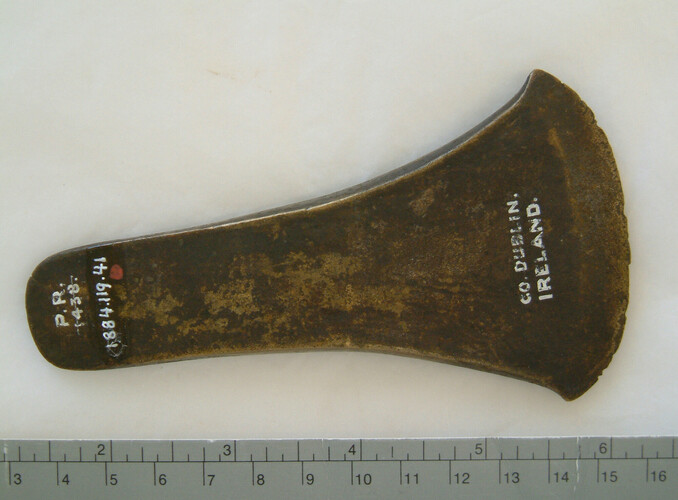 1884.119.41Bronze flat axe1884.119.41
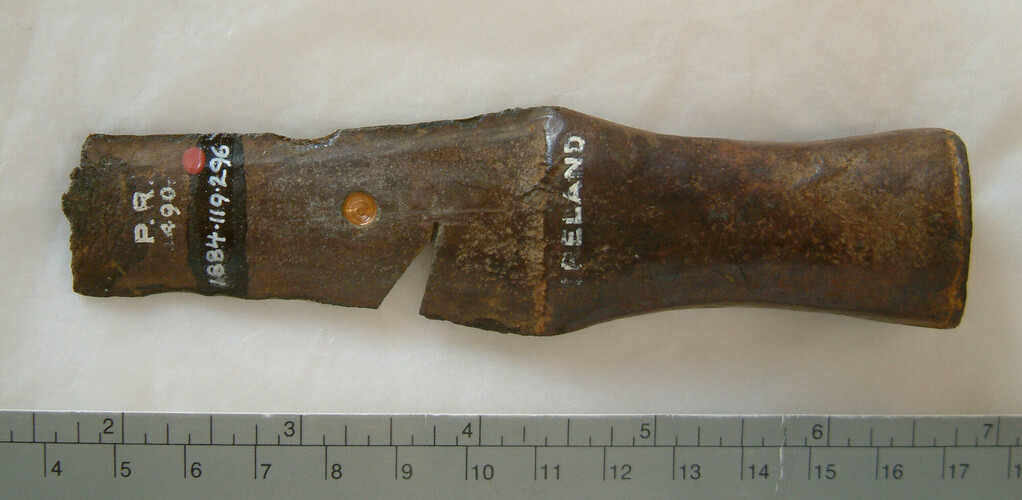 1884.119.296The lower part of a large oval-sectioned socketed bronze dagger.1884.119.296
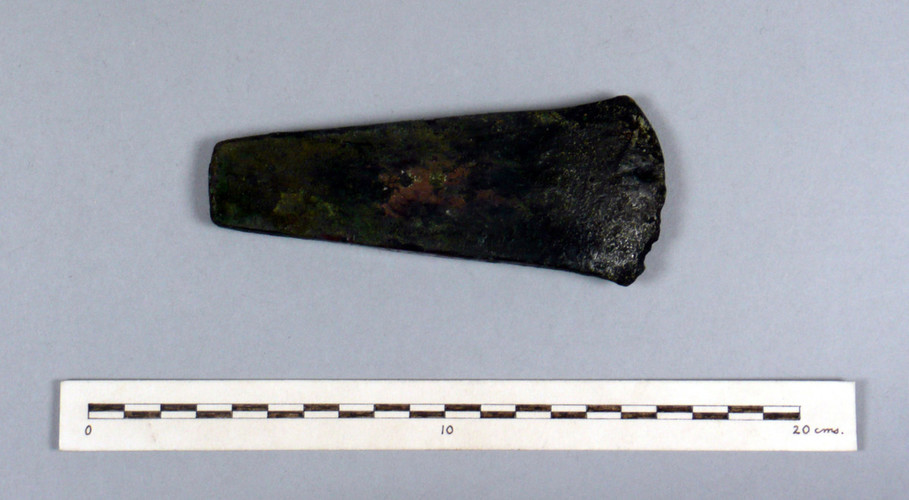 1892.67.84Arsenical copper alloy flat axe, with a thick slightly convex butt. The sides are nearly flat in cross-section. [MN 04/02/2009]1892.67.84
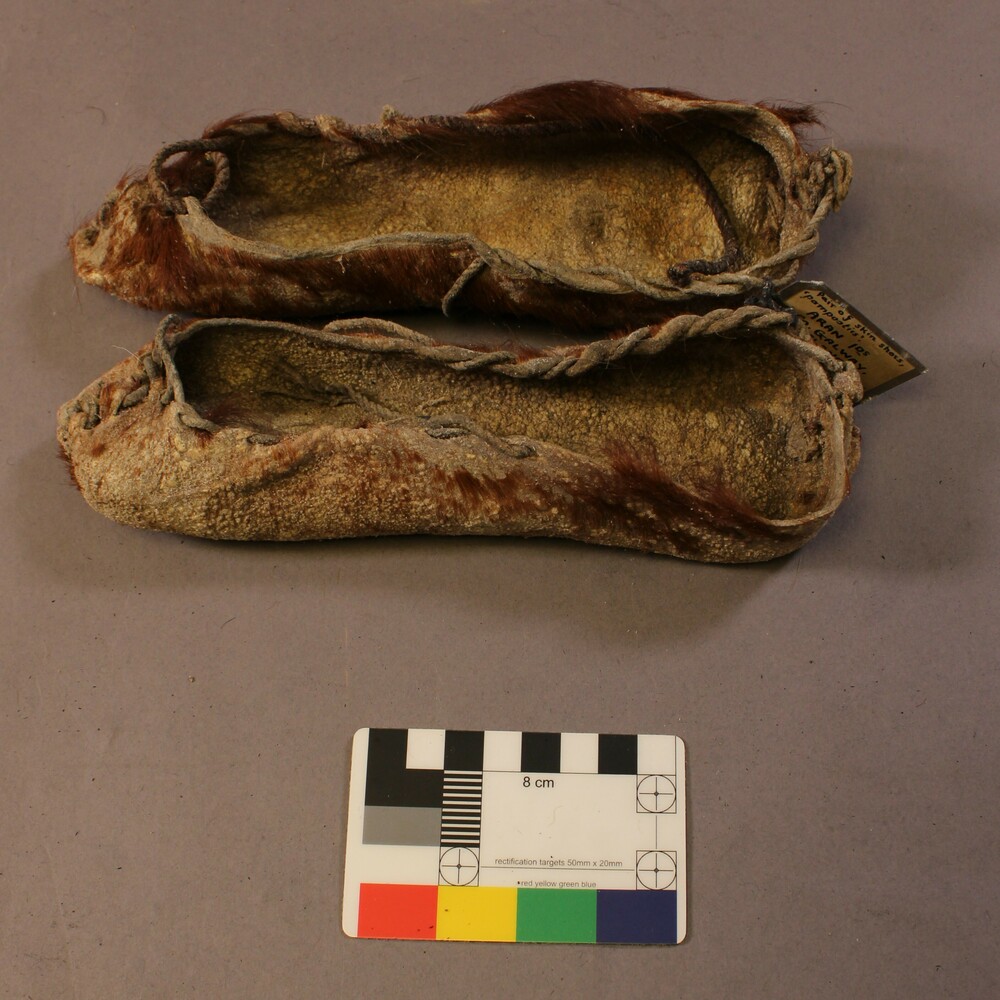 1931.34.1.1-2Calfskin shoes with the hair (red) outside. They are drawn up by two cords, one sews up the toe and continues along one edge of the shoe, the other the heel back and the other edge to the instep where the two ends are used for tying1931.34.1.1-2