
- Collection type
- Object
- Description
- 10 opercula of shells. [LM 'DCF 2004-2006 What's Upstairs?' 1/8/2005]
- Long description
- 10 opercula of shells. Stored in a small box. Each operculum is cream-coloured and rounded on one side, with a brown striated flat surface on the other. [CAK 23/06/2009]
- Geographical reference
- British Columbia Queen Charlotte Islands (Haida Gwaii) Cumshewa Inlet
- Cultural groups
- Haida
- Date / Period
- Date made: Before 1924
- Date collected
- By 1924
- Acquisition information
- Donated: 1924
- Materials and processes
- Material Operculum Shell
- Dimensions
- Length: max 15 mm
- Object numbers
- Accession number: 1924.33.16
- Research and responses
Opercula are often used to decorate bentwood boxes and grease dishes, or used as teeth on masks. [CAK 23/06/2009]
The following information comes from Haida delegates who worked with the museum’s collection in September 2009 as part of the project “Haida Material Culture in British Museums: Generating New Forms of Knowledge”:
The opercula were viewed with items of personal adornment on Friday Sept 11, 2009. Gaahlaay (Lonnie Young) explained that these are snail shells. They are found stuck to rocks. Much larger ones exist and are also eaten. [CAK 17/05/2010]
Search terms: Animalia, Specimen, Ornament, Food and Drink, Shell, Food
Further items to explore
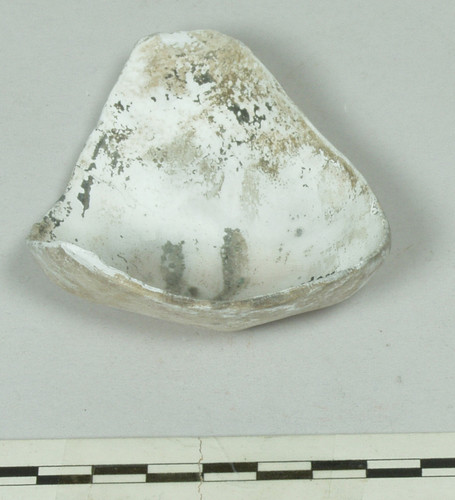 1921.92.62Shell fragment1921.92.62
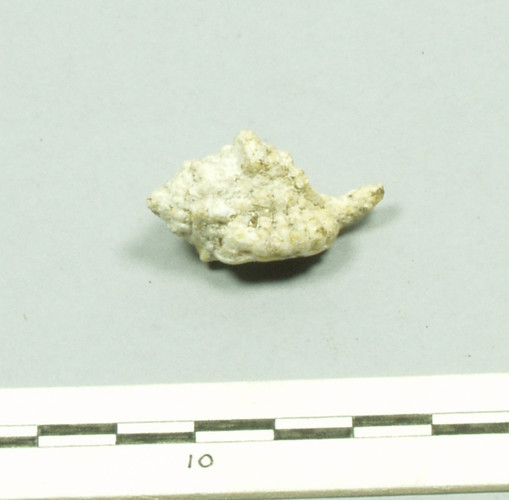 1931.86.326.10Mollusc shell. [El.B 'DCF 2004-2006 What's Upstairs?' 20/5/2005]1931.86.326.10
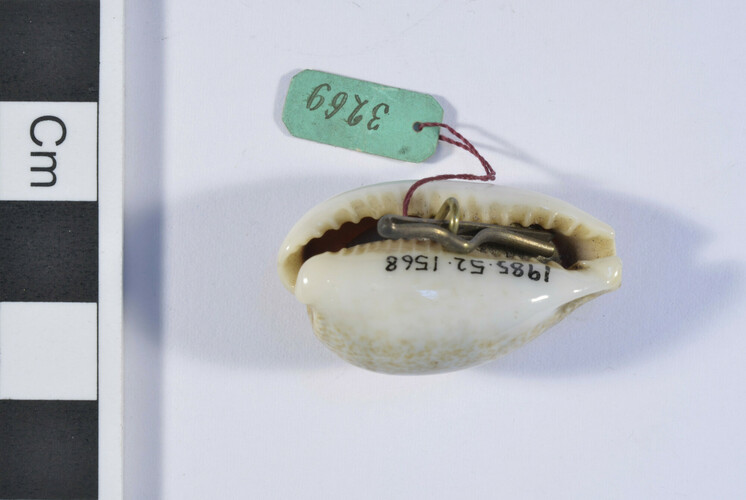 1985.52.1568Amulet, a cowrie shell cufflink, with a copper alloy metal loop and clip for attachment. [RB 28/05/2012]1985.52.1568
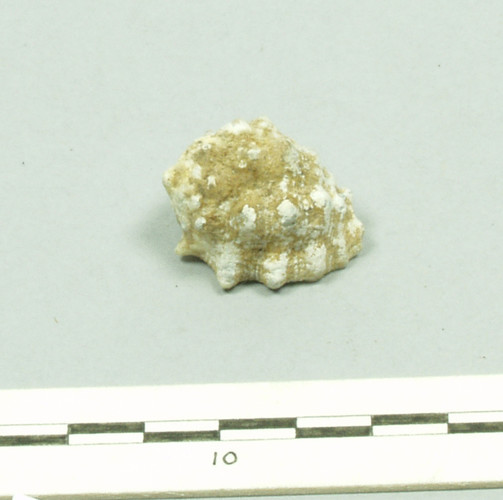 1931.86.326.11Mollusc shell. [El.B 'DCF 2004-2006 What's Upstairs?' 20/5/2005]1931.86.326.11