
- Collection type
- Object
- Description
- Cow-horn ladle, handle carved into humanoid (?bear) figure holding onto the hind flippers or legs of another animal (possibly a seal or a sea wolf). [CAK 01/04/2009]
- Long description
- Cow-horn ladle, handle carved into humanoid (?bear) figure holding onto the hind flippers or legs of another animal (possibly a seal or a sea wolf). Eyes, ears and flippers inlaid with haliotis shell. [CAK 01/04/2009]
- Geographical reference
- British Columbia Haida Gwaii (Queen Charlotte Islands) NW Coast
- Cultural groups
- Haida
- Date / Period
- Date made: Before 1951
- Date collected
- By 1951
- Acquisition information
- Donated: 1951
- Materials and processes
- Material Cattle Horn Animal, Process Steamed, Process Moulded, Process Carved, Process Inlaid
- Dimensions
- Length: max 225 mm
- Object numbers
- Accession number: 1951.6.54 Other numbers: WHMM No. 170243.
- Research and responses
The following information comes from Haida delegates who worked with the museum’s collection in September 2009 as part of the project “Haida Material Culture in British Museums: Generating New Forms of Knowledge”:
This spoon was viewed alongside other horn and wood spoons on Wednesday Sept 9, 2009. No information about this particular spoon was recorded from delegates. The spoons as a collection elicited a lot of discussion amongst delegates. They discussed whether the different varieties of spoons reflected differences in the owner's rank, or differences in function (i.e. everyday use vs. use at a feast). It was thought that the plain spoons (i.e. those collected by Charles Harrison, 1891.49.50- .51) were for everyday use. Delegates were also interested in the greenish hue of many of the spoons and this was identified as unusual. One delegate offered that, in general, mountain goat horn was used for smaller spoons because they have a narrower shape to their horns. People noted that the shape of a spoon can be altered by heat (i.e. from the soup itself). [CAK 01/06/2010]
Search terms: Food and Drink, Figure, Spoon, Animal Figure, Food Accessory
Further items to explore
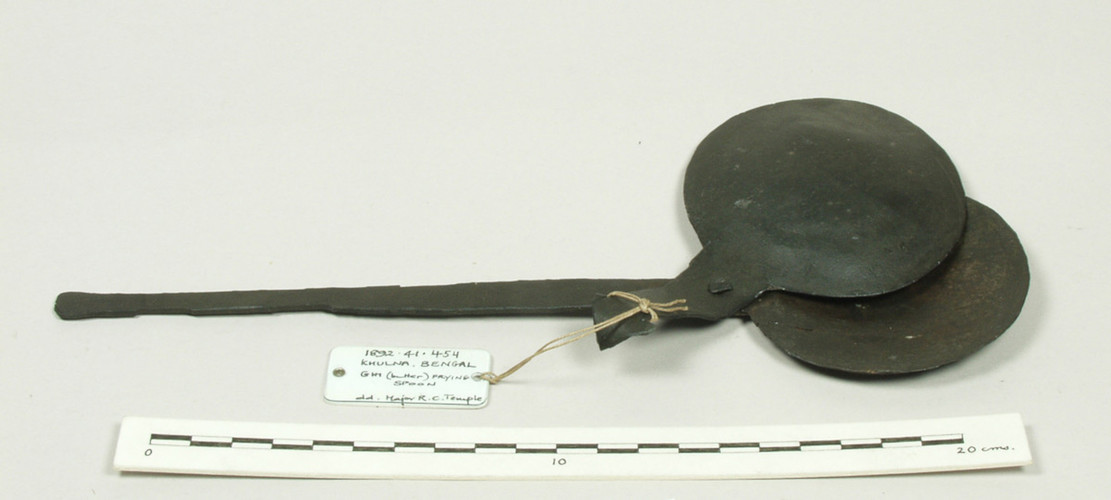 1892.41.454Frying spoon for ghee / ghi. [N.B. 'DCF 2004-2006 What's Upstairs?' 13/4/2005]1892.41.454
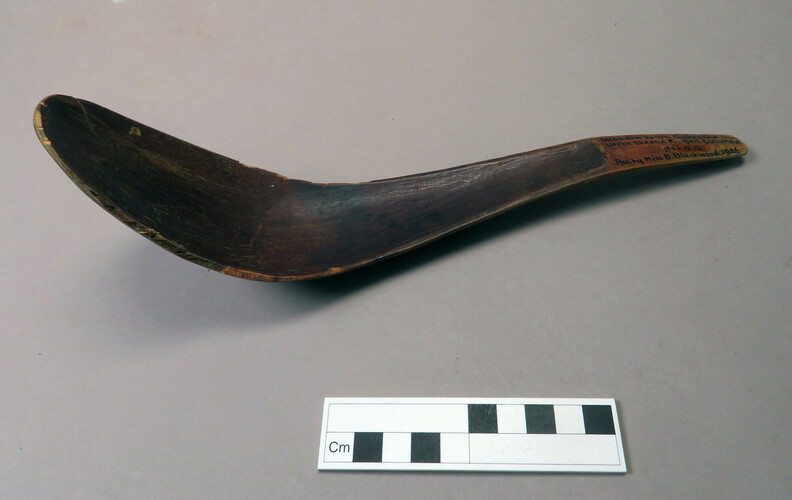 1926.12.12Wooden spoon, bowl and handle curved in one piece. [El.B 'DCF 2004-2006 What's Upstairs?' 17/3/2006]1926.12.12
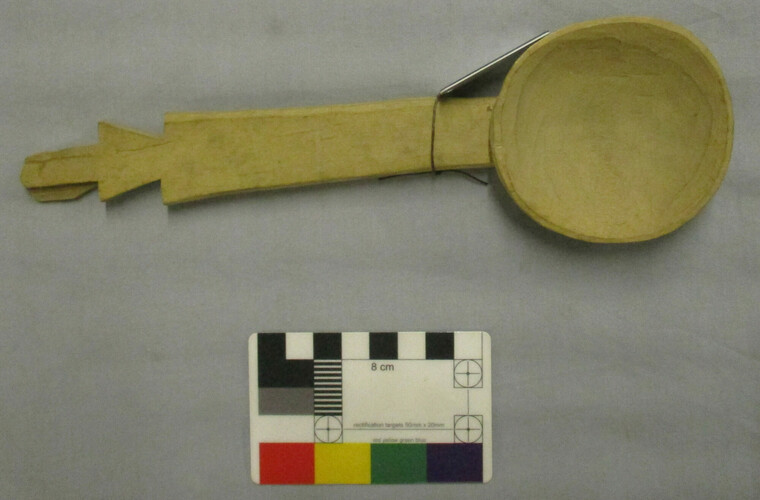 1966.16.103.2Wooden spoon carved from light wood. The handle is wide and flat and extends from towards the centre side of the bowl. The end is carve with a triangular shape which is surmounted by a shape that has had its edges broken off. The bowl is plain and round. [MOBB [OPS move] 23/5/2016]1966.16.103.2
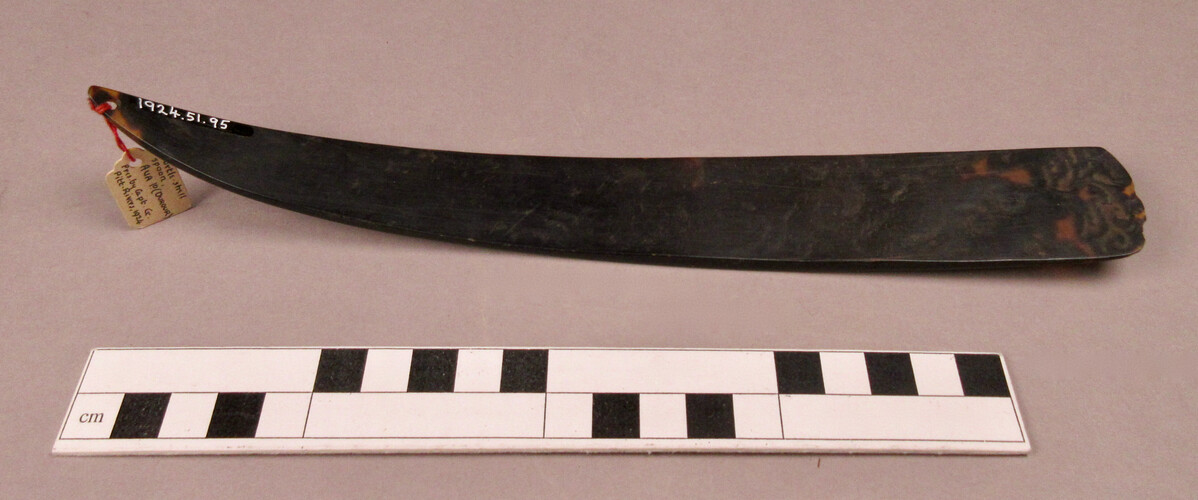 1924.51.95Long narrow turtleshell spoon, pointed and perforated at one end. [LM 'DCF 2004-2006 What's Upstairs?' 15/3/2006]1924.51.95
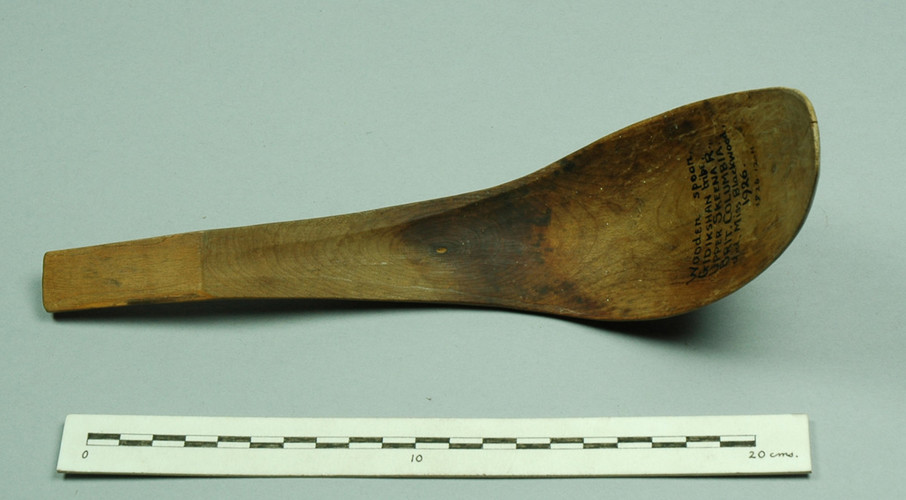 1926.12.11Wooden spoon, bowl and handle curved in one piece.1926.12.11
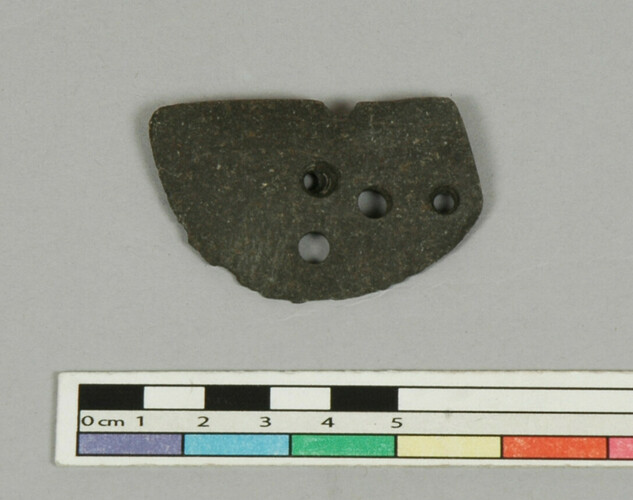 1906.76.9Piece of slate, roughly half-moon shaped, with four holes and part of a fifth. [El.B 24/02/2012]1906.76.9
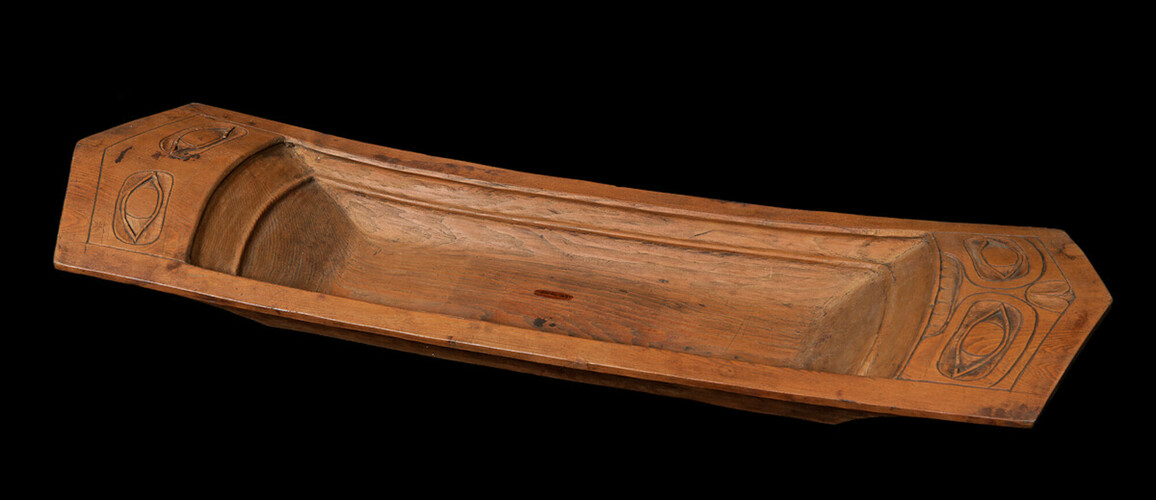 1891.49.45Wooden food dish, in one piece, flat bottomed, the sides diverging upwards, the ends produced as flat wide flanges for lifting.1891.49.45
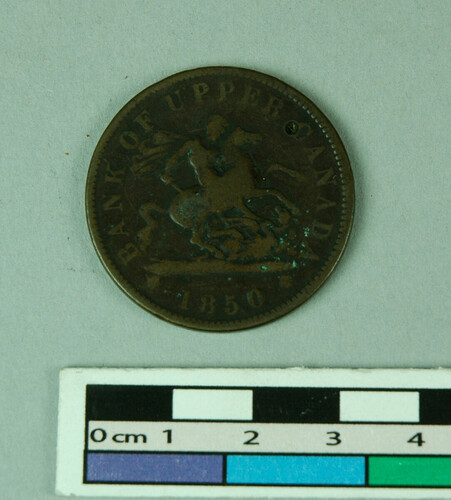 1946.8.125Circular copper one penny token. [MJD 08/04/2010]1946.8.125