
- Collection type
- Object
- Description
- Stone wedge showing lots of wear, particularly at the pointed edge. [CAK 29/05/2009]
- Long description
- Stone wedge showing lots of wear, particularly at the pointed edge. The tool is shaped to a point on end end. At the other end, one side has been worked to produce four grooves, presumably to allow the tool to be gripped in the hand. The stone has grey and brown grains in it. [CAK 29/05/2009]
- Geographical reference
- British Columbia Haida Gwaii Queen Charlotte Islands) NW Coast
- Cultural groups
- Haida
- Date / Period
- Date made: Before 1924
- Date collected
- By 1924
- Acquisition information
- Donated: 1924
- Dimensions
- Length: max 346 mm
- Object numbers
- Accession number: 1924.33.1
- Research and responses
The following information comes from Haida delegates who worked with the museum’s collection in September 2009 as part of the project “Haida Material Culture in British Museums: Generating New Forms of Knowledge”:
This tool as viewed alongside other stone tools on Monday Sept 14, 2009. Delegates did not necessarily accept the description of this tool as an adze. Christian White proposed that it is a wedge used to remove planks from cedar logs. Wedges, it was noted, however are usually made from wood. Other delegates thought this might used as a pick-axe. See also the entry for 1924.33.2.
In response to the collection of stone tools, delegates commented that the manufacture of stone tools occurred on Haida Gwaii and that it is possible to identify places where tools were made today based on archaeological analysis of detritus at the sites. They noted that there are a variety of stone types on Haida Gwaii and most of the tools found on Haida Gwaii were produced locally. There are sources of obsidian, for instance, although basalt is more common. [CAK 17/05/2010]
Further items to explore
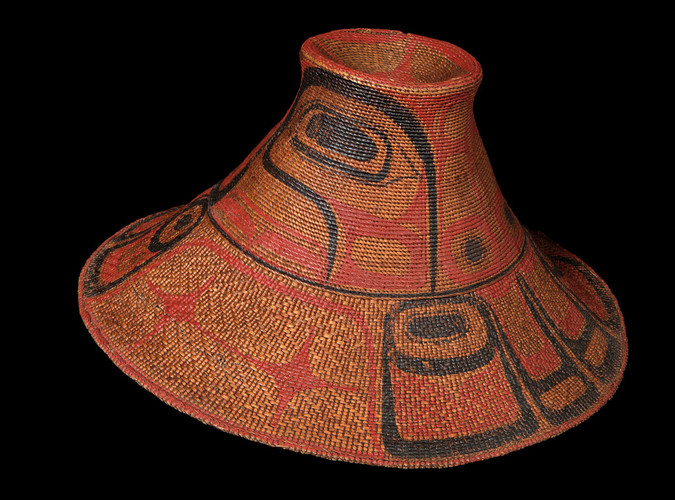 1884.91.19Spruce root hat done in a three-twine weave with a Z-twist and painted with a highly stylised bird. [CAK 25/05/2010]1884.91.19
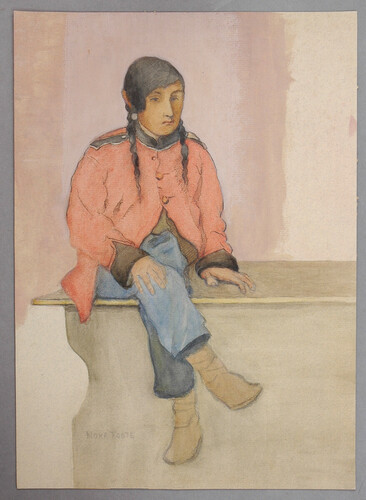 1952.10.5.2Watercolour portrait of a young man in red jacket and blue trousers. [El.B 25/04/2008]1952.10.5.2
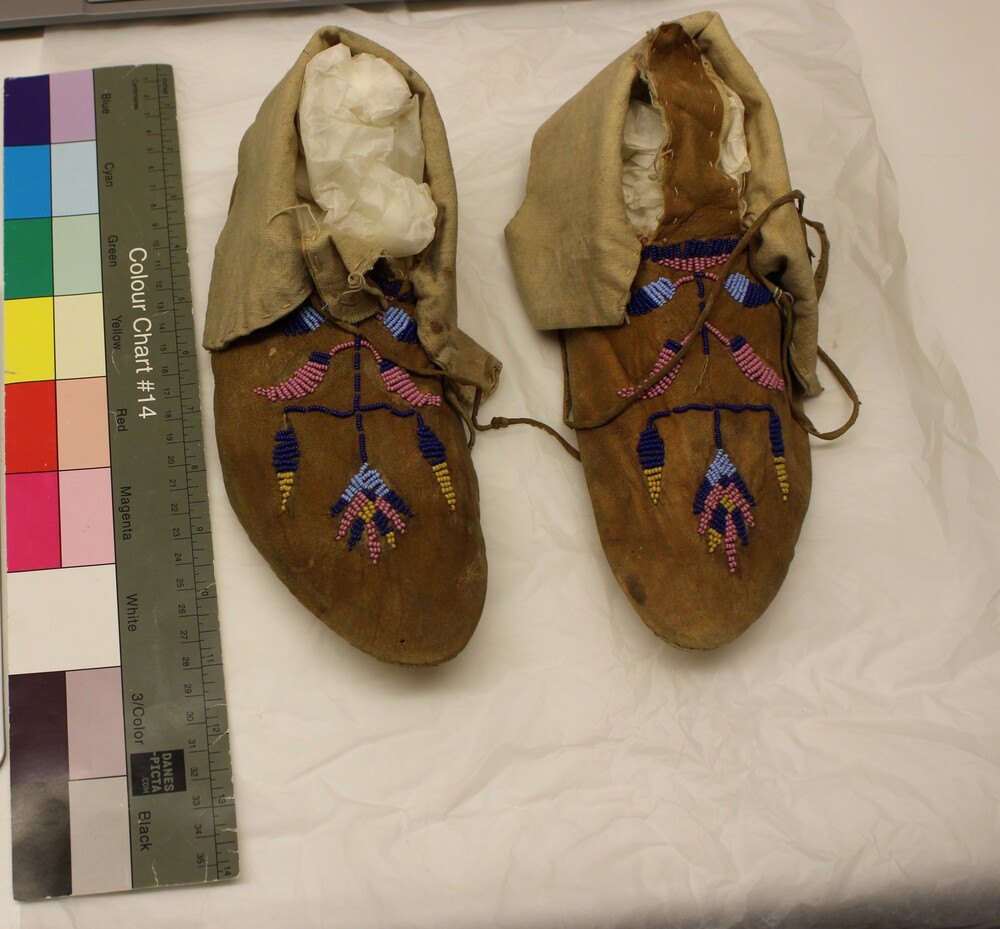 1948.12.15.1Pair of moccasins, rawhide soles, skin tops and canvas flaps. Decorated with conventionalized floral spray in beadwork. Denver No. B-80-G.1948.12.15.1
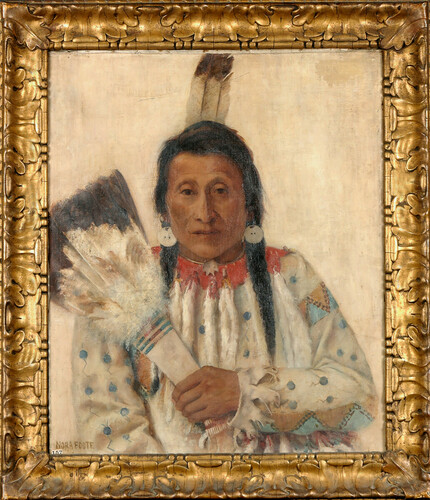 1984.19.1Painting of Little Ears, medicine man of the Blood Indians, wearing gala dress made by himself of skins, ermine tails and beads. The eagle feathers denote his rank.1984.19.1