
- Collection type
- Object
- Description
- Wooden figure of a rower, part of an Egyptian funerary boat model [see 1884.81.10 .1]. [FB 09/01/2013]
- Long description
- Wooden figure of a rower, part of an Egyptian funerary boat model [see 1884.81.10 .1]. The rower is in a crouched position and is painted with black hair and wearing a white loin cloth. There are perforated holes in the figures hands and a wooden peg inserted in the right foot to secure to the boat. The arms are socketed with wooden pins and are loose in their sockets. The number 12 is written on the figures chest in blue pencil. [FB 09/01/2013]
- Person
- Maker Unknown Maker
- Field collector Unknown Collector
- PRM source Augustus Henry Lane Fox Pitt Rivers founding collection
- Date / Period
- Date made: Circa 2050-1850 BC Archaeological period: Ancient Egyptian Middle Kingdom
- Date collected
- ?By 1879
- Acquisition information
- Donated: 1884
- Materials and processes
- Material Wood Plant, Material Pigment, Process Carved, Process Perforated, Process Painted, Process Inscribed
- Dimensions
- Height: max 163 mm, Width: max 55 mm
- Object numbers
- Accession number: 1884.81.10.7 PR no.: 1/ 9801
- Research and responses
From the research of Sam Powell: Model boat 1884.81.10 is a model boat with a crew of nineteen. My research focuses specifically on the figures, rather than the vessel as a whole but for more information, see Merriman, A. (2011). Egyptian watercraft models from the predynastic to Third Intermediate periods. BAR International Series 2263. Oxford: British Archaeological Reports Oxford Ltd. P373.
A provenance of Thebes is proposed by Merriman based on the hull’s stem design and comparisons with known Theban examples. She suggests the figures likely not original to the vessel and pastiche from a number of different crews.
My corpus suggests that a large number of models have been altered post-excavation in order to make them more aesthetically appealing. I recorded a lecture on such pastiche models using a boat in the Ure Museum, Reading as a case study (https://youtu.be/JA-yl9FQbOg?si=_JFtaiKHzOihxs2P), and will hopefully be writing an article about it shortly.
The figures themselves comprise of fourteen rowers (1884.81.10.2-1884.81.10.15), a helmsman operating the tiller at the stern of the vessel (1884.81.10.16), three standing figures (1884.81.10.17-1888.81.10.19), and a seated figure wrapped in a cloak, likely representing the deceased (1884.81.10.20).
For the standing figures, 17 and 18 have the right hand pierced, while 19, stood in the place of lookout at the bow of the vessel has the left pierced. Typically, the lookout stands with the right arm outstretched and the index finger of the right hand outstretched to indicate the direction of travel. The flat right palm of 19 seems to have the thumb on the wrong side of the hand, and may suggest the arms have been reassembled to the wrong shoulder at some point. The three figures, therefore are more likely to be attending to a sail on their original vessel.
Although Merriman suggests the figures may not all be from the same original model, I feel they are stylistically all similar enough to be from the same geographical provenance as some variance is normal within a grouping.
Their stylistic features are very similar to other examples from Thebes (modern Luxor) such as 20.9.83.74, World Museum, Liverpool (https://www.liverpoolmuseums.org.uk/artifact/model-of-servant-1) and W673, The Egypt Centre, Swansea (https://egyptcentre.abasetcollections.com/Objects/Details/3578). There are other comparable examples.
My online catalogue will be publicly available at https://woodenfuneraryfigures.abasetcollections.com/
There is a discrepancy about the number of rowers in the boat between the entries given above. [AP Leverhulme project on founding collection 1995-1998]
With reference to the discrepancy described above, the accession book entry mentions the 8 pairs of rowers with two missing, it does not make any mention of the other five figures on board the boat. If these are added to the 14 rowers then the 19 figures recorded in the Delivery Catalogue is reached. Close inspection of the figures on the boat would suggest that not all of the rowers are original. The head of the fourth rower from the stern who is sitting on his own appears to be carved differently to the other to the other rowers and there is a ridge along the top of his kilt that the others do not have. In addition, the rower on the port side nearest the bow appears to be larger than the other figures, though this could be put down to the hand carving. It is possible that the dealers, Rollin & Feaurdent added one or more figures to make the model more complete before it was sold to the General. When the case is next opened it would be useful if a closer inspection could be carried out to establish whether the figures are original or not. [RW May 2003]
Previously displayed in C.45.A situated behind the totem pole in the court until 6 January 2013 when it was removed for redisplay in Case 7.A - Treatment of the Dead - Ancient Egypt, Peru and Chile. At this point the separate components of the boat [paddles, & various figures] were individually accessioned with part numbers of the main accession number 1884.81.10 [originally given to the boat]. With regards to some of the rowers possibly being from another artefact and not original to the set, this would be difficult to say for certain without having an expert look at the boat and rowers. Even if a number of the rowers are indeed not 'original' to the set, the boat and all its parts came from the founding collection in 1884 and so are a set in terms of how they came to be in the Museum and so it was considered best on closer inspection in 2013 to keep all the parts together and number them as components of the whole. Therefore the boat, paddle and rowers are now 1884.81.10 .1 - .29 [FB 11/01/2013]
The wood appears to be in a stable condition. The painted surfaces are powdery. Much is missing from the model, i.e. the main mast etc (evidence of an old repair). Of the 20 rowers, 6 are missing and 2 of the existing 14 may be from another artefact. Only 9 (of 20) oars remain. 1 steering paddle and 1 mast seem also to be from another artefact. (Unknown conservator, 1989) [LKG 29/01/2009] - This information has been moved from the conservation layout [KJ 11/01/2013]
- Associated publications
- Illustrated in colour on page 6 of Pitt Rivers Museum: An Introduction, by Julia Cousins (Oxford: Pitt Rivers Museum, University of Oxford, 2004). Caption (same page) reads: 'Model of a funerary boat; from Ancient Egypt (Middle Kingdom). Part of the founding collection.' [JC 8 10 2004] Used in the Museum's 'Body Arts' trail, March 2005 [MdeA 13/5/2005] Illustrated in colour on page 25 of 'People Watching [Jenny Lunnon Surveys a Century of People Watching]', by Jenny Lunnon, in Oxford Today: The University Magazine, Vol. XVIII, no. 1 (Michaelmas 2005), pp. 24-36. [JC 4 11 2005] Illustrated in colour and discussed in detail as number 511 on page 607 of ‘Appendix A: Egyptian Watercraft Model Catalogue’ in ‘Egyptian Watercraft Models from the Predynastic to Third Intermediate Periods’, by Ann Marie Merriman (University College London: Ph.D. thesis, 2009), pp. 298–667 (see also pages 278, 279, 305, and 750). NB Unfortunately, the author gives the wrong number (1884.81.19) in the main entry on page 607 and on pages 278, 305, and 750. (Photocopies in RDF.) [JC 26 4 2010]
Search terms: Navigation, Death, Religion, Figure, Model, Grave Good
Further items to explore
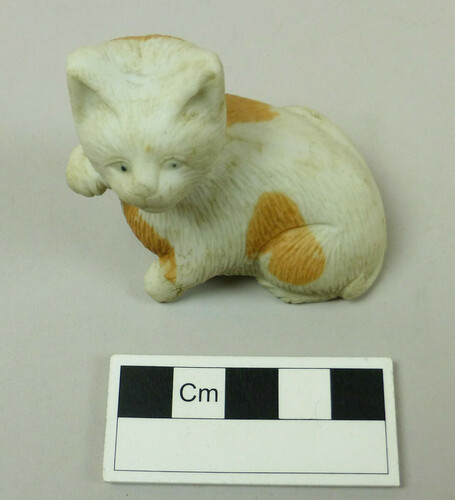 1985.53.709Pottery figure of beckoning cat, painted with brown spots. [El.B 20/11/2013]1985.53.709
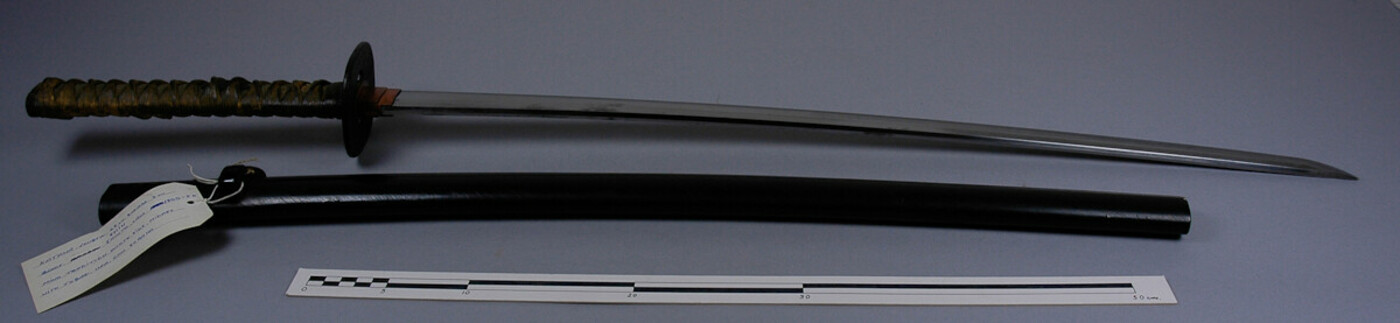 1946.12.68Sword [.1], sheath [.2], and small knife, not yet found [.3]. [El.B 27/02/2008]1946.12.68
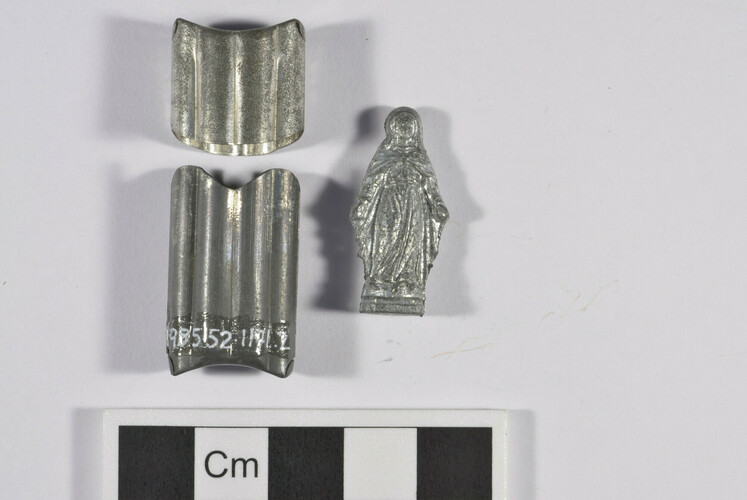 1985.52.1171.1Amulet, a figure of the Virgin Mary cast in white metal, inside a rectangular lead box [.2], with a detachable white metal lid [.3]. [RB 08/05/2012]1985.52.1171.1
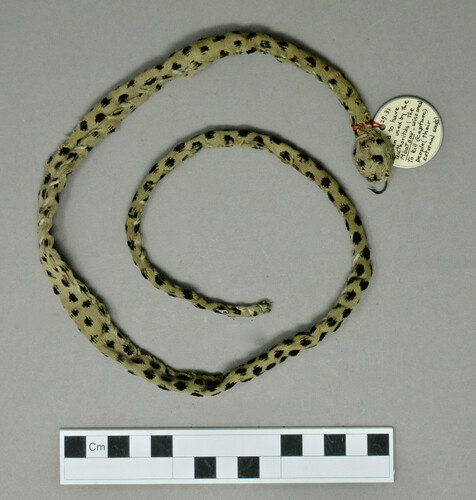 1933.29.31Brown cloth snake with black spots. [DCF Court Team 27/1/2003]1933.29.31
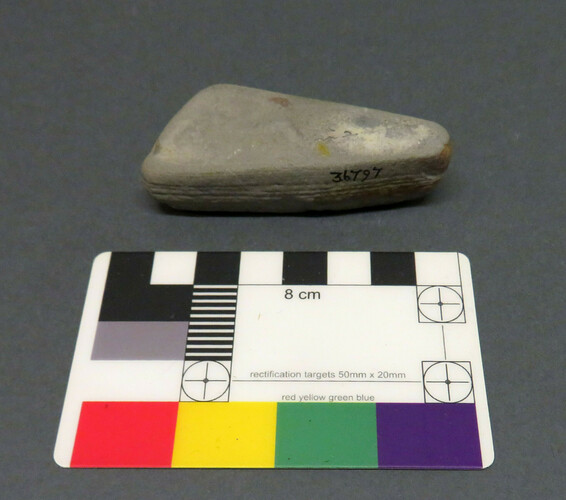 1985.54.553Amulet; grey stone. [ASh [OPS move] 25/08/2017]1985.54.553
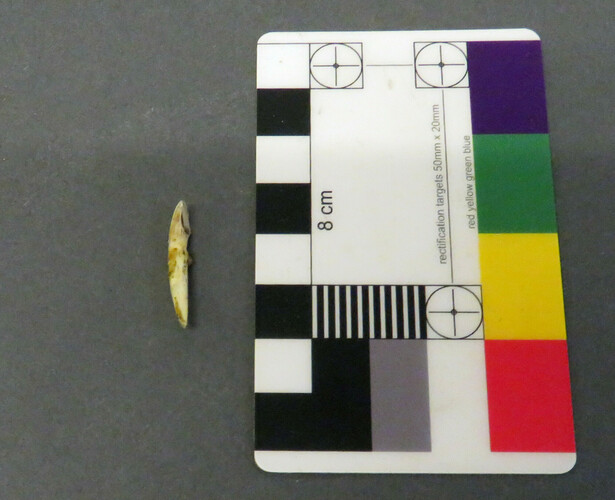 1985.54.3336.2Amulet. Animal tooth, possibly that of a deer. Incisor, with long root attached. For the other teeth see 1985.54.3336 .1, .3 & .4. [ASh [OPS move] 20/12/2017]1985.54.3336.2
 1963.10.46.2Flat disc-shaped yellow glass bead with red and black decorative shapes. [N.B. 'DCF 2004-2006 What's Upstairs?' 5/7/2005]1963.10.46.2
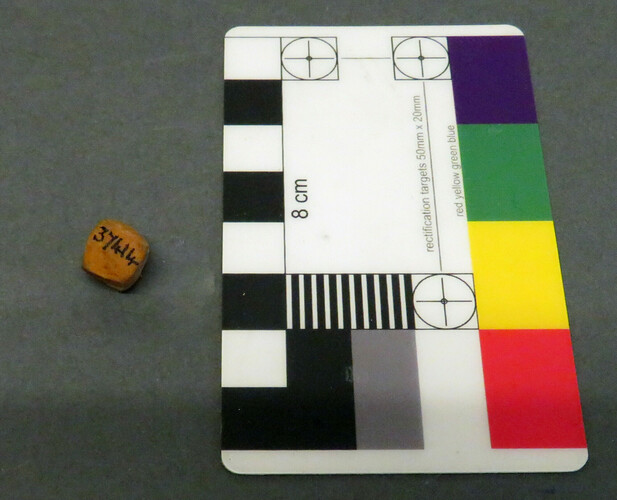 1985.54.2387Amulet, made from a red / orange pellet. Square in shape. Used by women for a swelling in the neck. [AF [OPS move] 06/11/2017]1985.54.2387