
- Collection type
- Object
- Description
- Amulet, pendant in the shape of The Holy Shirt of Chartres, with an inscription on the reverse, ?cast in ?nickel, with a loop for suspension. [ACA 24/07/2012]
- Long description
- Amulet, pendant in the shape of The Holy Shirt of Chartres, with an inscription on the reverse, ?cast in ?nickel, with a loop for suspension. The inscription reads: 'CETTE STE CHEMISETTE BENITE A CHARTRES A TOUCHE LE PRECIEUX VETEMENT DE LA STE VIERGE'. [ACA 24/07/2012]
- Person
- Field collector Unknown Collector
- PRM source Wellcome Institute
- PRM source Wellcome Historical Medical Museum
- Date / Period
- Date made: Before 1931
- Date collected
- By 1931
- Acquisition information
- Transferred: 1985
- Materials and processes
- Material White Metal, Material Nickel Metal, Process Inscribed, Process Cast
- Dimensions
- Height: max 19 mm, Width: max 13 mm
- Object numbers
- Accession number: 1985.52.2302 Other numbers: 4612
- Associated publications
- This amulet was selected for the Small Blessings project website [http://web.prm.ox.ac.uk/amulets], online text as follows: This tiny white metal pilgrimʼs souvenir from Chartres, France, is imprinted with the words ʻCETTE STE CHEMISETTE BENITE A CHARTRES A TOUCHE LE PRECIEUX VETEMENT DE LA STE VIERGEʼ (ʻthis holy tunic blessed at Chartres has touched the precious clothing of the Virgin Maryʼ). According to legend, Charles the Bald (823–877) gave a tunic to Chartres Cathedral in 876. The tunic was said to be the Sancta Camisa, a holy relic worn by the Virgin Mary when she gave birth to Jesus. It became associated with many miracles at Chartres, and pilgrims travelled from afar to venerate the tunic and the Virgin Mary. The production of metal pilgrimʼs souvenirs began in the Middle Ages, when pilgrimage was at its height. At Chartres, little medals and badges made of lead or tin were stamped with the image of the holy tunic and sold in the Cathedral cloister. Vendors were allocated a stall and cupboard, for which they paid an annual sum. [CB 29/08/2012]
Search terms: Religion, Ornament, Model, Writing, Amulet, Pendant, Religious Object, Inscription, Neck Ornament
Further items to explore
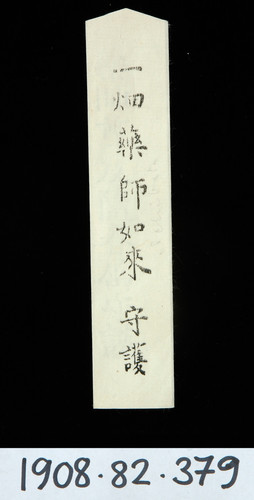 1908.82.379Amulet envelope with 8 Japanese text characters printed in black in on front and one stamp in red on reverse. [LKG 10/10/2008]1908.82.379
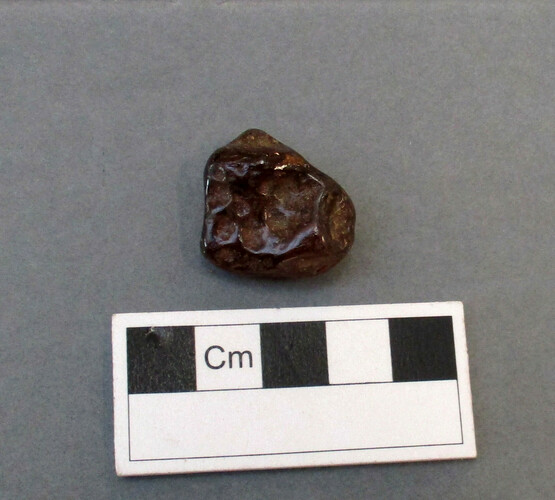 1985.54.708Amulet. Highly polished piece of transparent brown ?stone or ?glass. The amulet is not smooth, with several craters, some of have traces of encrustation. [MOBB [OPS move] 7/3/2017]1985.54.708
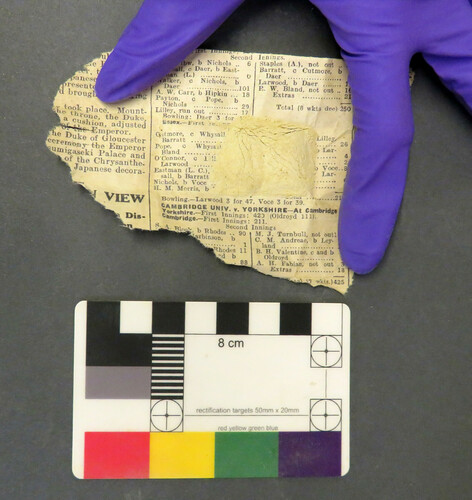 1985.54.2912Amulet. Cream coloured powder, made from an unknown substance. Used on the bite marks made by a rabid dog. [ASh [OPS move] 28/11/2017]1985.54.2912
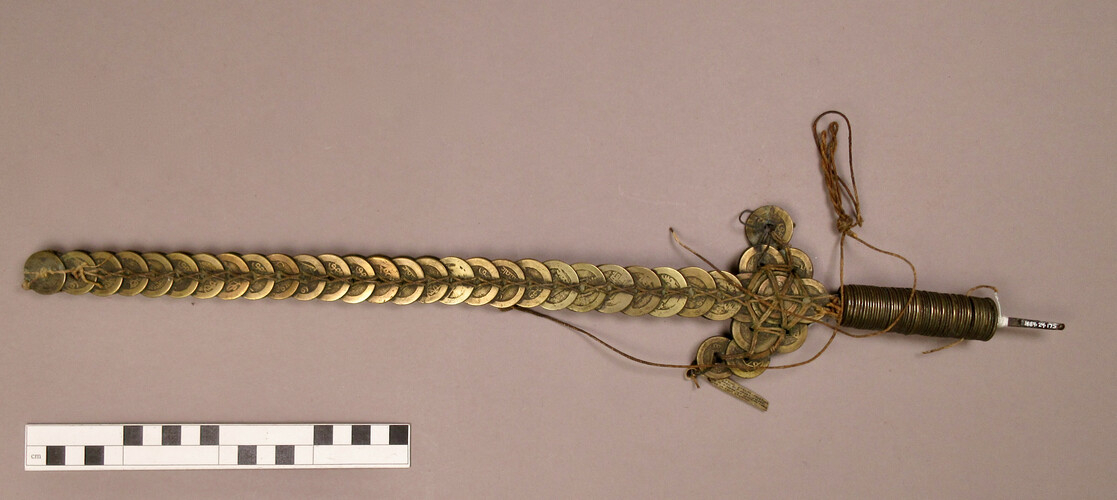 1884.24.175Cash-sword made entirely of cash coins.1884.24.175
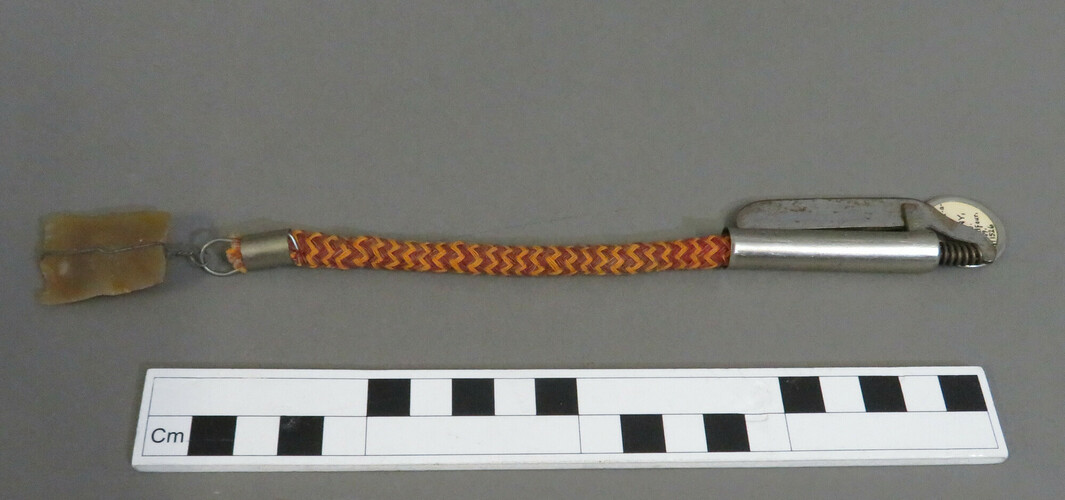 1938.35.814Pocket strike-a-light [PRA [OPS move] 6/9/2017]1938.35.814
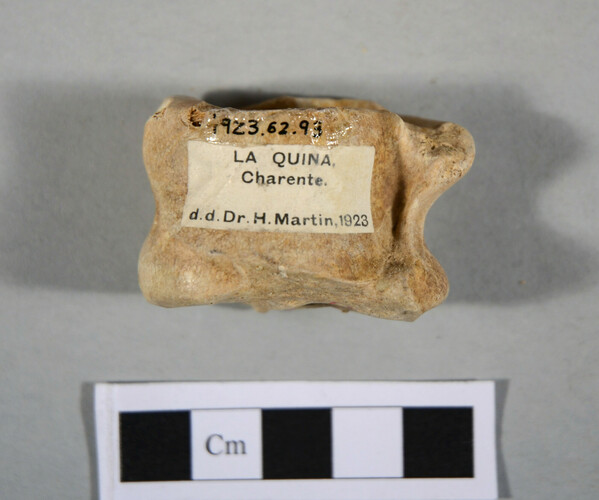 1923.62.93Animal knuckle bone, showing signs of cutting and scratching by stone implements. [RH [OPS Move] 8/5/2017]1923.62.93
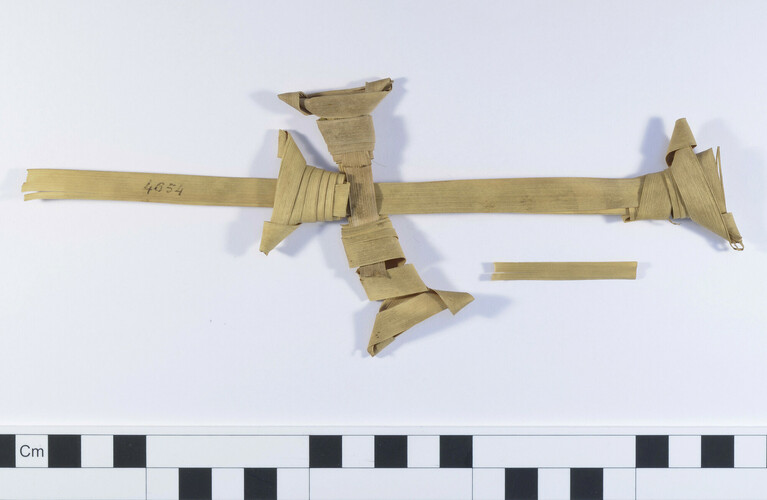 1985.52.2332Amulet, a Palm Sunday Cross, with a fragment, made from folded palm leaves. [ACA 26/07/2012]1985.52.2332
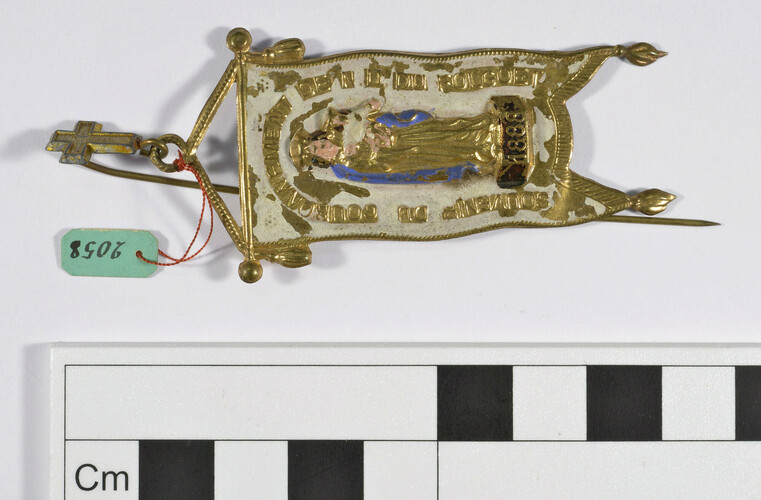 1985.52.1031Amulet, a metal pendant in the shape of a banner depicting a figure of Our Lady of Folgoët, suspended from a pin with a cross shape on it. [RB 26/04/2012]1985.52.1031