
- Collection type
- Object
- Description
- Amulet, a curved, comma-shaped stone bead, perforated at the thicker end for suspension, known as a 'Magatama' or 'jewels'. [RB 20/04/2012]
- Geographical reference
- Person
- Field collector Unknown Collector
- PRM source Wellcome Institute
- PRM source Wellcome Historical Medical Museum
- Date / Period
- Date made: Before 1931
- Date collected
- By 1931
- Acquisition information
- Transferred: 1985
- Materials and processes
- Material Stone, Material Agate Stone, Process Perforated, Process Carved, Process Polished
- Dimensions
- Length x Width: max 38 x 15 mm
- Object numbers
- Accession number: 1985.52.957 Other numbers: 1912
- Research and responses
Takeshi Matsumae (1980) The Heavenly Rock-Grotto Myth and the Chinkon Ceremony. Asian Folklore Studies, Vol.39, No.2, pp.9-22. Hard copy held in RDF. [CB 29/08/2012]
- Associated publications
- This amulet was selected for the Small Blessings project website [http://web.prm.ox.ac.uk/amulets], online text as follows: This comma-shaped stone jewel from Japan is called a magatama. ʻMagaʼ means curved or bent, and ʻtamaʼ means precious stone or gem. Magatama date back to the Neolithic period, and are typically made of stone, glass or jade. Their curved shape is thought to represent animal teeth and claws. Magatama are both personal ornaments and highly valued ceremonial objects. Women once wore magatama in their hair, and as decorative arm and ankle bracelets. They were also attached to sacred bows, mirrors and swords, placed at temple shrines, and used as funerary objects. A source of spiritual power and good fortune, magatama can still be bought in Japan today. Magatama also feature in Japanese mythology. According to the Kojiki, a collection of myths dating from the early 8th century, the storm god Susano-o terrorised his sister, the sun goddess Amaterasu, so much that she hid in a cave. Without Amaterasu the world became dark. In order to lure her out, the other gods hung a mirror, pieces of cloth, and many magatama jewels on a sacred evergreen sakaki tree outside the cave. Amaterasu looked out to see what the gods were doing, and as she emerged the world became light again. [CB 29/08/2012]
Further items to explore
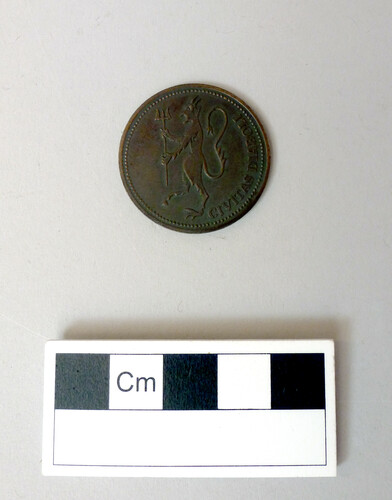 2013.8.1Circular metal coin found in a keyhole of a door in St Mary's Church, High Street, Oxford. [FB 26/04/2013]2013.8.1
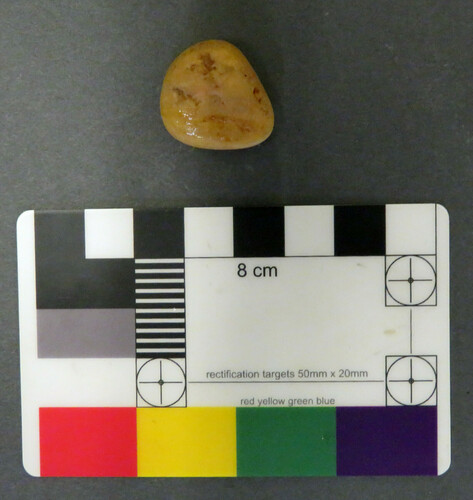 1985.54.3276Amulet. Stone, peach in colour with fissures in the surface. The stone is triangular in shape with smooth, rounded surfaces. [ASh [OPS move] 18/12/2017]1985.54.3276
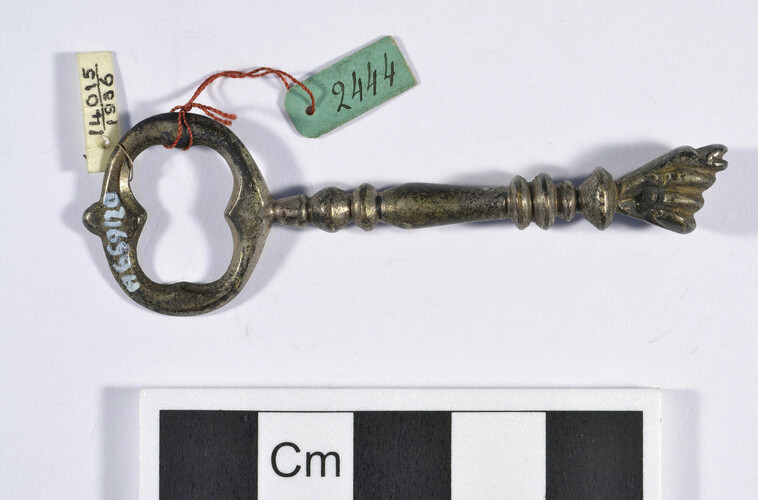 1985.52.1218Amulet, silver ?ex-voto pendant, with a hand, known as 'mano fica', and an oval loop for suspension, at either end of the stem. [ACA 10/05/2012]1985.52.1218
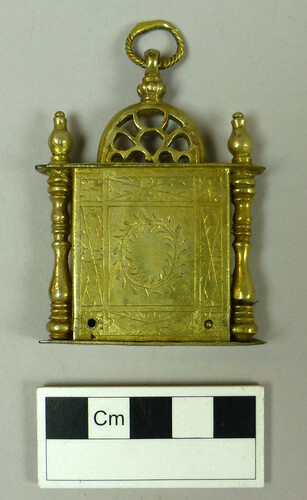 1985.50.617Amulet case of silver gilt, flat square box with incised decoration, with a pillar on each side and a half-moon filled with scrolls at the top. [El.B 18/12/2013]1985.50.617