- Collection type
- Object
- Description
- Amulet, striped textile pouch, containing folded paper. There is a metal pin sealing one side of the pouch, the rest is stitched closed. [ACA 29/02/2012]
- Long description
- Amulet, striped textile pouch, containing folded paper. There is a metal pin sealing one side of the pouch, the rest is stitched closed. The pouch is said to contain a ?medicinal substance wrapped in verses of the Koran used to cure contagious diseases. [ACA 29/02/2012]
- Geographical reference
- Sidi Bel Abbes
- Date / Period
- Date made: Before 1931
- Date collected
- By 1931
- Acquisition information
- Transferred: 1985
- Dimensions
- Height: max 68 mm, Width: max 52 mm
- Object numbers
- Accession number: 1985.52.254
Other numbers: 481 R 15896/ 1936
- Associated publications
- This amulet was selected for the Small Blessings project website [http://web.prm.ox.ac.uk/amulets], online text as follows:
This Qurʼanic amulet, made from a striped textile pouch stitched closed and sealed with a metal pin, contains a medicinal substance wrapped in religious verses. It is said to cure contagious diseases and was collected in Sidi-bel-Abbes, Algeria, by the French-Algerian zoologist Paul Maurice Pallary (1869-1942).
Islam is the state religion of Algeria and it permeates many aspects of everyday life. Traditional Islamic medicine combines the healing powers of the Qurʼan with natural remedies, and is particularly important in rural areas where people have limited access to modern medicine.
Traditional healers, sometimes called ʻsorcerersʼ or ʻshamansʼ, use a mixture of Qurʼanic verses, water, herbs, ornaments, oil, and honey to treat and protect against illness and disease. Verses of the Qurʼan may be recited, written with ink that can be dissolved in water and drunk as a holy tonic, or placed in amulets like this one.
[CB 29/08/2012]

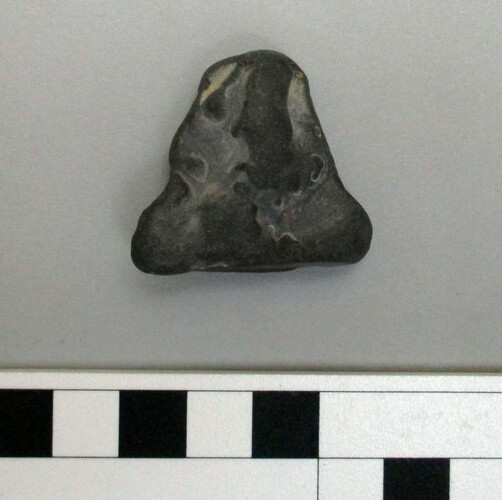 1985.54.1313Amulet. Stone. Grey in colour. Uneven, slightly triangular in shape, but without a point. There are grooves on two edges that are shiny. [MOBB [OPS move] 14/3/2017]1985.54.1313
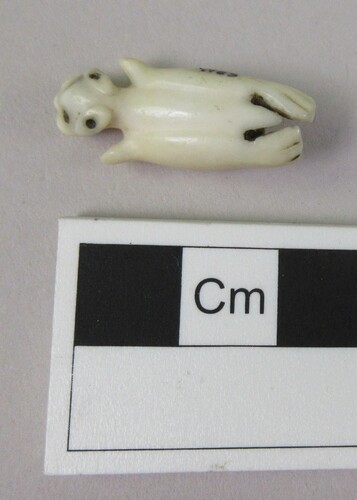 1884.68.39Very small figure of a seal carved in ivory. [DCF Court Team 9/12/2002]1884.68.39
 1985.52.1077.2Lid for the metal circular relic box 1985.52.1077 .1. The lid has a border in the shape of the Crown of Thorns, with a loop for suspension. [ASh [OPS move] 20/1/2017]1985.52.1077.2
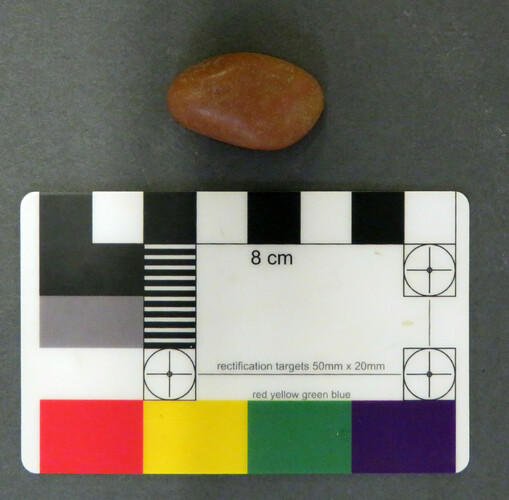 1985.54.3264Amulet. Stone, pink in colour and oblong in shape with smooth, round surfaces. Slightly translucent, polished exterior. [ASh [OPS move] 18/12/2017]1985.54.3264
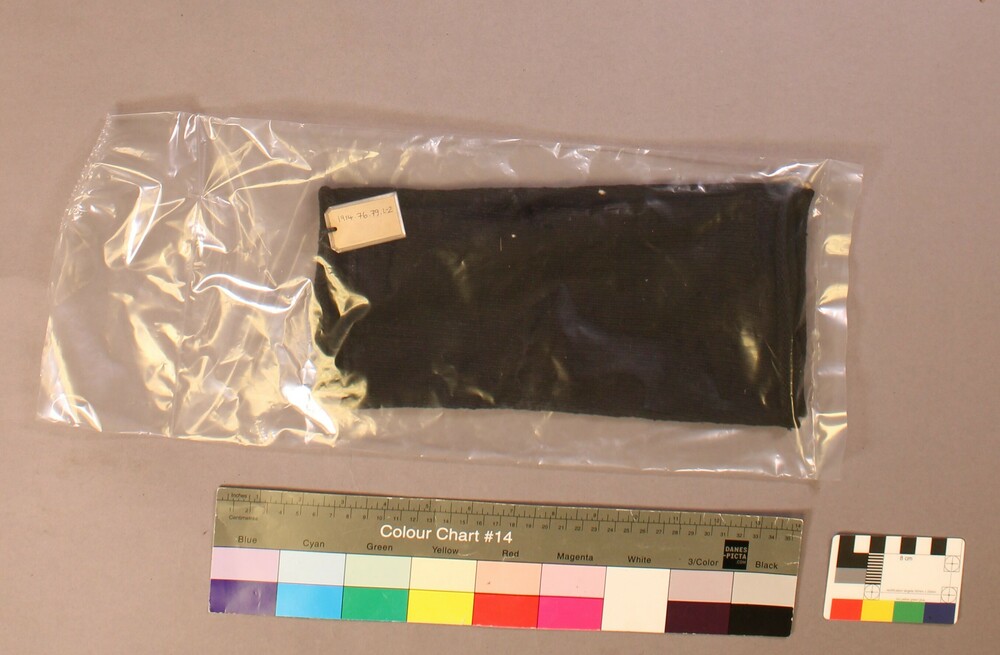 1914.76.79.1-2Pair of leggings1914.76.79.1-2
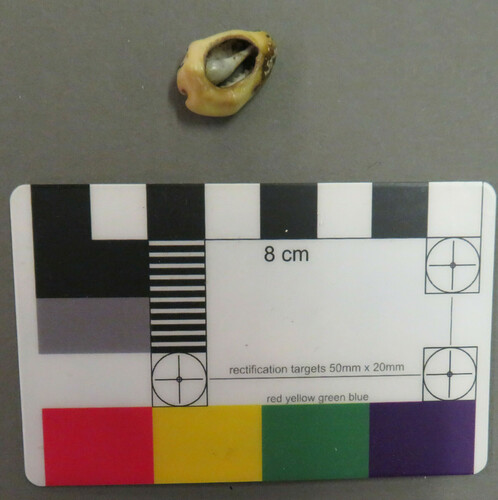 1985.50.1046.3Amulet of cowry shell. The top has been broken or cut off, presumably for suspension. It forms a group with cowry shells [1985.50.1046 .1] and [1985.50.1046 .2]. [BA [OPS move] 8/11/2017]1985.50.1046.3
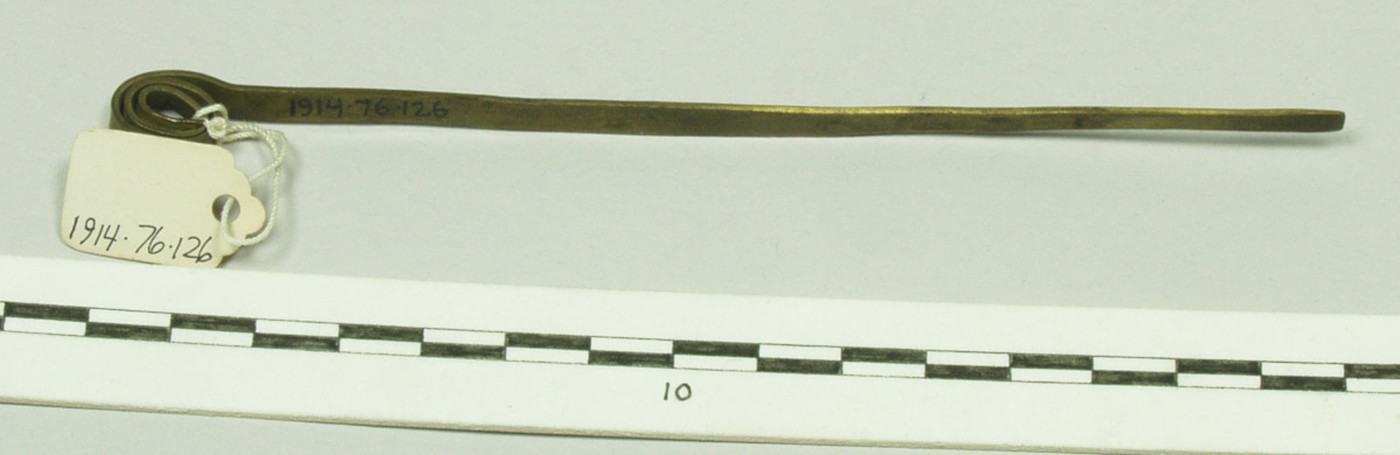 1914.76.126Surgical instrument, for lancing abcesses.1914.76.126
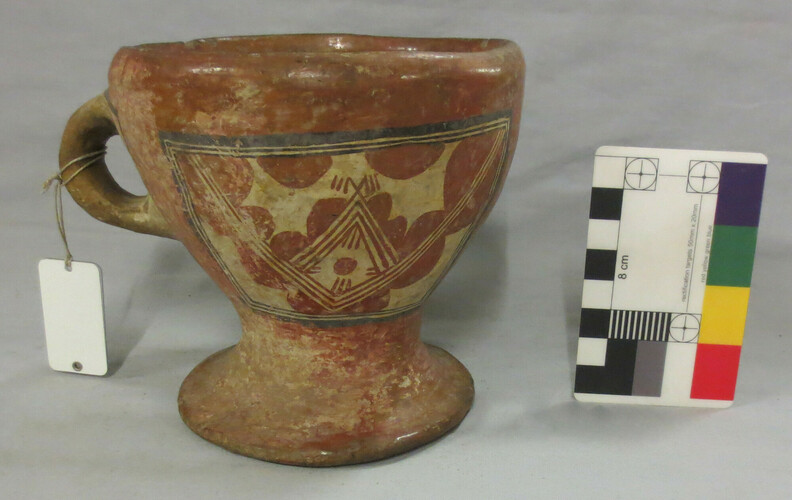 1983.22.2Pottery cup with looped handle on the side and a wide mouth and foot. [ASh [OPS move] 12/02/2016]1983.22.2