- Collection type
- Object
- Description
- Amulet, model Eiffel Tower with hanging loop at the top. [MJD 06/02/2012]
- Geographical reference
- Paris
- Date
- Date collected
- By 1931
- Acquisition information
- Transferred: 1985
- Dimensions
- Height: max 35 mm, Width: max 15 mm
- Object numbers
- Accession number: 1985.52.150
Other numbers: 268 R 15280/ 1936 2527
- Associated publications
- This amulet was selected for the Small Blessings project website [http://web.prm.ox.ac.uk/amulets], online text as follows:
These lucky mascots were purchased soon after the Eiffel Tower was built in 1889, and are still sold as souvenirs in Paris today. During construction, people also collected iron nuts found at the base of the Tower as keepsakes and to bring good luck.
The Eiffel Tower was designed by and named after the French civil engineer and architect Gustave Eiffel, who later became known as le Magicien du Fer (the Iron Magician). It was built as the entrance to the Paris Exposition, a celebration of the 100th anniversary of the French Revolution, and took two years to complete.
Initial reactions to the wrought iron Tower were mixed. Many prominent Parisians, including Alexander Dumas, Guy de Maupassant and Emile Zola, thought it was monstrous and useless, and petitioned against its construction. Offering panoramic views of Paris, it has since become a favourite icon and universal symbol of the city.
[CB 29/08/2012]

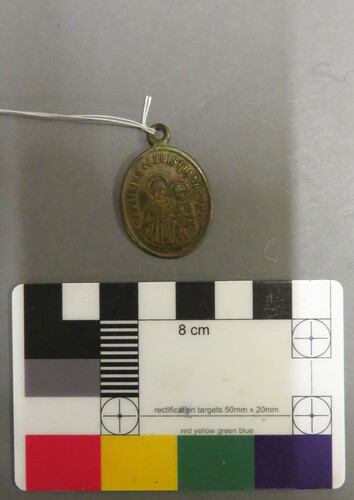 1985.50.443Amulet, oval medal with suspension loop. On one face St. Luke and the legend 'S. LUCCA PRECATE PER NOI'; on the other the ?Virgin and Child and the legend 'AUXILIUM.CHRISTIANORUM'. [CW [OPS move] 22/9/2017]1985.50.443
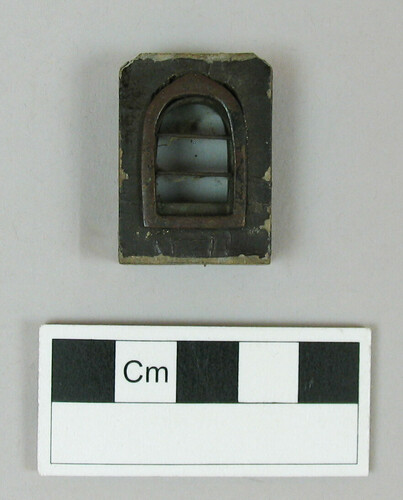 1985.53.599Amulet, rectangular block of wood with a metal-framed window in the centre, with partitions. [El.B 06/11/2013]1985.53.599
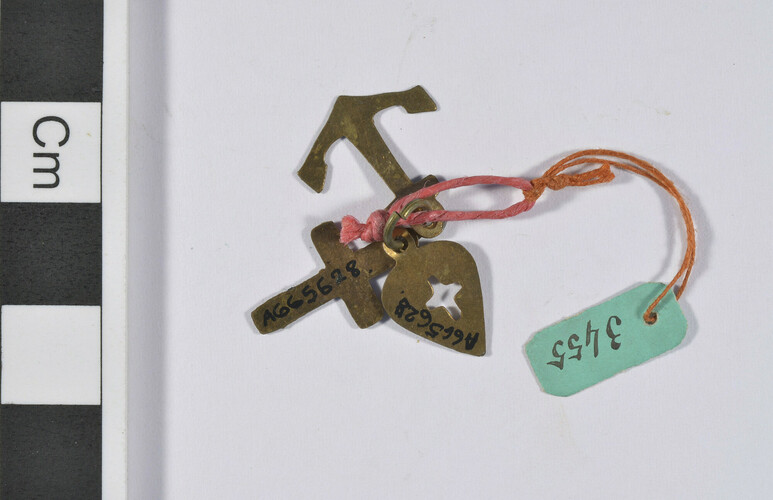 1985.52.1633Amulet, pendant with anchor, cross and heart with a cross cut out, on a single ring. [El.B 01/06/2012]1985.52.1633
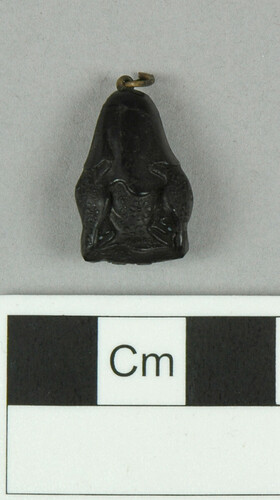 1985.51.746Carved model of a man, with a suspension loop. Used as an amulet. [SM 04/05/2011]1985.51.746
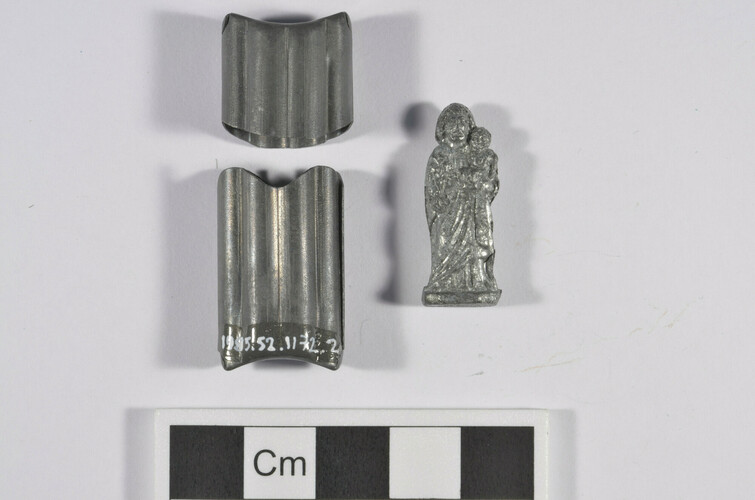 1985.52.1172.1Amulet, a figure of St Joseph [.1] cast in white metal, which fits inside a lead rectangular box [.2] with a detachable lid [.3]. [ACA 08/05/2012]1985.52.1172.1
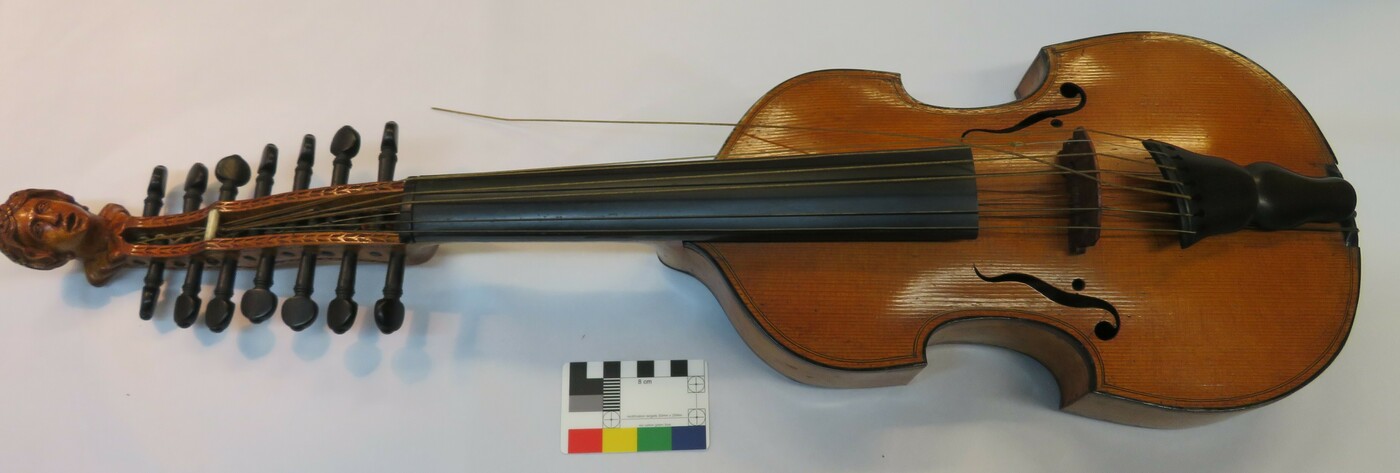 1938.34.650Viola d'amore [RR 16/1/2020]1938.34.650
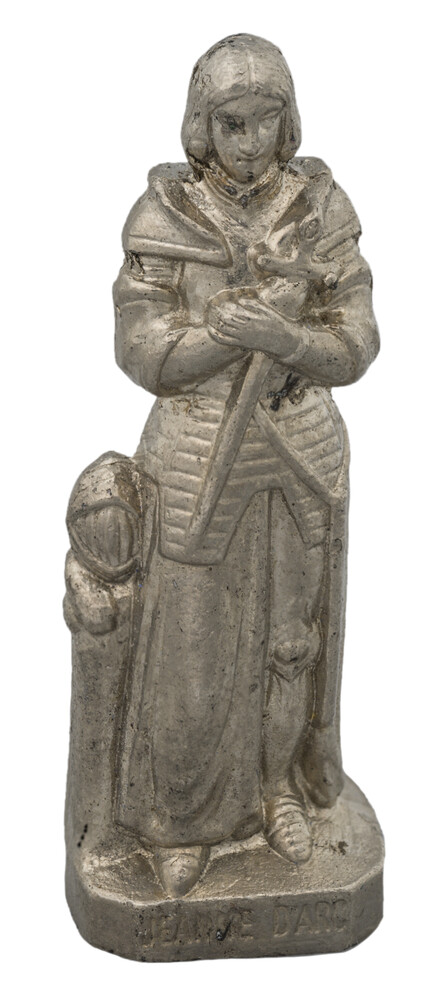 1985.52.1522Amulet, a statuette of Joan of Arc, cast in white metal, in a blue rectangular cardboard box.1985.52.1522
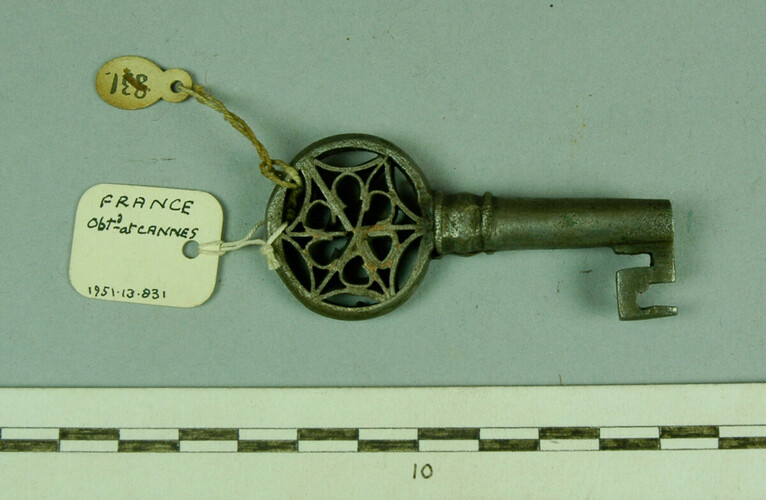 1951.13.831Iron key with floral design in the bow, tubular stem and S-shaped bit. [El.B 27/03/2009]1951.13.831