- Collection type
- Object
- Description
- Rabbit's foot , used as an amulet. [SM 16/02/2011]
- Date / Period
- Date made: Before 1933
- Date collected
- By 1933
- Acquisition information
- Transferred: 1985
- Dimensions
- Width: max 57 mm, Length: max 77 mm
- Object numbers
- Accession number: 1985.51.350
Other numbers: Z 176532 AM C lot 195
- Associated publications
- Illustrated in colour in the pamphlet accompanying the Reading Room displays at the Welcome Collection with the caption “Rabbit’s foot Natural materials UK? RRa0170/1985.51.350 Pitt Rivers Museum, University of Oxford.” [FB 15/8/2016]
Illustrated in colour on page 198 in ‘Reading Room Companion consisting of a rare and valuable collection of diverse curiosities acquired by and for Henry Wellcome with a great variety of books’ Written and compiled by Anna Faherty published in 2014 by the Wellcome collection, London. Illustrated alongside 1985.52.21, 1985.51.177, .923, .340, and. 361 with the caption “Amulets made from animals or animal parts. Pitt Rivers Museum. Any object can become a protective amulet or good-luck charm, so long as its owner belives (or hopes) it has the power to affect the world around them. Just as the value of an object in a museum collection is transformed from its intrinsic natural or functional purpose into something more representational, amulets are redefined and repurposed by those who use and value them. Derived from the Arabic term hamala, which means ‘to carry’, most amulets are worn in some way or kept in bags or pockets.
The amulets and charms on display in the Reading Room were collected by three different individuals. There original owners employed them as protection against threats such as the ‘evil eye’, or hoped that they would bring fertility, good health and good luck. For full details on each amulet, please consult the dedicated Amulets, charms and votives booklet.” [FB 15/8/2016]

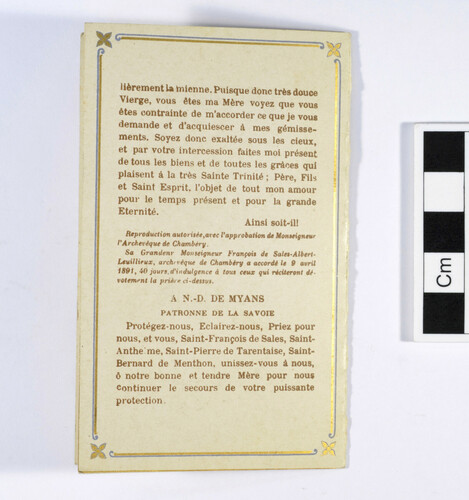 1985.52.2706Amulet, souvenir card from the pilgrimage to Notre-Dame de Myans, printed with an image of the Virgin Mary, religious figures and French text. [ACA 22/08/2012]1985.52.2706
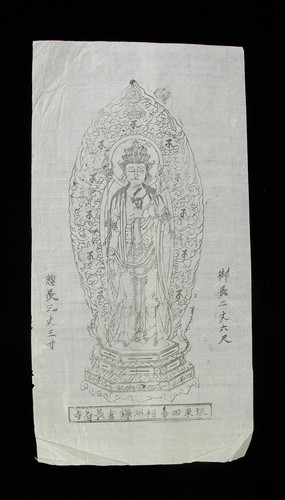 1908.82.643Picture of a deity. standing on a platform, with inscriptions to each side and beneath. [SM 13/10/2008]1908.82.643
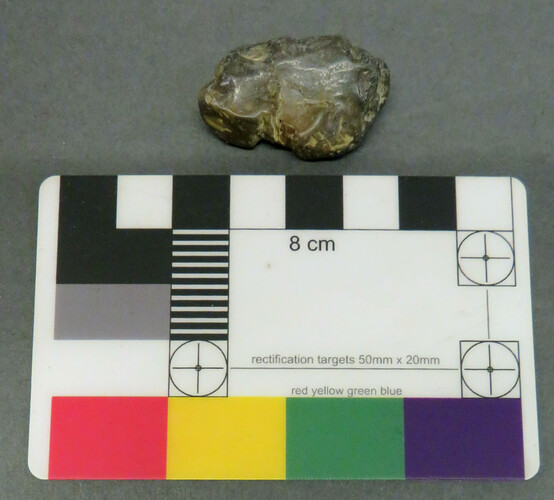 1985.54.2489Amulet, made from brown stone with a potted surface. Used to cure diseased liver due to alcohol abuse. [AF [OPS move] 09/11/2017]1985.54.2489
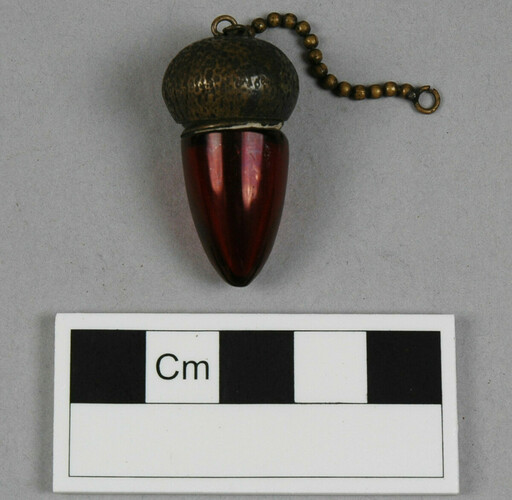 1985.51.273Acorn shaped pendant with red glass 'nut' and copper alloy cup. Used as an amulet against lightning [SM 03/02/2011]1985.51.273
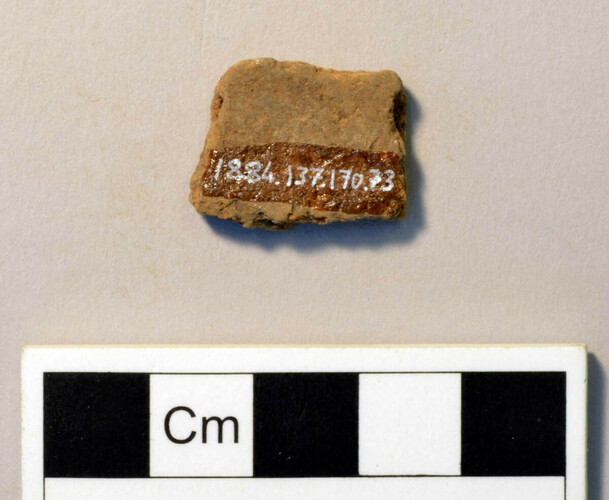 1884.137.170.73Ceramic sherd1884.137.170.73
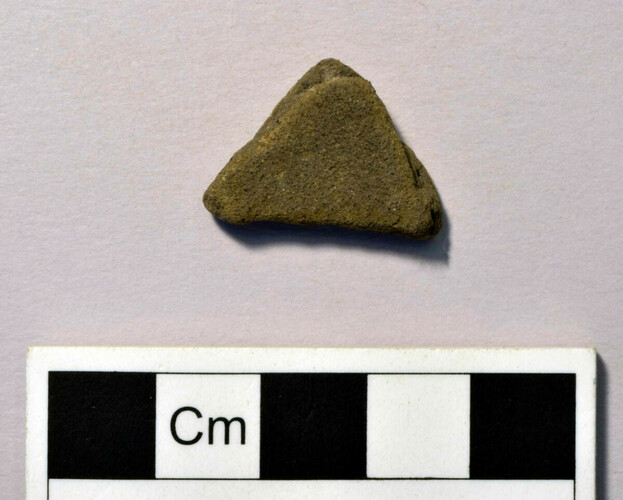 1884.137.52.32Ceramic sherd1884.137.52.32
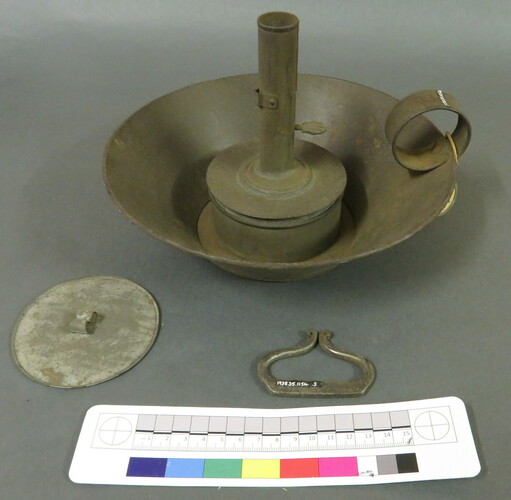 1938.35.1154.1Tinder box. Made from metal consisting of a cylindrical box which is attached to the centre of a circular bowl shaped base. The base has a loop handle on the rim. For the component parts see 1938.35.1154 .2 for the tinder box lid, 1938.35.1154 .3 for the fire steel and 1938.35.1154 .4 for the damper. [SB [OPS Move] 20/4/2017]1938.35.1154.1
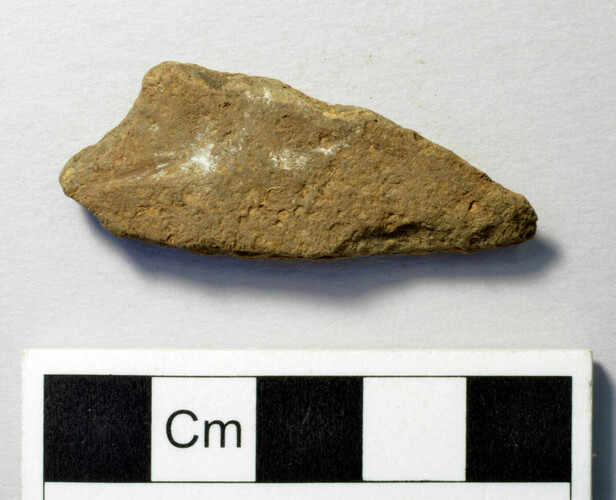 1884.136.1.289Ceramic sherd1884.136.1.289