
- Collection type
- Object
- Description
- Flint flake with parallel sides and flake scars, possible ?blade flake. Proximal end missing. Slight light grey patina on the ventral face. [MN 05/02/2010]
- Geographical reference
- England Suffolk near Lakenheath
- Date / Period
- Archaeological period: Upper Palaeolithic
- Date collected
- By 1897
- Acquisition information
- Donated: 1897
- Materials and processes
- Material Flint Stone, Process Flaked
- Dimensions
- Depth: max 4 mm, Width: max 13 mm, Length: max 46 mm, Weight 5 g
- Object numbers
- Accession number: 1897.11.70
- Research and responses
Flower refers to Lakenheath in his publication "Flower, J.W. 1869. ‘On some recent discoveries of flint implements of the Drift of Norfolk and Suffolk, with observations on the theories accounting for their distribution.’ Quarterly Journal of the Geological Society of London. 25:449-460" which may be relevant [CB 8/12/2009]
Dr Joshua Pollard (University of Bristol) examined 1897.11.43 - .85 (flints from Lakenheath) on the 2/02/2010, and thought them probably to be Upper Palaeolithic rather than Neolithic. [AS 04/02/2010]
Dr Alison Roberts (Ashmolean Museum) examined 1897.11.43 - .85 on the 21/05/2010 and confirmed that they are final Upper Palaeolithic. [MN 24/05/2010]
Search terms: Tool, Flake, Blade Flake, Debitage
Further items to explore
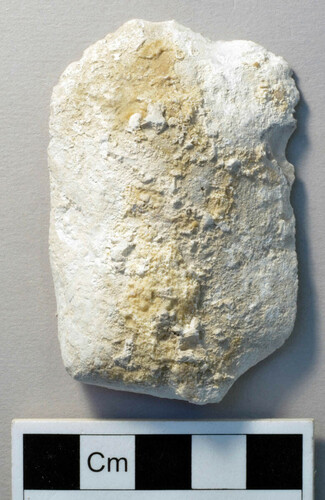 1884.136.55Stone flake1884.136.55
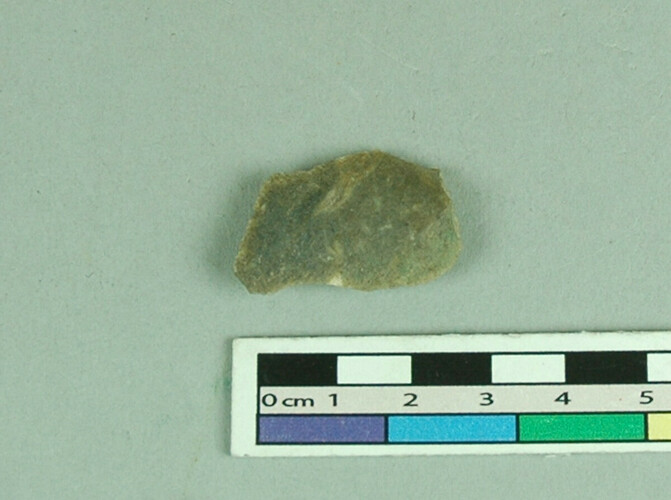 1927.37.58.66Flake of grey stone, wedge shaped with the slimmest end at the distal edge. [LKG 23/03/2010]1927.37.58.66
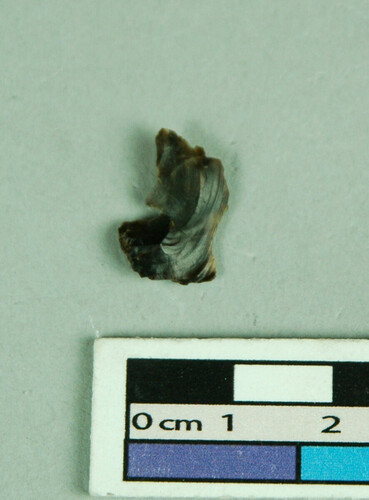 1927.42.31.34Stone flake, black in colour and irregular shaped. [MJD 24/03/2010]1927.42.31.34
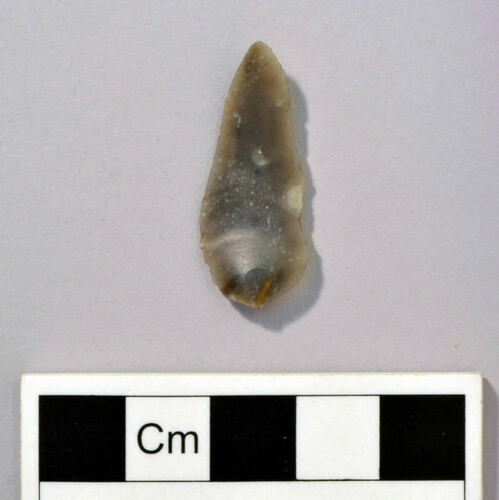 1884.140.1353Stone flake1884.140.1353
 1920.93.1.13Bullet. Part of the accessories for percussion cap sporting rifle 1920.93.1 .1. [MdeA 25/11/2008]1920.93.1.13
 1884.137.13.21Ceramic sherd1884.137.13.21
 1884.136.1.444Ceramic sherd1884.136.1.444
 1884.61.22Wooden apple-gouge1884.61.22