
- Collection type
- Object
- Description
- Possible blade flake with roughly parallel sides and flake scars on the dorsal face. The flint has a moderate light brownish grey patina. [MN 04/02/2010]
- Geographical reference
- England Suffolk near Lakenheath
- Date / Period
- Archaeological period: Upper Palaeolithic
- Date collected
- By 1897
- Acquisition information
- Donated: 1897
- Materials and processes
- Material Flint Stone, Process Flaked
- Dimensions
- Depth: max 3 mm, Width: max 10 mm, Length: max 60 mm, Weight 3 g
- Object numbers
- Accession number: 1897.11.49
- Research and responses
Flower refers to Lakenheath in his publication "Flower, J.W. 1869. ‘On some recent discoveries of flint implements of the Drift of Norfolk and Suffolk, with observations on the theories accounting for their distribution.’ Quarterly Journal of the Geological Society of London. 25:449-460" which may be relevant [CB 8/12/2009]
Dr Joshua Pollard (University of Bristol) examined 1897.11.43 - .85 (flints from Lakenheath) on the 2/02/2010, and thought them probably to be Upper Palaeolithic rather than Neolithic. [AS 04/02/2010]
Dr Alison Roberts (Ashmolean Museum) examined 1897.11.43 - .85 on the 21/05/2010 and confirmed that they are final Upper Palaeolithic. [MN 24/05/2010]
Search terms: Tool, Blade Flake
Further items to explore
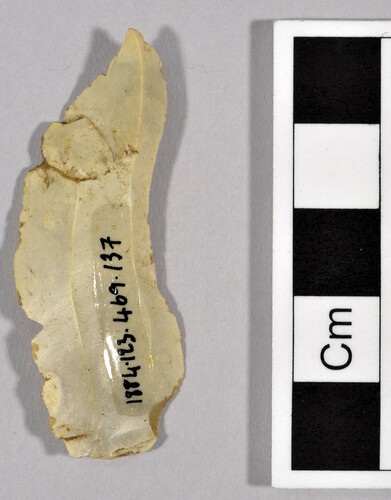 1884.123.469.137Stone blade flake1884.123.469.137
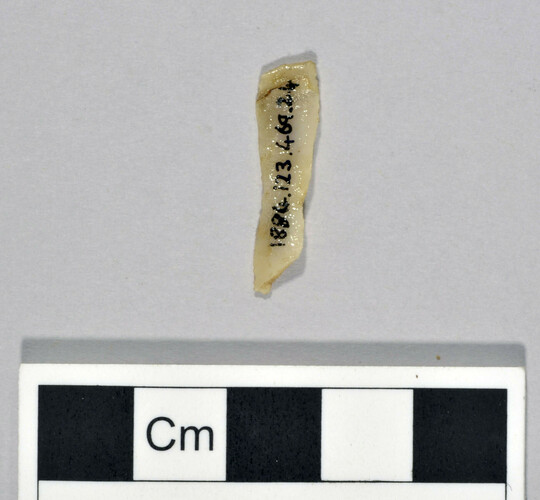 1884.123.469.24Stone blade flake1884.123.469.24
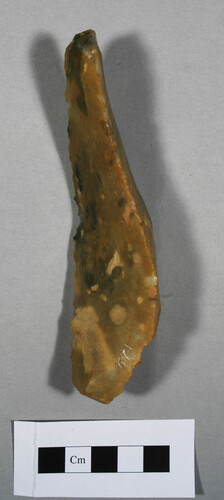 1908.14.17Stone tool, flake. [MJD 20/05/2013]1908.14.17
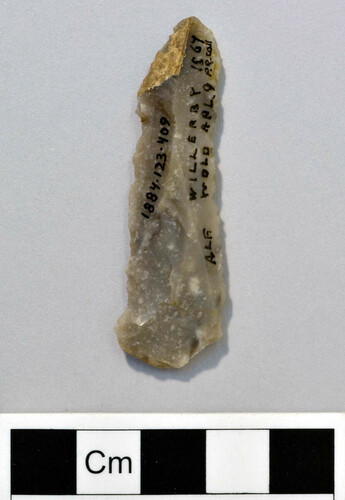 1884.123.409Stone blade flake1884.123.409
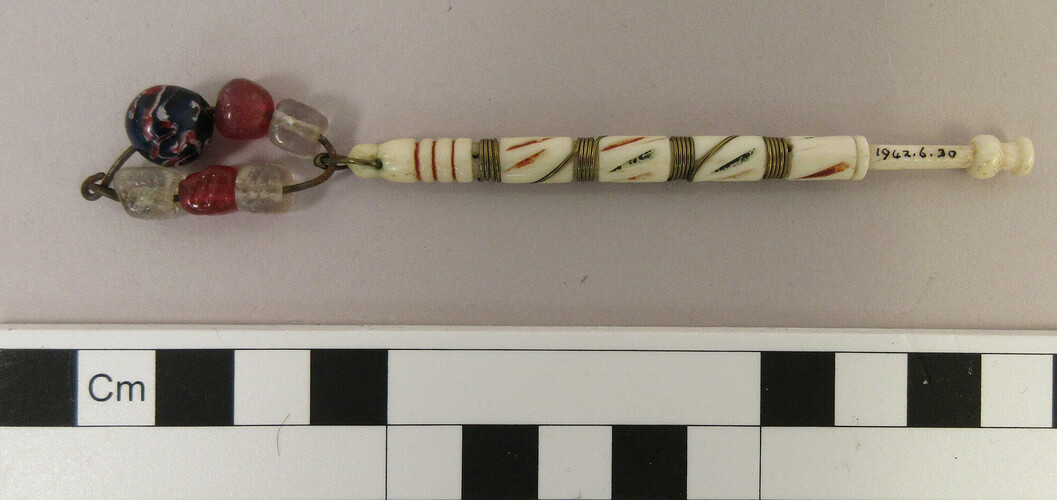 1942.6.30Bone lace-making bobbin decorated with brass wire.1942.6.30
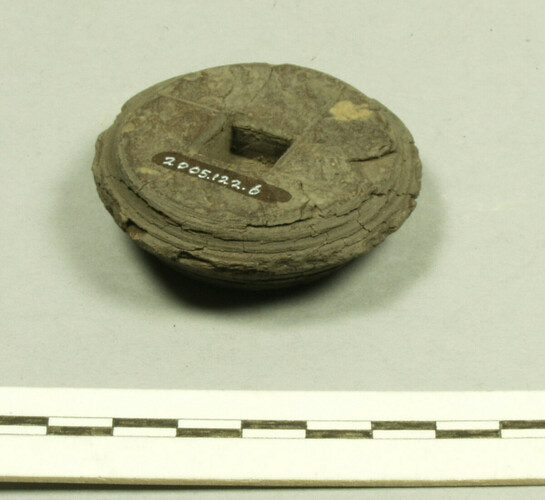 2005.122.6Turned disc of Kimmeridge shale: waste from an armlet factory. With square perforation where it was held by the lathe. In glass-topped box with 2005.122.1-5, 7-9. [LM 'DCF 2004-2006 What's Upstairs?' 19/10/2005]2005.122.6
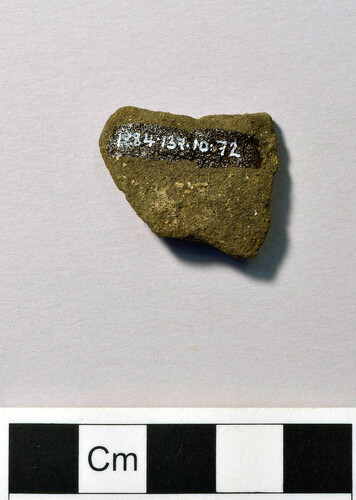 1884.137.10.72Ceramic sherd1884.137.10.72
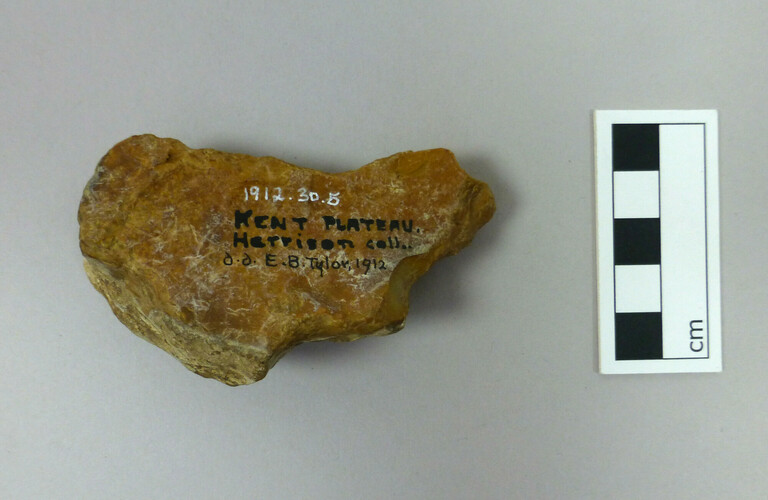 1912.30.5Stone eolith.1912.30.5