
- Collection type
- Object
- Description
- White cotton triangular amulet. [FC 03/12/2009]
- Long description
- White cotton triangular amulet. The amulet consists of a triangular piece of cardboard covered in white cotton textile. One side of the triangle has been decorated with pieces of printed textile and felt. Eight pieces of textile have been cut into a flower shapes in printed patterned green and purple textile, pink textile and black felt. In the centre a piece of black, yellow and brown printed textile cut into the shape of a four legged animal has been stitched. in-between the flowers and animal triangular pieces of textile have been stitched. All of these pieces have been stitched to the white cotton triangle with grey cotton yarn. The animal figure has a single round blue sequin for an eye and five of the flowers have a single blue sequin stitched in the centre. A blue felt boarder with triangles cut out has been stitched with grey cotton yarn along the three edges of the white cotton triangle. A length of black and white twisted woollen braid has been loosely stitched to the outer edge of the white cotton triangle with grey cotton yarn. Along the bottom edge of the white cotton triangle nine tassels have been stitched onto the edge of the white cotton triangle with black cotton yarn. Each tassel is attached to the end of a length of black and orange woollen yarn. The tassels are white, maroon, orange, black and brown in colour. The back of the amulet is undecorated and covered with stitches in grey cotton yarn. [FC 03/12/2009]
- Cultural groups
- Teke
- Person
- Field collector Sheila Rosemary Paine
- PRM source Julia Nicholson
- PRM source Pitt Rivers Museum
- PRM source Dreweatts Auctioneers
- PRM source Felicity Wood
- Date / Period
- Date made: Before 2002
- Date collected
- August 1994
- Acquisition information
- Purchased: 2008
- Materials and processes
- Material Cotton Seed Fibre Textile Plant, Material Cotton Seed Fibre Yarn Plant, Material Wool Textile Animal, Material Felt Wool Textile Animal, Material Ribbon Textile, Material Paper Plant, Material Synthetic, Process Stitched, Process Embroidered, Process Dyed, Process Appliqué, Process Knotted
- Dimensions
- Width: max 248 mm excluding tassels, Length: max 415 mm
- Object numbers
- Accession number: 2008.116.3 Other numbers: 128 105 SP As 73
- Research and responses
Taken from the sales catalogue, information about the time Sheila Paine spent in Turkmenistan: "A few of my Turkmen embroideries were brought in Afghanistan in 1992. They are made by Turkmen living in both Turkmenistan itself and Afghanistan. I first went to Turkmenistan by train from Russia in 1994, a journey I described in the Golden Horde. Ashgabat (Ashkabad) was then as I described it in the book - an insignificant grid town rebuilt after the earthquake of 1948. In the ten years since, when I have taken a textile tour each year, it has grown into a ridiculous Disney town with massive and useless buildings (Arch of Neutrality, Hall of Independence), fountains that deprive whole quarters of the city of running water, gold statues, and blown-up photos of Niyazov Saparmurad (Turkmenbashi) on every building. His hair on these were first grey and then changed to black. he considered himself immortal but died in his 60s (in 2007?) I don't know what has happened to all the gold statues ad huge portraits since. When I first went to Turkmenistan, I met an actress Jahan, in Ashgabat, who took me to the Sunday market. At that time there were no tourists at all, whereas ten years later there were quite a lot., particularly French and Italian. Jahan was exiled soon after I met her because her company were putting on a Shakespearian play (I think King Lear) and Turkmenbashi wanted them to rewrite it so that he was the hero. They refused and were exiled, no one knows where to. [FC 02/12/2009]
- Associated publications
- Listed as Lot 128 in sales catalogue The Sheila Paine Embroidery Collection Tuesday 22nd April 2008, Drewetts Auctioneers, Donnington Priory Salerooms: "A triangular felt Yurt amulet, with horn and solar motif, like eyes in a face, (As-72a). Most of the embroideries 'I brought in Turkmenistan come from the Sunday market held in the desert outside Ashgabat, and most are from the Tekke tribe'. Bought Ashgabat market, 1994; a white cotton Yurt or house amulet, appliqued with sparkly synthetic fabrics, hung with rags and acrylic tassels, and edged with black and white wool braid, (As-211). Brought at Ashgabat National Museum, 2002; and two other amulets, (As-73, As-94). [FC 02/12/2009]
Search terms: Textile, Ornament, Religion, Amulet, Religious Object
Further items to explore
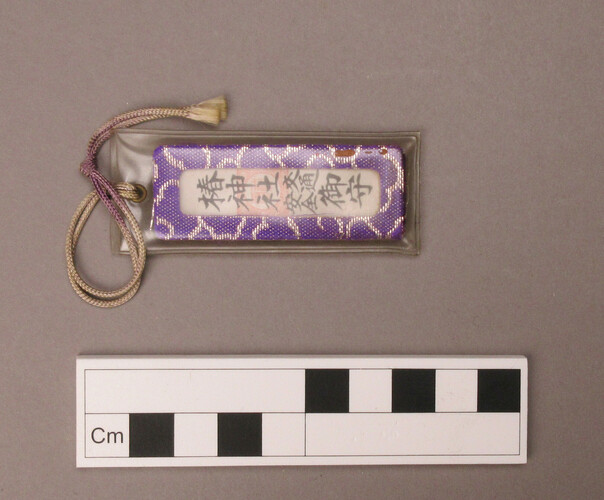 1996.17.134Shinto amulet against car accidents.1996.17.134
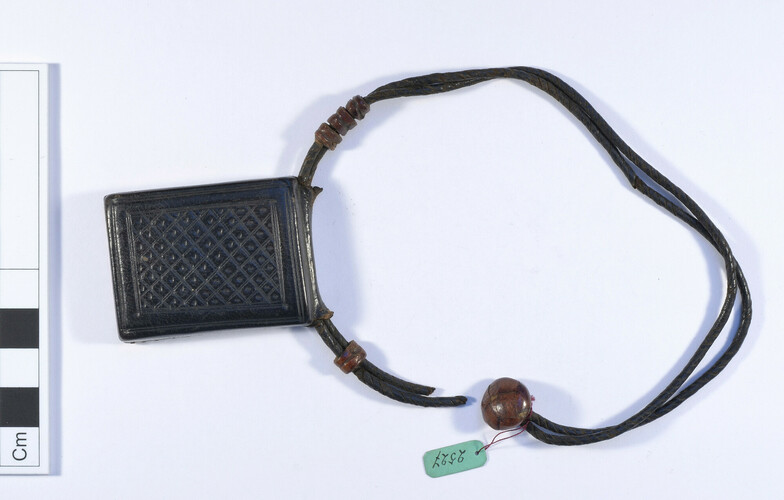 1985.52.1253Amulet, rectangular leather case with leather thong and leather button. [El.B 17/05/2012]1985.52.1253
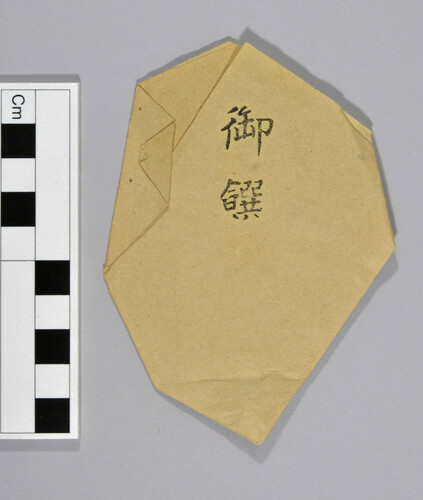 1985.53.148.3Paper charm, folded wedge shape, with two characters in black ink. There are rice grains inside the folded paper. One of a set of three paper charms - for other charms see [1985.53.148 .1] and [1985.53.148 .2] [EH [OPS Move] 26/4/2017]1985.53.148.3
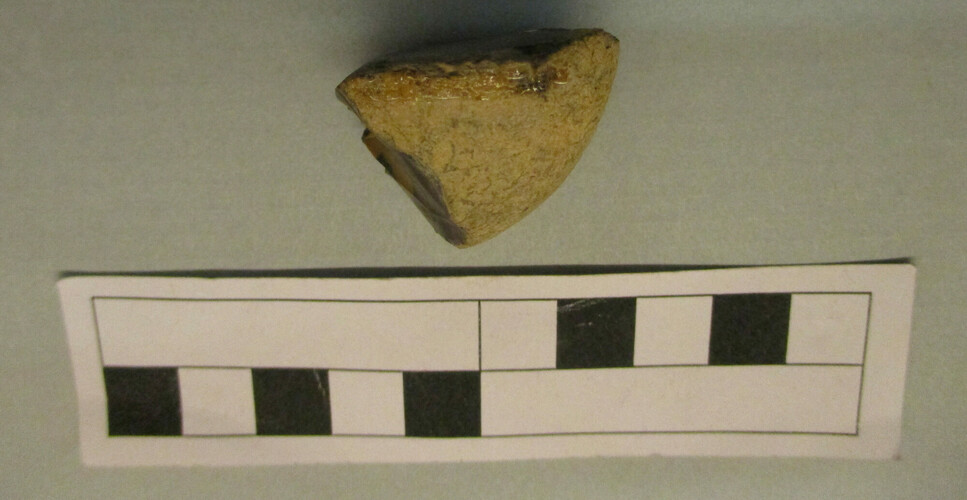 1985.54.645Amulet. Stone. Cream coloured on the outside, with brown inside. Curved on one side, with two flat broken sides. [AF [OPS Move] 9/3/2017]1985.54.645
 2000.51.3Child's bib.2000.51.3
 2000.51.4Pouch.2000.51.4
 2000.51.5Rectangular bag for carrying bread.2000.51.5
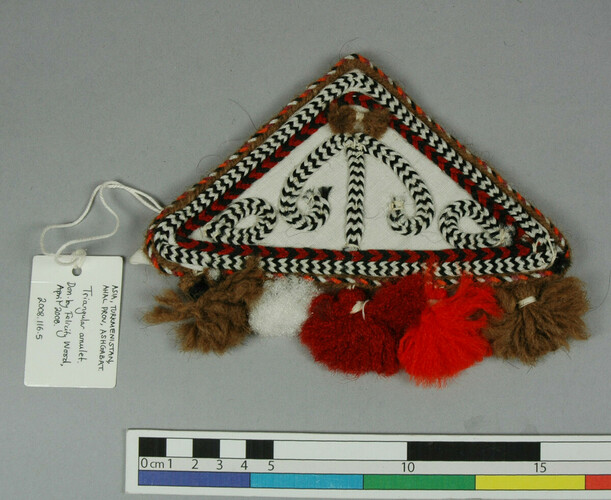 2008.116.5White cotton triangular amulet. [FC 03/12/2009]2008.116.5