
- Collection type
- Object
- Description
- Head ornament of yellow feathers with long red feathers, bound into a row with cotton yarn. [El.B 04/12/2008]
- Long description
- The row of feathers comprises mainly yellow feathers, with some black ones and some black and white marbled with brown and black stripes. There are two long red feathers, with clipped blue and red feathers, fluffy black feathers and pale yellow egret feathers attached to the tips with plant fibre. The long feathers are decorated with tiny black and turquoise feathers along the lengths of the quills. The cotton binding is mainly white with one red strand. There are plaited cotton ties at both ends. [El.B 04/12/2008]
- Cultural groups
- Trio; Tiriyó
- Date / Period
- Date made: Before 1964
- Date collected
- 1963 - 1964
- Acquisition information
- Purchased: 1964
- Materials and processes
- Material Bird Feather, Material Cotton Yarn Plant, Material Plant Fibre, Process Bound, Process Plaited
- Dimensions
- Width: max 280 mm without ties, Length: max 580 mm
- Object numbers
- Accession number: 1964.8.50.2B
- Research and responses
Related Documents File - Provided by Peter Rivière in July 2004, a photocopy of the catalogue written by Rivière in 1964 listing each of the 1964.8. objects donated to the Museum and from which the accession book entry was directly transcribed by Museum staff with some additional descriptions of the objects added [JP 17/7/2004]
The black and turquoise feathers are most likely from the Blue Dacnis, also called Turquoise Honeycreeper (Dacnis cayana). See Wikipedia page on the Blue Dacnis. [El.B 04/12/2008]
This object was examined by Peter Rivière in January 2009. He believes that 1964.8.50.1 and 1964.8.50.2 belong to two different headdresses. He also noted that the object is very clean, suggesting that it has not been worn. [SM 12/01/2009]
Search terms: Ornament, Headdress, Head Ornament
Further items to explore
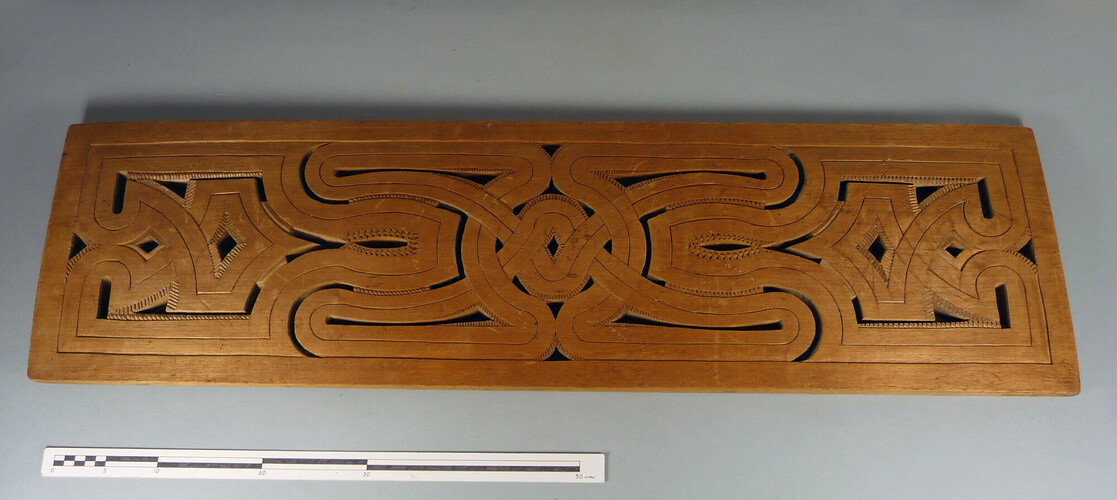 2011.109.35Carved wooden rectangular panel used as a house ornament. [FB 09/01/2012]2011.109.35
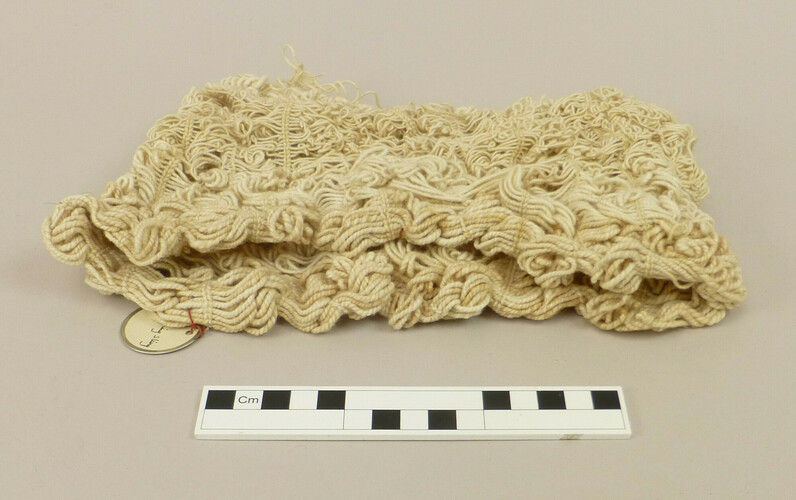 1964.2.57Baby carrying sling. Made of cotton in the style of a small hammock, but circular instead of one strip. Finger woven on a frame. [ASh [OPS move] 15/2/2017]1964.2.57
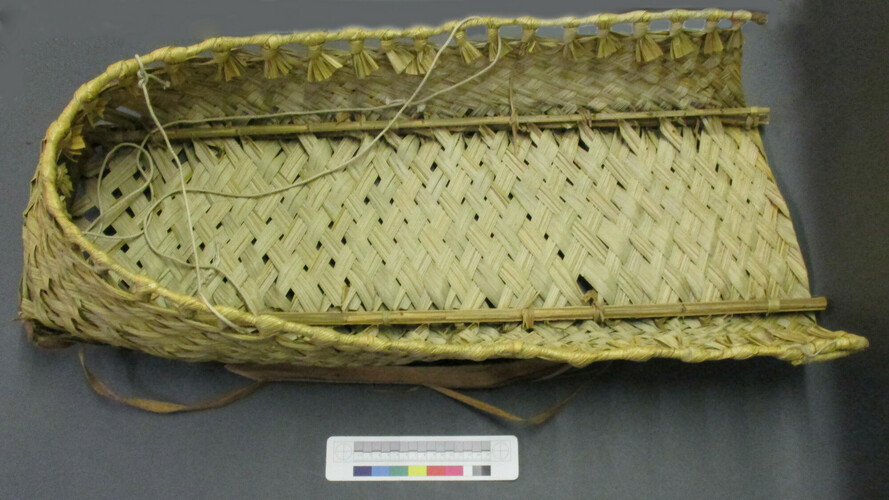 1964.2.31Carrying basket made from palm leaf. [MOBB [OPS move] 13/12/2016]1964.2.31
 1965.12.19Bow, made from wood with a nylon string. [ASh [OPS move] 26/7/2017]1965.12.19