
- Collection type
- Object
- Description
- Flat copper alloy pin, with handle with wave design, tiny dots inlaid in gold. Slots into a groove on sheath [.3]. [El.B 26/4/2007]
- Geographical reference
- Cultural groups
- Japanese
- Date / Period
- Date made: Before 1929
- Date collected
- By 1929
- Acquisition information
- Donated: 1929
- Materials and processes
- Material Copper Alloy Metal, Material Gold Metal, Process Forged (Metal), Process Incised, Process Inlaid
- Dimensions
- Length: max 212 mm
- Object numbers
- Accession number: 1929.17.3.6
- Research and responses
The purpose of the kogai is not clearly determined. Suggested uses include hairpin, chopsticks or tweezers (when divided in two). It also serves to lock the sword in the scabbard. [El.B 26/4/2007]
[NB: The former is the most widely accepted of these three interpretations - generally seen as intended for dressing and arranging the hair before donning, and after removing, the helmet. [12/7/07 AM]
Related Documents File - Detailed information from Colin Langton, 2001. Type is "Wakizashi, probably a slightly shortened Chisa/Uchi Gatana blade, Koshirae en suite to sword 7B". [CF 7/1/2002]
The following notes are drawn from research compiled by Andy Mills as part of the DCF Cutting Edge Project 2006-2007. This is a daisho or matching pair of swords, as worn exclusively by warriors of the samurai class, and which became the primary insignia of that class among men. The daisho could take two forms – a military form, or a civilian form: In the civilian form, with normal dress, a man would wear a katana and wakizashi (shortsword). The katana was carried blade upwards through the sash-belt, over the left hip-bone. The wakizashi was carried through the same belt, blade upwards, across the belly, with the hilt to the right. The example here is a pair of swords for civilian wear – katana and wakizashi. In the military form, with armour, swords were worn secured to the body through sword-belts and metal fittings on the blades themselves. [SM 17/06/2008]
Further items to explore
 1927.56.5Silver hairpin with head in openwork. Mounted on a board with 3 other hairpins [1927.56.3-4, 1927.56.6] [El.B 'DCF 2004-2006 What's Upstairs?' 9/2/2005]1927.56.5
 1926.20.21Bone hair pin with a plume of goat's hair. [El.B 'DCF 2004-2006 What's Upstairs?' 12/10/2005]1926.20.21
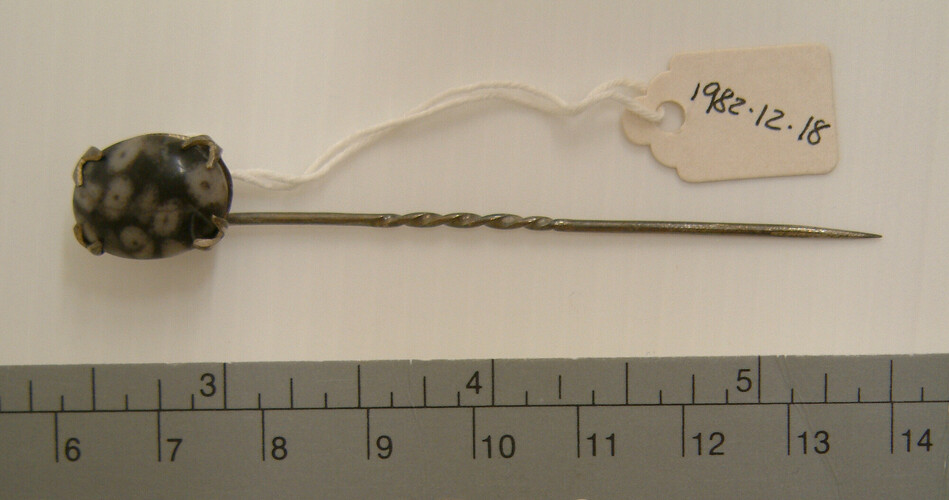 1982.12.18Tie pin with head made from a piece of grey and white coral or stone, mounted in silver metal. [E.S-R 'DCF 2004-2006 What's Upstairs?' 20/12/2004]1982.12.18
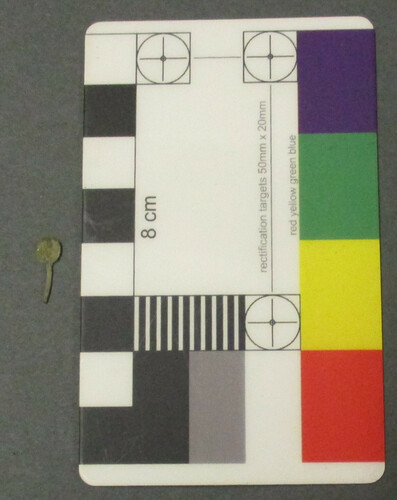 1942.13.1073.2Copper pin with flattened circular head. [BS [OPS Move] 21/11/2016]1942.13.1073.2
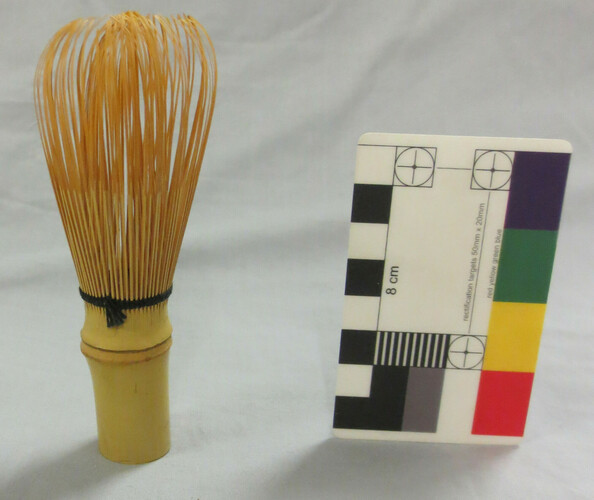 1996.17.40Tea whisk, bamboo bound at the base with black thread. [ASh [OPS move] 03/03/2016]1996.17.40
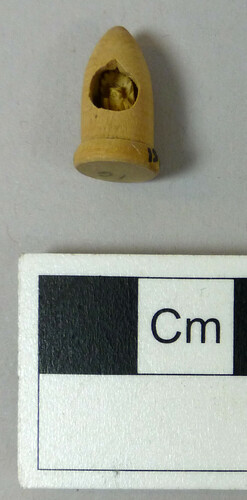 1985.53.888.2Wooden figure of a deity in a cone-shaped case with a window through which the figure is seen. The wooden figure is possibly meant to be 'Fudo Myo-o', the Buddhist patron deity for the rooster zodiac sign referred to on the bag in which the figure is kept, but it is too small to identify. For associated bag see [1985.53.888 .1] [EH [OPS Move] 27/6/2017]1985.53.888.2
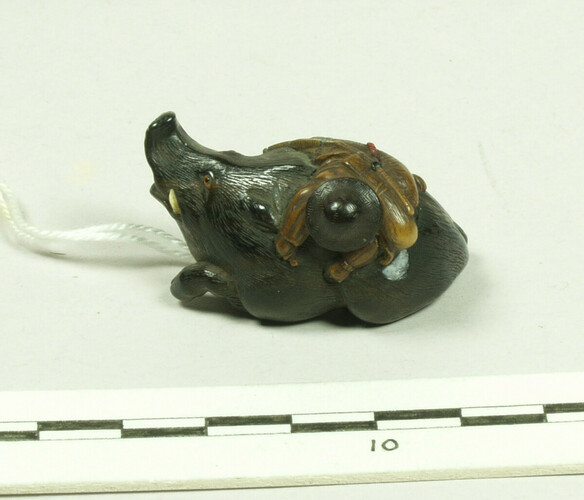 1980.34.609Toggle of lacquered wood, in form of a man straddling the back of boar. The boar has ivory tusks.1980.34.609
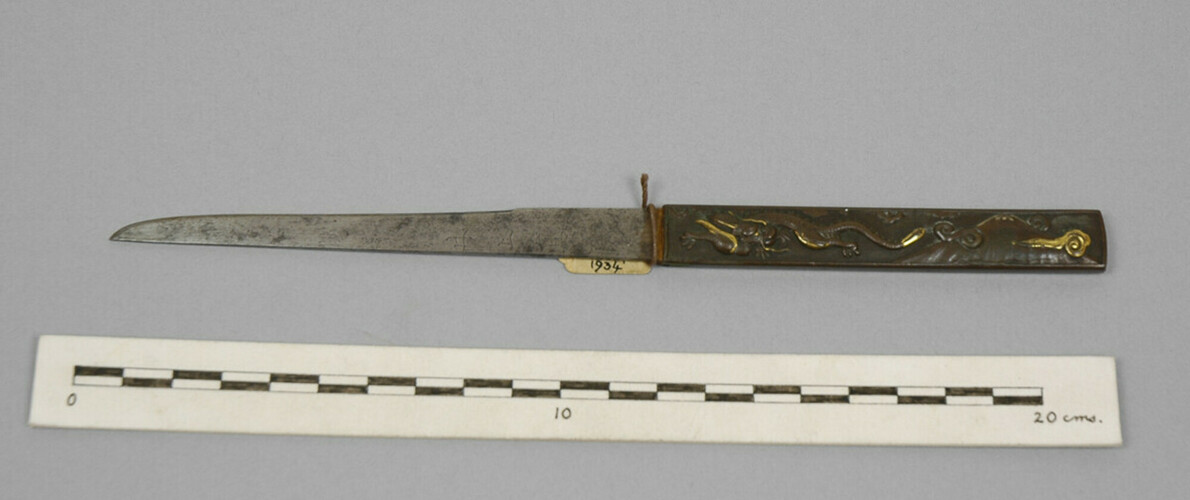 1934.25.56Small knife with single-edged blade and flat bronze handle, embossed on one side with figure of a dragon and a mountain with clouds, partly gilded. Japanese letters incised on the blade. [El.B 25/4/2007]1934.25.56