
- Collection type
- Object
- Description
- Strung beads and pendants: .7 [NI/1133,3] [see Other Information] [L.Ph 'DCF 2004-2006 What's Upstairs?' 24/6/2005]
- Geographical reference
- Northern Sudan Dunqulah [Dongola Dunkula]
- Date
- Date collected
- 1913-14
- Acquisition information
- Acquired: 1921 Acquired: 07/1945
- Dimensions
- Length: max 80 mm
- Object numbers
- Accession number: 1945.7.5.7
- Research and responses
Napata: the capital in about 750-590 BC of the ancient kingdom of Cush (Kush), situated downstream from the Fourth Cataract of the Nile, near Kuraymah in the northern part of what is now The Sudan. The Egyptian custom of royal burial under pyramids was introduced into Cush, as may be seen at Kurru and at Nuri, where the largest pyramid, that of the king Taharqa (reigned 690-664 BC), is situated. Taharqa, who also built several Egyptian-style temples at Napata and elsewhere, was defeated by the Assyrians and expelled from Egypt in 671 BC. Dunqulah: also spelled DONGOLA, OR DUNKULA, town, northern Sudan. It lies on the west bank of the Nile River, about 278 miles (448 km) northwest of Khartoum. Source: Encyclopaedia Britannica Online. [MR 10/8/2000]
Further items to explore
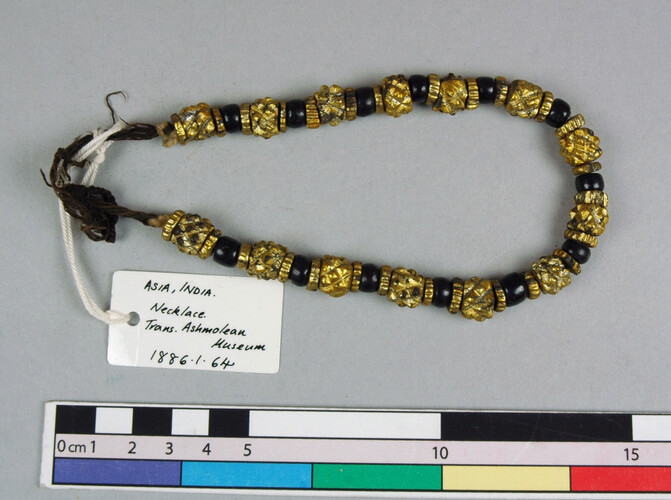 1886.1.64Necklace of black and gold gilded beads. [MJD DDF Body Arts Project 2010/2011 11/08/2010]1886.1.64
 1892.24.153Arm ornament of cord of twisted dark brown wool, bound with white and silver thread and ending with small purple balls. [MJD DDF Body Arts Project 2010/2011 17/08/2010]1892.24.153
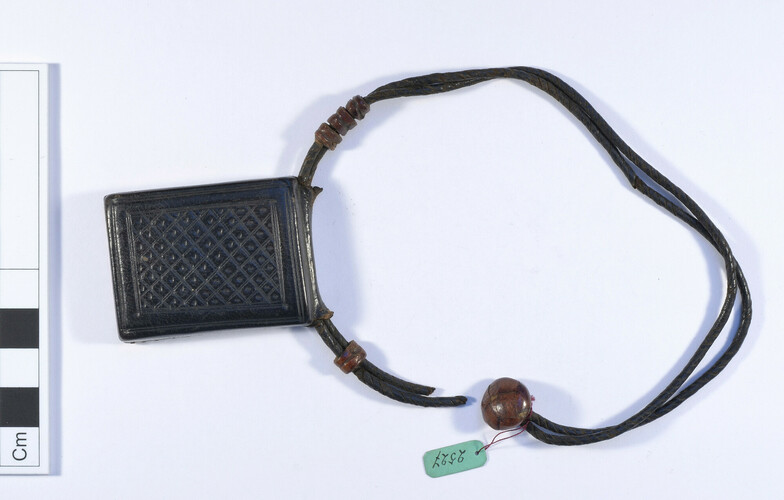 1985.52.1253Amulet, rectangular leather case with leather thong and leather button. [El.B 17/05/2012]1985.52.1253
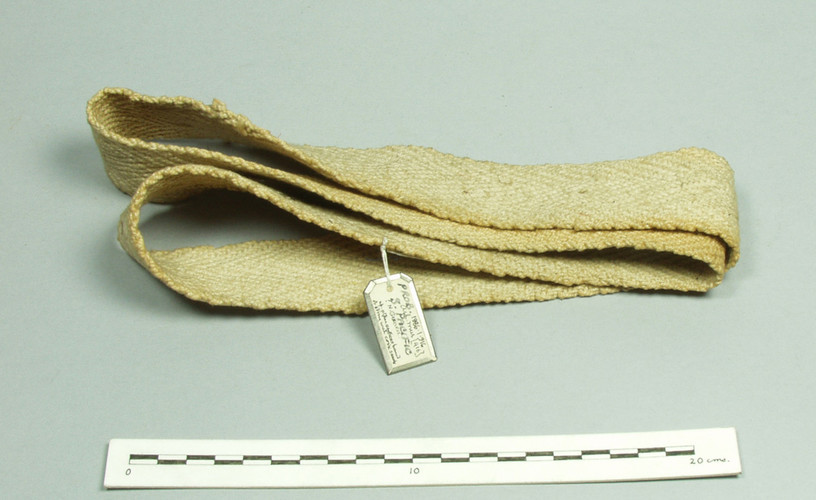 1886.1.916Woven textile band.1886.1.916
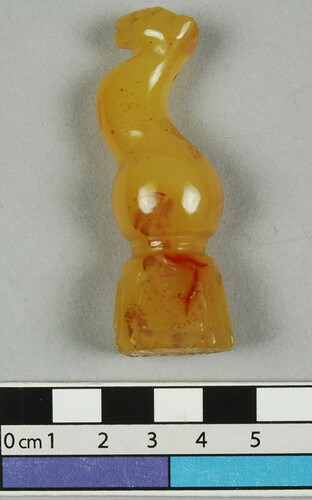 1971.15.527A knight from a chess set, made from cornelian stone, shaped like a ?cat. [SM 12/11/2010]1971.15.527
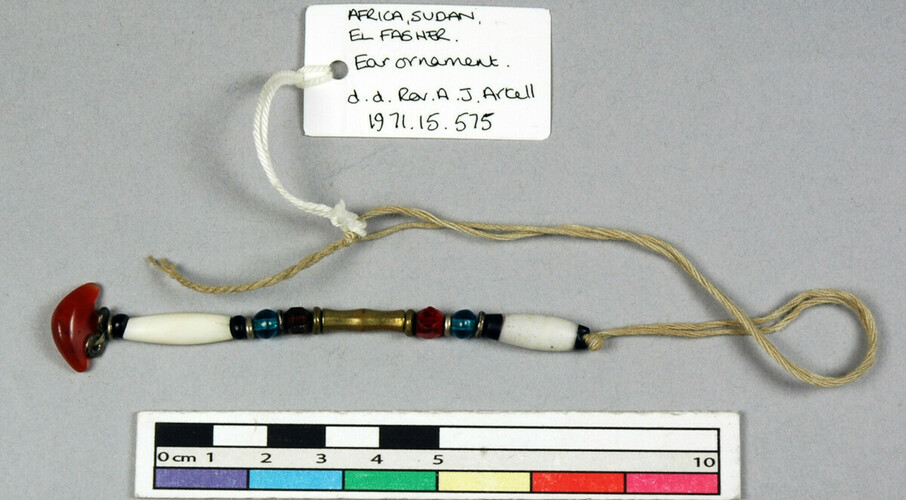 1971.15.575Ear ornament, tsagur. A string of beads and metal spacers, terminating in a boat shaped cornelian pendant. [SM 28/10/2010]1971.15.575
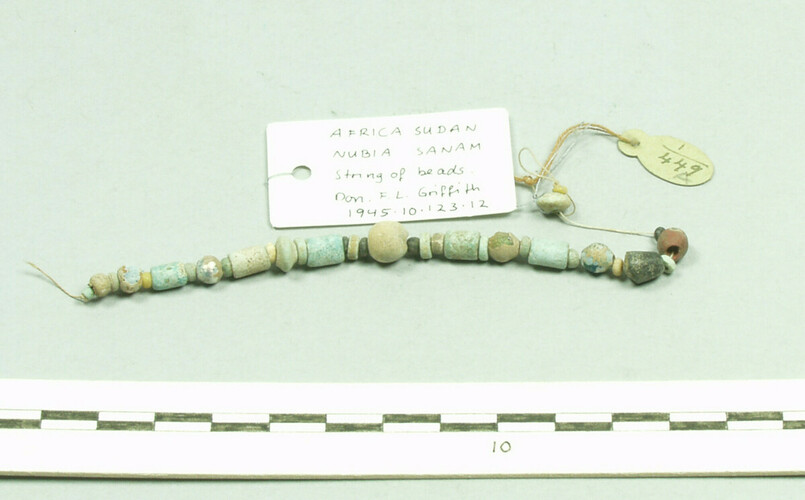 1945.10.123.12String of pottery beads. [El.B 'DCF 2004-2006 What's Upstairs?' 24/6/2005]1945.10.123.12
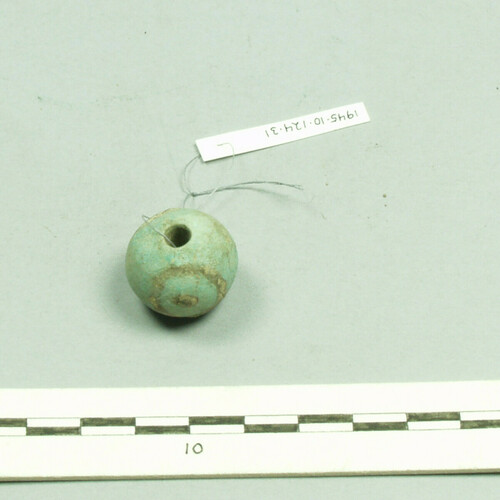 1945.10.124.31Large faience bead. [El.B 'DCF 2004-2006 What's Upstairs?' 27/6/2005]1945.10.124.31