
- Collection type
- Object
- Description
- Two human figures of wood, linked by an iron chain through their legs. Recorded as used in the practice of obeah.
- Long description
- Amulet. Two human figures of wood, linked by an iron chain through their legs. One figure has a cowrie shell and two pieces of ?bone or animal tooth fixed to the front of the body with mud or resin. The other figure has two faces and a small wooden ball and a faceted glass bead around the neck, attached with metal wire bound with a piece of textile. Both figures have glass eyes. They are connected by an iron chain, from which two padlocks and a small key are hanging. The smaller of the padlocks had two star-shapes and the words 'Hand made' stamped onto it. [El.B 20/11/2009]
- Geographical reference
- Person
- Field collector Robert Straker Turton
- PRM source Wellcome Institute
- PRM source Wellcome Historical Medical Museum
- Date / Period
- Date made: Before 1914
- Date collected
- By 1914
- Acquisition information
- Transferred: 1985
- Materials and processes
- Material Wood Plant, Material Iron Metal, Material Glass, Material Cowrie Shell, Material Bone, Material Tooth, Process Carved, Process Bound, Process Glued, Process Machine-made
- Dimensions
- Height: max 70 mm larger padlock, Length: max 270 mm total, Height: max 46 mm total, Width: max 190 mm total, Height: max 155 mm one-faced figure, Height: max 164 mm two-faced figure, Height: max 42 mm smaller padlock
- Object numbers
- Accession number: 1985.49.108 Other numbers: R 15215 1936 759
- Research and responses
This object was researched by Dr Jane Webster between October-December 2023 as part of her Visiting Research Fellowship at Magdalen College, University of Oxford. Dr Webster was exploring objects in the Pitt Rivers Museum collection which relate to the Transatlantic slave trade. Writing about this object, Dr Webster highlights that "the PRM curates several objects employed in the belief systems of enslaved Africans and their descendants in the Caribbean. Amongst these is an object used in Obeah, an African-based religion practiced in Jamaica. It was donated to the Museum in 1914 by a Dr R.S. Turton: almost certainly the district medical officer of that name who worked for the Jamaica Medical Service from 1894-1914. It comprises two carved, wooden, anthropomorphic figures, connected at the legs by an iron chain, from which two padlocks and a tiny key are suspended. The smaller of the two figures is double-faced and is likely intended to represent an Obeah practitioner, a spiritual healer and diviner considered to have the gift of second sight, and thus to be a ‘four-eyed’ or ‘two-headed’ person. This is a rare and important object: one that reminds us that Transatlantic slavery will never be ‘history’. Its legacies are with us today in so many ways, and not least in the belief systems that were brought to the Caribbean by enslaved Africans and are still practiced today". See RDF for a copy of Dr Webster's article written for the PRM Members' Magazine in which she discusses this work further.
- Associated publications
- Reference: Finding the Forgotten: Locating Transatlantic Slavery in The Pitt Rivers Museum Collection, Main author: Jane Webster, 2025, Page: 123-125, Page illustrated: 124, Catalogue number: Figure 9
Further items to explore
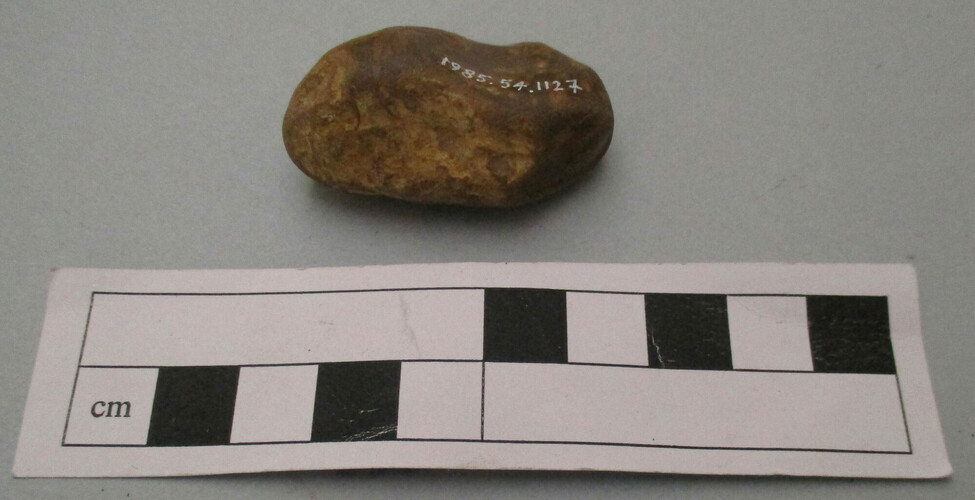 1985.54.1127Amulet. Brown stone with cream patches. Pitted surface. [IL [OPS Move Project] 13/03/2017]1985.54.1127
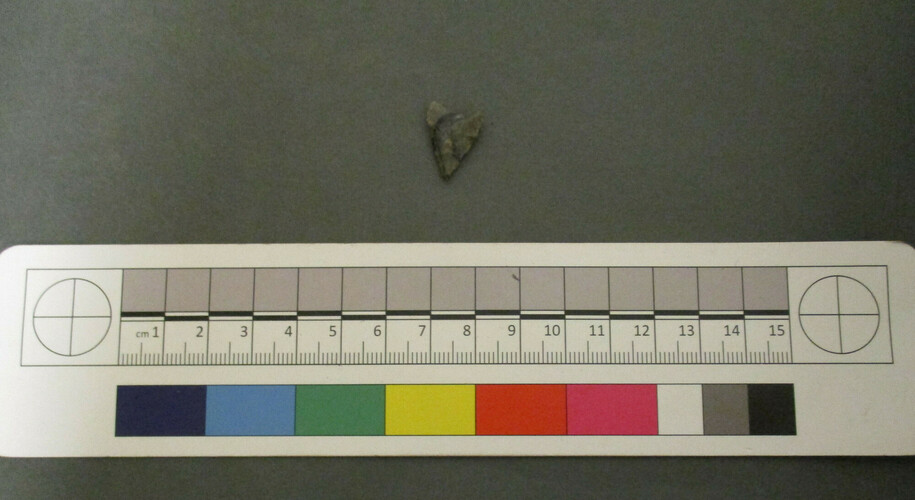 1985.53.823Arrow-head of grey flint, with barbs. [El.B 27/11/2013]1985.53.823
 1985.54.3360.2Amulet. Cellulose nitrate. Dark red in colour and triangular in section with cut marks along the edge. [ASh [OPS move] 21/12/2017]1985.54.3360.2
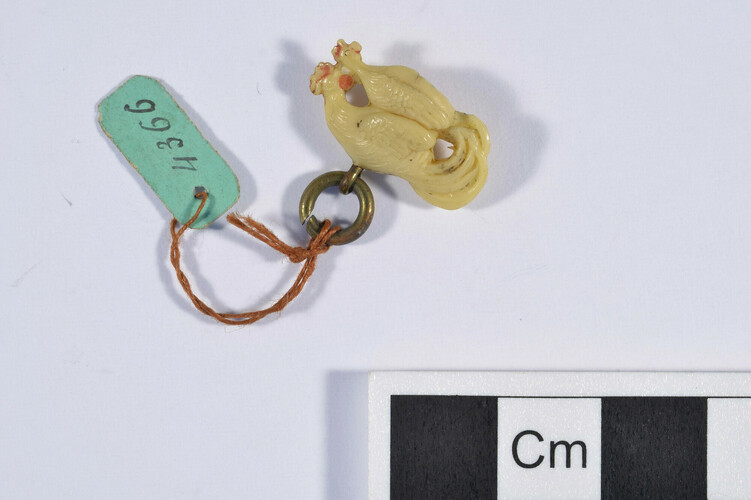 1985.52.2189Amulet, pendant with figures of cock and hen, with a ring for suspension. [El.B 10/07/2012]1985.52.2189
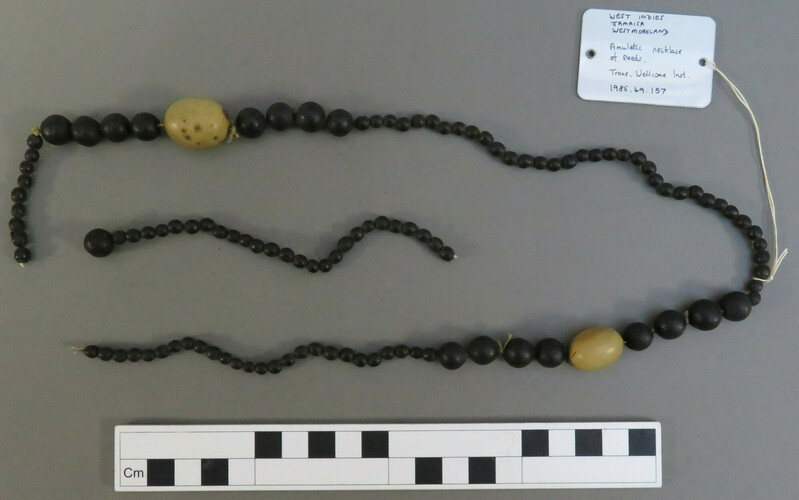 1985.49.157Amulet, a neck ornament consisting of a string of two sizes of spherical black seeds, and two larger ovoid white beads.1985.49.157
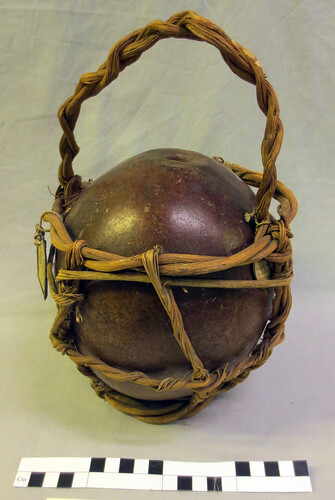 1905.36.4Gourd bottle mounted in cane work frame. [FB 04/06/2015]1905.36.4
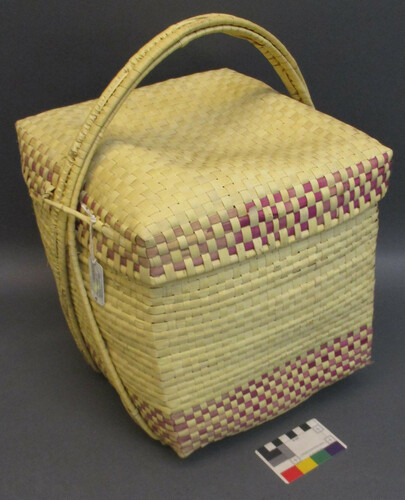 1997.11.65Deep square chequer-plaited basket with lid and handle. [MOBB [OPS move] 28/11/2016]1997.11.65