
- Collection type
- Object
- Description
- Set of 15 beads made of stone and pottery. At least two of them appear to be pottery spindle-whorls. All are perforated and they have been strung on white metal wire. [BA [OPS move] 1/11/2017]
- Long description
- String of spindle whorls and stone beads
- Geographical reference
- Person
- Field collector Unknown Collector
- PRM source Wellcome Institute
- PRM source Wellcome Historical Medical Museum
- Date / Period
- Archaeological period: Maya Archaeological period: Late Post-Classic
- Date collected
- By 1985
- Acquisition information
- Transferred: 1985
- Materials and processes
- Material Stone, Material Pottery, Material Bead, Material Metal Wire, Material Jadeite Stone, Process Perforated, Process Polished, Process Incised, Process Moulded
- Dimensions
- Width: max 76 mm, Depth: max 30 mm, Length: max 114 mm
- Object numbers
- Accession number: 1985.49.84 Other numbers: 23254
- Research and responses
Dr Elizabeth Graham examined these as part of the Fell funded project Characerizing the World Archaeology Collections. She advised that "Spindle whorls of this kind tend to be late in the Maya area (Middle to Late Postclassic (after A.D. 1200) although sometimes earlier; but I believe a bit earlier in Central Mexico. Obviously weaving was common throughout Mesoamerica history but for some reason, these shaped or modeled spindle whorls are late in the sequence. It is possible they have to do with innovations in spinning technology, but this remains to be studied.). Spindle whorls of this kind are usually Postclassic in date (after AD 900) and are highly important because they represent innovation in spinning technology (cotton or maguey fibres). Their shapes, weights and designs can tell us about the kinds of fibre being spun, the materials being woven, and to some extent how spinning and weaving was organised in the household" [AS 01/09/2010]
- Associated publications
- Illustrated in colour as Figure 18.6 on page 392 of 'Central America', by Elizabeth Graham, Dan Hicks and Alice Stevenson, in World Archaeology at the Pitt Rivers Museum: A Characterization, edited by Dan Hicks and Alice Stevenson (Oxford: Archaeopress, 2013), pp. 383-400. Caption (same page): 'Figure 18.6 fifteen Postclassic stone and ceramic spindle whorls and beads (PRM Accession Numbers 1985.49.84).'. [MJD 04/07/2014]
Search terms: Religion, Ornament, Bead, Textile, Pottery, Trade, Spindle-whorl, Amulet, Arm Ornament
Further items to explore
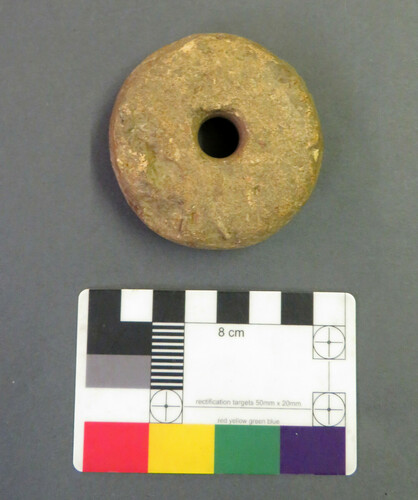 2008.57.51.2Stone whorl perforated. For the spindle see [2008.57.51 .1] [PR [OPS move] 26/4/2017]2008.57.51.2
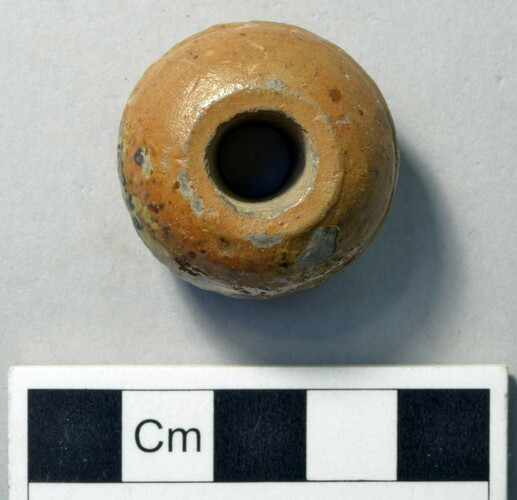 1884.104.79Ceramic spindle whorl1884.104.79
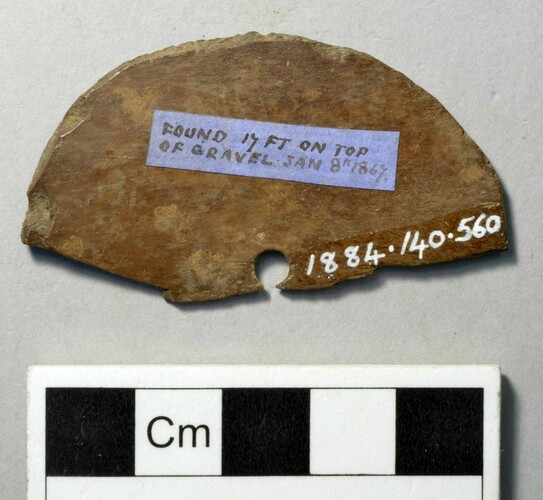 1884.140.560Bone disc fragment1884.140.560
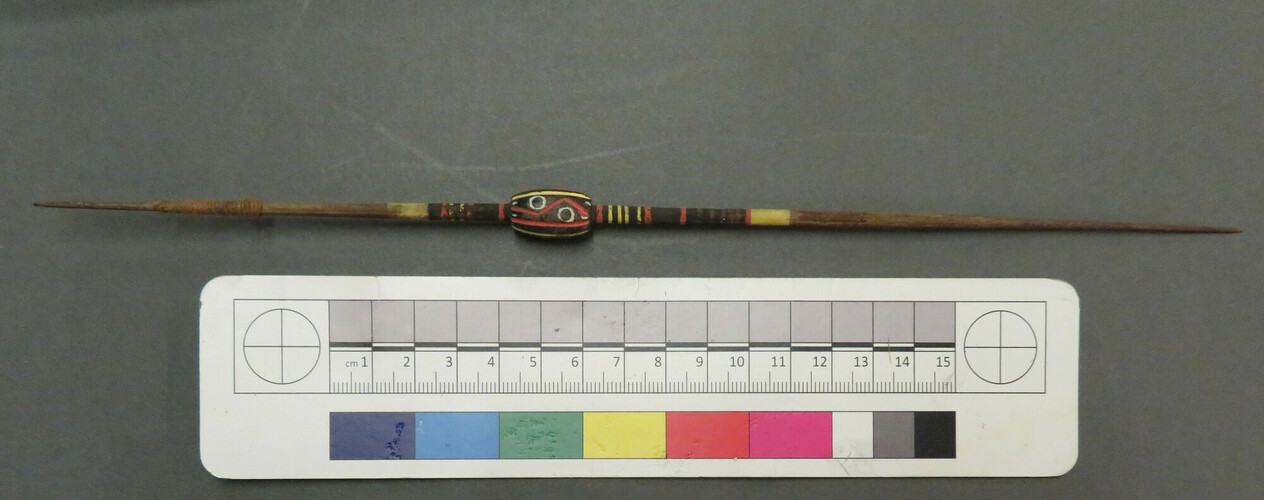 1941.2.115.9Spindle with painted whorl and yarn. Part of a weaver's basket - see 1941.2.115 .1, and for other components see 1941.2.115 .2 - .39 [EH [OPS move] 12/10/2017]1941.2.115.9
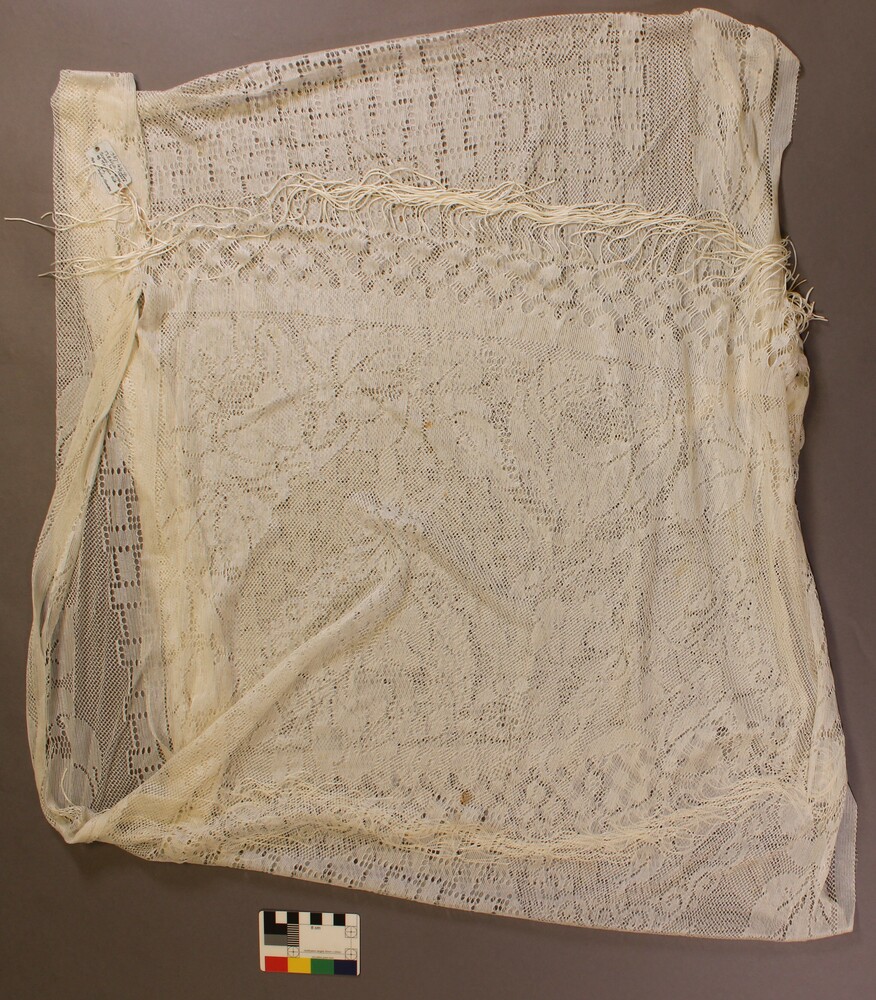 1967.42.16Hand-woven scarf of Mexican silk. Floral patterns enclosed in circles and as border.1967.42.16
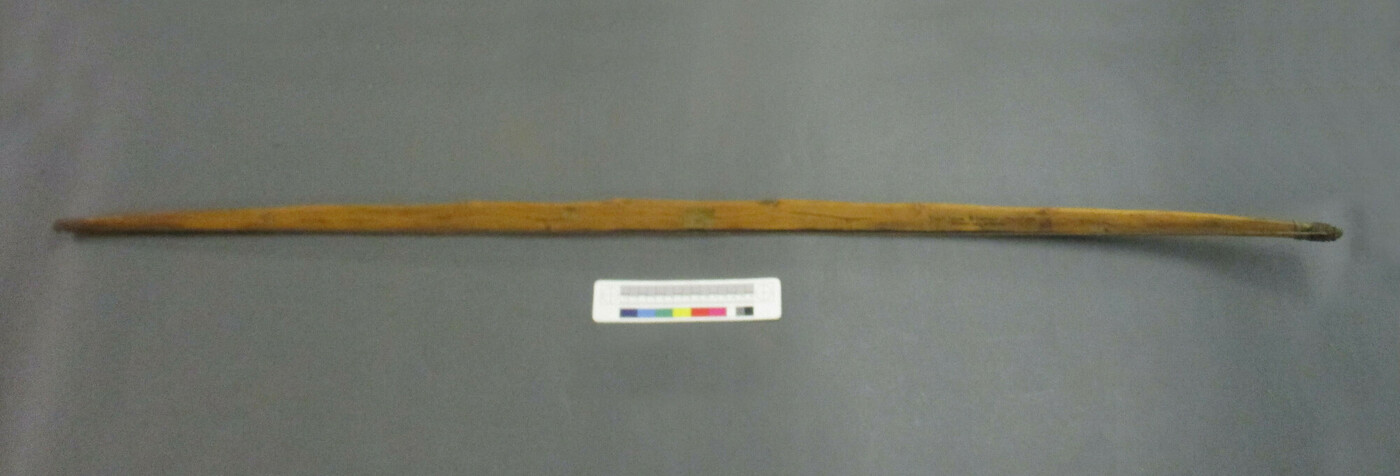 1895.47.2Bow made from wood with an animal sinew string.1895.47.2
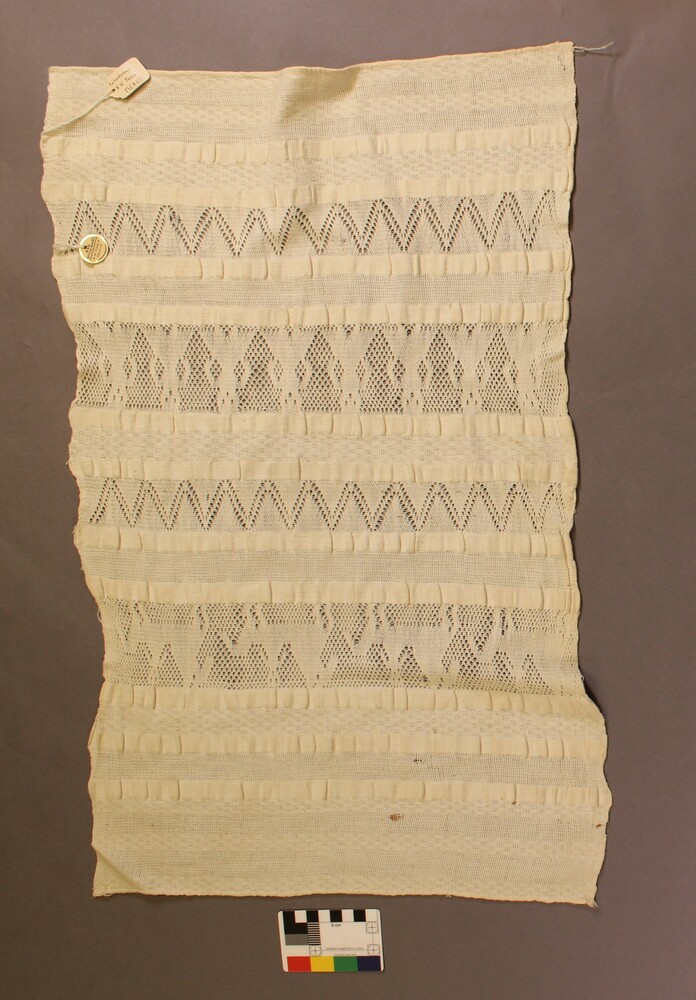 1946.6.33Half quexquemitl, in fine white cotton, human and animal figures (man on horseback in one panel) and zigzags in open weave between bands of closer weave, puckered.1946.6.33
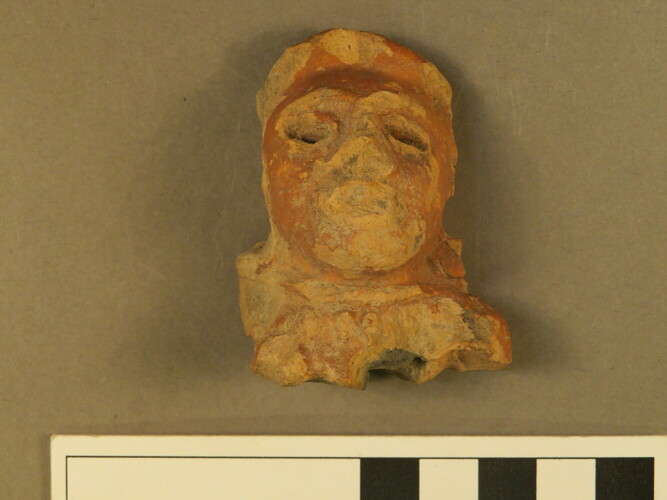 1912.45.6Ceramic head1912.45.6