
- Collection type
- Object
- Description
- Wooden 'pineapple' headed club, Totokia. [FB 09/12/2011]
- Long description
- Wooden 'pineapple' headed club, Totokia. The beaked battle hammer club has an arched neck with heavily studded head, with six rows of regular carved studs and cone beaked end. The butt end of the club is flared and flat and chipped. The wood has a dark brown/red patina. [FB 09/12/2011]
- Date / Period
- Date made: Before 1867
- Date collected
- 1867
- Acquisition information
- Donated: 1921
- Materials and processes
- Material Wood Plant, Process Carved
- Dimensions
- Height: max 140 mm, Width: max 270 mm, Length: max 810 mm
- Object numbers
- Accession number: 1921.93.197
- Research and responses
Sometimes called pineapple club, pandanus club or battle-hammer, I tuki or totokia, see F Clunie 'Fijian Weapons and Warfare' 1977 Fiji Museum, Suva, Bulletin of the Fiji Museum no.2 and R. Ewins, Fijian Artefacts: Tasmanian Museum and Art Gallery collection' Australia 1982. [AP Leverhulme project on founding collection 1995-1998]
Battle-hammers - Ai tuki and Totokia. Sometimes called pineapple clubs, or more accurately pandanus clubs (since they were fashioned after the pandanus fruit). The word i tuki also means hammer, and they were just that, with an arched neck, heavy studded head, and cone-shaped 'business end'. The totokia ('pecker' or 'beaked' battle hammer) was a development, the beak being used to deliver the coup de grace by neatly piercing the skull. It has been called by Clunie 'the most Fijian of all war clubs' R. Ewins, Fijian Artefacts: Tasmanian Museum and Art Gallery collection' Australia 1982, p.37. [FB 09/12/2011]
Further items to explore
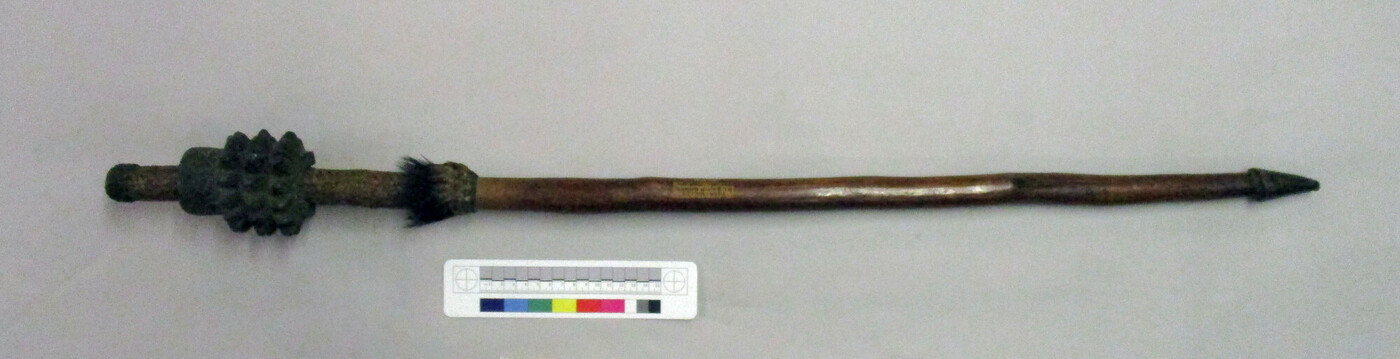 1904.60.26Club with perforated stone head, carved into three rows of projecting knobs. The shaft is bound at the top with various strips of plaited plant fibre, below which is a ring of feathers. It tapers to a small conical butt. [JC [OPS Move] 17/08/2016]1904.60.26
 1900.55.50Cylindrical wooden club, nulla, pointed at both ends and with a cylindrical expansion at the head. [JC [OPS Move] 24/10/2016]1900.55.50
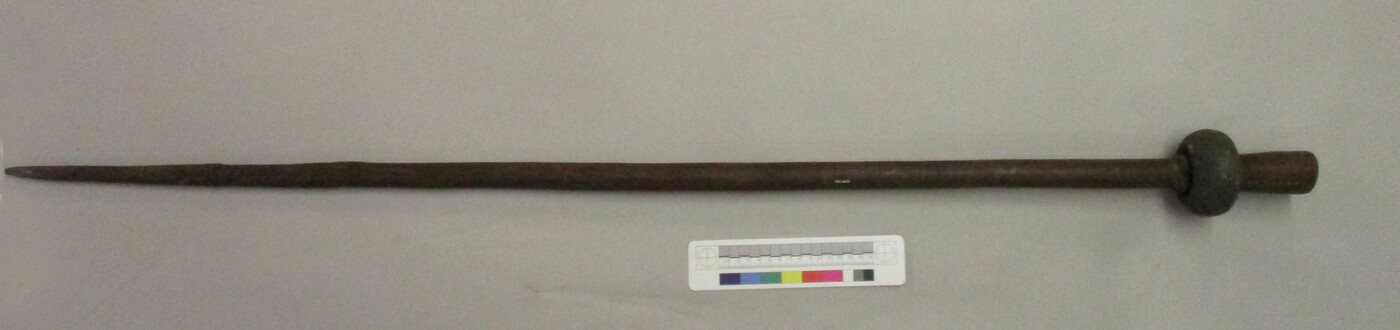 1899.62.751Club with round, perforated stone head. The stone head is attached to the distal end with resin and there is a line of small indentations in the wooden shaft above the head. The wooden shaft tapers to a slightly expanded conical point at the proximal end and the distal end, above the stone head, expands abruptly to a squared off end. [BS [OPS Move] 17/08/2016]1899.62.751
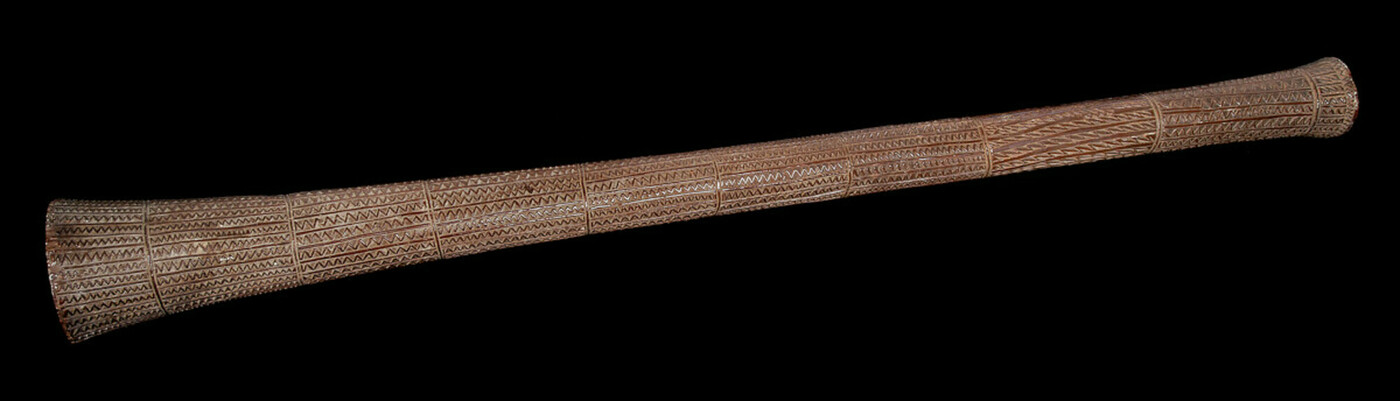 2008.3.1Wooden club carved all over with zigzag and linear designs [SM 26/11/2008]2008.3.1
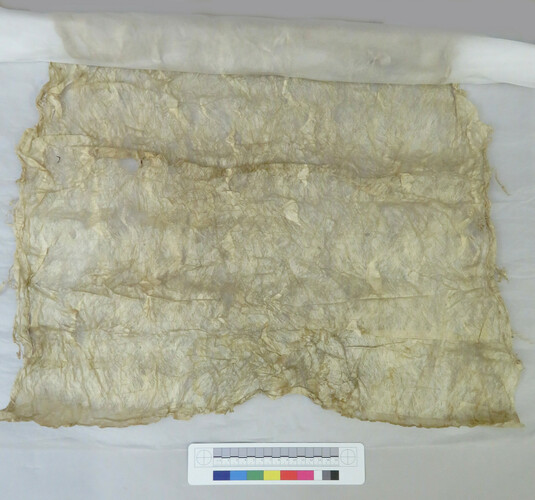 2005.126.1Barkcloth. It is cream in colour and roughly square. The barkcloth fibres are very fine. [AB [OPS move] 16/8/2017]2005.126.1
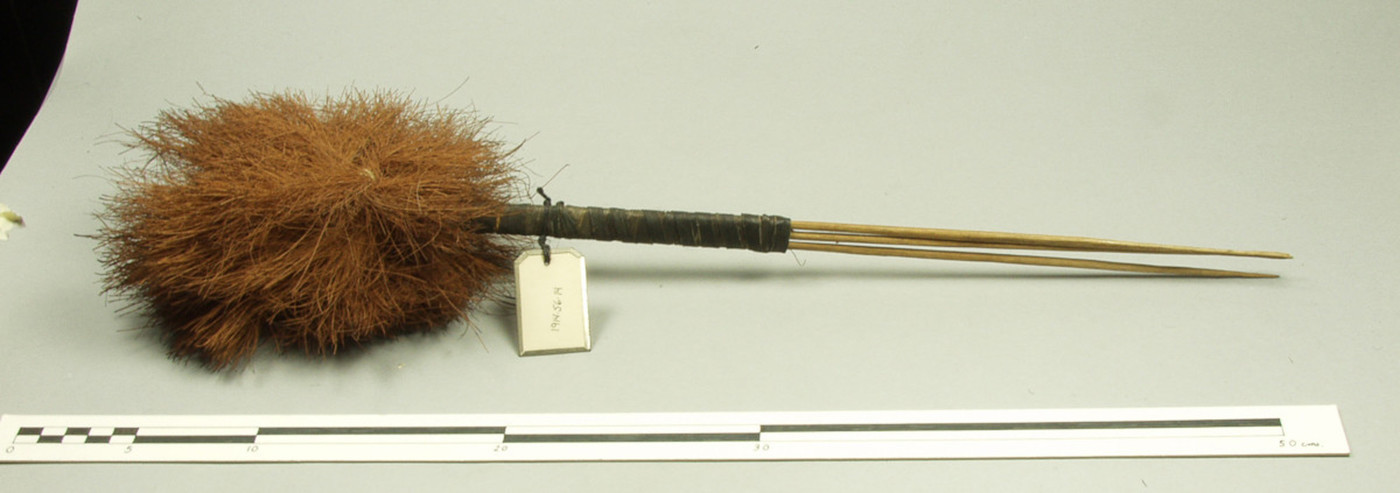 1914.56.14Model of hair ornament with triple pin, the upper part wound with plant fibre and with a brush of plant fibre at the top. [El.B 'DCF 2004-2006 What's Upstairs?' 3/2/2006]1914.56.14
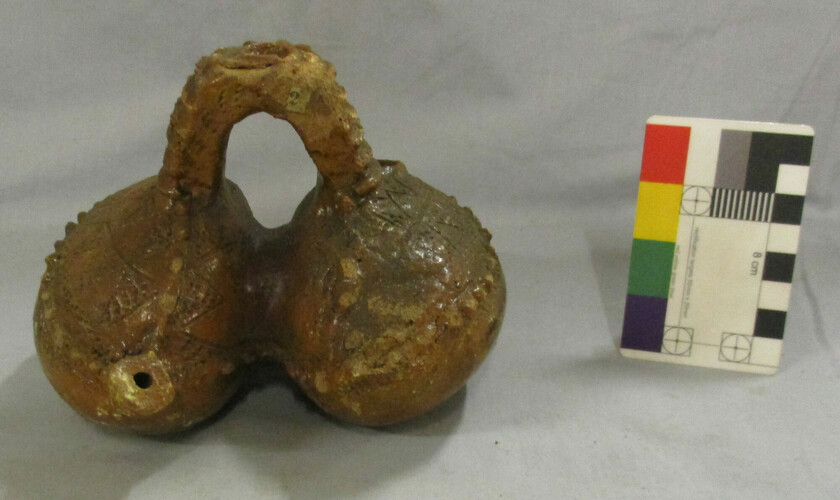 1884.35.53Double boat-shaped covered pot, glazed with resin making it a dark red/brown in colour. [ASh [OPS move] 08/04/2016]1884.35.53
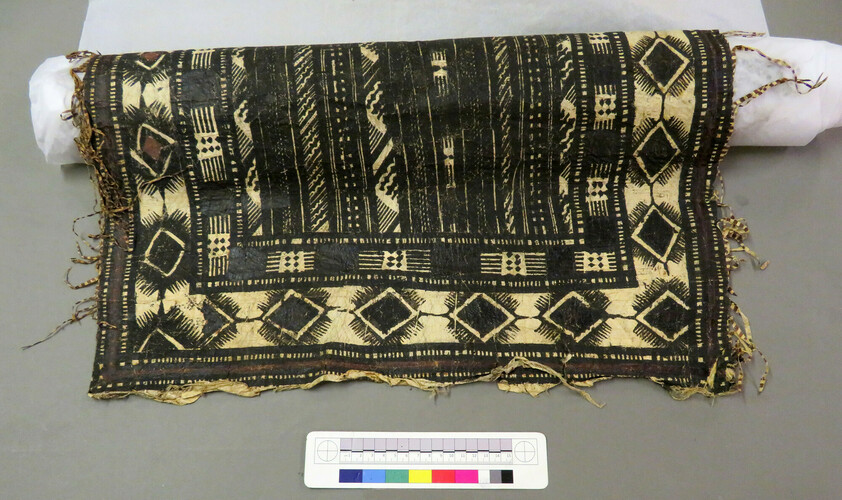 1906.20.13Barkcloth with painted decoration. [AF [OPS move] 15/8/2017]1906.20.13