
- Collection type
- Object
- Description
- Utensil used for preparing and eating food, made from carved stone.
- Geographical reference
- Date / Period
- Date made: Before 1924
- Date collected
- By 1924
- Acquisition information
- Donated: 1924
- Dimensions
- Length: max 42 mm
- Object numbers
- Accession number: 1923.85.173
- Research and responses
During a visit of Naga elders and tribal leaders in June 2025, members of the delegation identified misspellings of village names and incorrect tribal affiliations for objects or ancestors associated with certain villages. In consultations with Mr Ngongba Tange Thamlong Phom, Vice President of the Phom Peoples’ Organization, ' ‘Yungya’ was identified as 'Yongnyah' a Phom Naga village in Longleng District, Nagaland. For all objects listed as from ‘Yungya’ the correct spelling ' Yongnyah' has been used and ‘Phom Naga’ has been added to the cultural group field. [EW 19/08/2025]
This object record was discussed with Mr Ngongba Tange Thamlong Phom, Vice President of the Phom Peoples’ Organization as follow up work to his visit as part of a group of Naga elders and tribal leaders in June 2025. In consultations with Phom elders, Mr Ngongba Tange Thamlong Phom provided the below information about the use of the obejct via WhatsApp. [EW 19/08/2025]
"It was called as the 'hüngshong' which was primarily used for crushing gingers inside the stone bowl and the side small spaces were used for cutting meat into smaller pieces because in olden days they used to cook meat in large chunks and after it was cooked it was again cut into smaller pieces ready to be eaten."
Search terms: Religion, Amulet, Unidentified Object

Further items to explore
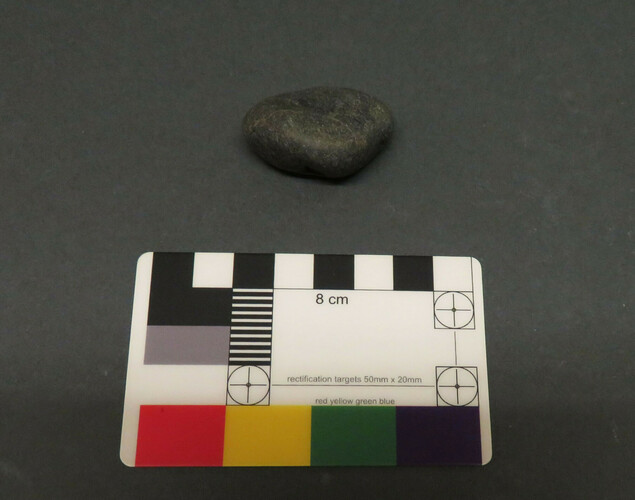 1985.54.492Amulet; grey stone. [ASh [OPS move] 23/08/2017]1985.54.492
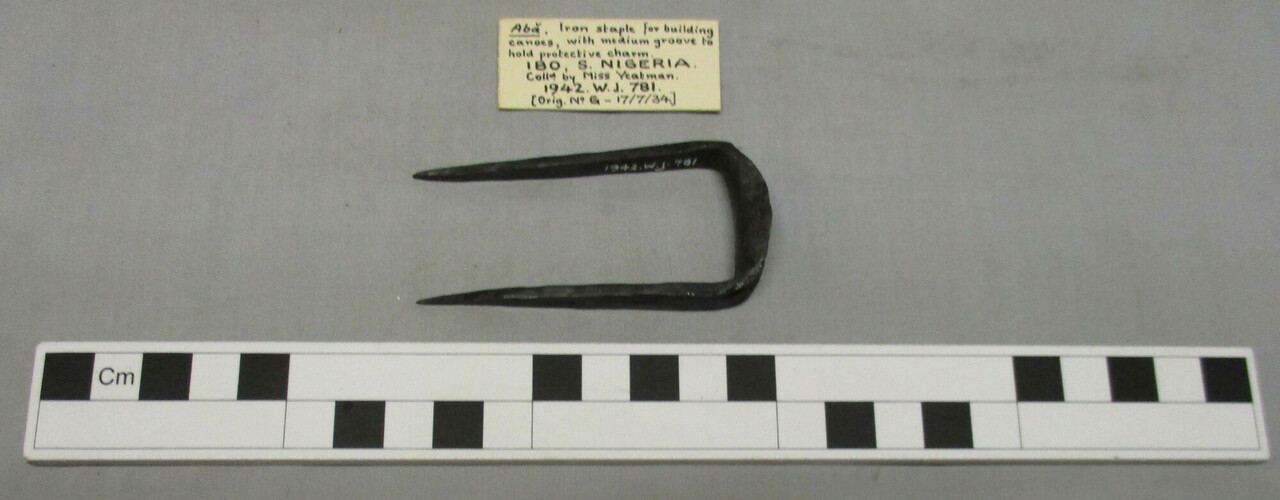 1942.13.781Iron staple for making canoe with a hollow in the centre for an amulet. [ASh [OPS move] 15/09/2016]1942.13.781
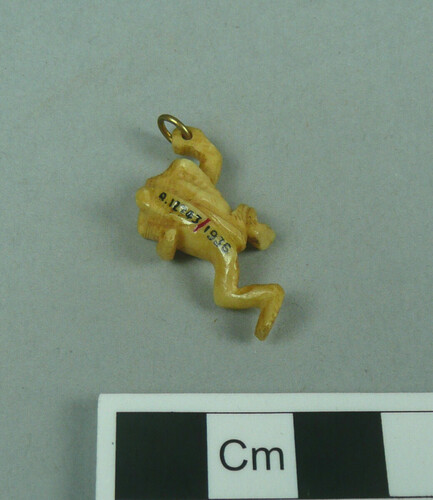 1985.51.908Carved bone frog charm with suspension loop. Used as an amulet for fertility. [SM 11/05/2011]1985.51.908
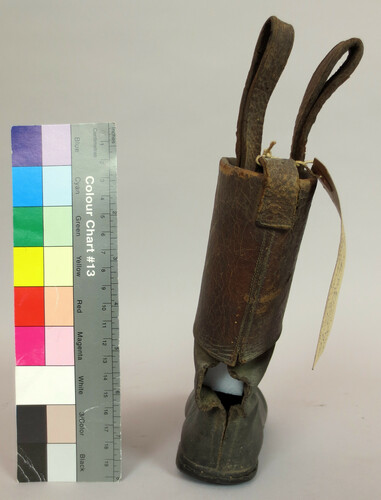 1892.35.6Child's leather boot with the turnover at the top. [SM (Verve) 08/05/2014]1892.35.6
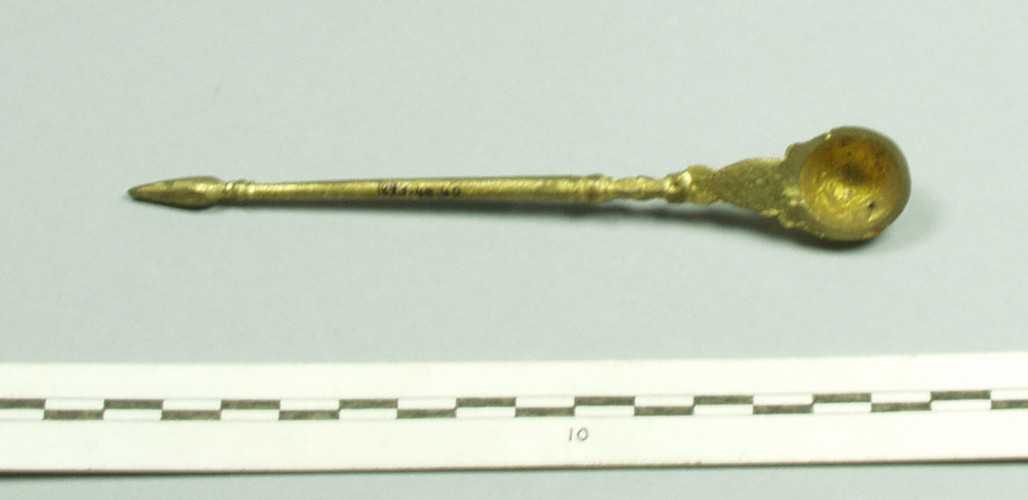 1893.48.40Gilt spoon with hemispherical bowl with a slender handle terminating in a lotus bud. [EC 'DCF 2004-2006 What's Upstairs?' 1/3/2006]1893.48.40
 1923.85.41.4One from a bundle of eight bamboo calthrops or panjis. [MJD DDF Body Arts Project 2010/2011 28/09/2010]1923.85.41.4
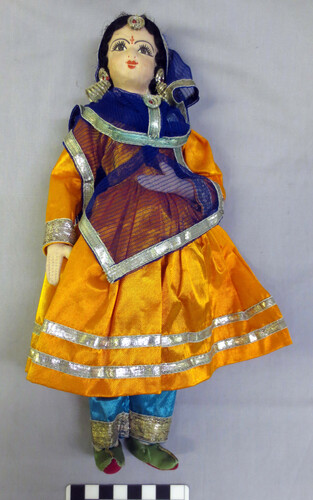 1958.7.13Textile doll dressed in a woman’s costume which signifies caste and regional style. The figure wears an orange dress with a blue translucent headdress. Underneath her dress, she wears pale blue trousers. [PR [OPS move] 12/6/2017]1958.7.13
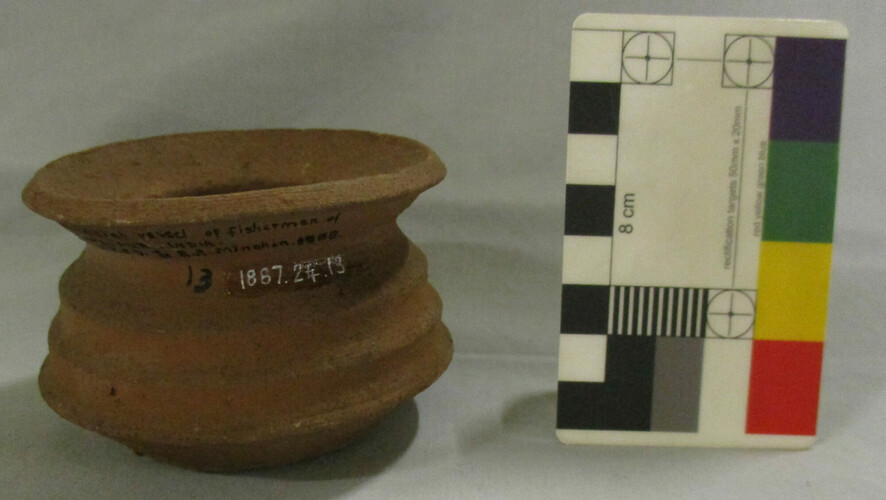 1887.24.13Red ware bowl, with flat base, short shallow sides. [MOBB [OPS move] 12/04/2016]1887.24.13