
- Collection type
- Object
- Description
- Metal candlestick shaped lamp with oil reservoir and supports for glass chimney. Painted red; no glass chimney or shade. [MOBB [OPS move] 29/3/2017]
- Long description
- The candlestick portion consists of a red circular base with decorative top leading to a narrow cylindrical section, which leads to a narrower cylindrical stem. At the top of the stem is an expanded rim. Within the rim a metal cylinder painted white with decorative perforations around the bottom is situated. A flat textile wick is held within a metal support inside the white tube. Attached to the back of this tube is a red support which leads to a horizontal oval oil reservoir. The support also holds up a large horizontal metal hoop for holding a shade. [MOBB [OPS move] 29/3/2017]
- Geographical reference
- England Oxfordshire Oxford
- Cultural groups
- English
- Date / Period
- Date made: 1800-1900
- Date collected
- ?By 1932
- Acquisition information
- Donated: 1932, uncertain
- Materials and processes
- Material Metal, Material Metal Wire, Material Pigment, Material Textile, Process Painted, Process Jointed, Process Woven, Process Perforated
- Dimensions
- Diameter: max 147 mm, Height: max 337 mm, Height 265 mm stand, Width: max 165 mm
- Object numbers
- Accession number: 1932.88.1149 Other numbers: UA 1 [U A 1]
- Research and responses
Colza: The French name of COLE-SEED. colza-oil: the oil expressed from the seeds, much used for burning in lamps. OED online [AP 18/07/2006] Commonly known as rapeseed in the UK. [MOBB [OPS move] 29/3/2017]
http://en.wikipedia.org/wiki/Argand_lamp: The Argand lamp was invented and patented in 1780 by Aimé Argand . It greatly improved on the home lighting oil lamp of the day by producing a light equivalent to about 6 to 10 candles. It had a circular wick mounted between two cylindrical metal tubes so that the air channelled through the center of the wick, as well as outside of it. A cylindrical glass chimney around the wick was used to steady the flame and to improve the flow of air. It used a supply of good liquid oil, such as spermaceti whale oil, supplied from a separate reservoir as the fuel. Aside from the improvement in brightness, the more complete combustion of the wick and oil required much less frequent snuffing (trimming) of the wick.
The lamp quickly displaced all other varieties of oil lamps and were manufactured in a great variety of decorative forms. They were somewhat more costly than the old oil lamps because of their increased complexity, so they were adopted first by the well to-do, but were quickly adopted by the middle class and eventually the less well-off as well. It was the lamp of choice until about 1850 when kerosene lamps, which used a flat wick in a cup with a bellied chimney, were introduced. Kerosene was considerably cheaper than whale oil, and many Argand lamps were converted to the new form.
In France, they were known as "Quinquets" named after the man who stole the idea from Argand and popularized it in France. [AP 02/10/2006]
Search terms: Lighting, Lamp, Candlestick
Further items to explore
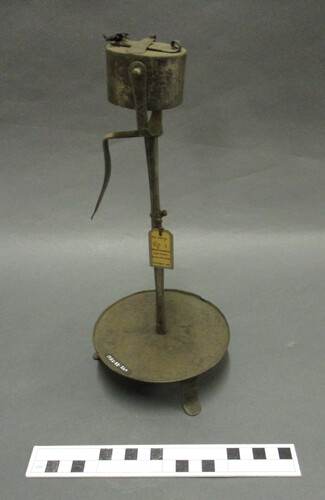 1932.88.240Small circular oil vessel covered by a small rotating lid, which rotates round the vertical channel for the wick. Shallow circular dish below, standing on three short legs. [MOBB [OPS move] 12/4/2017]1932.88.240
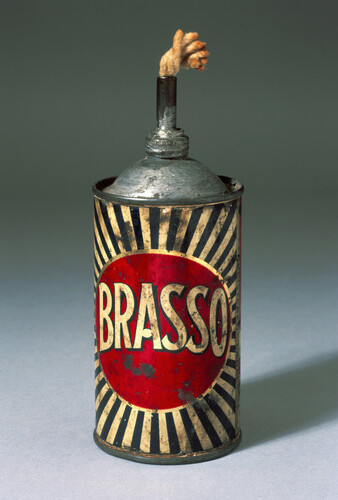 1966.3.61Wick lamp made from a Brasso tin with soldered top. [DCF Court Team 19/11/2002]1966.3.61
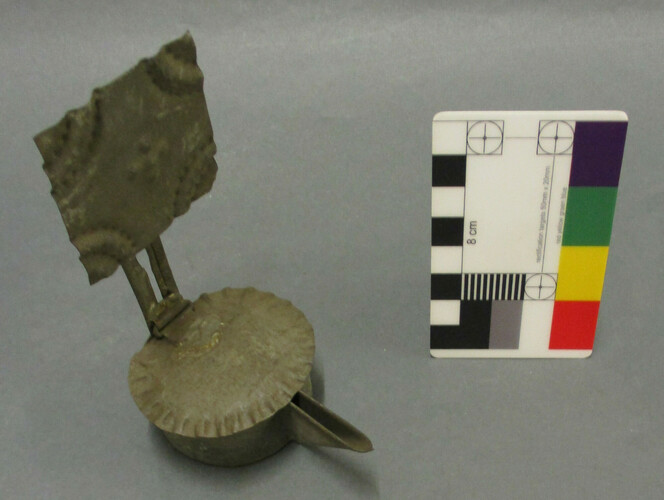 1932.88.804.1Hanging lamp of tinned iron. Circular lamp with flat bottom, straight sides and hinged lid over the pan. Long, narrow wick nozzle. The lid has fluted edges. Vertical arm at the back with rectangular aperture and decorative square plate at the top. The drip pan for this lamp is [1932.88.804 .2]. [MOBB [OPS move] 25/4/2017]1932.88.804.1
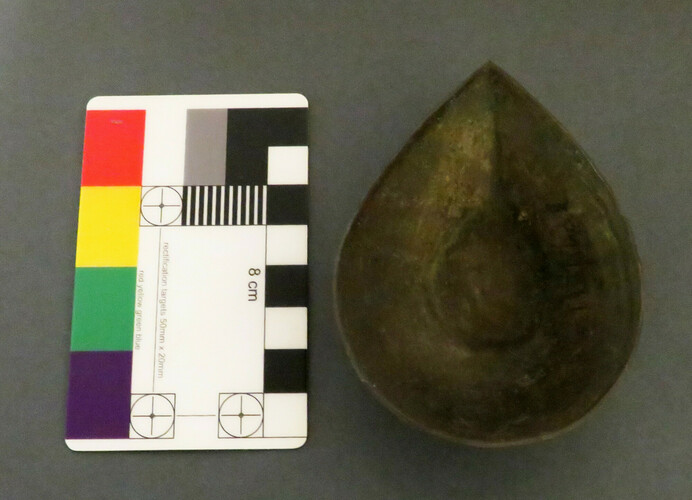 2017.52.2Brass lamp2017.52.2
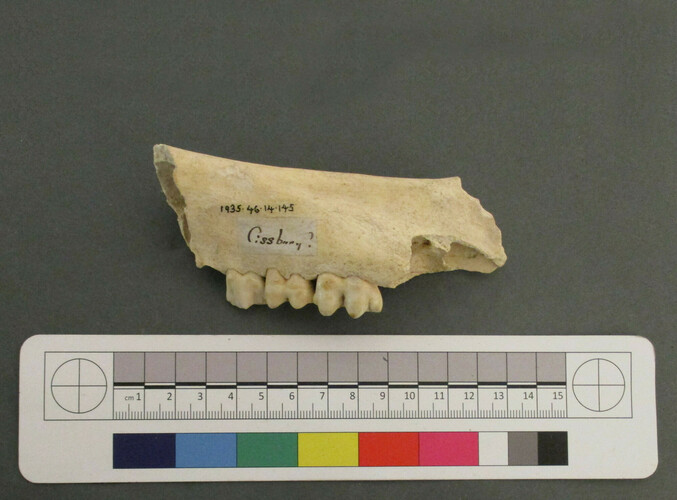 1935.46.14.145Animal jaw fragment set with three teeth. [CW [OPS Move] 23/5/2017]1935.46.14.145
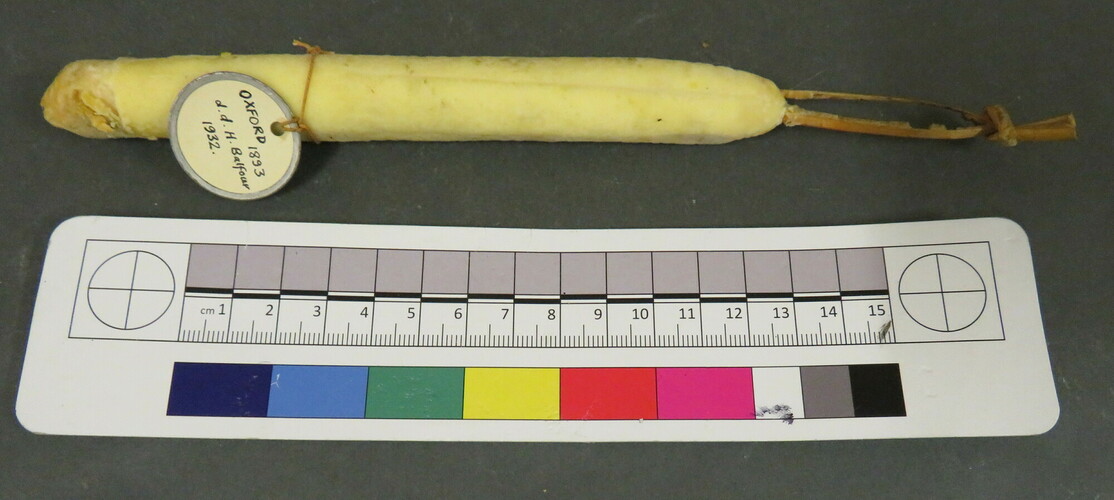 1932.88.74Rush candle. The candle is yellow in colour and cylindrical in shape with a rush wick which is knotted at the tip extending from one end of the candle. This candle is part of a set of five; for the full set see [1932.88.74 - 78] [SB [OPS Move] 3/5/2017]1932.88.74
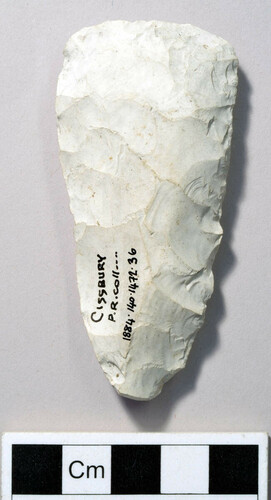 1884.140.1472.36Stone implement1884.140.1472.36
 1884.137.171.11Daub fragment1884.137.171.11