
- Collection type
- Object
- Description
- Tattoo pattern block, carved from wood with a scrolling and curved design. Traces of black pigment. [SM 29/09/2010]
- Cultural groups
- Kayan
- Person
- Field collector Charles Anthony Johnson Brooke
- PRM source Third Rajah of Sarawak, Charles Vyner de Windt Brooke
- PRM source Bertram Norman Sergison Brooke
- Date / Period
- Date made: Before 1923
- Date collected
- before 1923
- Acquisition information
- Donated: 1923
- Materials and processes
- Material Wood Plant, Material Pigment, Process Carved, Process Stained
- Dimensions
- Length x Width: max 51 x 44 mm
- Object numbers
- Accession number: 1923.86.375
- Research and responses
For information about tattooing and the patterns featured on these pattern blocks see Hose and McDougall, 'The Pagan Tribes of Borneo vol. I ', London : Macmillan and Co., 1912. Chapter 12. [JP 6/2/2001]
According to Charles Hose & R. Shelford, ('Materials for a study of Tatu in Borneo', J.R.A.I. vol. xxxvi, 1906), the term lukut (for male wrist tattoos) means an antique bead much valued by the Kayans. Its significance is tied to the belief that the soul escapes the body when ill. To prevent this "the man will "tie it in" by fastening round his wrist a piece of string on which is threaded a lukut or antique bead". This can be lost or broken so a tattoo represents the bead. Both the bead & the tattoo are considered as a charm to ward off all diseases. [CF 1/3/2001]
Search terms: Body Art, Tool, Technique, Tattooing Accessory, Pattern, Body Art Accessory
Further items to explore
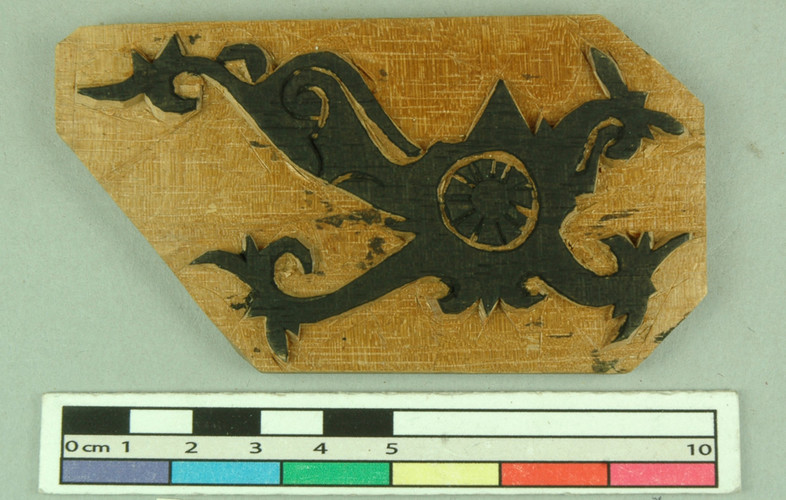 1923.86.371Tattoo pattern block, carved from wood with a scrolling and pointed design. Stained with black pigment.1923.86.371
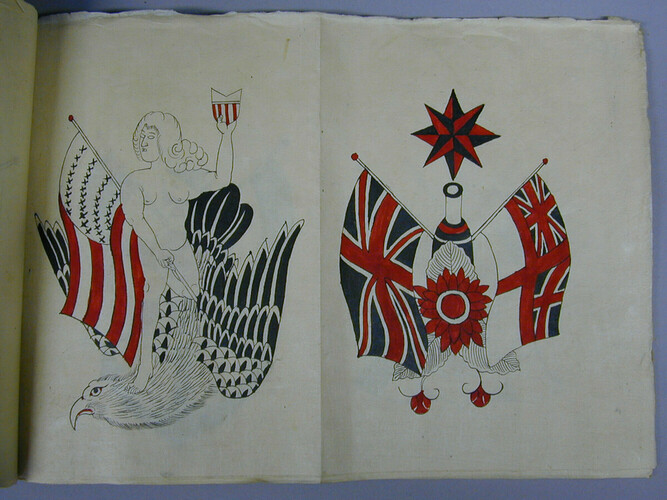 1906.18.8.126 sheets of paper with tattoo designs drawn in ink in both black and white and colour. Bound with string between two wooden bars. There are two illustrations on each page. The set seems to comprise of two parts. The first part (on narrower pages that the latter part), consists of animal and figurative designs of a 'traditional' nature. The latter part is drawn in black and red only and is of a naval/ military nature comprising mainly flags.1906.18.8.1
 1907.83.3Tattooing needles mounted into a wooden handle.1907.83.3
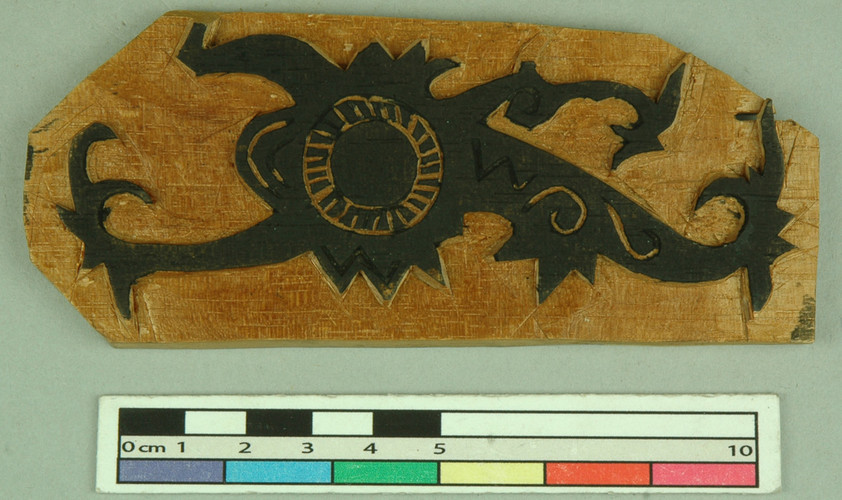 1923.86.342Tattoo pattern block, carved from wood, with a scrolling and pointed design. Stained with black pigment. [SM 29/09/2010]1923.86.342
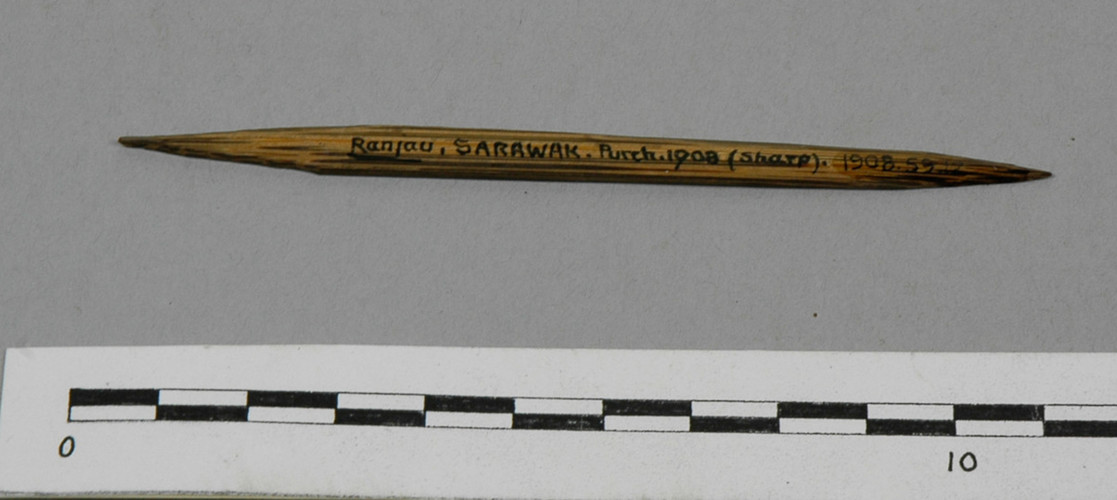 1908.59.12Blow pipe gauge for darts, made from a piece of bamboo that is tapered at both ends. [SM 12/11/2007]1908.59.12
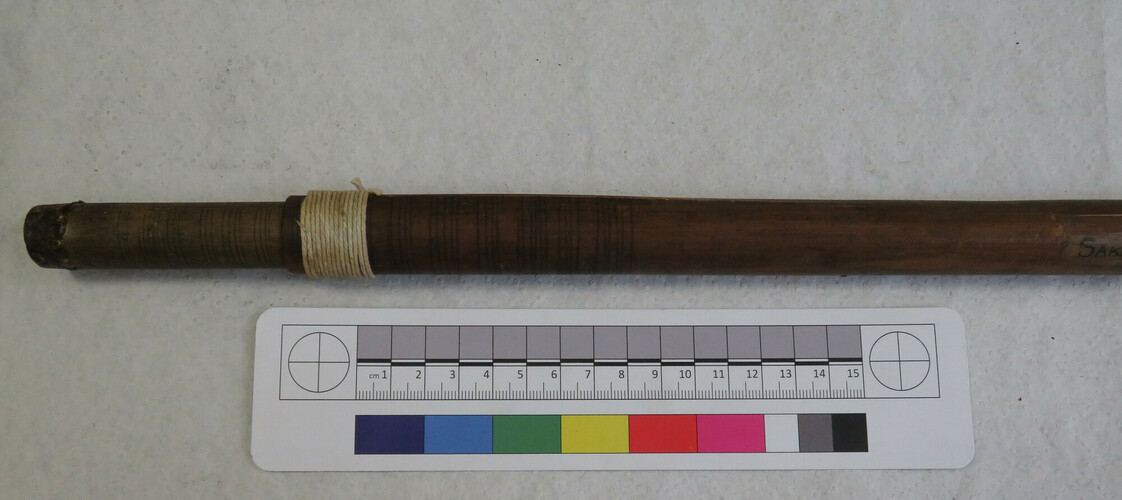 1891.55.48Bamboo blowpipe. With three tiered layers of bamboo. With incised geometric designs, the narrowest tube is decorated with dots. The mouthpiece is coated in resin. [AB [OPS move] 12/9/2017]1891.55.48
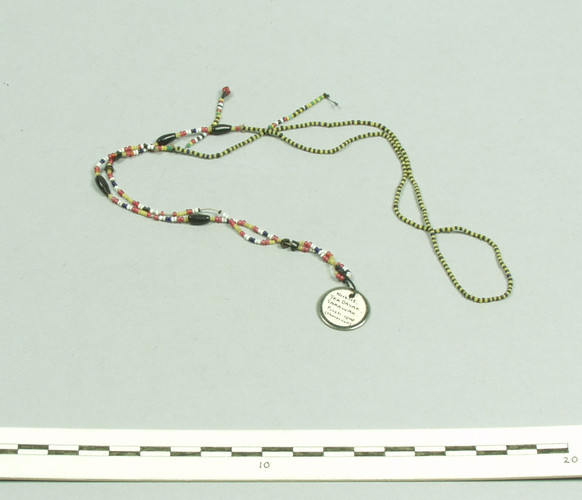 1908.59.63Neck ornament of tiny mainly yellow, black, red and white trade beads with some black seed beads. [LM 'DCF 2004-2006 What's Upstairs?' 22/7/2005]1908.59.63
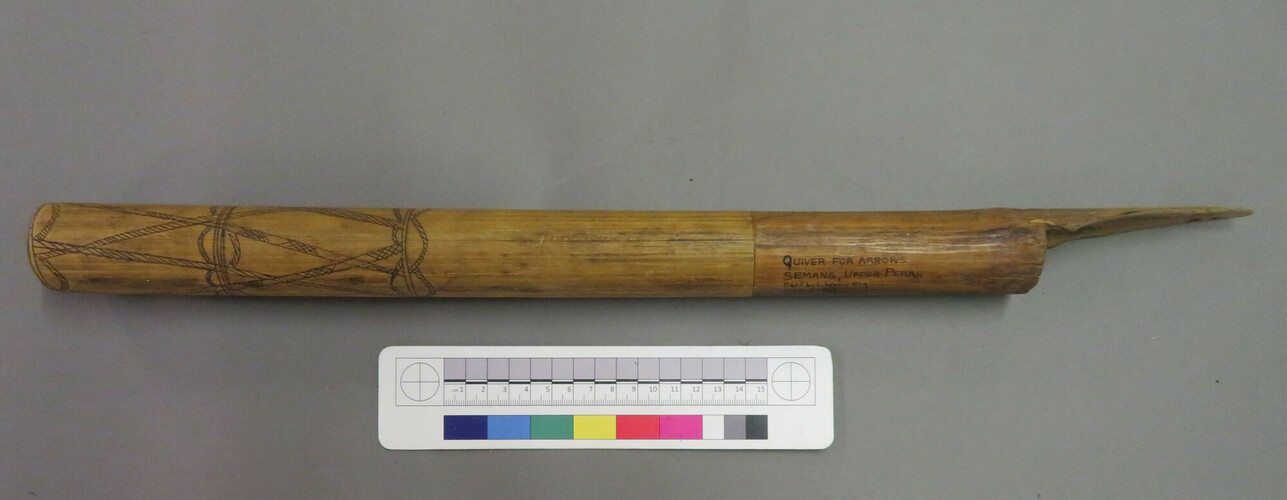 1893.70.18Bamboo quiver. [BS [OPS move] 11/9/2017]1893.70.18