
- Collection type
- Object
- Description
- Stone flake
- Long description
- Stone flake of bluish grey and white patinated flint. Cortex on 25% of surfaces. [JW [Excav. PR] 31/05/2013]
- Geographical reference
- England East Sussex Lewes Newhaven Castle Hill Hillfort
- Person
- Maker Unknown Maker
- Field collector William Whitaker
- Field collector Augustus Henry Lane Fox Pitt-Rivers
- PRM source Augustus Henry Lane Fox Pitt Rivers founding collection
- Date / Period
- Archaeological period: Neolithic, uncertain Archaeological period: Bronze Age, uncertain
- Date collected
- By 1874
- Acquisition information
- Donated: 1884
- Materials and processes
- Material Flint Stone, Process Flaked
- Dimensions
- Thick: max 7 mm, Width: max 25 mm, Length: max 44 mm, Weight 9 g
- Object numbers
- Accession number: 1884.132.277 PR Cat other PR nos: 3224
- Research and responses
The primary documentation is not completely clear that this was collected by Whittaker, and this object may have been collected by Pitt-Rivers himself. [Dan Hicks 16/08/2013]
In his 1869 paper on the Sussex hillforts, Pitt-Rivers described this site as follows: "THE CASTLE, NEWHAVEN.—Three miles west of this fort, upon a commanding height, and, like the two just described, partly destroyed by the erosion of the cliff, stands the intrenchment known as the castle of Newhaven. The modern work now in process of erection for the defence of the port cuts through part of the ancient earthwork, and in the course of its construction the remains of a kitchen-midden, including specimens of worked flints, were brought to light in the interior of the old work, and have been described in the Anthropological Journal. [Note: Journal of the Anthropological Society, No. 15, Oct. 1866, clxxxvii. The deposit included, besides flints, the evidence of the artificial workmanship of which appeared doubtful, fragments of pottery, supposed to be Konian, and bones of domesticated animals.] About 1680 yards of the northern front still remain, and it appears to be arranged in a succession of re-entering curves and salient points, but the whole configuration of the surface has been so much altered by deep fissures, and by the decomposition and settlement of the plastic clay on which it stands, that it is difficult to judge of its original form. Enough however remains to show that this work, like that of Beltout, occupied the whole summit of the hill, and conformed to the outline of the brow. Advantage was probably taken of a natural terrace to give additional command to the rampart. Plate VII. fig. 4 is a section of the only portion of this work in which any trace of an external ditch is discernible. The fort commands the whole of the surrounding country, but the view is limited to the north-west." (Lane Fox 1869: 34-35). [Dan Hicks 16/08/2013]
- Associated publications
- Lane Fox, A.H. 1869. An examination into the character and probable origin of the Hill Forts of Sussex. Archaeologia 42: 27-52. [Dan Hicks 16/08/2013]
Further items to explore
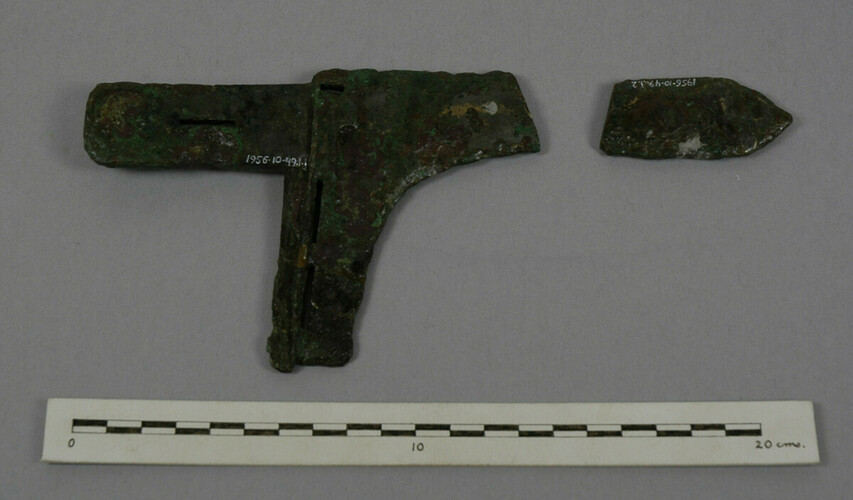 1956.10.49.1.1Bronze halberd blade in two pieces [.1.1, .1.2] with four slits in the tang and blade for attaching to the haft. With ferrule [1956.10.49 .2] [SM 16/04/2007]1956.10.49.1.1
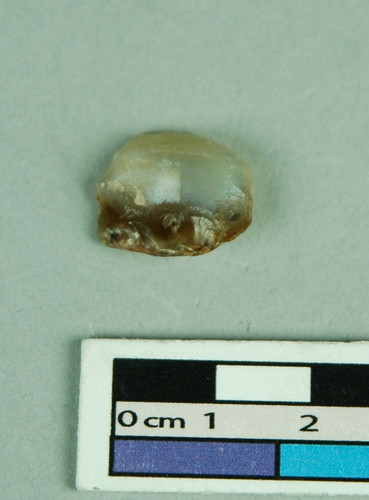 1926.40.32Scraper, white and orange in colour, discoidal in shape. [MJD 24/03/2010]1926.40.32
 1948.1.98.25Stone tool of semi translucent light grey colour, with percussion scarring on dorsal surface and sub-square shape. [LKG 20/07/2010]1948.1.98.25
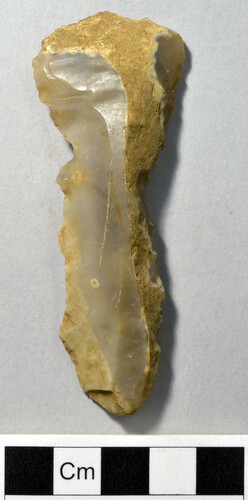 1884.140.1472.10Stone flake1884.140.1472.10
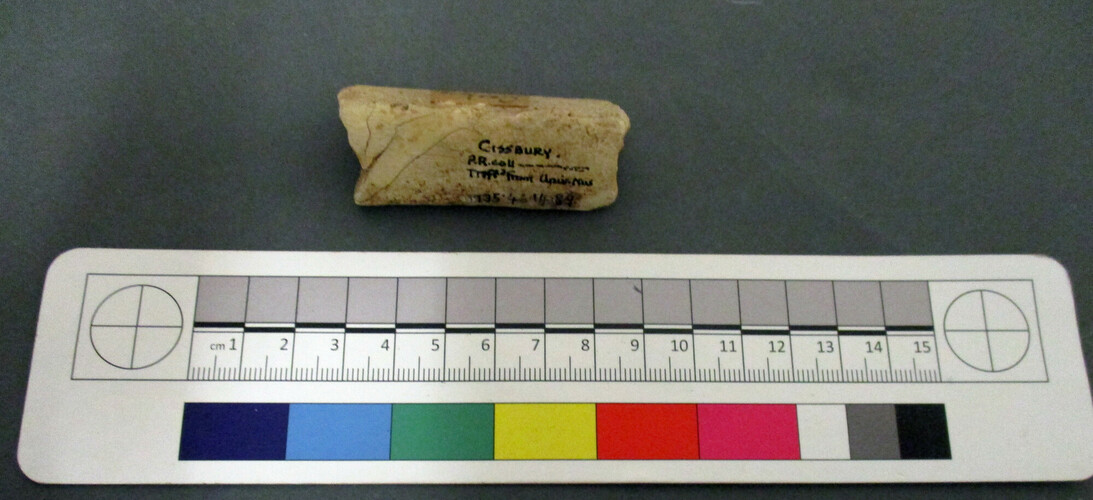 1935.46.14.89Animal bone fragment, possibly shaft from a long bone. [RH [OPS Move] 19/5/2017]1935.46.14.89
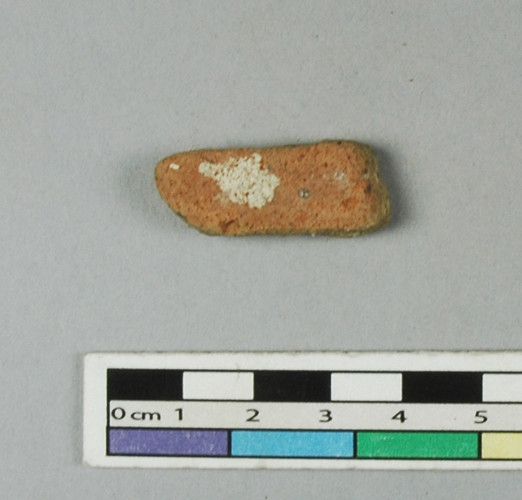 1884.138.14.23Ceramic sherd1884.138.14.23
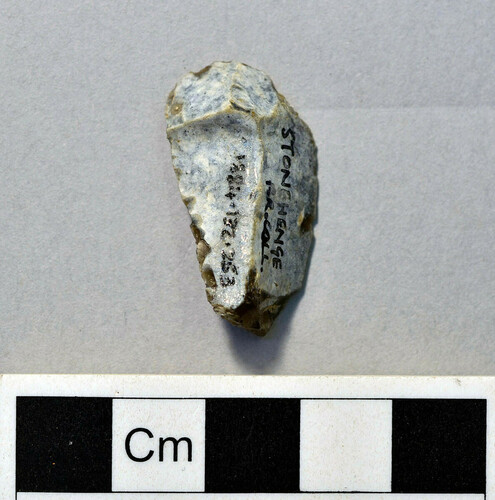 1884.132.253Stone flake1884.132.253
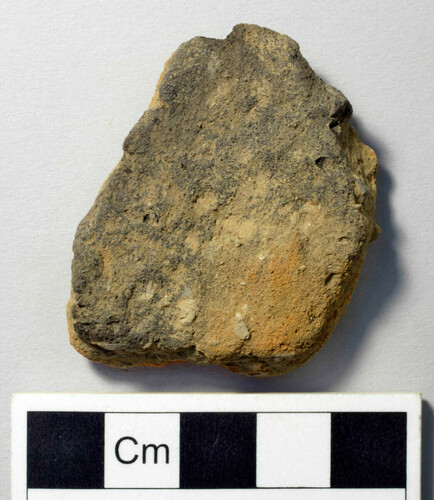 1884.137.26.8Ceramic sherd1884.137.26.8