
- Collection type
- Object
- Description
- Unidentified object - possibly a bow-puller.
- Person
- Maker Unknown Maker
- Field collector Unknown Collector
- PRM source Augustus Henry Lane Fox Pitt Rivers founding collection
- Date / Period
- Archaeological period: Roman
- Date collected
- By 1884
- Acquisition information
- Donated: 1884
- Materials and processes
- Material Bronze Metal, Material Copper Alloy Metal, Process Cast
- Dimensions
- Length x Width x Height: max 52 x 18 x 24 mm
- Object numbers
- Accession number: 1884.119.451
- Research and responses
These 'bow-pullers' were examined by Dr Zena Kamash as part of the Fell funded project Characterizing the World Archaeology Collections. She advised that such pieces are often found in graves of Greek, Etruscan and Roman date. They excited a lot of interest in the late nineteenth and early twentieth centuries from scholars who struggled to identify their purpose, to the extent that McDaniel (1918, 42) even refers to them as ‘diabolical puzzles’. Given their date of acquisition it is conceivable that the six objects came into the Pitt Rivers Museum collection because of the on-going, transatlantic debate about these curious objects. In general, the protagonists of this debate agree on two points: 1) that while these objects do have differences, as is demonstrated nicely by those in the Pitt Rivers Museum collection, they appear to form a coherent group and 2) that they were not bow-pullers; beyond these points, there has been little agreement. A multitude of suggestions have been made about their purpose, including screw drivers, wick-holders, spear-throwers, caltrops, horse bits (or some other object involved with horse control), a vicious part of a boxer’s hand covering (caestus), known as the myrmex or amulets where the spikes are the equivalents of animal horns and harness the power of the number three. None of these suggestions is quite satisfactory for all the objects and so, with Morse (1894, 142) before us, it seems we must still, 100 years on, ‘reluctantly yield the solving of the enigma to others’. See: Brinton, D.G. 1897: The so-called ‘bow-puller’ identified as the Greek myrmex, Bulletin of the Museum of Science and Art, University of Pennsylvania 1(1), 614; Charvet, B 1889: Communication sur un object appelé par moi gourmette de répression, Bulletin de la Société d’Anthropologie de Lyon 8, 7–74; Morse, E.S. 1894: The so-called bow-puller of antiquity, Bulletin of the Essex Institute 26, 148; McDaniel, W.B. 1918: The so-called bow-puller of antiquity, American Journal of Archaeology 22 (1), 25–43; Stevenson, C. 1912 So-called bow-pullers, Bulletin of the Pennsylvania Museum 10 (40), 55–9. [AS 14/02/2011]
Search terms: Animal Gear, Archery Weapon, Unidentified Object, Animal Harness, Archery Accessory
Further items to explore
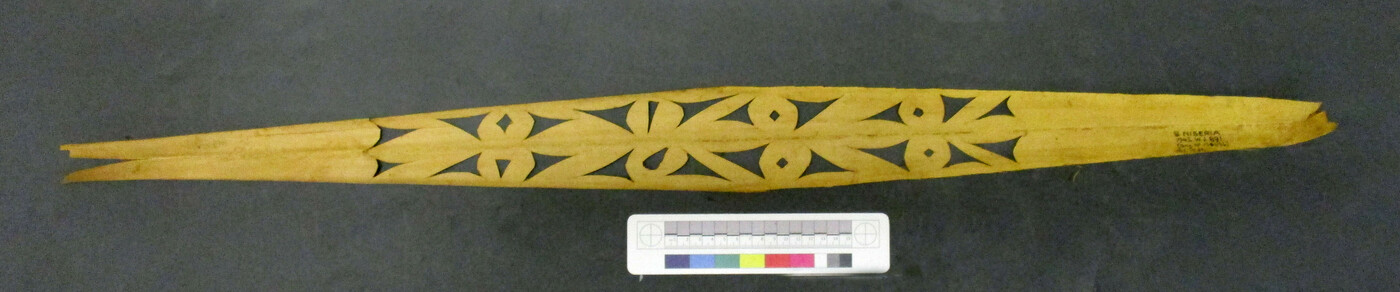 1942.13.891Cut palm leaf. Perforated to create decorative designs, the designs are in the form of two parallel rows of triangular shapes with concave edges, there are rhombuses between the triangles. There are two teardrop perforations. [AB [OPS Move] 24/1/2017]1942.13.891
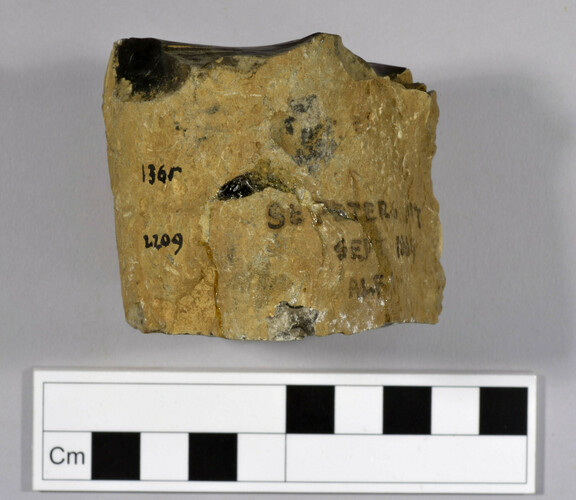 1884.140.1309Stone core or hammerstone1884.140.1309
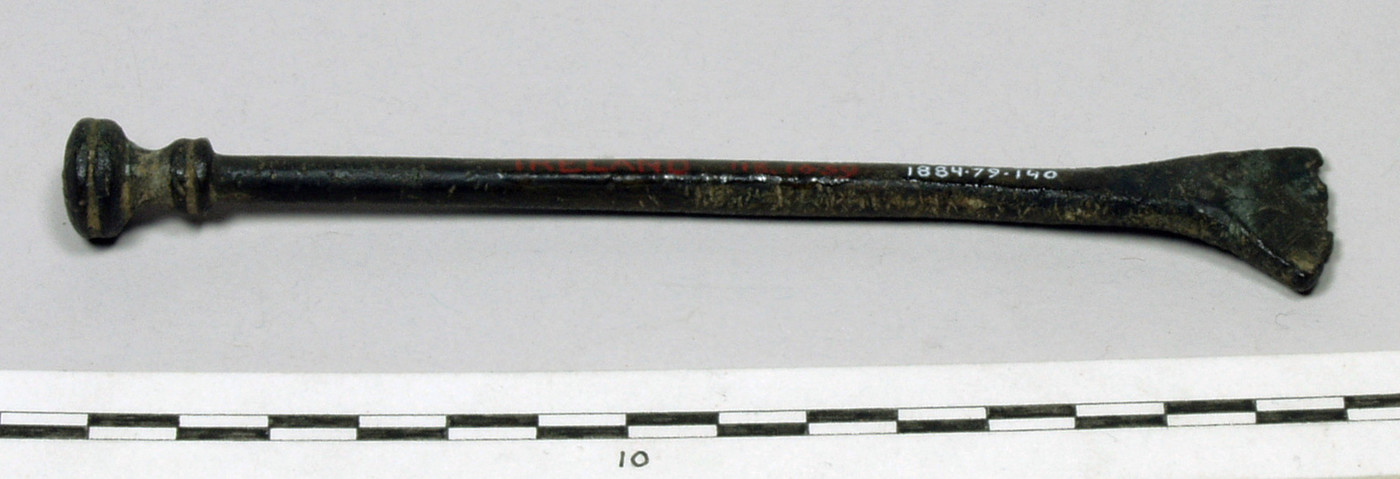 1884.79.140Long round bronze bar with knob at one end and expanded at the other and broken off (traces apparently of teeth)1884.79.140
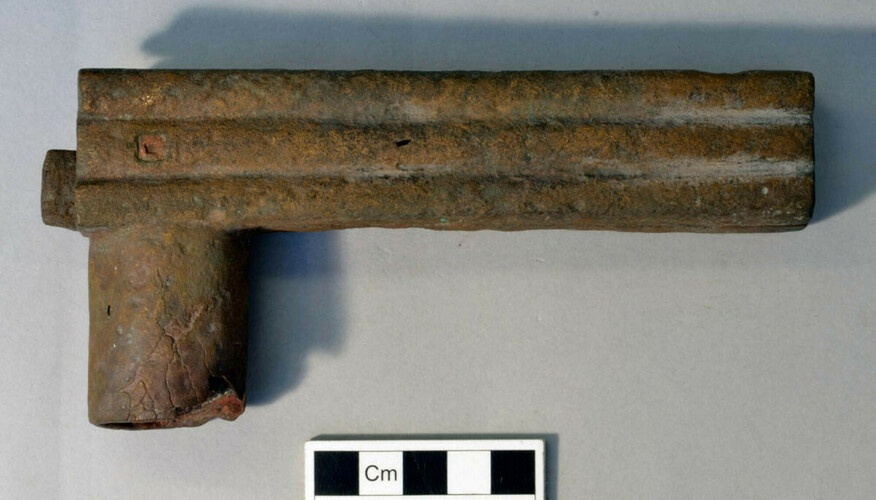 1884.119.613Copper alloy furniture fitting1884.119.613
 1941.8.0124.1String of 14 large dorini beads. For separate broken dorini bead see [1941.8.0124 .2] and for cigarette box see [1941.8.0124 .3]. [N.B. 'DCF 2004-2006 What's Upstairs?' 16/6/2005]1941.8.0124.1
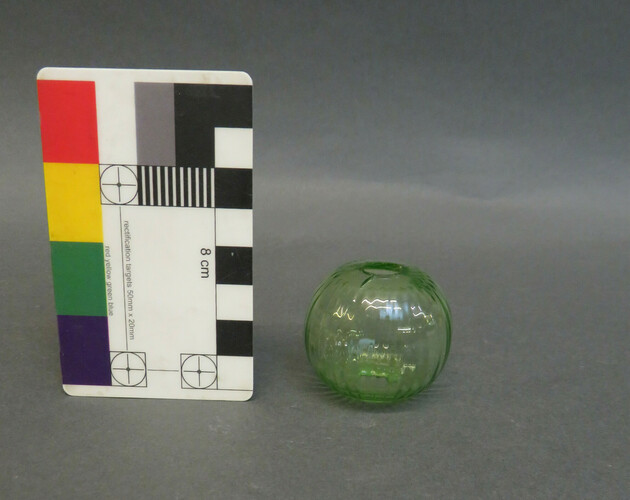 1965.9.45.2Lampshade. Spherical in shape, decorated with ridges. It has 2 openings at both ends. The lamp for this shade is [1965.9.45 .1] [MOBB [OPS move] 17/3/2017]1965.9.45.2
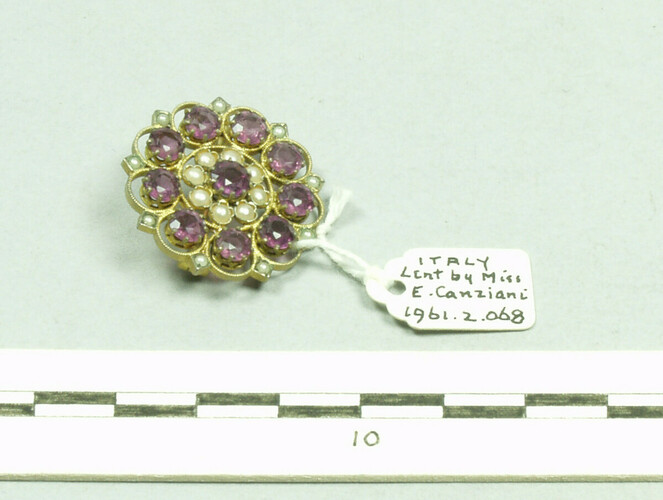 1961.2.068Brooch of gold openwork set with 10 amethysts, 8 pearls and 9 seed pearls. [N.B. 'DCF 2004-2006 What's Upstairs?' 16/6/2005]1961.2.068
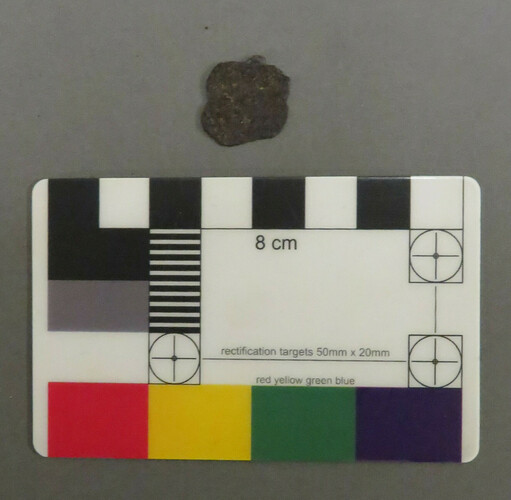 1985.50.404Amulet, thin metal medal of quartrefoil shape. [MJD (Verve) 12/9/2017]1985.50.404