
- Collection type
- Object
- Description
- Beadwork plaque showing a view of Venice.
- Long description
- From Conservation Card by Robert Pearce 06/12/2000 - Beadwork plaque showing a view of Venice. Disc of wood into which is set beads embedded in a waxy (possibly filled beeswax) resinous material. Design shows gondola on canal in Venice with vine leaves, grapes, etc. Most beads not strung. Outer red beads are strung. [MJD 30/1/2009]
- Geographical reference
- Cultural groups
- Zulu
- Person
- Maker Unknown Maker
- Field collector Unknown Collector
- PRM source Augustus Henry Lane Fox Pitt Rivers founding collection
- Date / Period
- Date made: Possibly before 1881
- Date collected
- ?Prior to 1881
- Acquisition information
- Donated: 1884
- Materials and processes
- Material Bead, Material Glass, Material Wood Plant, Process Beadwork
- Dimensions
- Diameter: max 406 mm
- Object numbers
- Accession number: 1884.117.36 PR no.: 30/ 12099
- Research and responses
In July 1884 this object was listed as having been re-received at South Kensington Museum [to judge by the second green book entry, 208.6878] which suggests that it had been removed by Pitt Rivers temporarily at an earlier date. [AP Leverhulme project on founding collection 1995-1998]
For a similar object, see 1884.117.102. The latter object is illustrated and discussed on page 60 of Beads and Beadwork of East and South Africa (Shire Ethnography 3), by Margret Carey (Princes Risborough: Shire Publications, 1986). In the accompanying text (same page), Carey writes: 'Following contacts with Europeans[,] goods began to be made for a western market. Some were the product of mission stations, where Africans were taught "useful" skills. In Victorian and Edwardian times, mission schools supplied goods for fund-raising bazaars, and some beadwork would have been included. A beaded plaque depicting the Lion of St Mark, described as "Kaffir, from the borders of Kaffirland", predates 1884. It is in the style of Berlin woolwork of the period and must have come from a mission.' These comments would also apply to 1884.117.36. [JC 7 2 2001]
- Associated publications
- Illustrated in black and white as Figure 1.3 on page 4 of 'Gender in the Making, Trading and Uses of beads: An Introductory Essay', by Lidia D. Sciama, in Lidia D. Sciama and Joanne B. Eicher (eds), Beads and Bead Makers: Gender, Material Culture and Meaning (Cross-Cultural Perspectives on Women, Vol. 19), Oxford: Berg (1998), pp. 1–44. Caption (same page): 'Figure 1.3 The Island of Saint George, Venice (Oxford, Pitt-Rivers [sic] Museum).' [JC 12 8 2015]
Further items to explore
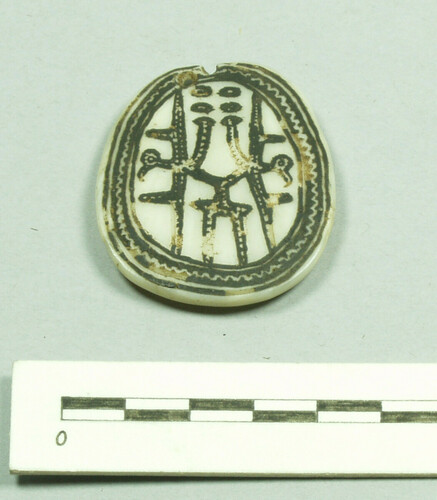 1914.69.7Perforated oval plaque, incised with frigate bird designs infilled in black. [LM 'DCF 2004-2006 What's Upstairs?' 20/9/2005]1914.69.7
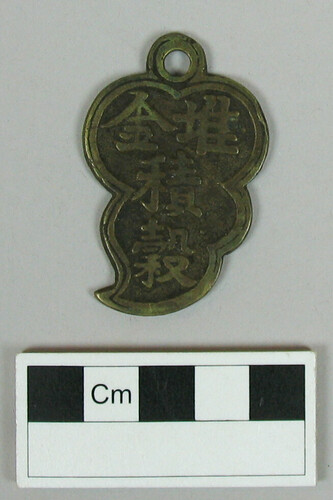 1985.53.619Amulet, copper alloy plaque in the shape of a leaf, with ring for suspension. [El.B 13/11/2013]1985.53.619
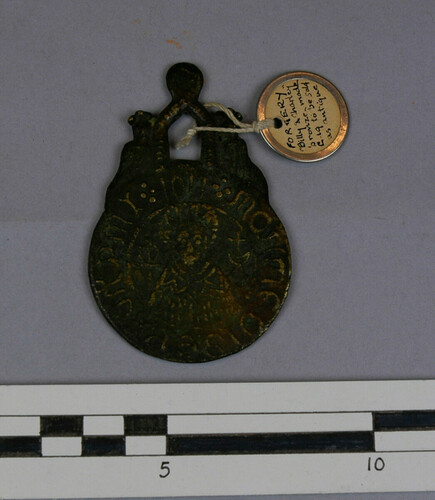 1949.8.133Brass plaque with pierced top for suspension, with picture of a king on one side and of a ?saint on the other. [El.B 06/02/2008]1949.8.133
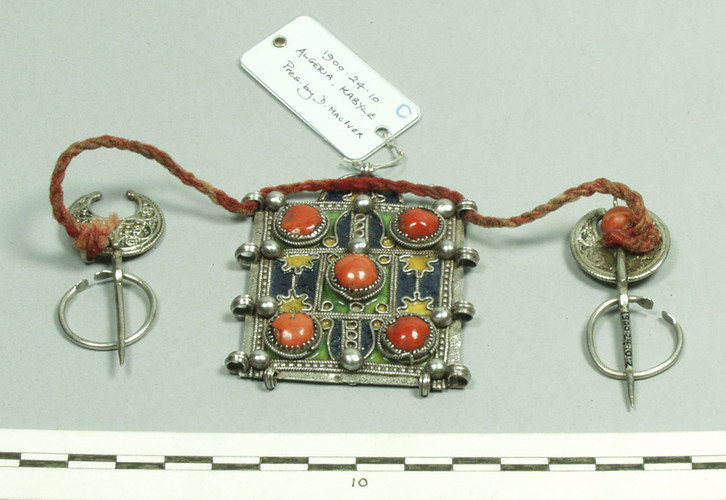 1900.24.10.1Enamelled silver plaque with coral bosses [.1], and 2 smaller silver penannular ring brooches [.2 - .3], one of which is missing the decorative pink bead. [.2 and .3] are attached to [.1] with twisted cotton yarn [L.Ph 'DCF 2004-2006 What's Upstairs?' 16/5/2005]1900.24.10.1
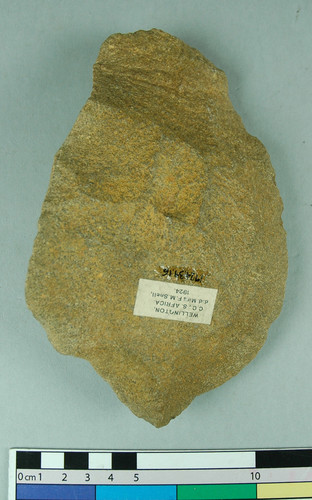 1924.39.16Stone tool, brownish orange, retouched right edge. [MJD 15/02/2010]1924.39.16
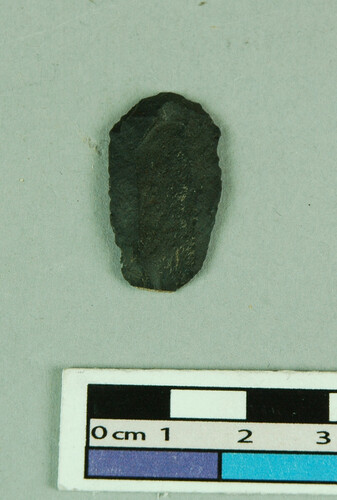 1930.20.59End-scraper, dark grey in colour and roughly oval shaped. [MJD 18/05/2010].1930.20.59
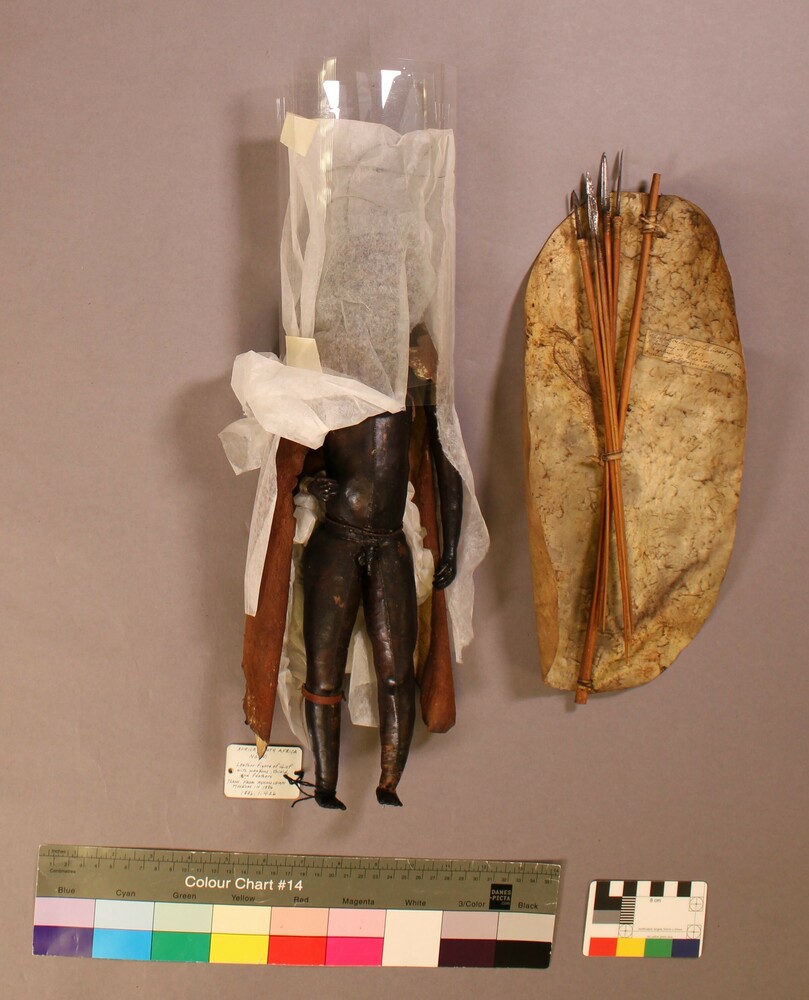 1886.1.426Figure.1886.1.426
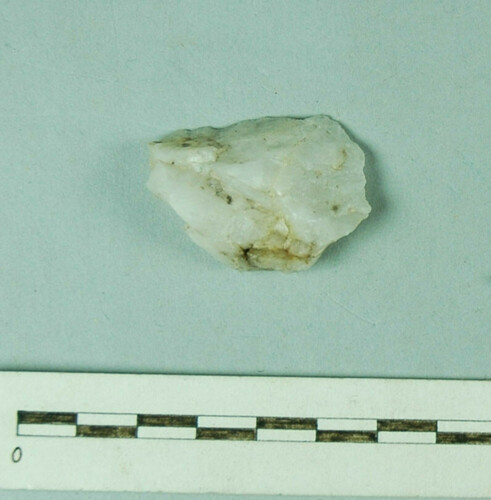 1910.34.35.5Piece of white quartzite stone with small veins of colour. [LKG 27/01/2010]1910.34.35.5