
- Collection type
- Object
- Description
- Narrow wooden mourner's mask with cylindrical bark headdress attached by string.
- Geographical reference
- Cultural groups
- Kanak
- Person
- Maker Unknown Maker
- Field collector Unknown Collector
- PRM source Augustus Henry Lane Fox Pitt Rivers founding collection
- Date / Period
- Date made: Before 1884
- Date collected
- Prior to 1884
- Acquisition information
- Donated: 1884
- Materials and processes
- Material Wood Plant, Material Bark Wood Plant, Material String, Material Palm Leaf Plant, Material Pigment, Process Carved
- Dimensions
- Height: max 435 mm
- Object numbers
- Accession number: 1884.114.115 PR Cat other PR nos: ? 3319
- Research and responses
This mask was seen by Emmanuel Kasarhérou, Président of the Musée du Quai Branly, during a visit in September 2024. He described how the slim wooden face was designed to resemble a dead person and was a very old style of mask likely dating to the 18th century. In later masks the nose becomes elongated and exaggerated, whereas in this mask the nose is relatively small. Worn by adult men, the mask was placed high on the head and was part of a complete costume which concealed the wearer's identity. Like all Kanak masks the eyes are not perforated, instead the wearer would have looked out through the hole in the mouth. The palm bark headdress tied to the wooden face is a later addition and not part of the original mask, possibly added in order to trade or sell the mask to Europeans. In its initial form the mask would have been adorned with a beard of human hair and a headdress surmounted by feathers, plant fibres, and hair cut from the heads of mourners. The wooden face is perforated with at least five holes through which the beard and wig elements would have been fixed. Such masks are associated with the lives and authority of chiefs, who wore them at important gatherings. In the mourning rites of chiefs, masked dancers appeared as substitutes for the deceased leader. These kind of masks were first recorded by the French explorer Jacques Labillardière in 1792. When missionaries met the Kanak people they thought the masks were representations of devils and tried to stop their use. As a result few were made after French colonisation of New Caledonia in 1853.
Search terms: Mask
Further items to explore
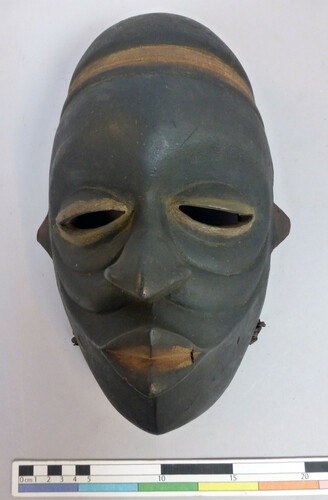 1938.15.23Face mask [ZM 15/05/2013]1938.15.23
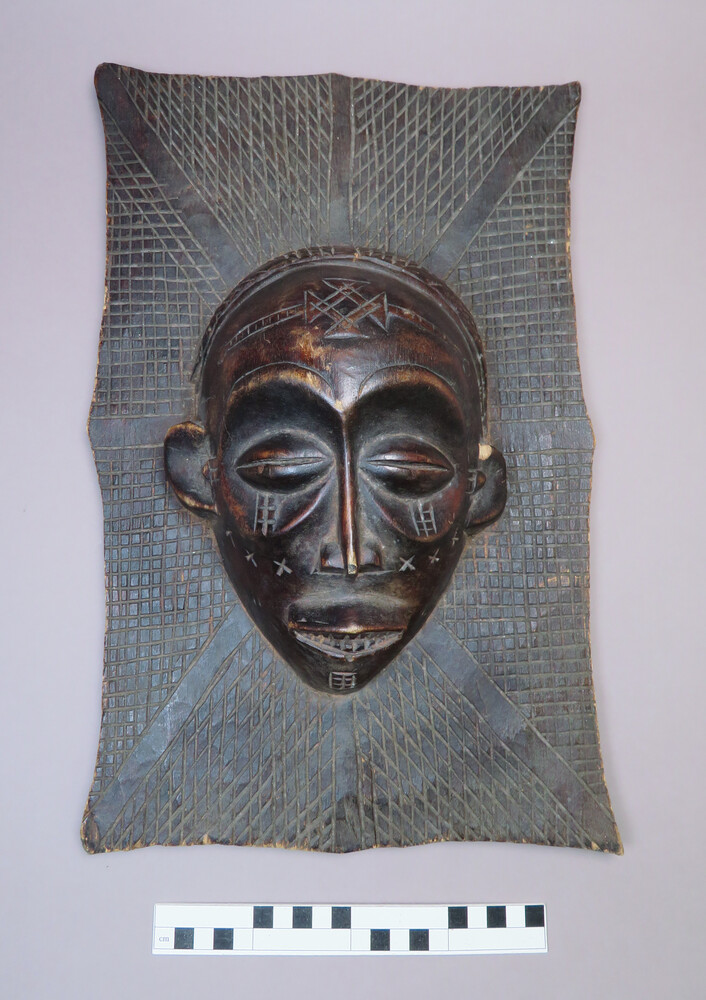 2024.21.2Carved wooden plaque with female face (Pwo) in centre.2024.21.2
 1901.46.1.5Face mask [.5], part of complete suit of Japanese armour. [El.B 4/4/2007]1901.46.1.5
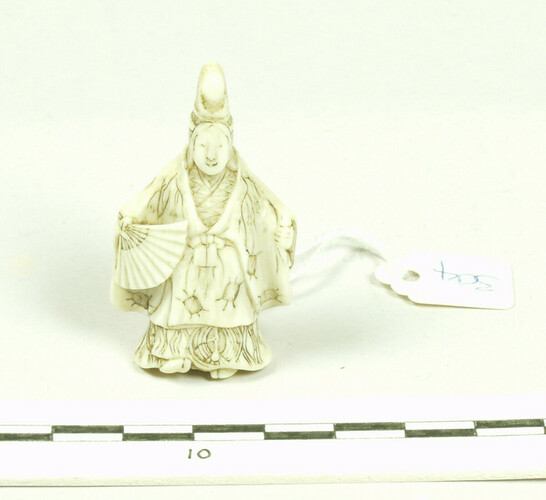 1980.34.304Netsuke toggle of Tanabata dancer [L.Ph 'DCF 2004-2006 What's Upstairs?' 5/4/2005]1980.34.304
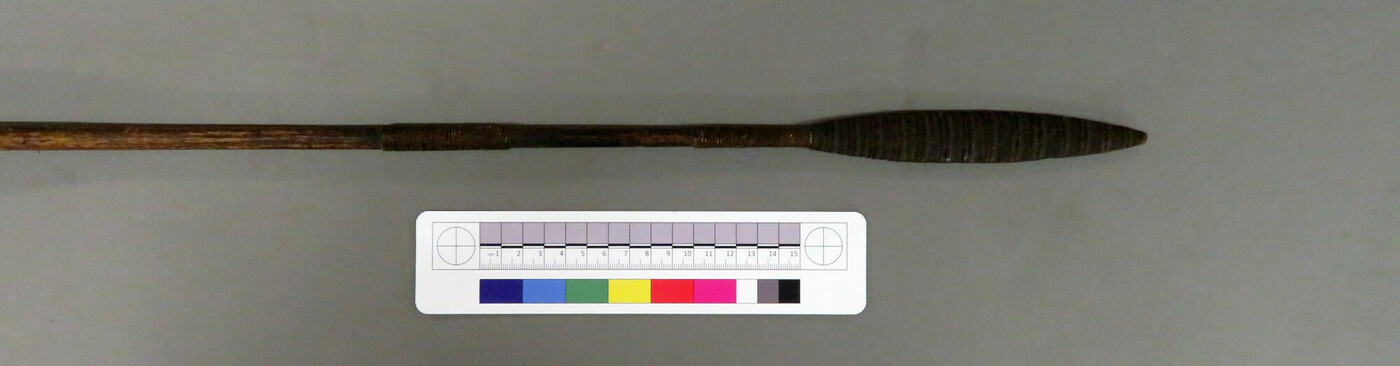 1884.19.67Wooden spear with straight pointed tip, and the butt end carved into a leaf shape. [AFS [OPS move] 18/6/2018]1884.19.67
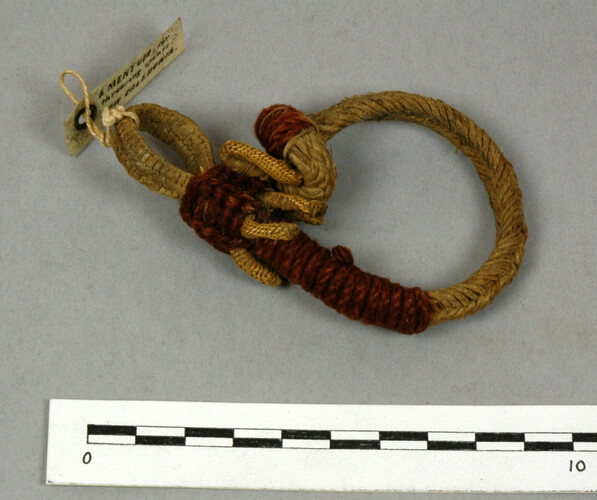 1884.99.49Spearthrower made from a square braid of plant fibre, with a loop at one end to engage the spear butt. The object is decorated with strings of red-dyed flying fox hair, used as a medium of exchange in New Caledonia. [LM 17/10/2007]1884.99.49
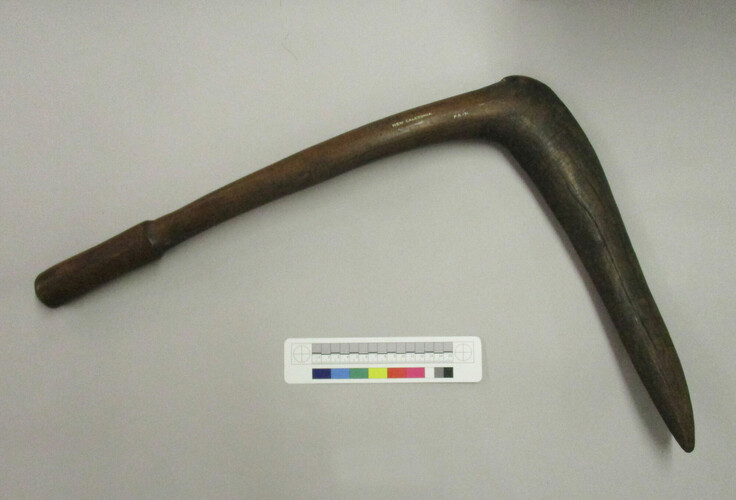 1884.12.179Wooden club with curved shaft and expanded handle.1884.12.179
 1886.1.1535.5Sling-stone. [JC 28 2 2014]1886.1.1535.5