
- Collection type
- Object
- Description
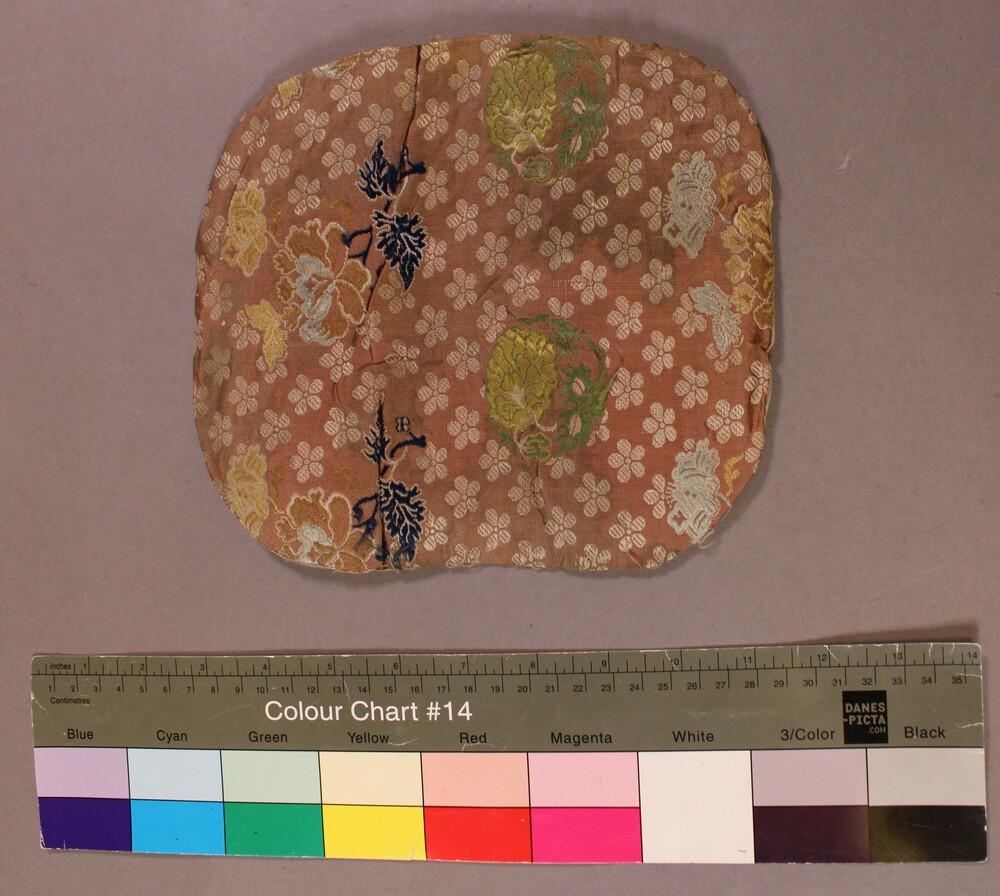
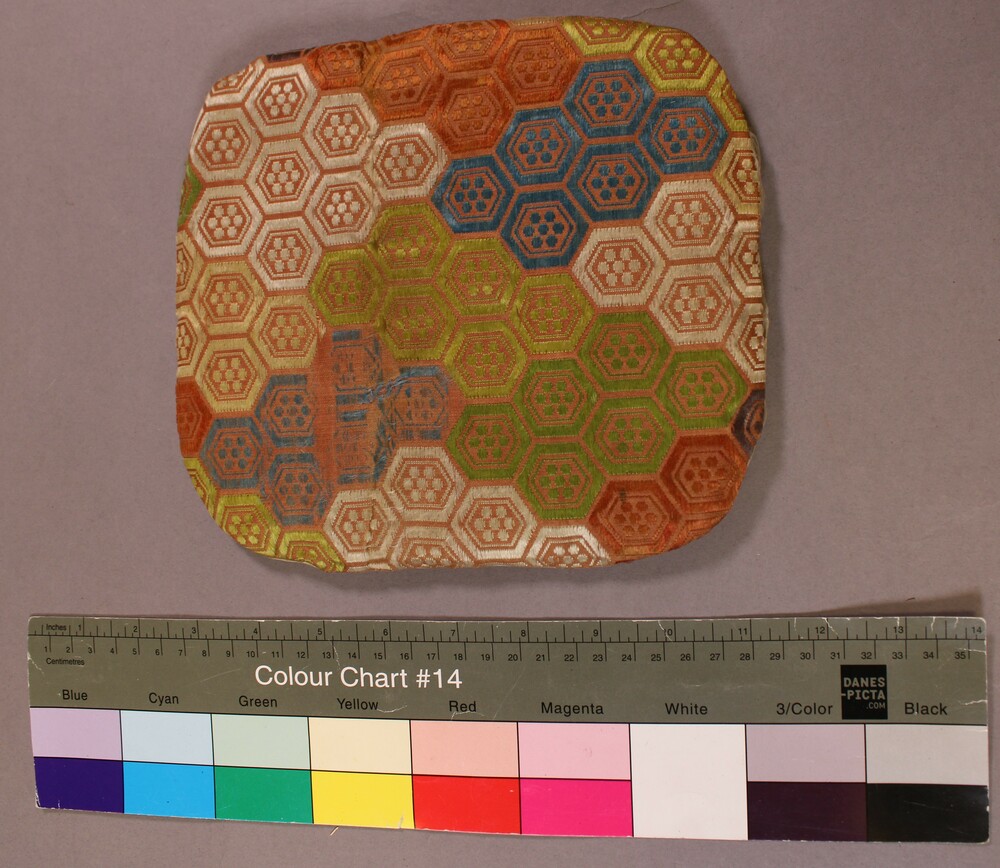
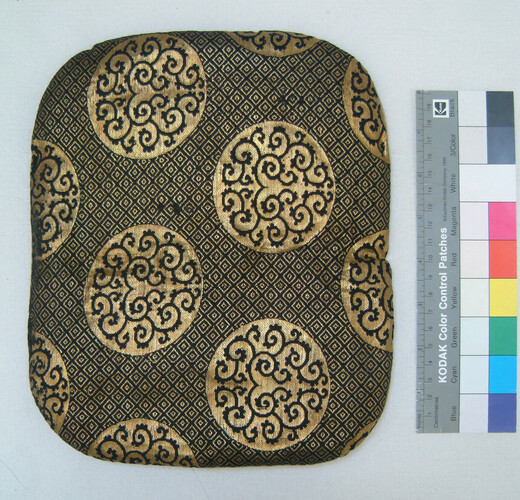
- 1 of 51 padded fabric covers for Japanese Noh Masks [JN 3/12/2001]
- Long description
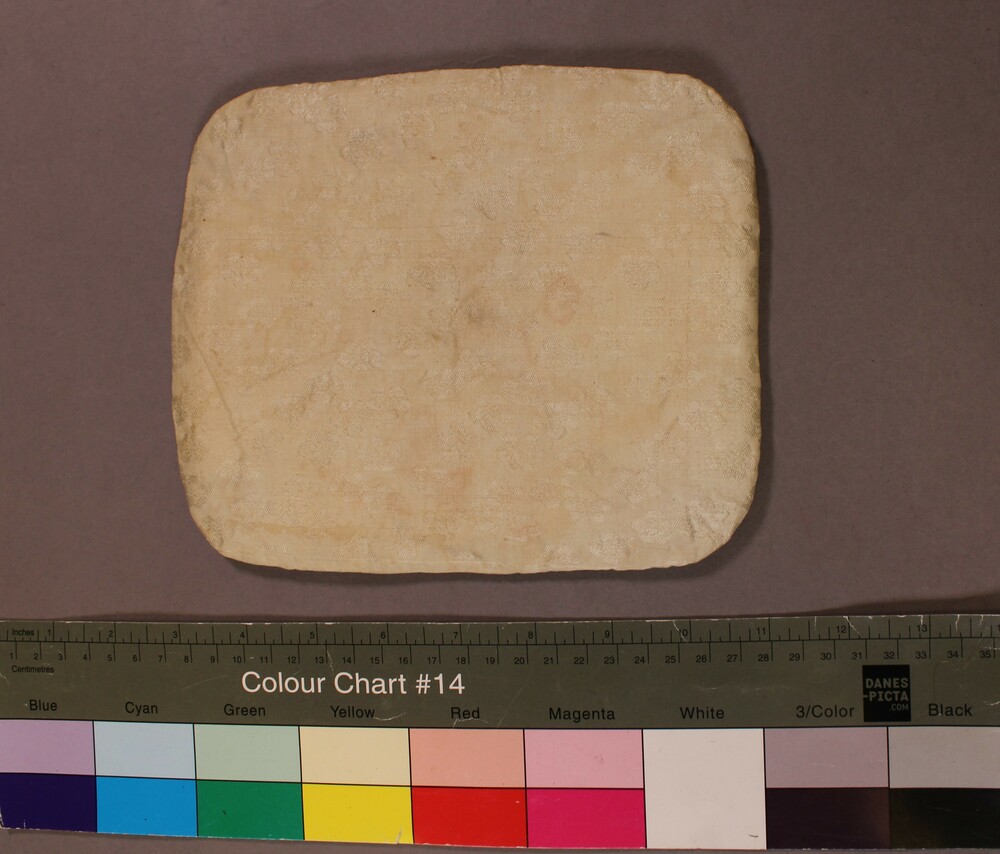
- 1 of 51 covers for Japanese Noh Mask (the masks associated with the covers are numbered 1884.114.7 - 58, the covers are numbered 1884.114.59 - 109). All the mask covers are slightly padded and rectangular or square shaped, mostly with rounded corners. It is said that Noh mask covers are made from pieces cut from old Noh theatrical costumes. This particular piece has a front made up of small patchworked pieces of fabric including black velvet, plain silk, silk with woven and damask patterns. The back is of plain cream fabric with a long pile. [JN, 1998] There is a paper tag attached to the cover. This has been translated by Rachel Payne, Pembroke College, Oxford, to read 'below three' (in red printed text) and 'nineteen' (in black text). The same text appears of all the other paper tags attached to the mask covers in this collection. [JN 1998]
- Geographical reference
- Cultural groups
- Japanese
- Person
- Maker Unknown Maker
- Field collector Unknown Collector
- PRM source Augustus Henry Lane Fox Pitt Rivers founding collection
- Date / Period
- Date made: Possibly before 1880 Archaeological period: Middle Edo Period, uncertain
- Date collected
- ?Prior to 1880
- Acquisition information
- Donated: 1884
- Materials and processes
- Material Silk Textile Animal, Material Damask Textile, Material Velvet Textile, Material Cotton Textile Plant, Process Woven, Process Stitched, Process Patchwork, Process Brocaded Woven
- Dimensions
- Width: max 182 mm, Length: max 206 mm
- Object numbers
- Accession number: 1884.114.59
- Research and responses
Information from Julia Nicholson: It appears that nearly all the mask covers in this collection are made from silk cloth but have cotton padding. [JN, 1999) Iwao Nagasaki, Curator Japanese Textile Section, Tokyo National Museum wrote [June 1999] 'the objects you sent me must be "men-ate (mask pad)." Usually mask pad is used with "men-bukuro (mask bag)" which is cloth bag with buttons or something like that on the edge of opening part.
Here is how to use mask pad and mask bag underneath.
1. Put the mask on somewhere with it's face upward
2. Put a mask pad on the face of mask
3. Put the mask with mask pad into the mask bag from the bottom part of the mask
4. Put on the button
5. Place the mask bag with the mask in it face up into the "men-bamko ( mask box)"
The mask bag and mask pads are sometime made with the fragment of noh robe, but major of them are made with ordinary fragment. Tokyo National Museum has some examples made with noh robe fragment too. Even in case of using the noh robe fragment, there must be no relation between the mask character (role) and fragment itself, I believe.
Search terms: Mask, Theatre and Drama, Textile, Mask Cover
Further items to explore
 1884.114.711 of 51 padded fabric covers for Japanese Noh Masks [JN 3/12/2001]1884.114.71
 1884.114.811 of 51 padded fabric covers for Japanese Noh Masks [JN 3/12/2001]1884.114.81
 1884.114.911 of 51 padded fabric covers for Japanese Noh Masks [JN 3/12/2001]1884.114.91
 1884.114.661 of 51 padded fabric covers for Japanese Noh Masks [JN 3/12/2001]1884.114.66
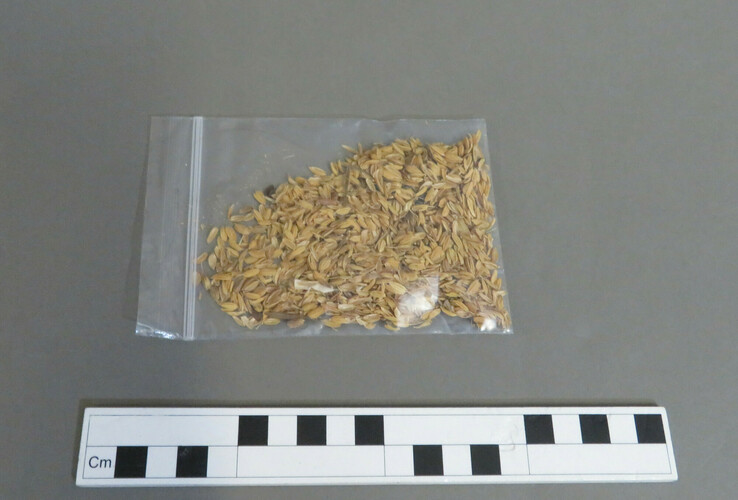 1938.35.865.5Tinder. Light brown tinder made from plant fibre. Resembles cereal grains or casings. Please note that found inside the tobacco pouch [1938.35.865 .4]. [ILL [OPS move] 18/9/2017]1938.35.865.5
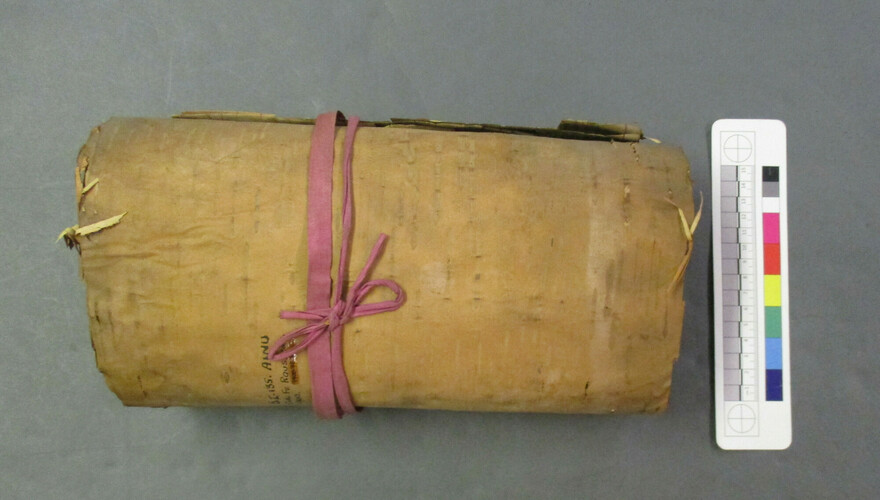 1900.78.38Bundle of bark tied together with red cotton tape. [FB 2/2/2017]1900.78.38
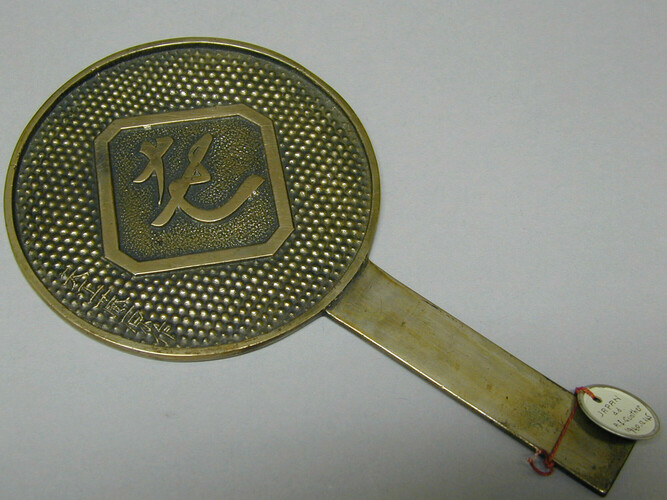 1940.12.145Mirror with writing on back.1940.12.145
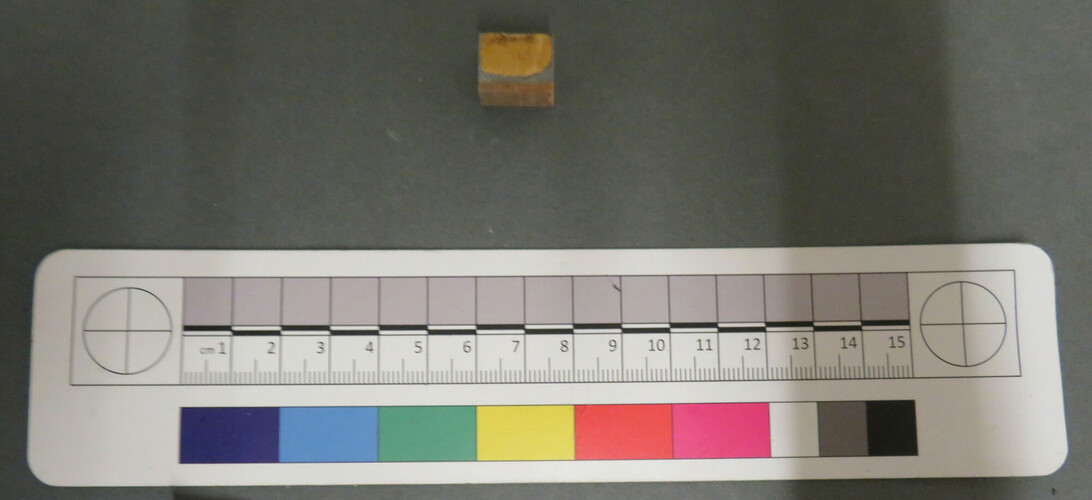 1985.53.596.15Roughly cut or broken cube shaped piece of wood, part of a reliquary or amulet. Gold lacquer on the two largest surfaces, which at the edges has completely flaked away to reveal blue-grey residue underneath. Amulet is broken into multiple pieces - see [1985.53.596 .1 - .23] [EH [OPS Move] 2/5/2017]1985.53.596.15