
- Collection type
- Object
- Description
- Shaman's rattle or baton carved as a blue heron, painted blue and strung with puffin beaks. [CAK 04/06/2009]
- Long description
- Shaman's rattle or baton carved as a blue heron, painted blue and strung with puffin beaks. The rattle or baton is carved from a single piece of red cedar. At its base are the bird's body and tightly bent legs with small feet, all painted blue. There are no arms or wings visible. The back of the body is decorated with a number of upper mandibles of puffins: yellowish bills with two or three grooves on each side. These are tied on with a thin string made from sinew or fishing line. The neck of the bird is plainly carved and unpainted. The head of the bird extends upward from the neck such that the long beak forms the top tip of the rattle or baton. The head and beak are painted blue. There are two crescent-shaped grooves carved behind each eye. The eyes are long, and accented with black paint. The mouth is outlined in red. Along the lower jaw, running the length of the eye, are more puffin mandibles attached with thin strings of sinew or fishing line. [CAK 04/06/2009]
- Geographical reference
- Vancouver Island British Columbia Haida Gwaii (Queen Charlotte Islands)
- Cultural groups
- Haida
- Person
- Maker Unknown Maker
- Field collector Frederick Dally
- PRM source Augustus Henry Lane Fox Pitt Rivers founding collection
- Date / Period
- Date made: Possibly before 1870
- Date collected
- 1862 - 1870
- Acquisition information
- Donated: 1884
- Materials and processes
- Material Cedar Wood Plant, Material Animal Sinew, Material Puffin Beak Bird, Material Pigment, Process Carved, Process Painted, Process Strung
- Dimensions
- Depth: max 38 mm, Width: max 80 mm, Length: max 584 mm
- Object numbers
- Accession number: 1884.110.8 PR Cat other PR nos: 2172
- Research and responses
The following information comes from Haida delegates who worked with the museum’s collection in September 2009 as part of the project “Haida Material Culture in British Museums: Generating New Forms of Knowledge” :
This rattle was viewed alongside other rattles and musical instruments on Thursday Sept 10, 2009. Delegates were unanimous in their identification of the bird as a blue heron. The 'swooping ear' behind the head and the blue colour were both used to identify the bird. The Haida word for blue heron was given as hlgu. Some delegates referred to this object as a shaman's rattle, while others referred to it as a shaman's baton or dancing stick. Delegates noted that puffins are native to Haida Gwaii and that they shed their beaks once a year. The beaks were collected and often used on dresses. With regards to shamans, delegates noted that women could become shaman, but only after menopause as their menstrual cycles were believed to make them too powerful. Jaalen Edenshaw thought the piece was Haida in its appearance, particularly because of the eyes. Lucille Bell identified the wood as red cedar. Christian White has seen a similar object in another collection, but the location of this collection was either not remembered or not recorded. One delegate thought the beaks were tied on with fishing line, but it is unclear if they were referring to Haida-made fishing line, or commercially-produced fishing line acquired through trade or purchased. [CAK 19/02/2010]
Two other model totem poles and this object are the only Dally collected objects which are not listed in the Green book [AP Leverhulme project on founding collection 1995-1998]
A similar bird rattle with hand grip between the beak/head and wing/tail areas of the bird, and using puffin beaks as rattles, is published in A. Wardwell, Tangible Visions: NWC Shamanism and its Art (NY:Monacelli Press, 1996), p.279, and is identified as being collected by James G. Swan at Klawock (Tlingit); National Museum of Natural History, Smithsonian, accession number 20828. [L Peers, 10/04/2015]
- Associated publications
- Reproduced in colour on page 89 of the exhibition catalogue 'From the Forest to the Sea: Emily Carr in British Columbia' edited by Sarah Milroy and Ian Dejardin, published 2014 by Art Gallery Ontario and Dulwich Picture Gallery. With the caption 'Heron Rattle, Northern Northwest Coast, 19th century. Cedar wood, animal sinew, puffin bills, pigment and fishing line'. [FB 29/10/2014]
Search terms: Music, Figure, Dance, Medicine, Rattle, Bird Figure, Medical Accessory, Musical Instrument, Dance Accessory
Further items to explore
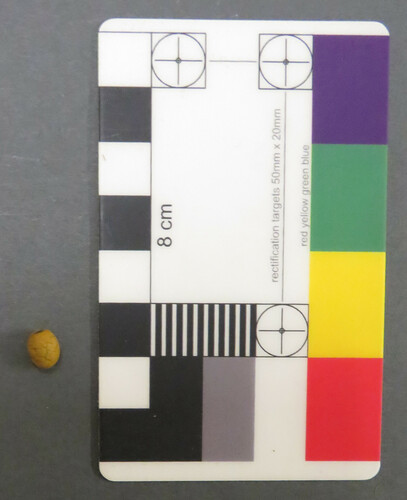 1964.8.27.2BPlant seed from the contents of shaman's rattle 1964.8.26B: One of 30 'spirit stones': ‘Jaguar’. [SM 23/12/2008]1964.8.27.2B
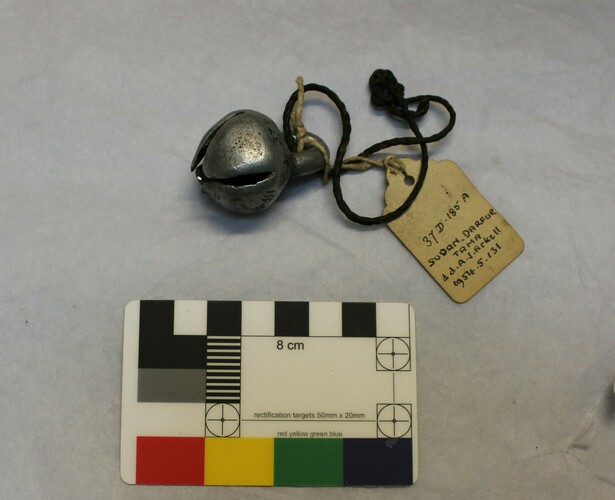 1954.5.131Sheep bell1954.5.131
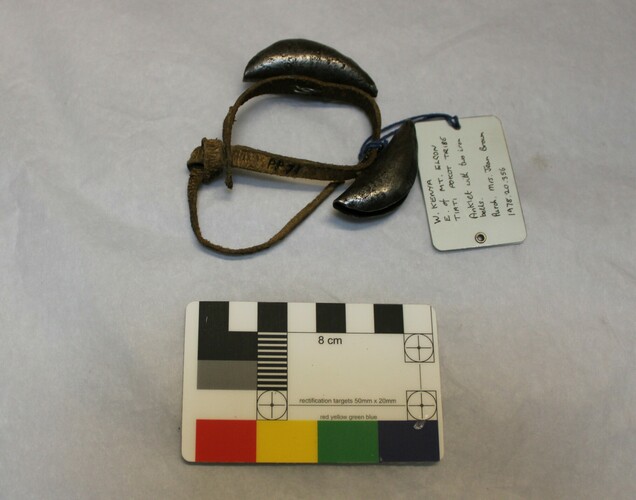 1978.20.356Hide anklet with two crescent-shaped iron pellet bells1978.20.356
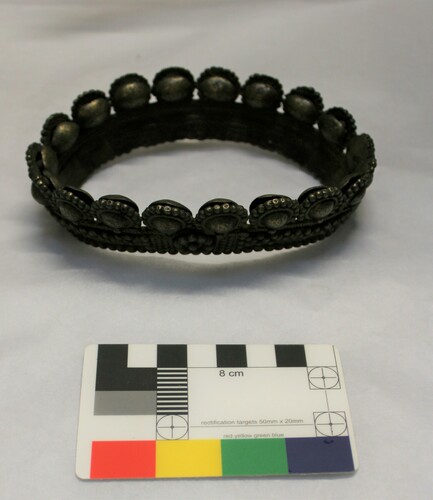 1884.110.21Musical instrument: Woman's dance rattle worn on ankle. [HLR]1884.110.21
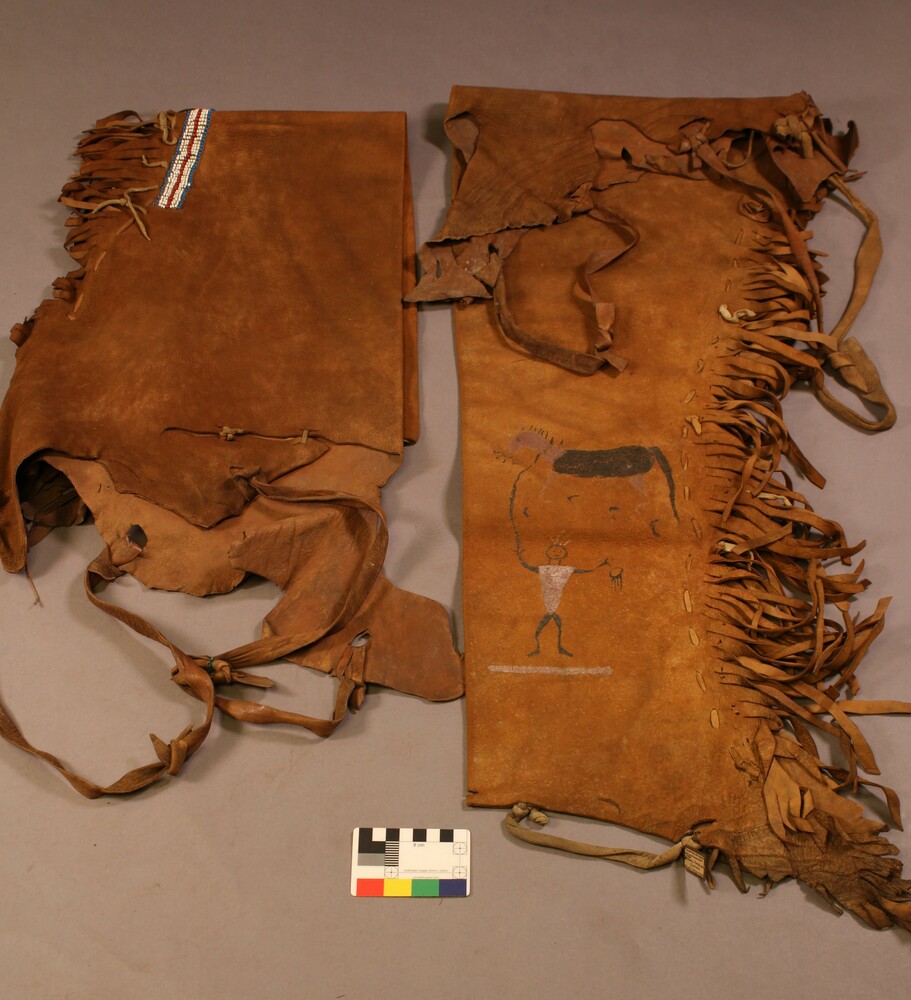 1884.88.4.1Pair of leather leggings1884.88.4.1
 1994.15.690Drawing by child of a figure. [MJD 27/01/2015]1994.15.690
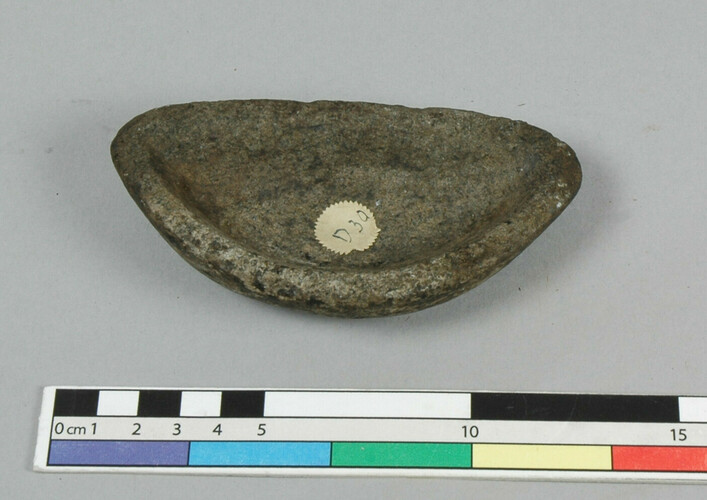 1900.65.14Miniature stone lamp from a grave. Semi-circular, shallow saucer lamp with flat bottom and rounded sides. [MOBB [OPS move] 14/6/2017]1900.65.14
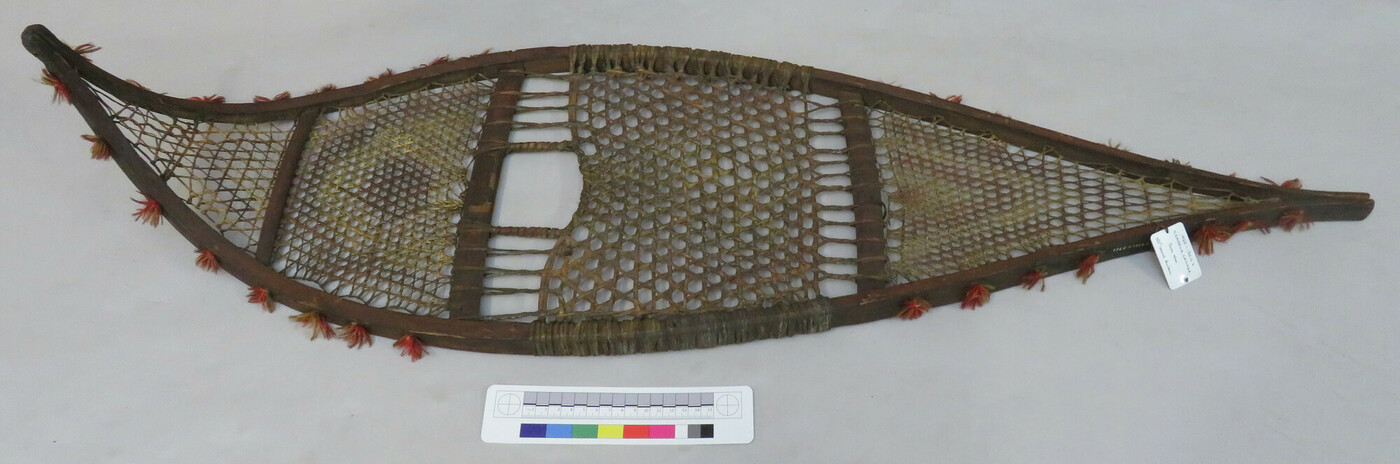 1966.1.1324.2One of a pair of snowshoes. Made with a roughly oval wooden frame with upturned points and woven in the centre with ?caribou-gut. There are red and yellow wool tufts decorating the edges of the frame. For the other in the pair see 1966.1.1324 .1. [AB [OPS move] 29/8/2017]1966.1.1324.2