
- Collection type
- Object
- Description
- Wooden bowl carved in the form of a beaver with four legs as the base, the face on one end, and tail on the other.
- Long description
- Wooden bowl carved in the form of a beaver with four legs as the base, the face on one end, and tail on the other. [CAK 17/08/2009]
- Geographical reference
- British Columbia Haida Gwaii (Queen Charlotte Islands) NW Coast
- Cultural groups
- Haida
- Person
- Maker Unknown Maker
- Field collector Unknown Collector
- PRM source Augustus Henry Lane Fox Pitt Rivers founding collection
- Date / Period
- Date made: Before 1874
- Date collected
- By 1874
- Acquisition information
- Donated: 1884
- Materials and processes
- Material Wood Plant, Process Carved
- Dimensions
- Length x Width x Height 230 x 95 x 130 mm
- Object numbers
- Accession number: 1884.68.48 PR Cat other PR nos: 2073
- Research and responses
This object was viewed and confirmed as Haida by tribal members Vincent Collison, Lucille Bell, and Kwiiawah Jones on 7 September 2007 in preparation for a planned Haida community visit to PRM in 2009 [L Peers, 24/01/2008]
The bowl would likely have been used to hold grease or other foods. There is however little residual evidence of grease in the wood itself. [CAK 17/08/2009]
The following information comes from Haida delegates who worked with the museum’s collection in September 2009 as part of the project “Haida Material Culture in British Museums: Generating New Forms of Knowledge”:
This bowl was viewed alongside other grease dishes and food bowls on Wednesday Sept 9, 2009. The type of wood used to make the bowl received the most discussion. One delegate said it was too heavy a wood to be cedar and thought it could be yew wood. Another delegate thought yew was also a possibility, but also wondered if it was made from alder. Jaalen Edenshaw thought it was more likely to be crab apple because the bowl is too light on the bottom of the base to be yew wood. The figure was confirmed as a beaver and Haidas requested close-up photographs of the bowl. [CAK 11/03/2010]
- Associated publications
- Reproduced in colour on page 107 of the exhibition catalogue 'From the Forest to the Sea: Emily Carr in British Columbia' edited by Sarah Milroy and Ian Dejardin, published 2014 by Art Gallery Ontario and Dulwich Picture Gallery. With the caption 'Beaver Feast Bowl, Haida, 19th century. Wood'. [FB 29/10/2014]
Search terms: Figure, Vessel, Food and Drink, Bowl, Animal Figure, Food Accessory
Further items to explore
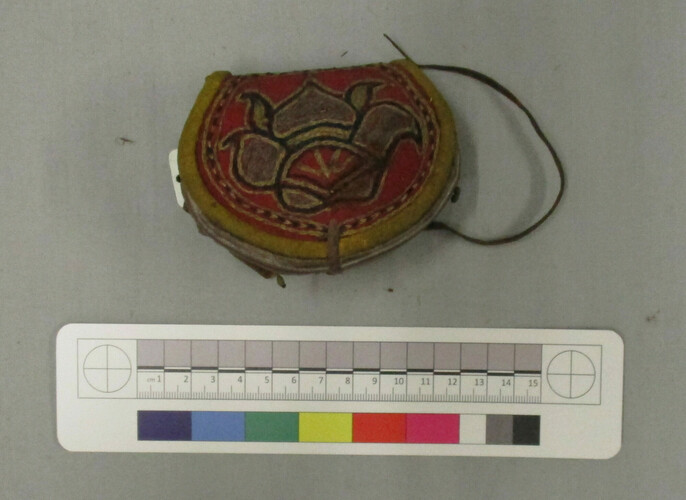 1966.1.972Bag or pouch.1966.1.972
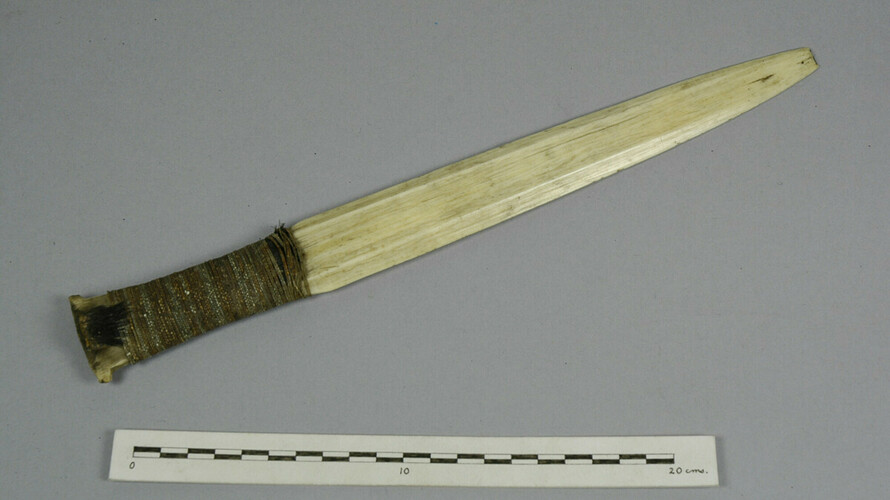 1954.9.88.1Dagger of whale's bone, grip bound with sinew wrapped with dyed porcupine quill or moose hair. Under the binding is a strip of animal fur. [LM 14/05/2007]1954.9.88.1
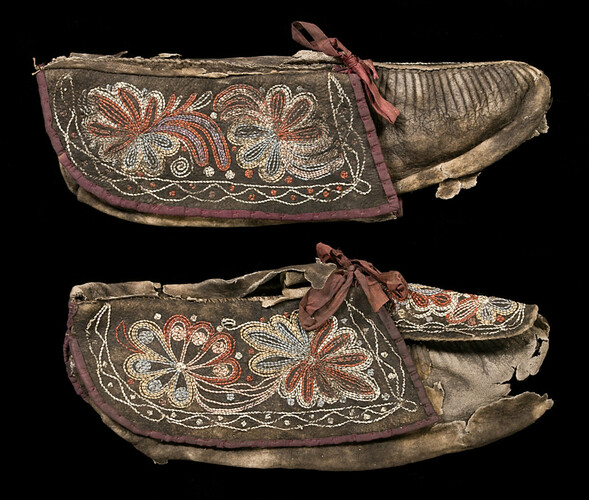 1941.2.107.1Pair of moccasins with floral design in moose hair work. Bound with silk ribbon, extremely fragile.1941.2.107.1
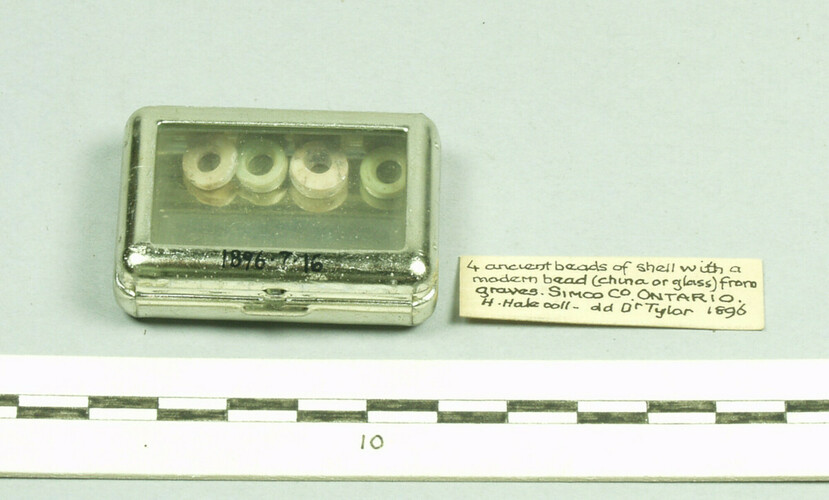 1896.7.16Four shell beads.1896.7.16