
- Collection type
- Object
- Description
- Conical argillite carved figure in long garment, with bone head. [CAK 29/04/2009]
- Long description
- Conical argillite carved figure in long garment, with bone head. The body of the figure is carved from a single piece of argillite. The base is roughly rectangular and flat. Overall, the figure resembles a missionary or church figure. The garment worn by the figure begins at the neck and has a plainly carved collar, followed by a bross-hatched section over the shoulders, extending down the front and back a short distance. The remainder of the torso is plainly carved. The sleeves are plain and long, extending to the wrist. The arms are bent slightly and the hands rest at the figure's waist. There is a belt at the wait. The bottom part of the garment represents a single piece (i.e the bottom of a robe), and is decorated with thin stripes. There is a plain hem at the bottom. No feet are visible. The head is carved from a single piece of bone and is square in shape. A mouth, long nose and two eyes (characteristic of formline design) are clearly visible. The reverse of the head is flat, except for a groove running vertically down the middle. The eyes have some discolouration, particularly the figure's (i.e., proper) left eye that may be from contact with a metal such as iron/rust or burning. [CAK 29/4/2009]
- Geographical reference
- British Columbia Haida Gwaii (Queen Charlotte Islands) NW Coast
- Cultural groups
- Haida
- Person
- Maker Unknown Maker
- Field collector Frederick Dally
- PRM source Augustus Henry Lane Fox Pitt Rivers founding collection
- Date / Period
- Date made: Possibly before 1870
- Date collected
- 1862 - 1870
- Acquisition information
- Donated: 1884
- Materials and processes
- Material Argillite Stone, Material Animal Bone, Process Carved, Process Glued
- Dimensions
- Height: max 135 mm
- Object numbers
- Accession number: 1884.65.8 PR no.: 125/ 12099
- Research and responses
The following information comes from Haida delegates who worked with the museum’s collection in September 2009 as part of the project “Haida Material Culture in British Museums: Generating New Forms of Knowledge”:
This figure was viewed alongside other argillite carvings on Tuesday Sept 15, 2009. Christian White identified the figure as a missionary with a head made of ivory. Another delegate suggested the material was bone. Delegates noted that it was not uncommon to mix bone or ivory with argillite. They said a dowel type segment would be used to join the two parts together. Adhesive acquired through trade, pitch or halibut glue would be used to hold the parts together. Halibut tails were used in the making of glues. They would be boiled to form the basis of the adhesive. Regarding argillite and gluing more generally, delegates reported that in the case of argillite boxes, the box form would be made first, then glued, and lastly carved.
A group discussion about argillite raised the following points. Argillite is only carved on Haida Gwaii. It is a natural resource of the islands, is very brittle and difficult to carve. Black is the most common variety, but rarer red and brown varieties also exist. It requires a skillful hand to carve it successfully. In addition to early trading, argillite served an important purpose during difficult years in Haida communities. Even when not skillfully executed, argillite allowed carvers to record stories and oral histories, like previous generations did in wood before them; they were able to preserve a significant amount of information that might otherwise have been lost. Argillite also provided a medium for Haidas to be satirical about the Europeans they were encountering. [CAK 08/03/2010]
This figure was studied by Gerald McMaster on 31 October 2013. He notes: I believe this is the first argillite sculpture of a missionary I've seen. The only other examples are from the Plains where artists represent missionaries in winter coats. The head doesn't appear however to be European. It appears almost mask like. It could also be the size and material that dictates the form; but also the stylistic conventional approach of this Haida artist. The eyes are typical for example of Haida, as are the eyebrow shape. The mouth is indistinguishable and perhaps unfinished; but it's the nose that most suggests a European in that its narrow, at least from a frontal view. From a side view, the nose appears to the beaked - not sure what this means(?). One last look at the eyes and it appears that artist had eyes/pupils painted and over time the right, for example, has slowly rubbed off. It's not clear if the figure were to have worn a hat. The remainder part of the body - all in argillite - is that of a missionary, or 'black coat' as some native people would've said. The body isn't as finely done as the head, for example, as I've seen works done by other artists. Maybe they were in a rush, maybe this is an earlier work in an artists' career. In some sculpture I've also seen that the artists would have carved in the feet - this one is flat. All in all it's not a bad work for its depiction. I've found Haida artists' more interested in sculpting naval figures. There is a female figure in the British Museum (cat. No. AM.9391) that might be the same artists, but it is a female. Maybe it's his wife? [MJD 31/10/2013]
Further items to explore
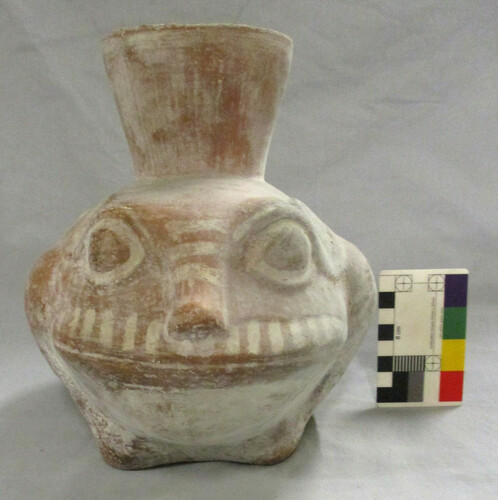 1900.30.81Red ware pottery vessel with the body moulded into the shape of a frog. [ASh [OPS move] 21/03/2016]1900.30.81
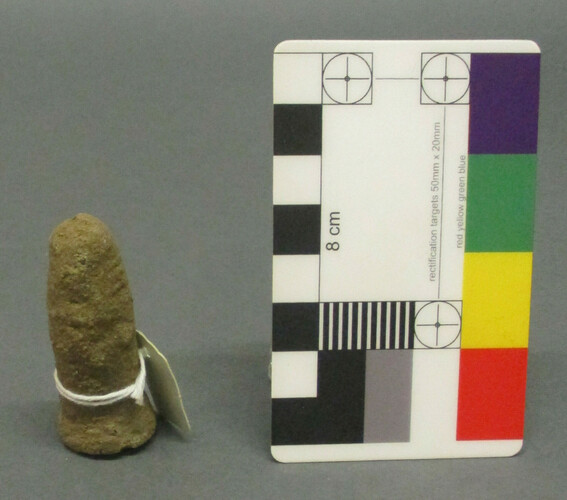 1958.11.3.133Clay Mkaramo figure. A tapering cylinder with a rounded head. Probably phallic. There is a small depression or slight crack at the top. [BA [OPS Move] 10/7/2017]1958.11.3.133
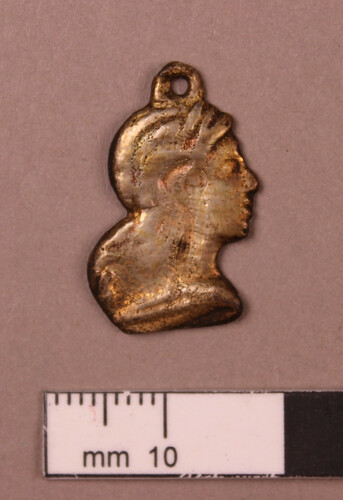 1988.21.5Ex voto of a female human head (facing right).1988.21.5
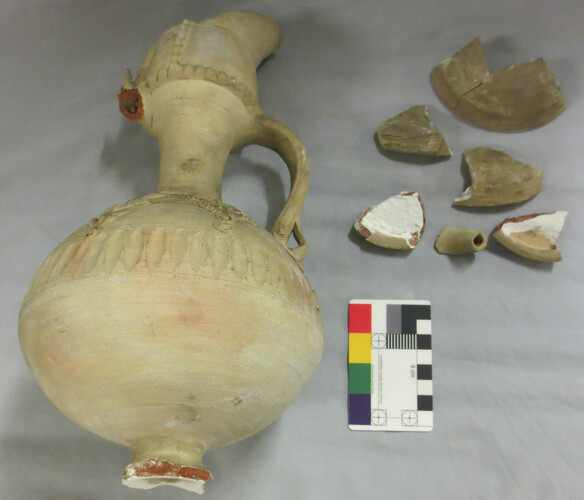 1903.38.10Unglazed water jar with jackal’s head. The foot and possibly the spout have broken off, but are with the object.1903.38.10
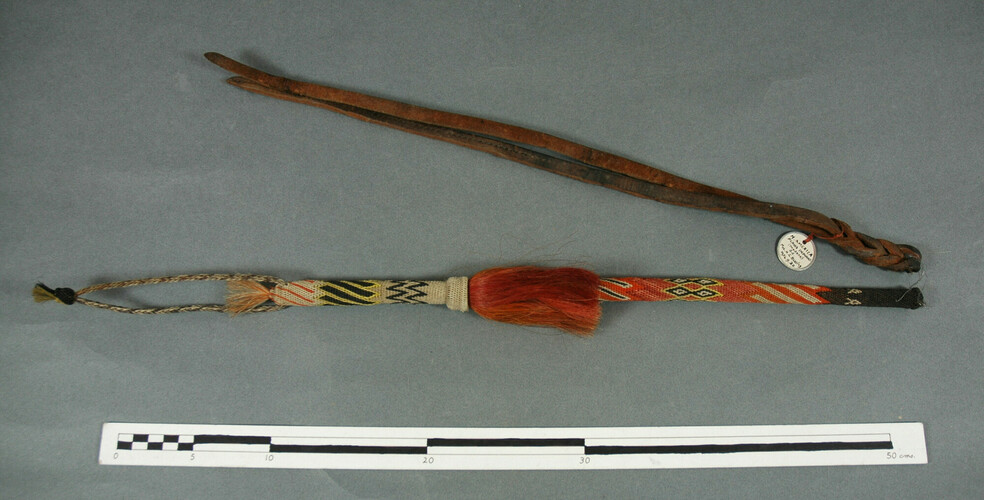 1954.9.30.1Whip of two leather thongs [.2] with handle of braided dyed horse-hair [.1]. [MJD 13/11/2012]1954.9.30.1
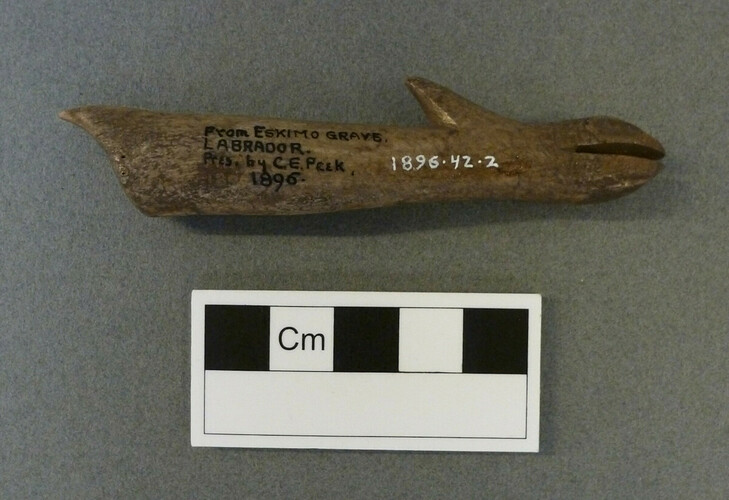 1896.42.2Bone harpoon-head from a grave. [El.B 03/05/2012]1896.42.2
 1934.20.8Mat creaser; grooved wooden implement used in mat-making.1934.20.8
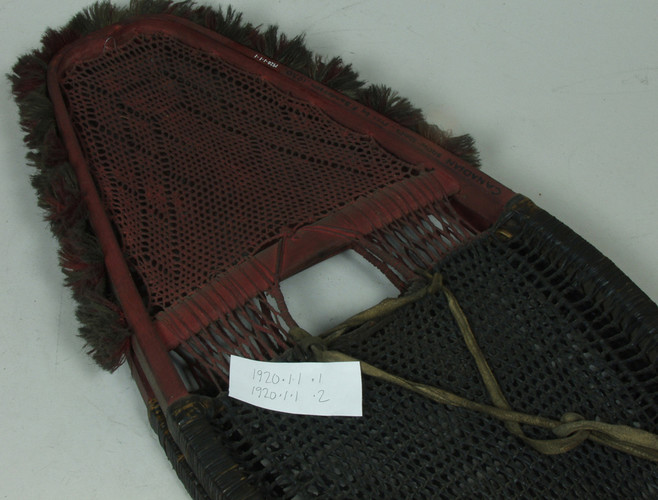 1920.1.1.1Pair of painted snow-shoes1920.1.1.1