
- Collection type
- Object
- Description
- Ceramic kylix (drinking cup); Iron Age (probably 4th century BC) in date.
- Long description
- Red and black figure vessel in the form of a very low, flat bowl. It has squared handles, which shows a painted pattern of lotus flowers and leaves, with a stamped palmate decoration in its centre.
- Person
- Maker Unknown Maker
- Field collector Unknown Collector
- PRM source Augustus Henry Lane Fox Pitt Rivers founding collection
- Date / Period
- Date made: 400-301 BC Archaeological period: Iron Age Etruscan
- Date collected
- By 1874
- Acquisition information
- Donated: 1884
- Dimensions
- Diameter: max 232 mm, Height: max 53 mm
- Object numbers
- Accession number: 1884.64.4 PR Cat other PR nos: 1756
- Research and responses
This object was examined by Lucy Shipley as part of the Fell funded project Characterizing the World Archaeology Collections. She described it as a red and black figure vessel in the form of a very low, flat bowl. It has squared handles, which shows a painted pattern of lotus flowers and leaves, with a stamped palmate decoration in its centre. It is suggested to be of Greek origin, but the floral decoration, particularly the lotus flowers, is more suggestive of Italian red and black ware. [AS 04/11/2010]
When this object was later seen by Dr Yannis Galanakis and Dr Stella Skaltsa they confirmed a southern Italian origin for this vessel and described it as a kylix, a type of vessel related to the storage of oils or cosmetics. They observed that in the tondo the potter had originally painted a helmeted head in profile. Today only a very faint trace of this head appears since the potter later changed his mind: he decided to decorate the tondo with impressed palmettes, a much-loved theme of the fourth century BC. [AS 06/01/2011]
- Associated publications
- Illustrated in colour as Figure 16.4 on page 347 of 'Iron Age and Roman Italy', by Zena Kamash, Lucy Shipley, Yannis Galanakis and Stella Skaltsa, in World Archaeology at the Pitt Rivers Museum: A Characterization, edited by Dan Hicks and Alice Stevenson (Oxford: Archaeopress, 2013), pp. 336-357. Caption (same page): 'Figure 16.4 Southern Italian kylix (cup) of the 4th century BCE from the Pitt Rivers Museum founding collection (PRM Accession Number 1884.64.4) and referred to on pages 348-9. Kamash, Shipley, Galanakis and Skaltsa writes 'A south Italian kylix (1884.64.4, Figure 16.4) also revealed a nice surprise. In close examination, especially on attempting to photograph the inside of the cup, it was observed that in the tondo the potter had originally painted a helmeted head in profile. Today only a very faint trace of this head appears since the potter later changed his mind: he decided to decorate the tondo with impressed palmettes, a much-loved theme of the 4th century BCE.'. [MJD 30/06/2014]
Further items to explore
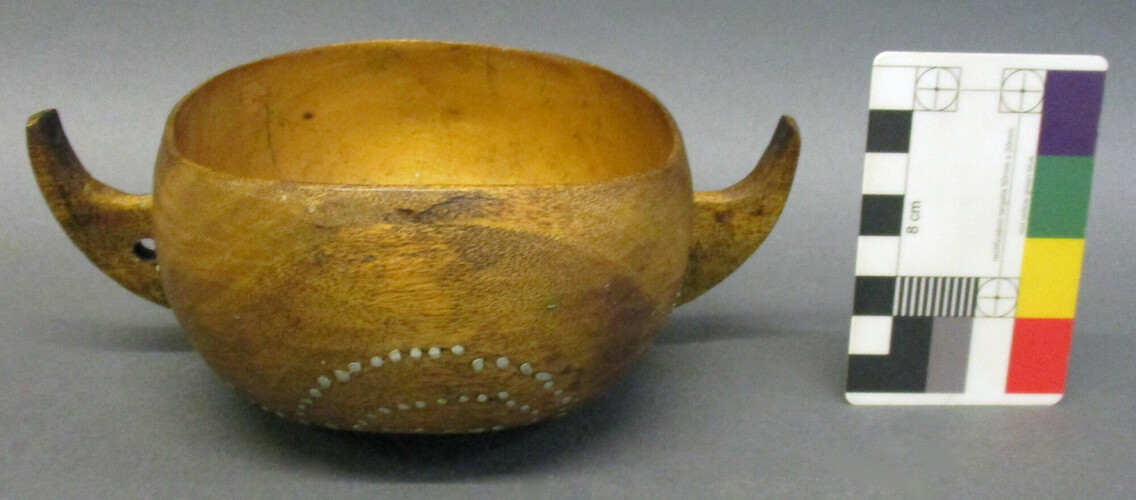 1996.21.12Broadly oval shaped wooden bowl with rounded edges and two handles, one on either side. Handles are perforated.1996.21.12
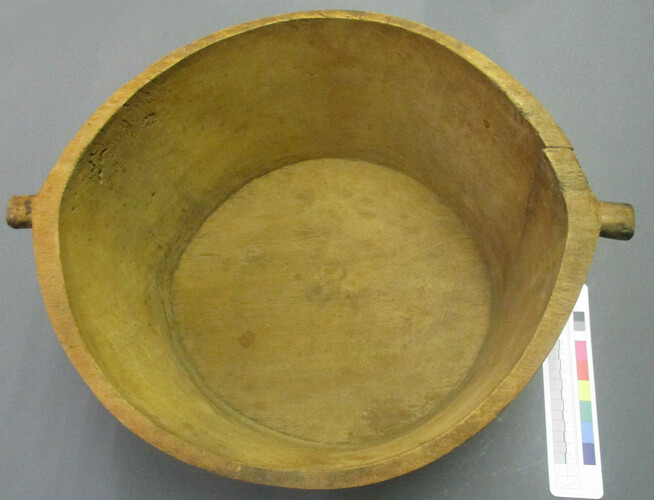 1895.55.2Oval wooden bowl with pointed ends, straight expanding sides and small lug handles at the top on each side and a flat bottom. [MOBB [OPS move] 21/9/2016]1895.55.2
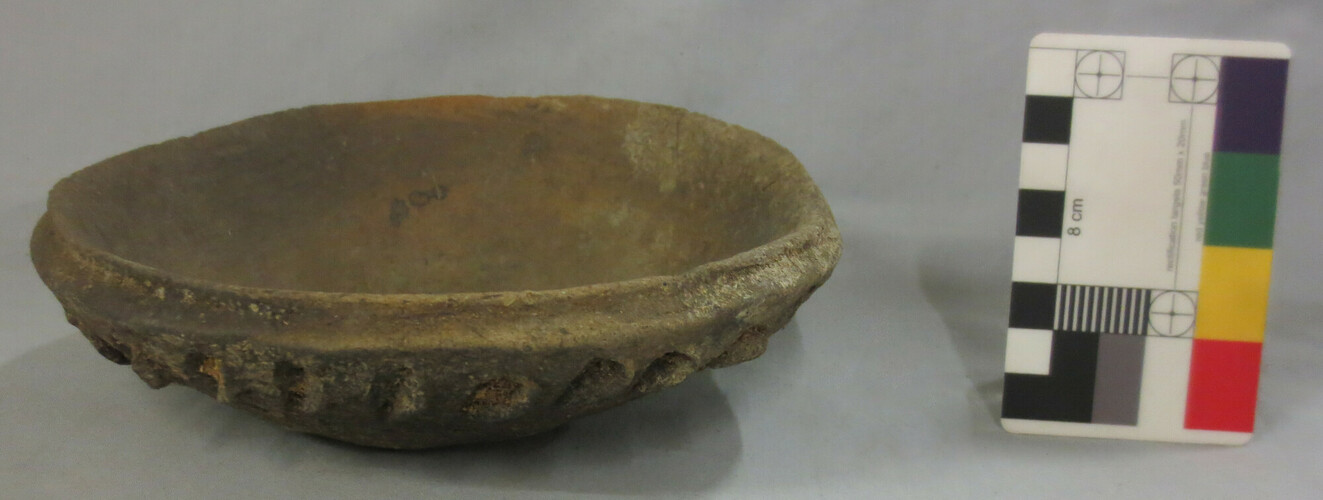 1942.13.338.3Pottery bowl with band of finger impressed foblique lines, and the exterior of the bowl demonstrates cord or mat-rolled impressions.1942.13.338.3
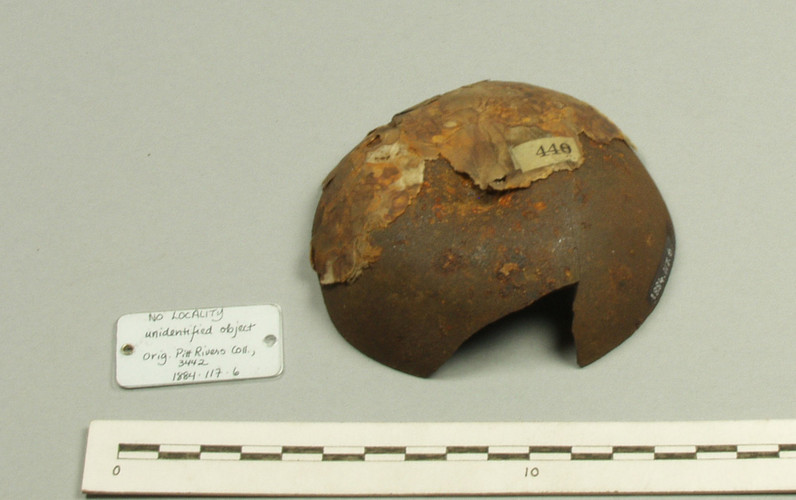 1884.117.6Small iron bowl, very rusted and broken at the rim with central 'umbo' on the concave side. [EC 'DCF 2004-2006 What's Upstairs?' 28/2/2006]1884.117.6
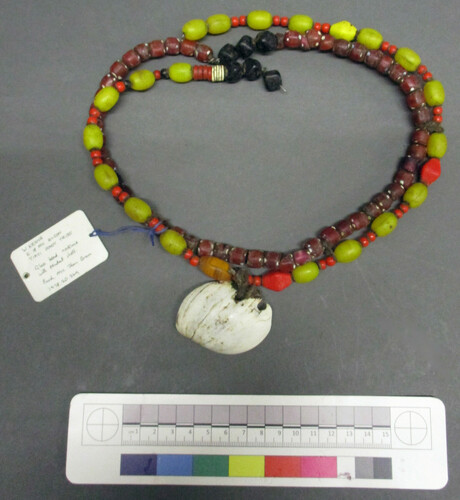 1978.20.349Necklace. Two strand necklace of glass beads on wire with a pendant shell. [ASh [OPS move] 15/12/2016]1978.20.349
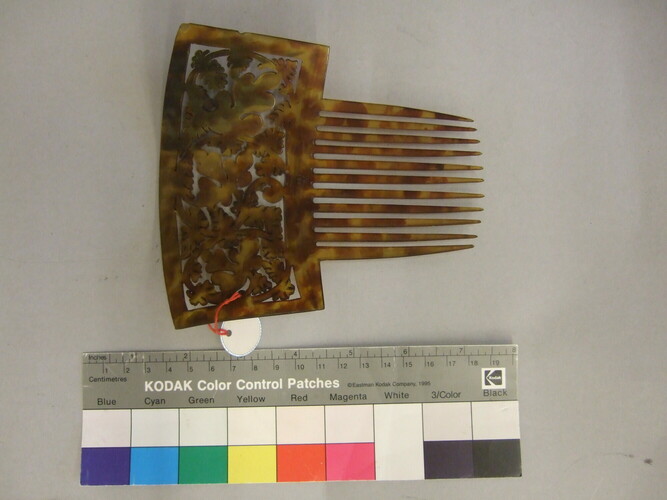 1941.8.02Tortoiseshell comb with openwork floral decoration. [LM 'DCF 2004-2006 What's Upstairs?' 6/2/2006]1941.8.02
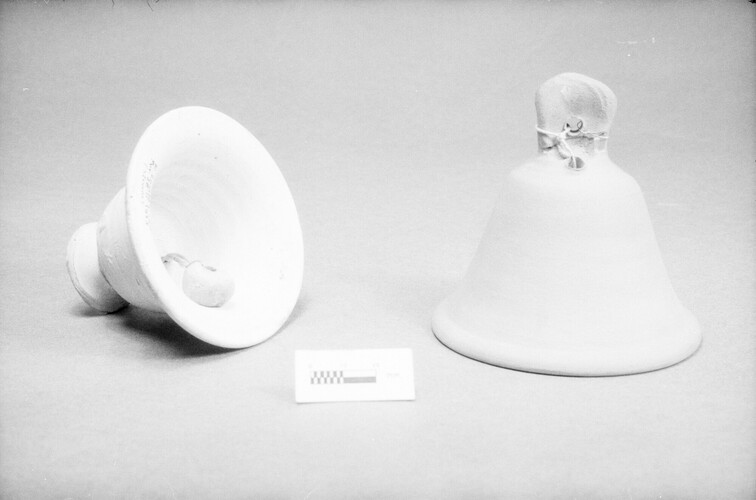 1933.90.30Clapper bell.1933.90.30
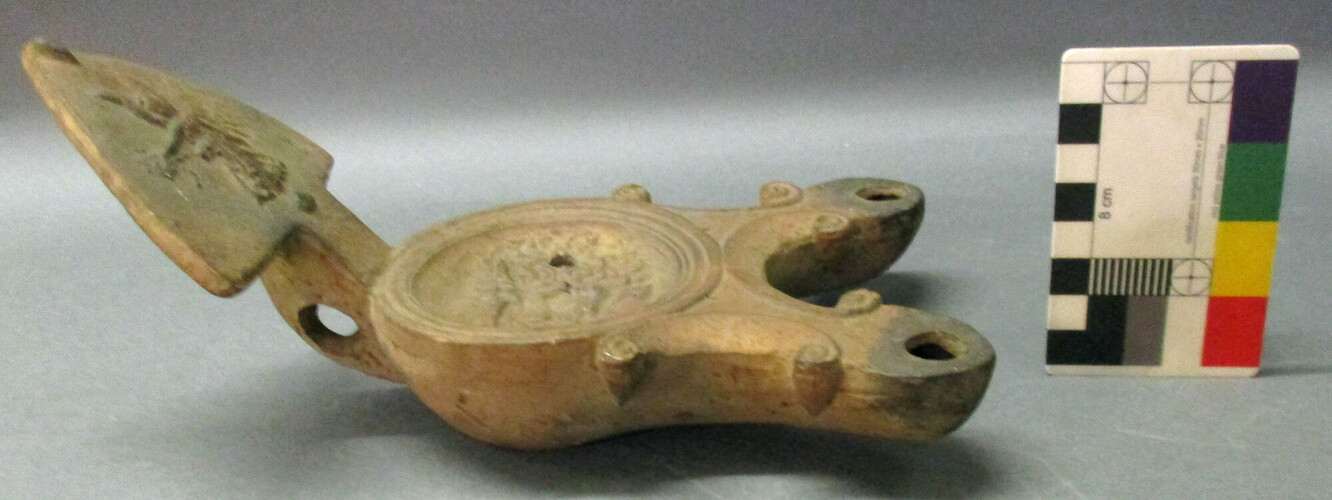 1932.88.434Pottery lamp slipped red and with the area around the wick nozzles painted black. [MOBB [OPS move] 11/10/2016]1932.88.434