
- Collection type
- Object
- Description
- Carved, seated human female figure, coloured with red, palm-leaf necklet, hung in huts as a protective device/amulet.
- Long description
- Carved, seated human female figure, coloured with red, palm-leaf necklet, hung in huts as a protective device/amulet. The figure has painted black hair, a red painted face with eyes in black, red linear decoration on the arms and a painted red skirt. The arms are attached with wooden spikes. The figure's right hand is missing. The left hand is clenched with a holes through the centre. The figure has a neck ornament of twisted palm leaf. it also has a piece of ?bone tied to it with a length of grass. The figure has a sash of red and white textiles over the right shoulder and tied on the left at the waist.
- Geographical reference
- Person
- Maker Unknown Maker
- Field collector Edward Horace Man
- PRM source Augustus Henry Lane Fox Pitt Rivers founding collection
- Date / Period
- Date made: Before 1884
- Date collected
- Prior to 1884
- Acquisition information
- Donated: 1884
- Materials and processes
- Material Wood Plant, Material Pigment, Material Textile, Process Painted, Process Carved, Process Twisted, Process Tied, Process Perforated, Process Woven
- Dimensions
- Height: max 365 mm, Width: max 150 mm, Depth: max 150 mm
- Object numbers
- Accession number: 1884.56.86 Other numbers: 26 135 105 PR no.: 26/ 11935
- Associated publications
- JAI 1882: 277 [similar on p293] 'Kareau (Plate XXV fig 1 1a 1b) These are specimens of charms used by the natives of the central and southern islands of the group for frightening away evil spirits. Life-size human figures represented in the act of striking with a spear are often to be seen at the entrance of their huts' [EH Man]. Indian Antiquary, Feb. 1895, 'Catalogue of Nicobarese objects', p. 136 '152 (m) Kareau. Carved wooden human figure, generally about life-size, kept in a hut to frighten away the iwi ie the evil spirits. When newly-made, and on the occasion of any sickness in the hut, it is regarded as a henta-koi (vide no 153) . Those representing a woman are assumed to be equally feared by the bad spirits, as they are credited with the faculty of givng notice to the other kareaus whenever the spirits intend mischief (Central Group_. At certain villages on Teressa and Bompoka the kareau is hollowed out in the trunk, and contains the bones of some famous Menluana ie 'medicine man' or exorcist, many years deceased, while his skull and jaw-bone are fixed in a socket provided for the purpose between the shoulders of the figure, which is usually, if not invariably, represented sitting cross-legged. On the skull is generally to be seen an old silk-hat or other foreign headgear. These kareau are so highly esteemed that no reasonable offer would serve to secure a specimen. In the Southern Group and at Chowra, there are but few kareau and those small and inferior and copied from the type in the Central Group. At Car Nicobar none are to be seen.' There is a letter in the PRM archives relating to Kareau: PRM Tylor papers B13 6.6.81 EH Man 6th June /81 2 Palace Road Surbiton Dear Sir By this post I am writing to the Director of the S. Kensington Museum requesting him to be so good as to forward to your Museum the Nicobarese image which I have brought to England at Prof. Rolleston’s request. I was obliged to saw the image into 3 or four pieces in order to pack it, but no difficulty will be found in re-connecting the parts. I append a note which I would suggest for the label for this object. I am sorry to learn from your note that Prof. Rolleston is still on the Continent on account of his health. I am yours very truly E.H. Man Wooden image (called Karêau) used by the natives of the central and southern islands in the Nicobar group and placed inside the entrance of their huts for the purpose of frightening away evil spirits. These charms are of various sizes and descriptions, sometimes paintings or carvings in thin planks or Areca spathes, representing men and women, animals, fish, birds, the sun and moon etc and are kept suspended in their huts (specimens are to be seen at the S. Kensington Museum Anthropological Dept.) To Chas Robertson Esq. Anatomical Dept Museum Oxford. Another relevant letter is: PRM Tylor papers B13 26.6.87 EH Man to Tylor .... With regard to the collection sent to the British Museum wh was despatched on the 11th Inst and wh will I trust reach Mr Franks about the same time this letter is delivered to you, I should be glad if you could obtain a copy of the Catalogue which I sent with it and substitute it for that I prepared for you, as it embodies my latest information regarding the objects in question, and I found it necessary to correct my description of a few of the principal objects, viz the fetish-like ‘Kareau’ and ‘henta’ etc [AP Leverhulme project on founding collection 1995-1998] Illustrated on page 58 of Amulets: A World of Secret Powers, Charms and Magic by Sheila Paine (London: Thames and Hudson, 2004) and with the following caption: "Seated female house guardian wearing a palm leaf necklet, Nicobar islands." and credited on page 186 as "Pitt Rivers Museum, University of Oxford, Acc. No. 1884.56.86". Copy in RDF. [JP 6/10/2004]
Search terms: Religion, Furniture Dwelling, Figure, Amulet, House-ornament
Further items to explore
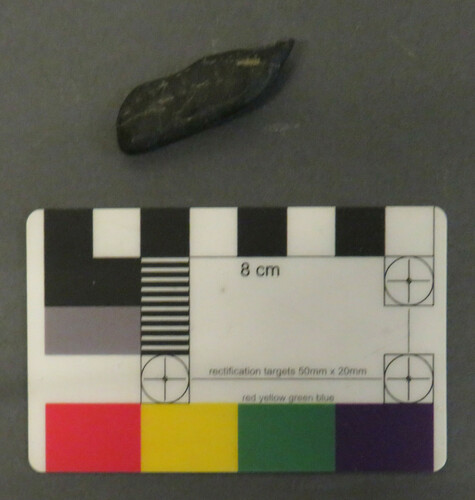 1985.54.2219Amulet. Black-coloured stone, pointed at one end. [BA [OPS move] 26/10/2017]1985.54.2219
 1884.56.14Carnelian amulet in the shape of an arrowhead.1884.56.14
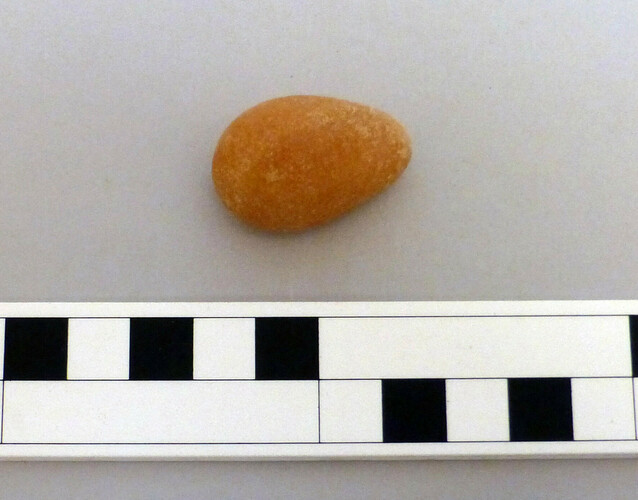 1985.54.41Amulet, made from an egg-shaped pink coloured stone. Used to protect a woman from a 'mazaira'. [CW [OPS Move] 28/02/2017]1985.54.41
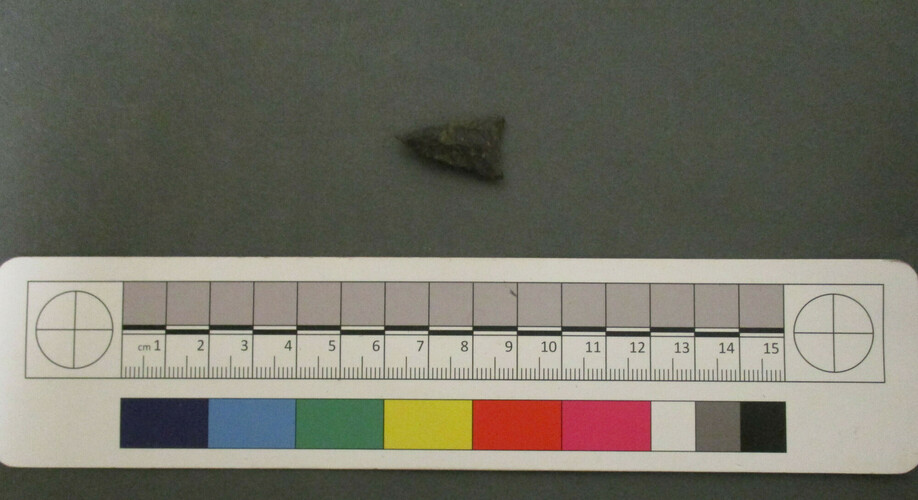 1985.53.991Arrowhead of black flint, triangular. [El.B 16/12/2013]1985.53.991