
- Collection type
- Object
- Description
- Ceramic vessel [CG [Excav. PR] 24/05/2013]
- Long description
- Complete, reduce fired ceramic vessel with beaded rim. The body of the vessel is scored with lines creating a diagonal cross-hatch pattern. [CG [Excav. PR] 24/05/2013]
- Geographical reference
- England Dorset Weymouth And Portland Weymouth Jordan Hill
- Person
- Maker Unknown Maker
- Field collector James A.S. Medhurst
- PRM source Augustus Henry Lane Fox Pitt Rivers founding collection
- Date / Period
- Archaeological period: Romano-British
- Date collected
- By 1879 July 2
- Acquisition information
- Donated: 1884
- Dimensions
- Depth: max 165 mm, Height: max 132 mm, Weight 647 g
- Object numbers
- Accession number: 1884.37.56 PR no.: 101/ 9680
- Research and responses
This object was probably among those purchased by Pitt-Rivers at a Sotheby auction on 2 July 1879, but is not listed individually in the catalogue. [Dan Hicks 14/08/2013]
Many Jordan Hill objects were collected by Medhurst, this item was obtained by Pitt Rivers in 1879 and it is therefore likely that James A.S. Medhurst, was the probable source, probably purchased by Pitt Rivers from Sotheby's in July, possibly 2 July 1879. [AP 04/08/2006]
http://en.wikipedia.org/wiki/Jordan_Hill_Roman_Temple: Jordan Hill Roman Temple is a Roman ruin situated on a hill above Bowleaze Cove in the eastern suburbs of Weymouth in Dorset, England. grid reference SY701820. Amateur excavations in 1843 found coins that suggest the site was used in the 4th century, during the later years of the Roman occupation. The temple is thought to have been pagan, as similar archaeology nearby at Maiden Castle and at Lydney in Gloucestershire show a resurgence of paganism at this time. In the 20th century the site became property of the Ministry of Works and now English Heritage. [See http://www.english-heritage.org.uk/server.php?show=conProperty.268] [AP 29/09/2006]
The Probable Roman Temple at Jordan Hill [SY 6989 8207], and James Medhursts excavation is recorded on the English Heritage maintained National Monuments Record under monument no. 452622. The record describes Medhursts findings as follows: In 1842 Mr Medhurst excavated the site and made no adequate plans or report but found a square building with an entrance either on the south or east side. In the South-East corner and partly underlying the main wall was a ceremonial pit at the bottom of which were 2 Roman urns, an iron spearhead [possibly 1884.120.45 or 1884.120.48?], a broad sword, an iron knife [possibly 1884.121.4, 1884.121.12 or 1884.121.13?] and a steelyard and above them were bones of birds. The only dateable coin was of Theodosius (AD 379-395). The entire interior of the building was excavated and steps leading up to the entrance were found also the pavement of a portico or colonnade and the foundations of 4 columns. Outside this was a courtyard surrounded by a wall 5 ft thick enclosing an area variously given as 100 and 200 ft square. Inside the enclosure were found many coins and bones and horns mainly of young bulls. The conclusion was reached that it was a temple. A Roman cemetery adjacent to the temple was also excavated by James Medhurst, and it may be that some of the urns [1884.37.54 - .56 and 1884.37.57 .1] are from this site. The NMR record also notes that further artefacts from the Medhurst excavations are held in the British Museum and Dorset County Museum. The record can be accessed online at http://pastscape.english-heritage.org.uk/hob.aspx?hob_id=452622. [MN 12/06/2009]
Although James Medhurst did not publish his findings he evidently had a number of visitors to the site, who took notes and sketches. Two of these, HC Harford and C Warne published in 1844 their own accounts of Medhurst's excavations, Harford's being particularly detailed. Warne also included an account in his 1872 publication (pages 225 - 229). Further excavation was carried out and published by CD Drew in 1932. Full references: Harford, H.C. 1844. Essay on the Roman Remains, near Weymouth, read before the Antiquarian Society of London on March 21st 1844. London: George H Nichols; Warne, C. 1844a. ‘Roman remains at Preston near Weymouth’ The Gentleman’s Magazine 20 (Feb): 185-187; Warne, C. 1844b. ‘Roman ruins at Weymouth.’ The Gentleman’s Magazine 21 (Dec): 634-635; Warne, C. 1872. Ancient Dorset: the Celtic, Roman, Saxon and Danish antiquities of the county. Bournemouth: Sydenham; Drew, C.D. 1932. ‘The excavations at Jordan Hill, 1931.’ Proceedings of the Dorset Natural History and Archaeology Society 53:265-276. [CB 8/12/2009]
- Associated publications
- Sotheby, Wilkinson and Hodge 1879. Catalogue of Antiquities and Works of Art including the collection of the Baron Heath...and the Musuem of Romano-British pottery and Roman personal ornaments formed by the late Mr James Medhurst of Worthing and Weymouth; comprising vessels in terra-cotta, bronze figures &c., cinerary urns, early Roman implements, beads, Roman coins...(1-2 July 1879). London: Dryden Press (Messrs Sotheby, Wilkinson and Hodge). I have placed a copy of this catalogue on file in the RDF for 1884.2.1 [Dan Hicks 08/07/2013]
Further items to explore
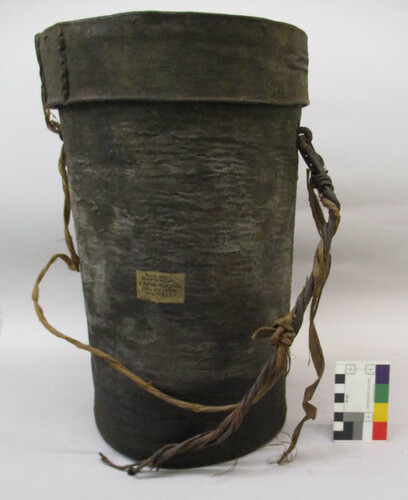 1942.13.1594.1Cylindrical box of bark. It has a handle attached to two lugs positions near the rim of the box, both made from twisted and knotted plant fibre. There are vertical stitches around the upper section of the box which attach a band to the interior of the box rim. For the lid of the bark box see 1942.13.1594 .2 [CW [OPS Move] 14/07/2016]1942.13.1594.1
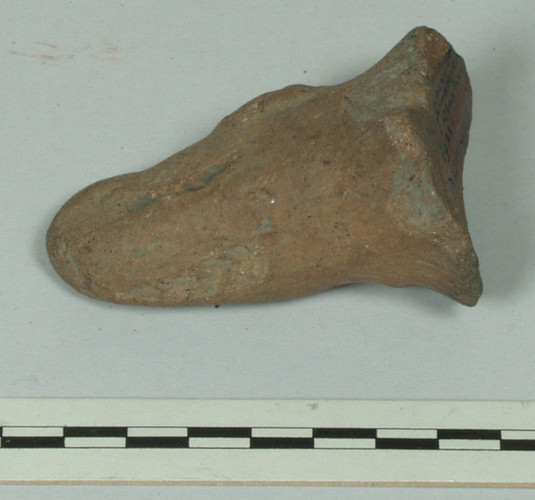 1921.24.27Ceramic animal head, probably a foot broken from a tripod vase.1921.24.27
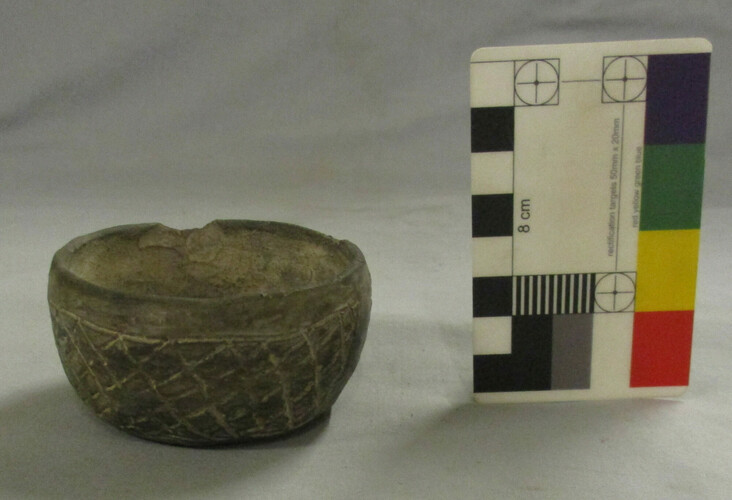 1947.7.018Black ware pottery vessel with a convex base to the interior of the piece. [ASh [OPS move] 01/04/2016]1947.7.018
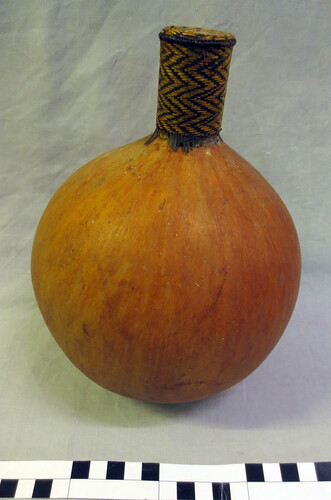 1960.3.16Gourd, with stopper covered with woven zigzag pattern in black and yellow. [FB 04/06/2015]1960.3.16
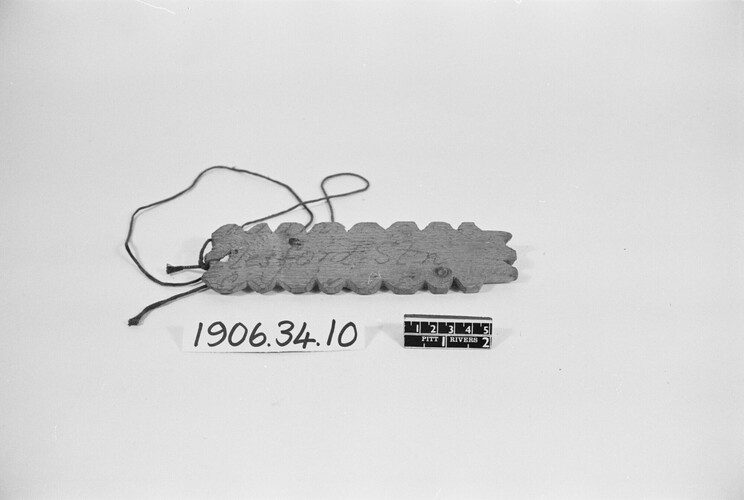 1906.34.10Bullroarer1906.34.10
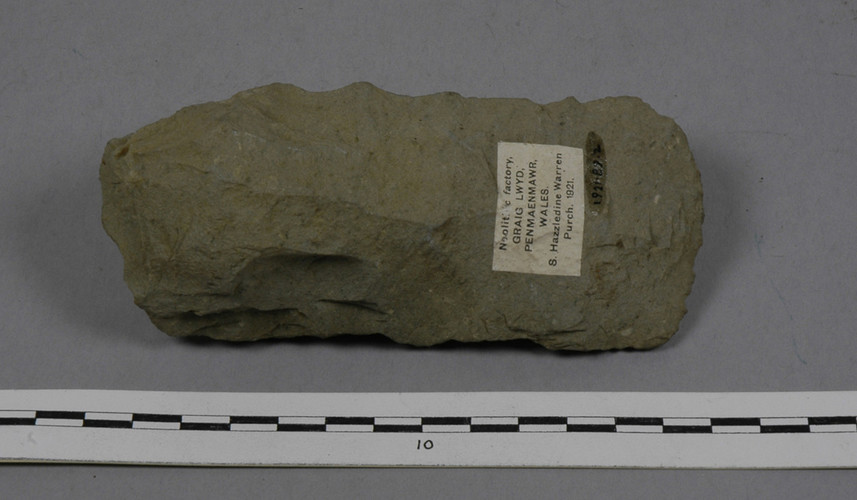 1921.89.2Flaked axe of grey stone, with bulbous butt and rectangular edge. [El.B 08/10/2007]1921.89.2
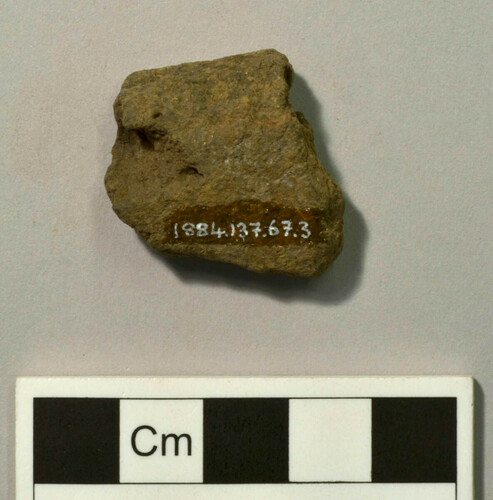 1884.137.67.3Ceramic rim sherd1884.137.67.3
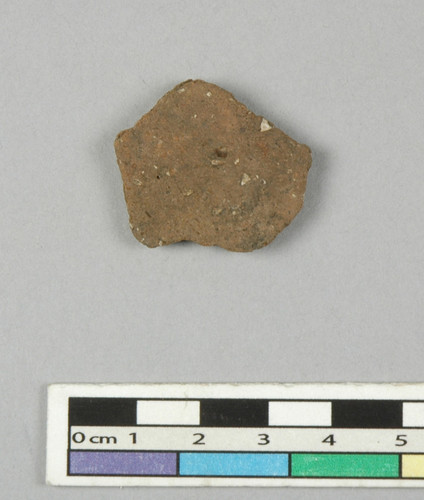 1884.138.8.231Ceramic sherd1884.138.8.231